

The rules about attic storage in a rental are almost never written down anywhere, and that is exactly why they cause trouble. Nothing in the lease says you may use the attic. Nothing in the lease says you may not. What is actually in most leases is silence, and silence gets decided by whoever has more nerve.
My building in Long Island City had one. It was a pull-down folding ladder in a ceiling hatch at the end of the second-floor hallway, the kind with a counterweight rope, and the space above it was a low dark cavity with plywood decking on steel joists. I moved in in March 2022 with a car full of books I did not have room for.
Nobody said no. That is the thing I want to put first, because it is where most people go wrong. The absence of a prohibition is not permission, and in the two years I lived there I spoke to four different people about it and got four different answers.
The super, Frank, said anyone could use it. The property manager, Dana, said it was for residents only, which she defined as "people in this building." The lease itself mentioned "attic storage areas" in one line, in a clause about fire safety, and did not say who could use them. And the woman in 3B, who had lived there nine years and had a whole section of the attic, told me it was fine because everyone did it.
Four answers, and none of them answered my actual question, which was not whether I could put a box up there. It was what happened if something went wrong while the box was up there.
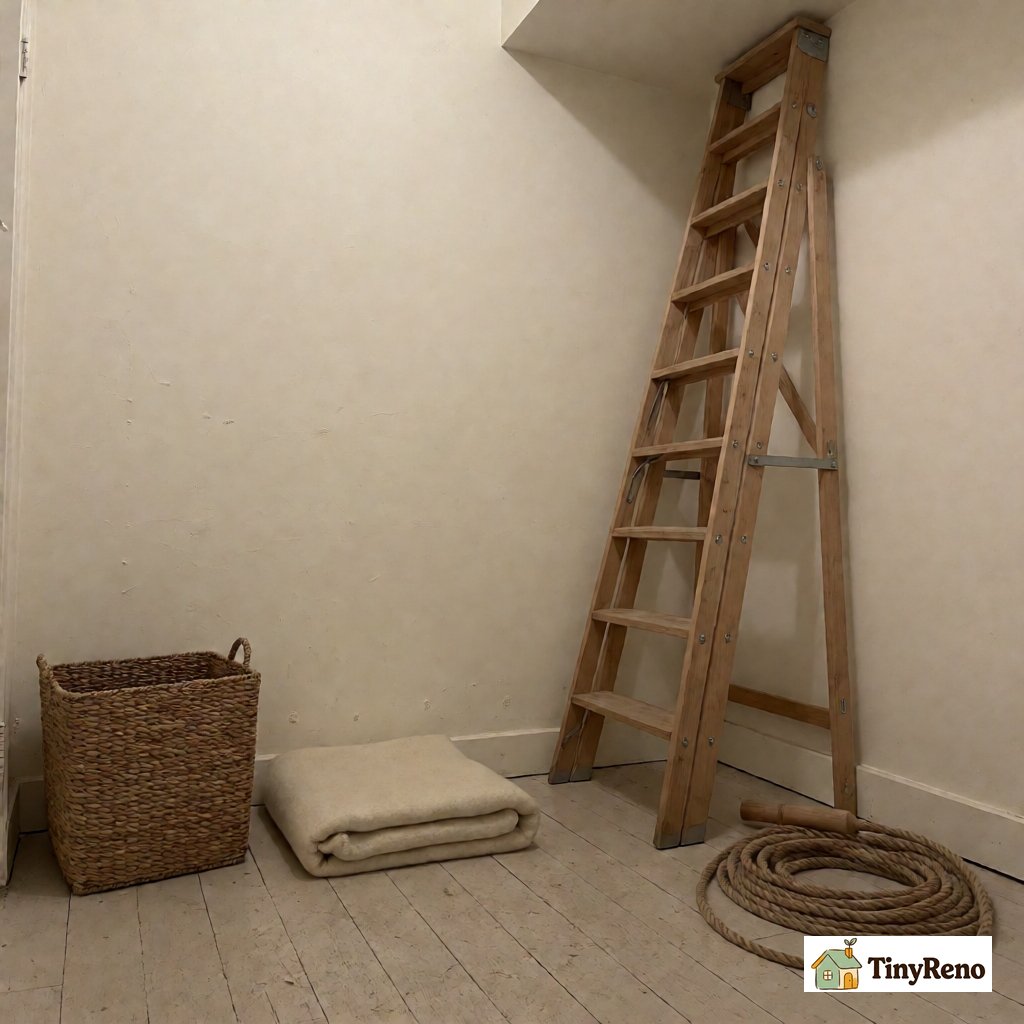
Is the attic part of your unit, or not?
Everything else hangs off this one question, and it is about the physical arrangement of the building rather than about permission.
In-unit attic. Some buildings have a small storage space inside the apartment itself, or a private loft accessible only from your door. If that is what you have, it is unambiguously part of your unit. Storage rules for it are ordinary landlord-and-tenant rules: it is your space, subject to fire safety requirements and to anything the lease adds.
Shared attic. A single attic for the whole building, reached from a common hallway. This is the common case in older buildings and the one with the most ambiguity. In principle the building owns it and lets residents use it as a facility; in practice nobody maintains a list of who has put what up there.
Not yours at all. Some attics are the property manager's private storage, or hold the building's mechanical equipment, boiler parts, or the water tank. If there is a sign, a locked hatch, or equipment in there, it is not available space and you need written permission before you go up.
How do you tell which one you have without climbing? Open the hatch with someone present, or ask the super to open it and look with you. Look for three things. Whether there is separate partitioning or cages, which means individual assignments exist. Whether there is other people's stuff, which means it is in use and you need to know by whom. And whether there is mechanical equipment, which means the space is partly the building's.
In my case it was a shared attic with no partitioning, some junk from the previous super, and the building's water tank taking up one corner. Frank said anyone could use it. I put eight boxes of books up there over two years and nothing went wrong. That is not the same as it being safe, and I want to be honest about the fact that I got lucky with a low-risk load in a dry summer with a building that had no water history.
What actually creates the risk
These rules are not really about permission, they are about exposure — and almost nobody thinks about that part. There are three ways stored property in an attic causes trouble, and only one of them involves you doing something wrong.
Water, from above. This is the big one and it is entirely outside your control. A roof leak, a failed gutter, a burst riser pipe, or a blocked drain that backs up over a wet winter will put water in an attic. It usually finds the lowest point, which is exactly where your boxes are. And attic spaces are unheated and uninsulated in most older buildings, so condensation forms on the underside of the roof deck in cold weather, which is a slow version of the same problem.
Paper is what dies. Books, documents, photographs, clothing, anything in cardboard. I know this because in January 2024 there was a roof issue in the building next door that flooded three flats and their attics, and the owner of the building wrote to every resident whose boxes got wet telling them the landlord's contents insurance did not cover tenant property in common areas.
Fire. This is the other big one and it is the reason attics are mentioned in the lease at all. Storing things in an attic can affect how a building burns, because combustion needs fuel and an ordinary closet full of textiles is a great deal of fuel. Buildings with attics used for resident storage frequently have fire-code rules about what may go up there: no flammables, no heaters, no batteries, sometimes no cardboard. If you store something that is against the rules and there is a fire, the landlord's insurer will look at what was in that attic first, and your involvement in it can complicate your claim.
Access. If your boxes are in the way of the boiler, the water tank, the electrical panel feed, or a flue, you have created an access problem for the building, and the landlord will want them gone. This is the most likely consequence you will actually experience, and it is not serious, but it will happen on someone else's schedule.
What you should actually have in writing
Here is the request I wish I had made in March 2022 instead of relying on Frank's "anyone can use it."
One: written permission naming the space. Not a verbal yes in a hallway. An email that says something like "I would like to use the shared attic for storage of personal belongings. Please confirm this is permitted and let me know if there are any restrictions." You are not asking for permission to do something unusual. You are asking for a record, and the request is unremarkable enough that most landlords will answer it without being annoyed.
Two: the answer in a form you can keep. An email reply is a record. A conversation in a hallway is not. If the answer comes in a text message, that is also a record. What you want is a sentence that says yes, and a sentence that says what is not allowed up there.
Three: the exclusions. Ask directly what must not be stored: flammables, batteries, chemicals, heaters, anything that needs power, food. This matters because the answer is often not written down anywhere else, and it is the answer you need when you are standing in a hallway deciding whether a given box can go up.
Four: what happens to your things if there is a leak or a fire. This is the question that makes people uncomfortable and it is the one that should. The honest answer from most landlords is that tenant property in common areas is not covered by the landlord's policy, which is why renters insurance exists and why it is worth having a policy that covers contents stored off-premises.
Five: notice before anyone goes up. Ask whether residents will be notified before anyone accesses the attic for repairs, inspection, or pest treatment. This is reasonable, it is usually granted without argument, and it is the difference between finding your boxes where you left them and finding them moved.
What to store, and what never to store
Even with permission, the choice of what goes up there changes your risk more than anything else you can control.
Do not put anything irreplaceable up there. That is the whole rule, and everything else is a detail of it. Books I could replace from a library. Documents I keep in a folder in a drawer. Photographs, of which I have many, stay in the drawer no matter how full the flat gets.
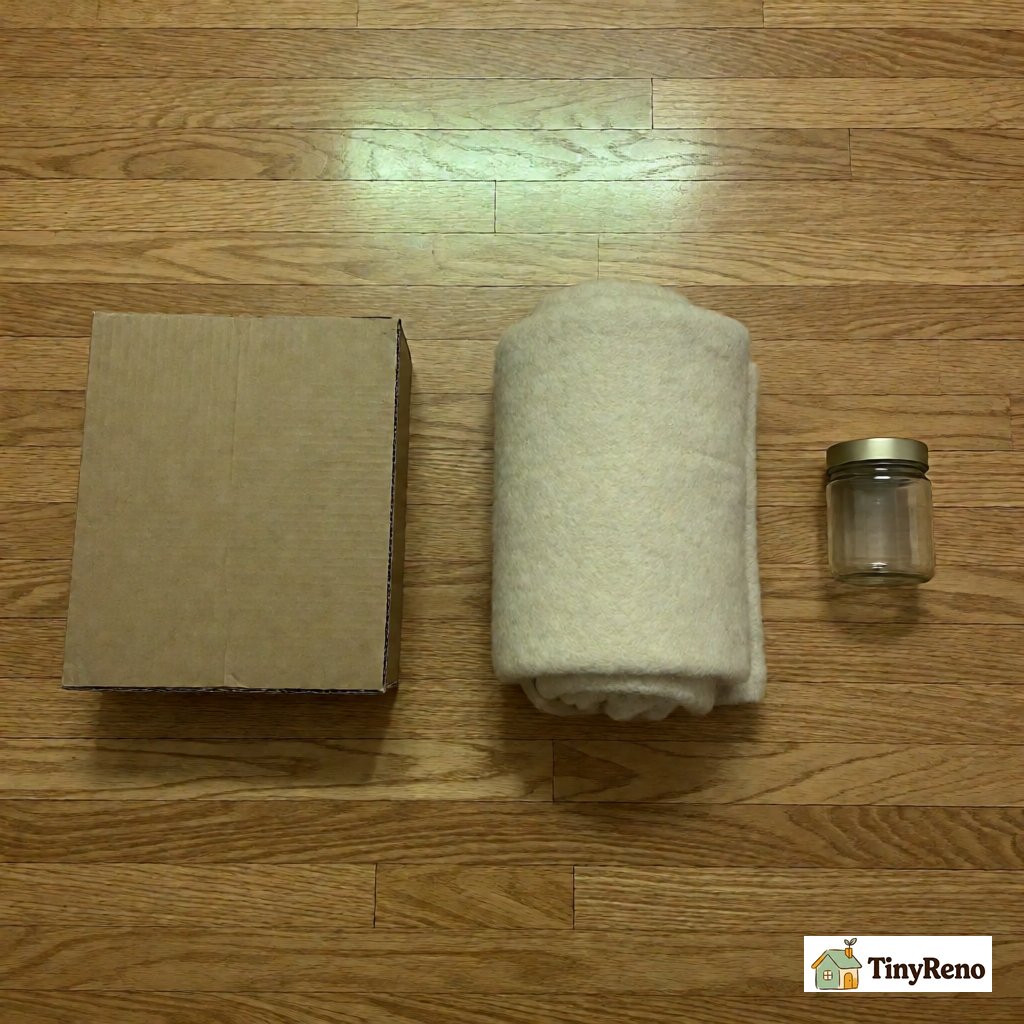
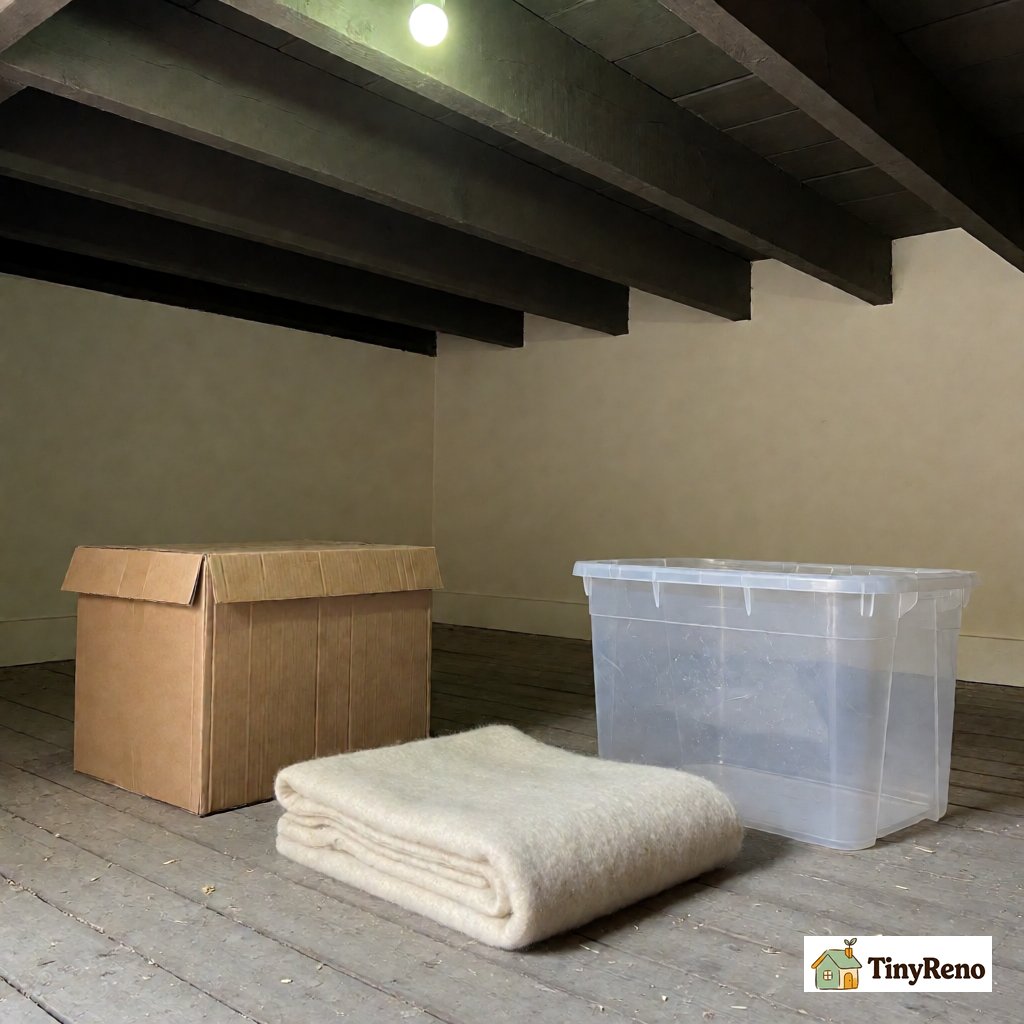
Do not store cardboard if you can avoid it. Cardboard in an attic picks up moisture, and it is also the most common thing in a building store. If you must use boxes, use plastic bins with lids that are not sealed airtight, and put nothing damp or soft inside them.
Do not store anything that needs a specific temperature. That rules out candles, chocolate, some adhesives, electronics, and anything with a battery you care about. Battery leakage in heat is a real and unpleasant failure mode.
Never store flammables, heaters, generators, or anything with a fuel. This is usually a fire-code rule and it is the one rule people are most tempted to break, because a storage unit is exactly where someone might think to put a space heater they use in winter. Do not. And note that the rule applies to items you already own and use, not just to junk.
Label your boxes. This sounds trivial and it is the difference between your stuff and someone else's when a landlord clears out an attic. A strip of masking tape and a marker is enough. Write your name and your unit number, and the date. If the landlord does eventually ask everyone to remove their things, labelled boxes come out first and unnamed ones get put on the curb.
The version I would tell a friend
Attic access renter storage rules come down to one email and one test, and if someone asked me about storing things in their building's attic, here is what I would tell them, If someone asked me about storing things in their building's attic, here is what I would tell them, and it is shorter than the article.
Ask for one email. Say you want to use the shared attic for personal belongings, ask them to confirm it is allowed, and ask what is not allowed up there. That email takes four sentences and it converts a verbal yes from a super into something you can actually rely on.
Then decide what goes up based on one question: could I replace it if it was destroyed? If the answer is no, it stays with you. That is the only test that matters, and it will keep you out of trouble with the landlord, out of trouble with the insurer, and out of the four months of grief that follows a flooded box of things you cannot buy again.
And if the answer to "who is allowed to use this attic" turns out to be nobody in particular, then treat it as nobody in particular. The people who get burned by attics are almost never the ones doing something dramatic. They are the ones who put a box up because nobody stopped them, and then the roof does what roofs do.


Discussion (0)
Sign in to join the discussion