

When your fridge dies and the food inside is ruined, it feels like a fairness question. It is really a money question, and the two get confused in a way that costs tenants real money every time it happens.
My fridge died on a Saturday afternoon in August 2022 in a one-bedroom in Jersey City. It was a small under-counter unit, the kind that came with the apartment rather than one I chose, and the compressor had been making a noise I had been describing to myself as "the fridge being old" for about five weeks. At 2 p.m. on the Saturday it stopped making any noise at all, and by 4 p.m. the milk was the temperature of the room. I had roughly $180 of groceries in there, including a frozen chicken I had bought that morning, a block of cheese, half a bag of coffee beans, and about four days of meals I had planned.
The landlord's response, when it came on Monday, was that the fridge was old and that I should have reported it earlier. Which was true. I had not reported it earlier. I had noticed the noise, decided it was not yet a problem, and then the problem arrived on a Saturday without asking me.
These cases turn on one thing, and here is what I learned over the next three weeks — the thing I wish someone had told me on that Saturday afternoon: the landlord's obligation is not to repay your groceries. Their obligation is to repair the appliance, and only if you told them it needed repair do you have any argument that the delay made your loss bigger than it had to be.
That distinction sounds cold. It is not. It is the difference between a claim that succeeds and a claim that gets a sympathetic reply and no money.

The report you sent before the food died is the whole case
Everything downstream of this depends on one timestamp. Did you, in writing, tell the landlord that this specific appliance was malfunctioning, before the food went bad?
If yes, you have a claim that has a shape: they knew, they did not repair it within a reasonable time, and the food loss followed from the delay. That is a straightforward causal chain and landlords settle it more often than tenants expect.
If no, you have a claim that is really a claim about bad luck. The fridge broke, food spoiled, and you are asking the landlord to absorb a loss that followed an event they did not know about and had no chance to prevent.
The reason I lost my argument in August 2022 was not that the landlord was unreasonable. It was that my five weeks of noticing the noise existed entirely in my head and in two text messages to a friend. When the landlord said "you should have reported it," I had nothing to point at.
The second apartment I lived in after that one, in 2024, I reported a fridge noise at 9:40 on a Wednesday morning by email, with a two-line description and a photo of the temperature reading. The landlord's maintenance guy was there by Friday. When the unit did fail outright in October 2025, the email thread from October 2024 was still in the inbox, and the replacement was scheduled without a single further conversation.
So the practical rule is not "always report every sound." It is: if an appliance has made a new noise for more than a week, write it down, and if it dies later, the write-down is worth more than any argument you could make from memory.
What is actually reimbursable, and what is not
Every renter ruined food after fridge broke claim I have seen since 2022 has come down to the same filter, which is that not every grocery dollar is on the table. This is where most claims quietly fall apart, because tenants submit a total from a receipt and the landlord responds with a number that is smaller, and nobody can explain why.
Perishable food, yes. Meat, dairy, frozen goods, anything that spoiled because the unit stopped holding temperature. This is the core of the claim and it is usually payable.
The value of the food, not the value of what you would have paid retail. This is the first place tenants overclaim. A receipt from a fancy grocery store with good olive oil and imported butter is asking the landlord to reimburse your shopping preferences. The number that matters is what the food was worth, and for a fridge of groceries, that is usually a conservative estimate of what you had inside, not the receipt total.
Groceries you had not bought yet. If you had a shopping list on the fridge with a planned $60 of groceries, that is not a loss. It is a plan.
Meals you had already eaten. This sounds obvious and it comes up anyway.
Your own negligence, in part. If you left a freezer door open all afternoon because you were distracted, some of this is yours. Landlords will push on this and they are not entirely wrong, because a fridge that died from a door left open is a different event than a fridge that died because its compressor failed.
Paper towels and cleaning supplies. Small, and often nobody claims them. Some landlords will include them; most will not, and asking for $6 in a $200 claim can make the whole request feel petty, which is a bad trade.
The two ways a landlord can answer, and only one of them is final
When you send the claim, you will get one of two kinds of response. Learning to tell them apart is worth more than knowing any particular dollar figure.
Response one: a repair. They send someone, the appliance gets fixed or replaced, and the conversation ends without money changing hands. This is the correct outcome when the fridge is repairable and the food loss is small, and if you get this response you should absolutely take it. A functioning fridge is worth more than a reimbursement.
Response two: a payment. They send you a cheque or a credit for an amount, usually lower than you asked for, often with no explanation of how they got there. This is not final. It is an opening position, and the thing that makes it negotiable is that it is a number, and a number can be checked.
Here is the arithmetic to check it with. If the landlord says "we will credit $80" for a spoiled load of groceries, ask two questions. What did you say the loss was, and what did they say they were deducting? If the numbers differ, ask which items they excluded and why. The most common legitimate exclusion is frozen food, on the theory that a freezer holds for a day or two and the landlord will not reimburse food that would have survived. Sometimes that is right. Sometimes the freezer was packed and the unit stopped entirely, and frozen food did not survive at all.
I want to be careful here, because there is a version of this argument that becomes a negotiation about the aesthetic quality of your groceries. The number is the number. If they say $80 for $140 of food and will not explain the $60 gap, that is the conversation to have.
What to send, and what to keep
The claim itself is short. It does not need to be a lawyer's letter, and a long one reads like a threat.
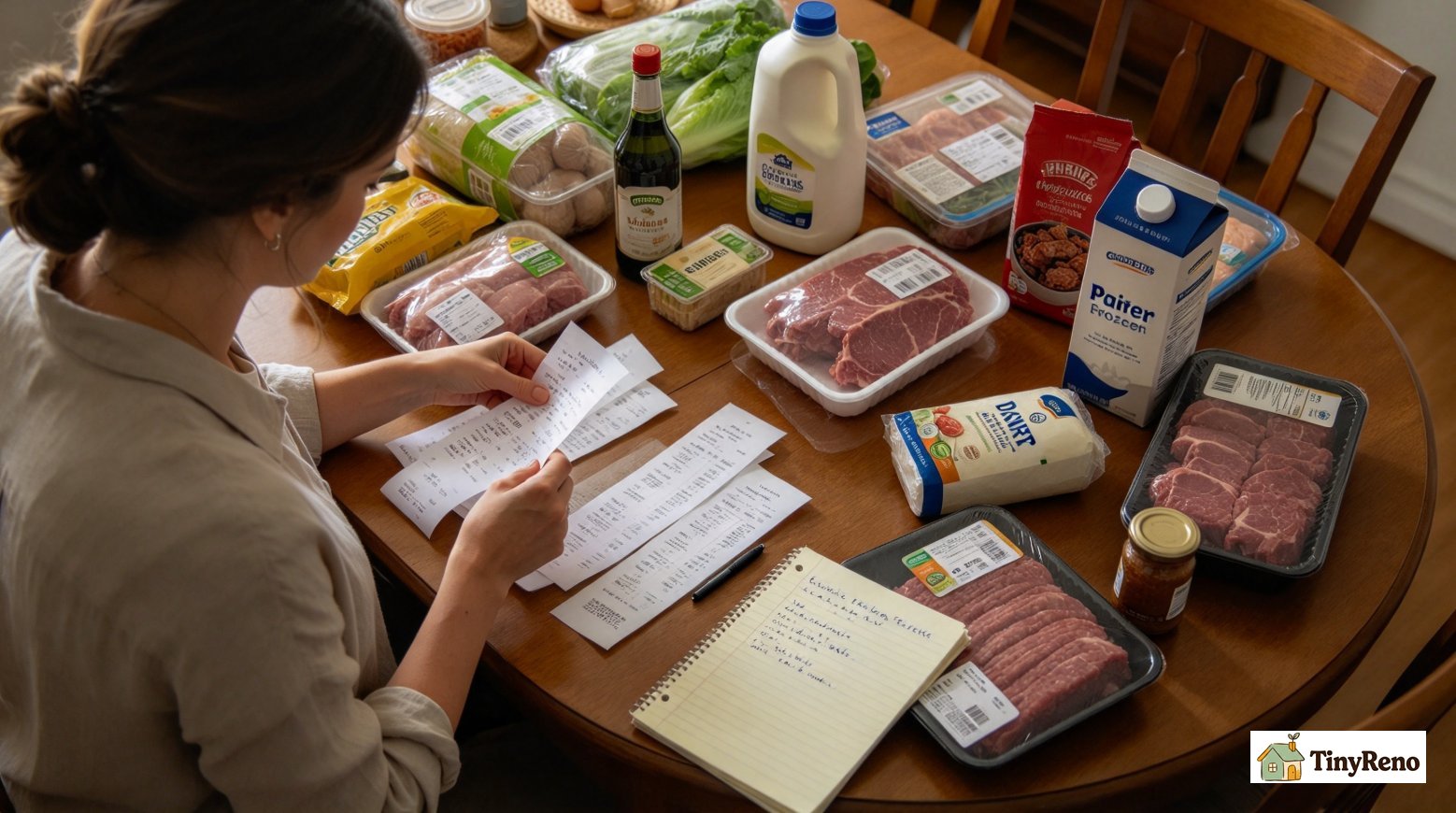
What to include: the date you first reported the problem, or the fact that you never did and what you did instead; the date the appliance stopped working; a list of what was inside and roughly what it was worth; a request for a specific outcome; and the date you are sending it.
What to keep: every email or text about the appliance, dated and in order; photos taken at the time rather than after; the receipts for the food if you still have them; and the temperature readings, which are more useful than you might think because they establish how warm it got and for how long.
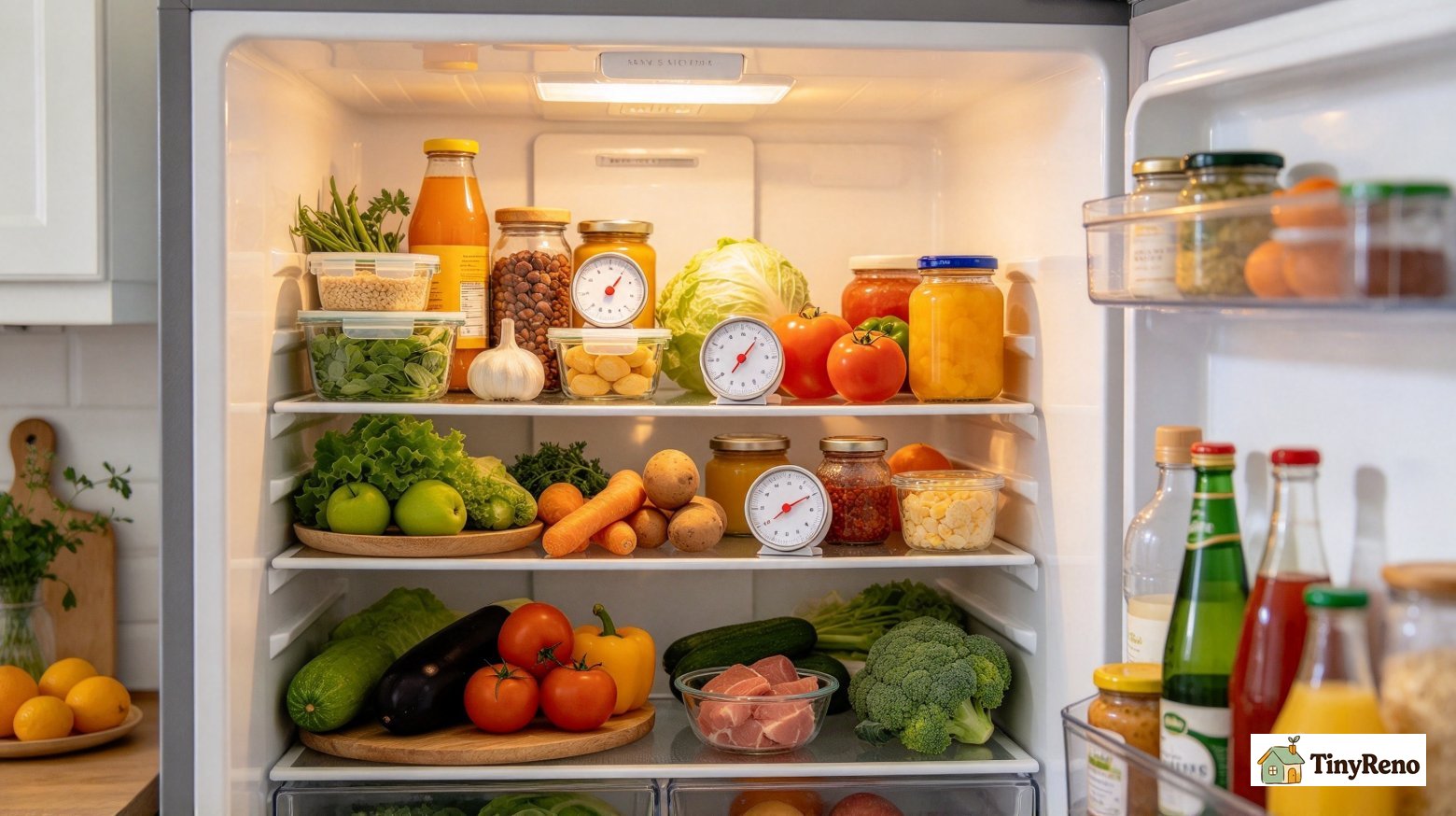
On that last point, and this is the practical tip I would give first: put a cheap thermometer in the fridge the day you notice something is wrong. A kitchen thermometer costs under ten dollars. It turns "it felt warm" into "it was 54 degrees for six hours," and the second sentence is the one that supports a claim. I now keep one in the fridge and the freezer in every place I have lived since 2022.
One more thing to keep, and it is the one people forget: the fridge itself, exactly as it failed. Do not empty it and clean it out before the landlord or their contractor has seen it. An appliance that has been emptied looks like an appliance somebody was planning to replace anyway. An appliance still full of spoiled food, with a thermometer in it, is evidence.
The version of this I would tell a friend
Renter ruined food after fridge broke is not the kind of problem that announces itself, and if someone asked me what to do at 4 p.m. on a Saturday with a dead fridge and $180 of groceries in it, here is what I would say, and it is much less satisfying than being made whole.
Eat what you can. Freeze what you can still save. Photograph everything before you throw it away. Write to the landlord the same day, and in that message say two things: the appliance has failed, and here is what was in it and roughly what it was worth. Ask for a specific outcome, and give them a date to respond by. If they send a repair person, let them in and let them look, and keep the spoiled contents until they have been there. If they send you a number, check the number against your list before you accept it or argue with it.
And the next time an appliance makes a sound it did not used to make, write one line about it the same day. Not because you expect to need it. Because the version of this story where you needed it is exactly the version where you had the email.


Discussion (0)
Sign in to join the discussion