

That balance on your laundry card is not really about money. It is about a category error I have watched people make in every building I have lived in since 2014: they treat a prepaid card like a deposit, and they expect the same thing back when they leave.
I moved into a two-bedroom in Astoria in March 2021 with a laundry room on the ground floor. The machine took a plastic key card, not coins, and the key came on a plastic tab from the landlord's office with a $40 balance already loaded on it. I did not think about it. In October I moved to a place with a coin machine, and in March 2023 to a place with a phone-based card system that charged a fee on top of every load. Same word, three completely different objects. The plastic card with $40 on it was a gift, the coin machine was simple, and the phone system was a subscription with a balance that belonged to a company I had never heard of.
The mistake I made, and the one I have watched three housemates make, is assuming the money on the card is still there when you move. It sometimes is. It is much more often tied to something you no longer have.
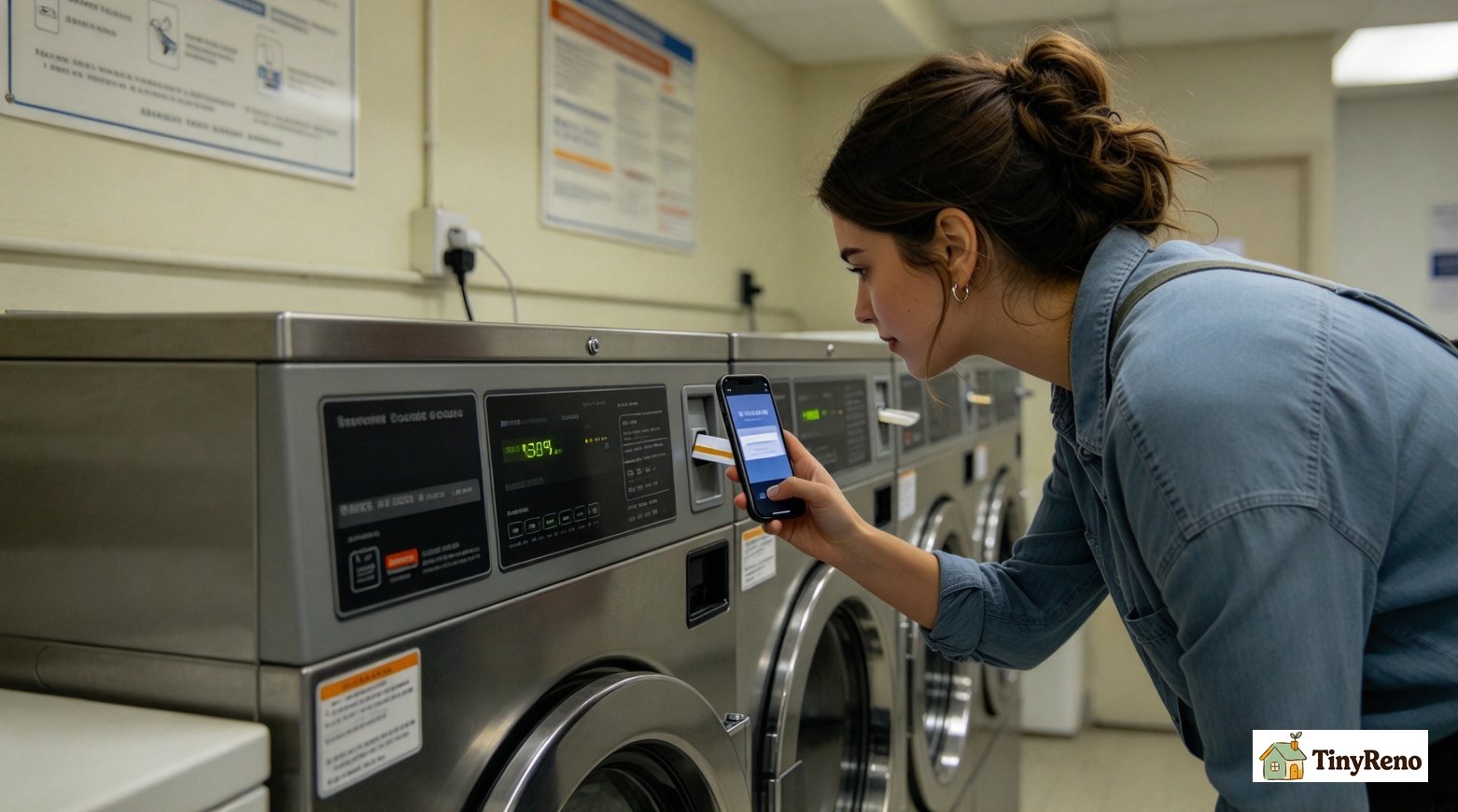
What a prepaid laundry card actually is
This problem is usually diagnosed late, because the card feels like a convenience rather than an account. Here is the mechanism, and it is the same mechanism whether the card is plastic, magnetic stripe, or a number in an app. You have paid money in advance for a service you will use later. The balance is money the operator holds on your behalf. It is not money you hold, and the operator is not a landlord, a bank, or a landlord's security account. It is a private company or a building management company running a revenue-generating amenity.
That single fact answers most of the questions people actually ask me. When the landlord says the laundry room is free, they mean there is no monthly fee for the space. It does not mean the washers are free. When they say your deposit is safe, they are talking about your security deposit, which is a different pile of money held by a different person under a different set of rules.
Because the balance is held by an operator and not by your landlord, your lease may say nothing about it at all. I have read leases that describe the laundry room as a "convenience amenity" and leases that describe it in six lines with a fee schedule. I have read a lease that never mentioned laundry. If the operator is a third-party company, the terms of that company govern the money, and your lease is silent.
The practical consequence is that there are three separate questions people conflate, and they have three different answers:
Where does the money physically sit? Sometimes it sits with the building management company as an account in a spreadsheet. Sometimes it sits with an outside card vendor who issued the cards and holds the float. Sometimes it never exists as money at all, because your phone app has a stored credential with a balance attached to your account. These three arrangements fail in three different ways.
Who is the counterparty? If it is the landlord, they probably owe you the balance under your lease or state law and you can write a letter. If it is a vendor, the landlord may not have the money or the ability to hand it back, and your argument is with a company whose address is a suite number in another state. You can still get it, but you have to go through their process, not your landlord's.
Is it refundable at all? Some operators will refund a balance on request. Some will not, because the card is a stored-value instrument and unclaimed value is revenue. Some will refund only above a threshold, on the theory that they should not be processing claims for $2.
I have one of each. The building-management spreadsheet balance came back as a cheque. The vendor balance came back as a refund to my original card, minus a $2 processing fee, eleven weeks after I asked. The phone app balance is gone, and I have decided that this is my own fault for not asking in month one.
The three ways the balance disappears
Before the legal question, there is the boring question, and the boring question is where most of the money actually goes.

Balance one: the machine keeps the card. This is the most common loss and the most humiliating, because it is entirely avoidable. Older machines have a slot where the card goes in and does not come out if the load fails to start, or if the door is opened mid-cycle, or if the machine's reader is temperamental. The balance is still on the card. The card is in the machine. The machine belongs to the landlord or the vendor, and getting the card out is a request, not a right.
My rule after losing two cards: before you press start, write down the balance on the back of your hand or photograph the machine screen. It costs four seconds. It has saved me $18.50 and, more importantly, it has given me the one piece of evidence that makes a claim credible.
Balance two: the machine charges more than the posted price. A dryer that lists at $2.00 in the lobby notice may debit $2.40 because the card carries a service fee, or because the machine runs a heat surcharge in winter, or because a previous cycle was cancelled and the system still holds a pending charge. The posted price and the debited price are different numbers, and the difference has no label on the machine.
Balance three: the fee for using the fee. Some card systems charge a per-load fee on top of the load price. A $2.00 wash can cost $2.60. Over four loads a week for a year, that is $124.80 that never appears on any posted price, because it is not a surcharge on the laundry, it is a surcharge on the mechanism you used to pay for the laundry.
This third one is worth dwelling on because it is invisible until you total it up, and it is the reason a laundry card balance apartment renter conversation can turn into a billing argument instead of a deposit argument. I did the arithmetic on my own card in 2023 and found $61.40 in per-load fees over a fourteen-month tenancy that I had never once looked at. The card balance had been sitting at $4.80 that whole time and I had assumed it was simply low.
What to do before you move out
None of this requires a lawyer, a chargeback, or a dispute. It requires a sequence, in the right order, and doing it in the wrong order is what turns a $30 refund into a fight.
Do this in month one, not month thirty. Ask the landlord, in writing, one question: who holds the card balance and is it refundable. If the answer is that the laundry card is a courtesy and balances are forfeited on move-out, you now know, and you can spend the balance on your last month deliberately instead of discovering it is gone. I asked in April 2021 and got an answer in two days. I did not ask in a second building and only found out eleven months later.
Find out who the counterparty is before you ask for money. If the card came from an outside vendor, the refund request goes to the vendor, and the vendor will need your card number, your account email, and your old address. If it is the building's own spreadsheet, the landlord's office has it and no one else does. Asking the wrong party costs you a month.
Take the number, not the word. When you ask, ask for the balance figure in writing, on the same day. A conversation on a staircase produces a number you remember and cannot prove. An email produces a number the other person also has. When I asked, I asked for "the remaining balance on my laundry card as of today, in writing," and the reply came back in eleven minutes with a figure and a date.
Ask before you move, not after. Many operators will refund a balance only while you are still a resident, or only within a window after you move. Some will not refund a balance at all for a card that was never linked to a specific unit, because they cannot tell whether you are still a resident or simply a person who used a card once.
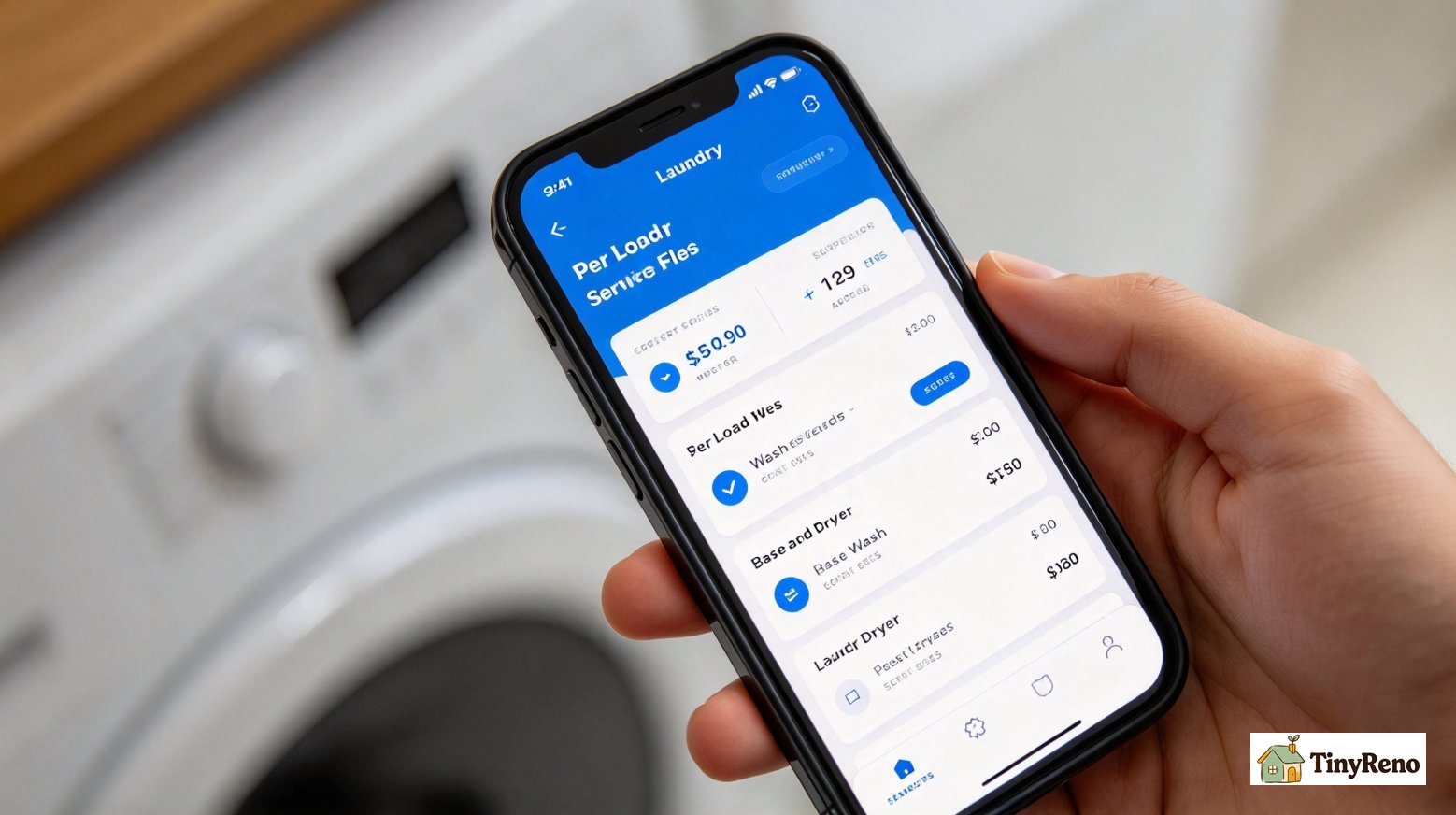
Do not let it come out of the deposit conversation. This is the mistake I made, and it is worth naming. My landlord offered to deduct $31.20 from my deposit, the exact value of my remaining card balance, as a "courtesy." That sounds generous. It is not. It converts a claim against a vendor into a deduction against my security deposit, which means I would have had to dispute a deposit to get money the vendor owed me. I said no, asked the vendor directly, and got the money back. The deposit stayed clean and the card balance got paid separately.
The rule that holds in every building
Here is the part I wish someone had told me in 2021, and it is the part that makes the specific building details irrelevant.
Laundry card balance apartment renter situations follow one rule, and it is the only rule I have needed in four buildings. A prepaid balance is money you have already spent on a future service. It is closer to a gift card than to a deposit. The moment you treat it like a deposit, you start expecting protections that were never attached to it, and you stop asking the questions that actually get the money back.
The question that works in every building I have tried since is the same one, and it is short: who holds the balance and what is the process for getting it back? If you have that answer in writing, everything else is a detail. If you do not, then the balance was never really yours, and the mistake was treating a convenience like an account.
That is also why I stopped worrying about which machine my building has. A coin machine, a plastic key card, and a phone-based system are three different implementations of the same arrangement: an operator holds your money, the operator decides when it comes back, and the lease is usually not the document that tells you.
I did get all three balances back, in the end. One by cheque, one by refund, one by deciding it was gone and moving on. What I lost was $61.40 in per-load fees and one card swallowed by a dryer in a building I no longer live in. The rule that would have saved both is the boring one: know who holds the money before you need it back.


Discussion (0)
Sign in to join the discussion