

The question I get asked most often about a busted window blind is “is this my fault or the landlord’s,” and the honest answer is that the question is badly formed. Fault is not what splits a window blind problem. What splits it is which part of the blind gave out. A horizontal blind has four systems, and the ownership question is decided by which one failed, not by arguing about blame. If you can name the part, you have usually answered the money question.
I know this because I had all three happen in one lease, in sequence, over fourteen months, in a two-bedroom apartment in Terre Haute, Indiana. Each time I assumed the answer would be the same as the last time. Each time it was not. The slat was mine. The tilt wand was mine. The ladder tape was the landlord's, and I fought about it for a week before somebody pointed out that I had been arguing with the wrong number.

The Blind Is Not One Object
This is the whole idea and it takes about ninety seconds to understand. A horizontal venetian blind has four distinct systems mounted on the same headrail.
The first is the slats. These are the horizontal blades you look through. They are the visible surface, they are what catches a dent, and they are the part that bends when somebody leans on them or when a child decides the window is a thing to climb on. Slats also fade, yellow, and go brittle with sun exposure over years, which is a completely different story from a slat that got bent in month four.
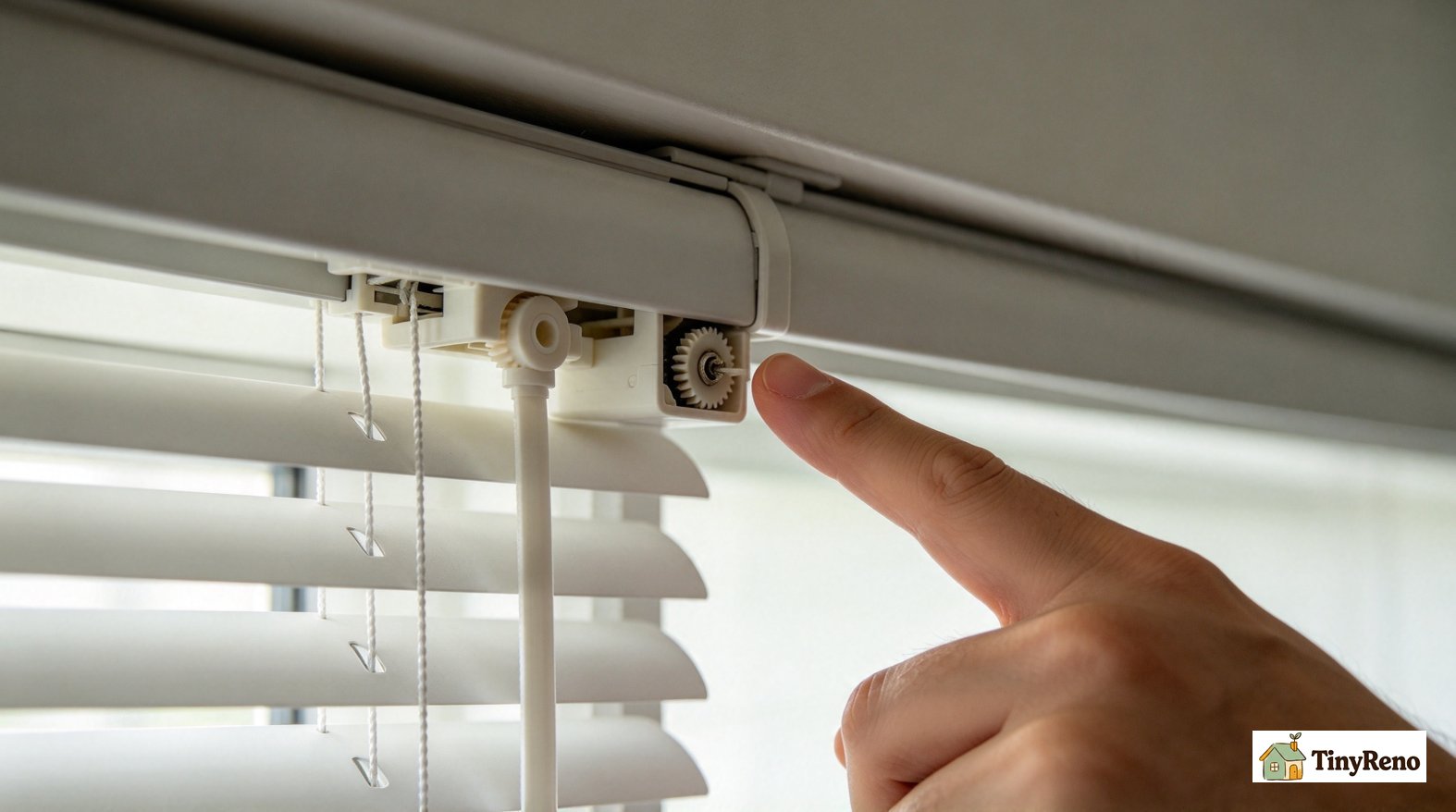
The second is the tilt mechanism: the gear assembly inside the headrail, the rod that runs the length of it, and the plastic wand that hangs down and twists. This is the control that rotates the slats to change the angle of the light. It is also, on a cheap blind, the single most fragile part of the whole assembly, because it is a small plastic gearbox that gets twisted by hand several times a day for years.
The third is the ladder tape, sometimes called the ladder cords. These are the two vertical fabric or cord straps that run up each side of the blind and hold the slats in their stack. Nothing about them is visible when the blind is closed and working, which is exactly why they are the most commonly misattributed part in the entire business. A ladder tape does not bend because someone leaned on the blind. It cracks because the plastic or the fabric it is made of has been in a hot window for eight years and has become brittle.
The fourth, and the one that makes the first three possible, is the headrail and mounting: the housing, the brackets, the screws, the bottom rail. That is the structure, and it is almost always the landlord's problem, because almost nothing a tenant does in normal use will damage it.
So when a blind dispute comes down to a number on a move-out statement, the first useful move is to stop looking at the whole blind and start looking at the component. Almost every blind dispute I have seen collapses the moment somebody asks the landlord which part failed, because the answer is specific and it settles things. You usually do not have to work out who owns the whole blind once you know which part failed.
Case One: The Slat I Bent, and the Slat That Yellowed
In March of my second year, my dog put a paw through the blind while I was on the phone, and the second slat from the bottom on the living room window took a hard crease about two thirds of the way along. It was not broken. It was bent at an angle, and it sat at a different angle from every other slat, which from across the room looked like a mistake rather than damage.
This one was mine and I did not argue about it. A slat bent at a sharp angle is not wear and tear; wear and tear is a slat that has faded unevenly or gone soft from heat, and everybody who works in this area knows the difference even if landlords do not. A crease has a cause, and the cause was in the room with me.
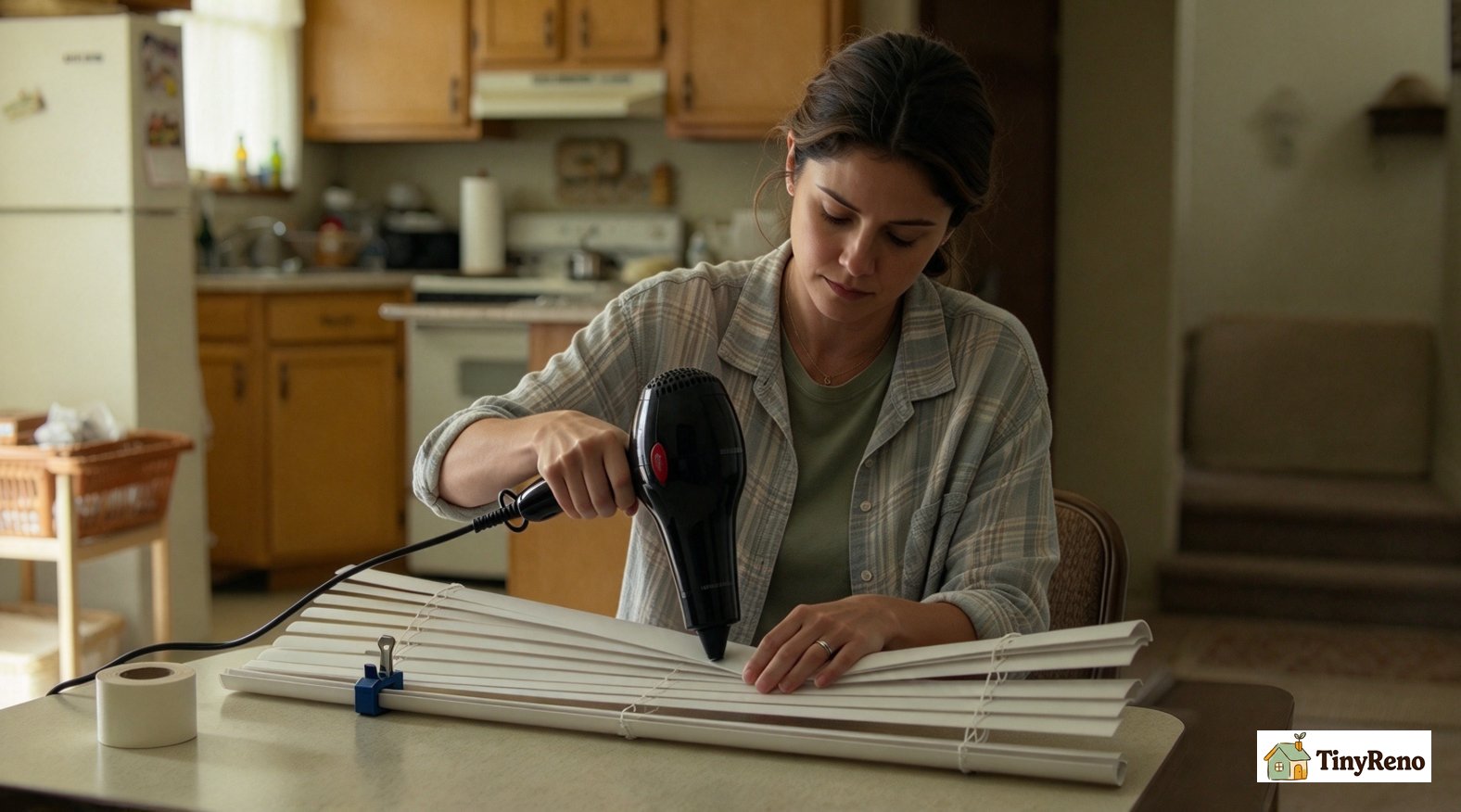
So I fixed it. I did not buy a new blind and I did not leave it. I took the blind down, slid the bent slat out of the ladder, warmed it gently with a hair dryer on a low setting, pressed it straight against a flat surface, and left it clamped overnight. The slat came back about ninety percent, the crease was faintly visible only from one angle, and the blind worked. If you bend several slats or crack one outright, a replacement slat or two is a reasonable ask, but repair is the first thing that should be offered, and offering it is your move.
That took me twenty minutes and cost me nothing. What it bought me was that at move-out there was no charge at all for that window, because there was nothing to charge for. The blind was functional, the slat was straight, and a landlord charging for a repair that has already been made and that has restored the function is asking to be paid for their own maintenance.
Case Two: The Tilt Wand I Should Have Replaced
In the October of my first year, the wand on the bedroom blind stopped working. I would twist it and the wand would spin a quarter turn and then go slack, with the slats staying exactly where they were. This is the classic broken plastic gear in the tilt mechanism, and it is the failure that generates the most arguments because it looks like it should have been prevented by a tenant.
But the ownership question was still not mine, and the way I settled it was to ask the question that had been sitting in the statement the whole time: which part failed? My landlord's move-out statement said "blind repair, bedroom: tilt mechanism replacement, $48." I wrote back and asked whether they were charging for the wand or the internal mechanism, because they are different parts with different prices, and I attached a photograph of the headrail with the wand detached and the stripped gear visible inside.
It could not have been prevented, and the diagnostic shows it. A wand that spins without moving the slats has failed at the gear inside the headrail, not at the wand. If the wand itself had broken, the slats would still tilt, because the wand would be turning a shaft that still had teeth engaging. When the wand spins freely and nothing happens, the teeth have stripped inside the gearbox, which is a moulded plastic part with a service life measured in years of daily twisting. I had not reported anything, and if I had noticed the wand being stiff and said nothing, my position would have been much weaker, because a landlord can fairly say a stiff wand reported in July might have been a fifteen-dollar part rather than a replacement gearbox. I got lucky on the reporting, which I do not recommend as a strategy.
The general rule I took from that: the wand is a part tenants handle constantly and tenants break, and it is usually cheap. The gearbox inside the headrail is a wear item. If the wand came out of your hand, that is a wand. If the wand spun and nothing moved, that is a gearbox, and it belongs to the landlord. Those two facts look identical in a move-out statement.
They came back with the parts invoice, which showed a replacement tilt mechanism at $34 and a replacement wand at $14, both on it because the technician replaced both while he was in there. The parts totaled $48, and the statement had added labor on top. I pointed out that the wand itself was not broken and asked for that line to come off. The corrected charge was $38 for the mechanism and labor. I did not pay for a wand replacement, because the wand was not the failed part.
Case Three: The Ladder Tape That Was Not My Fault
This is the one I got wrong for a week, and it is worth reading for, because the mistake I made is the one most people make.
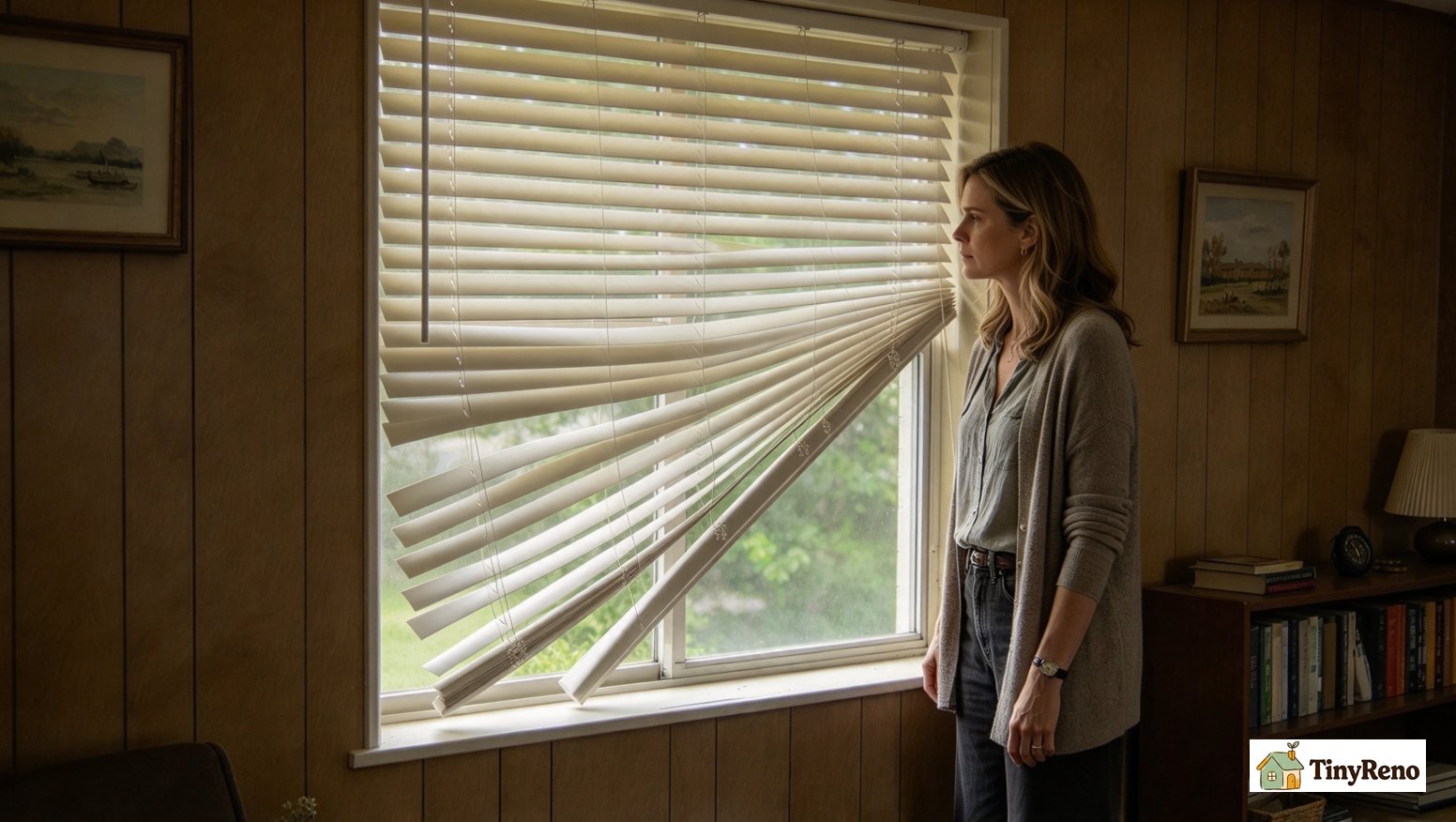
About six weeks before I moved out, the bedroom blind started hanging oddly. The slats on the right sat about a quarter inch lower than the slats on the left, and the whole stack drooped on one side. If you have ever seen this, you know it looks catastrophic and is usually a small problem. It is almost always a ladder tape that has come loose at one end or has broken, and blinds that look broken often work fine once the tape is reattached or replaced.
My landlord's statement said "blind replacement, bedroom: cracked ladder tape, blinds cannot be raised, $145." I read that and thought: right, the tape has cracked, that is tenant damage, the blind is broken, therefore it is mine. I nearly paid it.
Then I did the thing I wish I had done on the slat case, which was to ask what a ladder tape is made of and how it fails. A ladder tape on a plastic or vinyl blind is a strip of the same polymer as the slats. It sits in a window in direct sun and heat and goes through the same UV and thermal ageing as the slats it holds. When it finally cracks, it usually cracks from thermal fatigue rather than from a tenant using it. It lives behind the slats, and the only way to touch it is to take the blind apart, which you usually do for some other reason entirely.
A crack caused by sun on a polymer part that the tenant cannot reach without disassembling the blind is not tenant damage. It is the blind reaching the end of its life. And the consequence of that distinction is enormous, because a landlord who argues "the blind is broken, replace it, $145" has just told you that a repair was not attempted. If the tape can be replaced, then the blind was never unrecoverable and a full replacement is a betterment.
So I asked the two questions. Could this be repaired rather than replaced, and what does the repair cost? A ladder tape is a short strip of fabric or plastic. It is not a $145 problem. My landlord had a handyman swap the tape for about $25 in parts and $20 in labor. The blind was level again and would raise and lower. The $145 replacement deduction came off the statement, and I paid the $45 repair instead. That is the repair-versus-replacement question in its simplest form. A landlord quoting full replacement for something a twenty-dollar part fixes has described an upgrade, not a loss.
The Rule That Answers Most of These
Here is the version I would put on a card and hand to a friend, because I did not have it for the first fourteen months of my lease and it would have saved me a lot of money and one particular week of frustration.
Look at which part failed, and ask who owns it. Blinds that came with the unit are the landlord's asset, and that means the landlord owns the sun damage, the age, and the plastic gearbox that wears out on schedule. You own what you did to it: the crease you put in it with a dog, the wand you snapped by twisting too hard, the slat a child bent. And when a part is genuinely borderline, the move-in condition decides it, not the repair cost.
That last clause is the one I would underline. The instinct is to argue about money, because money is what the statement contains, but the money is a derived number. The underlying fact is the condition of the blind when you arrived. If you photographed it and it was already yellowed and sagging on one side, then the ladder tape that cracked in your final two months was the last straw in a process that started before you got there, and a landlord who cannot show you the condition at move-in has not established that you caused the failure.
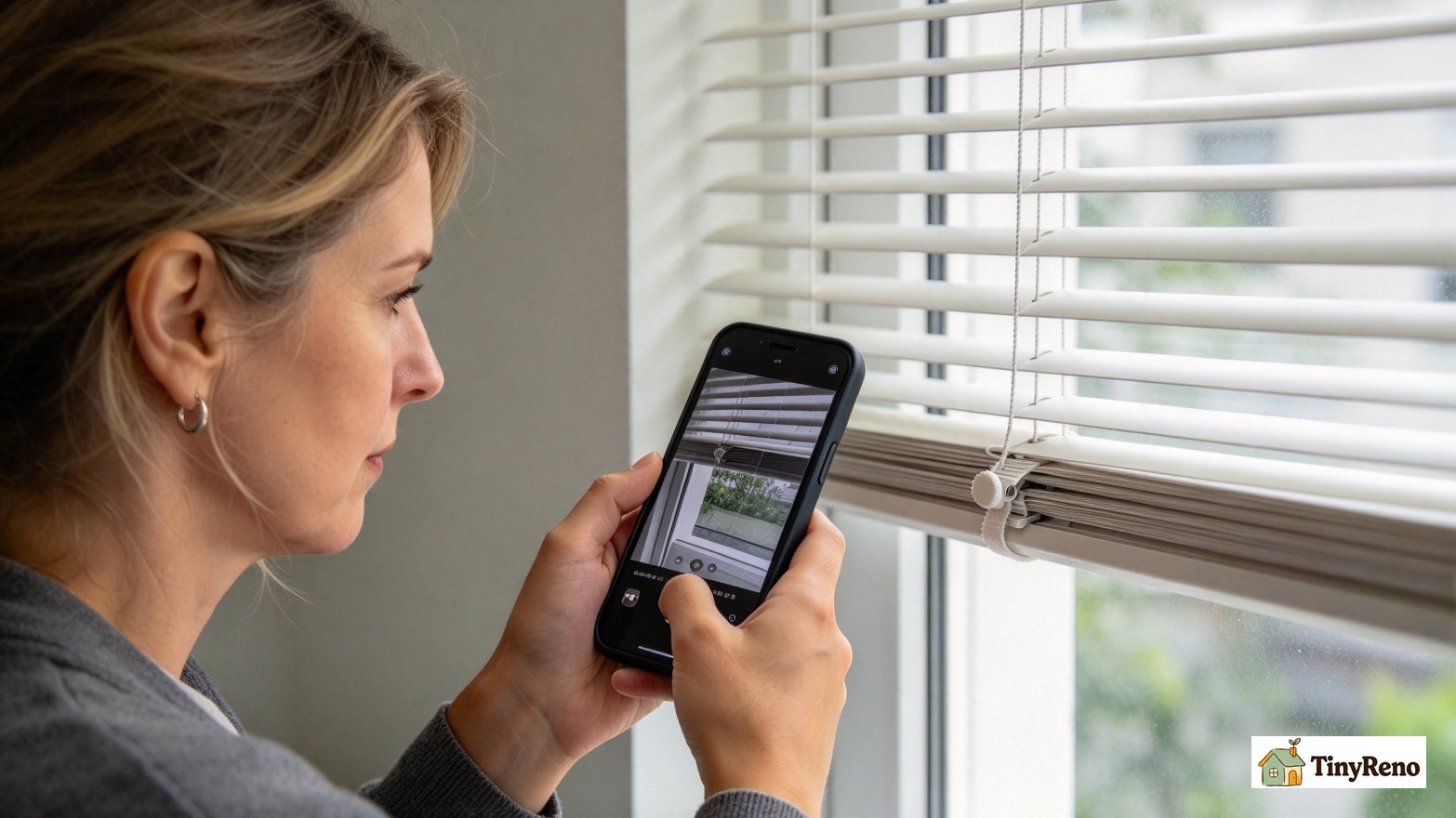
What you photograph at move-in is therefore the whole ballgame. Take one wide shot of each blind so you can see it in context, one close shot of the headrail so the wand and the tilt gear are visible, and one close shot of a few slats so the fade and the colour are on record. If a blind is already bent, already sagging, or already missing a slat, photograph that specifically and note it in writing on the move-in form. If your lease has no line for blinds, ask for one, in writing, in the first month. It takes five minutes and it converts a dispute you would otherwise lose on recollection into a dispute you win on evidence.
What I Would Do Differently
I would fix what I can fix, immediately, without being asked and without announcing it. The slat I bent, I straightened. That single decision is why there was no blind charge at all on that window, and it cost me twenty minutes. A renter who quietly leaves a bent slat for the landlord to find is a renter who has both done the damage and then declined to mitigate it, and those two things together make an argument much harder to win.
I would report the wand and the sag in writing, the day I noticed them, with photographs. Not because they were my fault, but because the landlord cannot credibly say you ignored a failing mechanism if you emailed it in August. And I would keep the reply. When my landlord said the tape was cracked and the blind could not be raised, I wrote back with three questions, and their answers are why I paid nothing on that window. A landlord who answers your question is a landlord engaging with the substance of it.
And I would not replace a landlord's fixture with my own. Repairing what you broke is right; swapping in a whole new blind you bought is a different act, and you may be charged for it later anyway on the grounds that the original had to be restored. Fix the damage you caused and leave the landlord's blind a landlord's blind.
What I take from fourteen months of this is that a blind is not a single object with a single owner, and that most of the money in these disputes comes from collapsing four systems into one line on a statement. Almost every argument was won or lost on that sentence, not on the amount. Name the part. Ask who owns it. Ask whether it could be repaired. Those three questions, in that order, usually settle the amount before anyone has to escalate anything, and they take about ten minutes.


Discussion (0)
Sign in to join the discussion