

A lock-change charge on my deposit was what my landlord sent me, and I did the thing that a lot of renters do, which is to assume it was one number for one thing. It was $185, it said "rekey: front door and deadbolt, 2 locks," and I assumed that was the end of it. It was not the end of it, because "rekey" on a landlord's invoice can mean two entirely different jobs and only one of them is what I had actually caused. Once I understood the difference, the number came down by $110 and nobody was angry. That difference is what this article is about, and it is the fastest way to tell whether the charge is fair.
This is a story about that charge, but it is not really about locks. It is about the gap between what a landlord's statement says and what the invoice behind it actually says, and about the fact that almost nobody reads the second document.
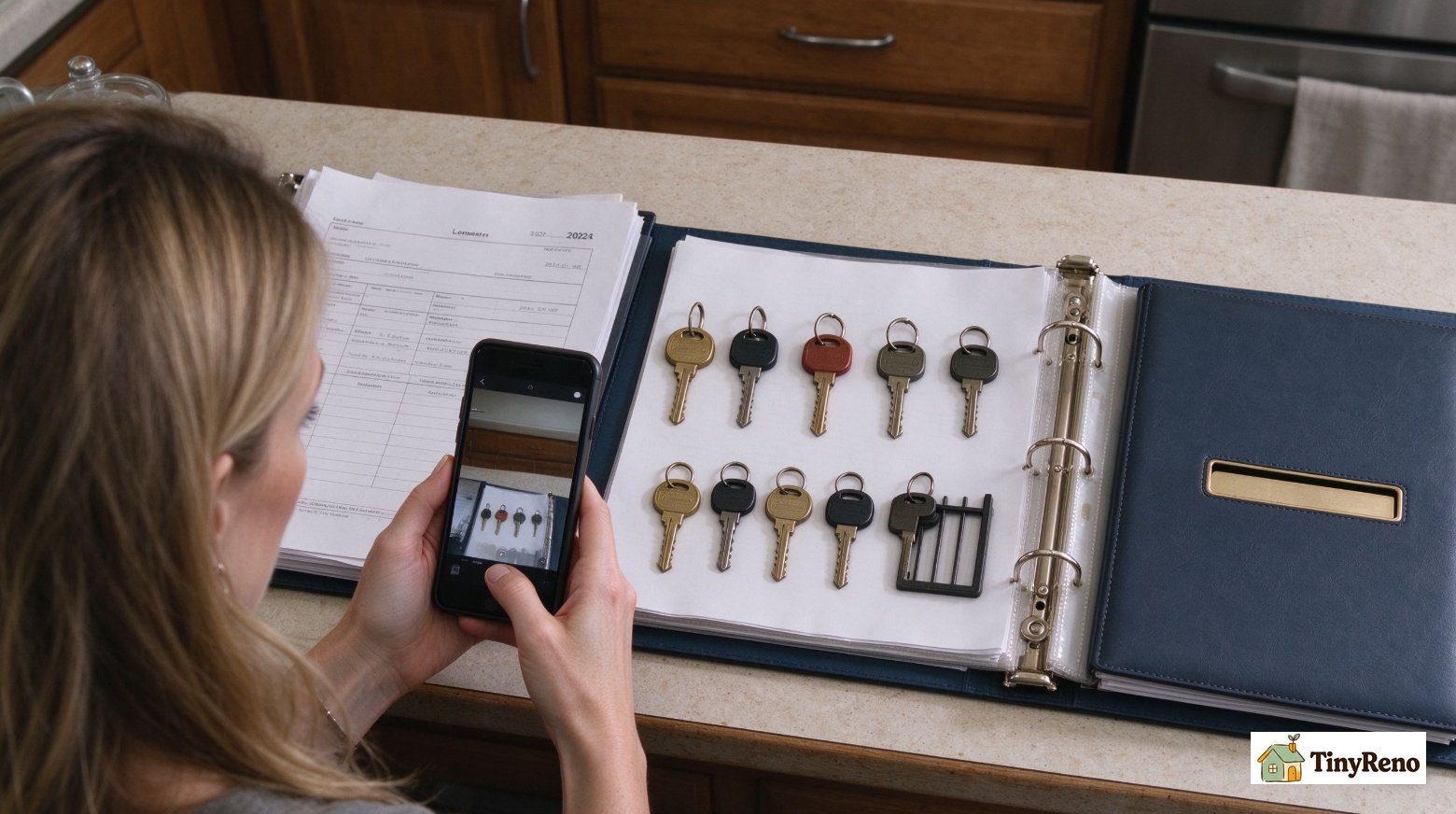
I rented a two-bedroom house in Madison, Wisconsin, from a landlord who managed maybe a dozen units and had a property manager named Ray who handled move-out for all of them. My lease had a key section I read carefully at the start, because I had been burned before about a mailbox key, and it said that all keys were to be returned at move-out and that the cost of changing locks would be deducted if any key was unaccounted for. I counted at move-in. I photographed the keys laid out on the kitchen table next to my lease binder. I noted that there were four: front door, back door, deadbolt, and a small brass mailbox key.
At move-out I had all four. I knew I had all four. But Ray deducted $185 anyway, and the itemised statement said "rekey 2 locks, no keys returned." I emailed to ask what had gone missing, and he sent back a photograph of four keys on his desk. They were mine. All four. The keys I had photographed.
That email is where this story turns, and I will save the rest of the method for later, because the first thing I had to solve was a puzzle that had nothing to do with fairness. If all four keys came back, why was there a rekey charge at all? A locksmith does not charge to rekey a door that opens with a key you just handed back. Something had to be wrong with the count, or the count had never been right, or the rekey was not for my missing key at all.
The Two Jobs Called "Rekey"
This is the core of the whole thing and almost nobody separates it, including, I would guess, most landlords when they are reading a locksmith invoice.
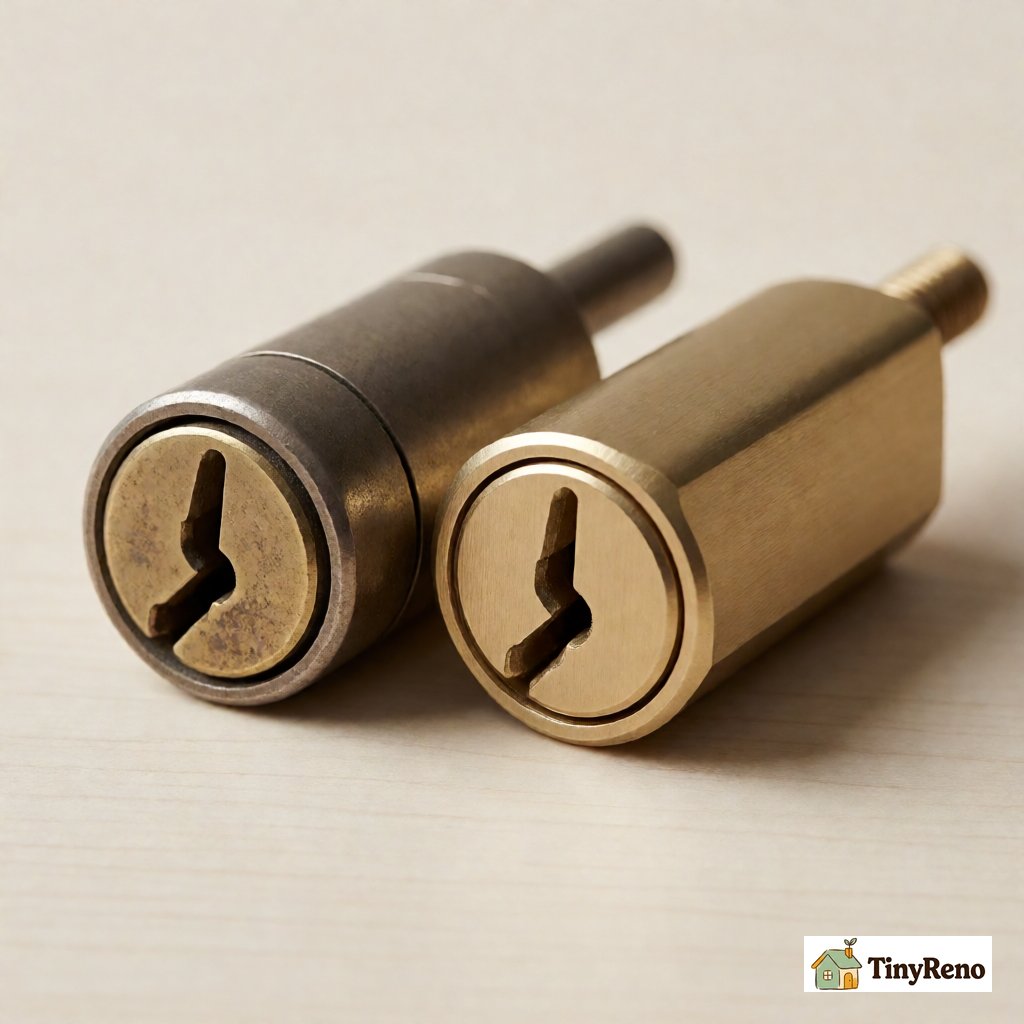
A cylinder re-pin is a repair to what is already there. The technician opens the lock, removes the brass cylinder, changes the internal pin pattern so that a brand new key is required and every old key stops working, then puts the same cylinder back in the same door. The deadbolt body, the strike plate, the handle, the door, the frame: nothing changes. The tenant gets new keys. The old keys become pieces of metal. This is a fifteen-minute job with a small parts cost, and on a residential rental it typically runs a modest figure for the labour plus the new key blanks.
A full lockset replacement is a different job entirely. The existing hardware comes out and new hardware goes in: new cylinder, new deadbolt body, possibly a new strike plate and a new handle set, and sometimes the door has to be re-drilled if the new hardware has a different backset. This is what you need when the hardware has been physically damaged, when it is worn out past the point of holding a latch, when you are upgrading to a different security grade, or when a smart lock platform is going in.
Here is the mechanical difference that matters for your deposit. In a re-pin, the physical lock is the landlord's existing asset and it stays in service. In a full replacement, the landlord has thrown away an asset and bought a new one. Those two situations have completely different justifications, and when they arrive on the same invoice without being distinguished, a renter ends up paying for the more expensive one without knowing it.
The word that should have been on my statement and was not is the number of locks. "Rekey 2 locks" could mean two cylinders were re-pinned on two existing doors, or it could mean two complete locksets were removed and replaced. The invoice did not say. The landlord was not hiding anything, I do not think; the locksmith had written a line that is standard shorthand in the trade, and everyone downstream read it the same way, which was the wrong way. This is the exact question that separates a rekey vs lock replacement renter dispute from every other kind of deposit argument, and it costs nothing to ask it.
What the Locksmith Actually Did
I called Ray and asked him for the locksmith's invoice rather than his summary of it. He was slightly annoyed and then entirely cooperative, which I attribute to the fact that I had sent a courteous email first and had a photograph to back up my position.
The invoice read: "Service call, residential lockout rekey, 2 cylinders re-pinned, new key blanks x4, door and deadbolt cylinders on entry door and side door. Cylinder on deadbolt showed seizure, replaced with equivalent. Total 185." And at the bottom, on the line I had not known to look for, a note: "No new hardware. Existing deadbolt body retained."
That last line was worth a hundred and ten dollars to me. It established that this was a repair to existing hardware and not a hardware upgrade, which is what I had been afraid of. It also established something more interesting, which is that the actual reason for the visit was not a missing key at all.
The deadbolt cylinder had seized. That is a wear failure. It is the sort of thing that happens when a tenant has been putting a key in that is not quite right, or when the cylinder is simply at the end of its life, and it does not require anybody to lose anything. A seized cylinder would have needed attention whether or not I had handed back every key in the building, and a landlord whose tenant reports a stiff or jammed deadbolt has a maintenance obligation to get it looked at.
The technician had been sent to rekey because Ray's standard move-out procedure is "no keys returned, rekey," and Ray had defaulted to that template without first checking the key count against the move-in record I had made eleven months earlier. If you are reading this because you have just received a missing key deposit deduction notice, read that sentence twice. It is the mechanism, and it happens because the move-out procedure was written for the common case and your case was not the common case.
The deadbolt cylinder was a second, smaller problem. It had been replaced, and that replacement was chargeable to me in part, because I had been the one living with it and I had mentioned once, in a text message about a sticking lock, that the deadbolt had been hard to turn. Ray could have pulled that text in five seconds. What he could not do was charge me for the fact that the cylinder had to be replaced, because the cylinder he replaced was a cylinder that had failed on its own.
What I Should Have Done at Move-In
The photograph of four keys on my kitchen table was the single most valuable thing I did in this entire tenancy, and I did it for no particular reason. I had a policy about photographing things and I photographed the keys. That photograph is what turned a $185 deduction into a $75 one, because it established the baseline that every other fact was measured against.
Here is what a good move-in key record looks like, and none of it is difficult. Lay every key you receive on a flat surface, in one frame, next to something that gives the photo a sense of scale, and include the lease or a piece of paper with the date written on it. Do this for the mailbox key, the gate or fob, the storage locker, the parking permit, and the amenity keycards as well as the door keys, because those are the ones people forget. Count them, write the count on the move-in inspection form next to the number your lease says you will receive, and if the two numbers differ, ask before you sign.
Photograph the lock hardware itself on move-in too, and get a shot of the deadbolt face, the cylinder, and the keyway. This is the thing I would change. I had a photograph of the keys. I did not have a photograph of the deadbolt cylinder. So when the technician said the cylinder had seized, I could not show that it had been sticking from the start or prove it had not. I had a text message about it, which was better than nothing and worse than a dated picture.
And count the keys again at move-out, in one frame, next to the same piece of paper with the move-out date on it. Send that photo to your landlord the same day you hand the keys over. This costs you four seconds and it ends the conversation about whether the keys came back.
How I Split the Charge
I did not try to argue that the charge was zero. That never works, because the locksmith did attend, the deadbolt did seize, and the landlord did have a legitimate interest in the security of the door. Trying to get to zero would have been asking a property manager to explain to a dozen landlords why a tenant had a free rekey program. Instead I split it, and the split was mechanical rather than emotional.
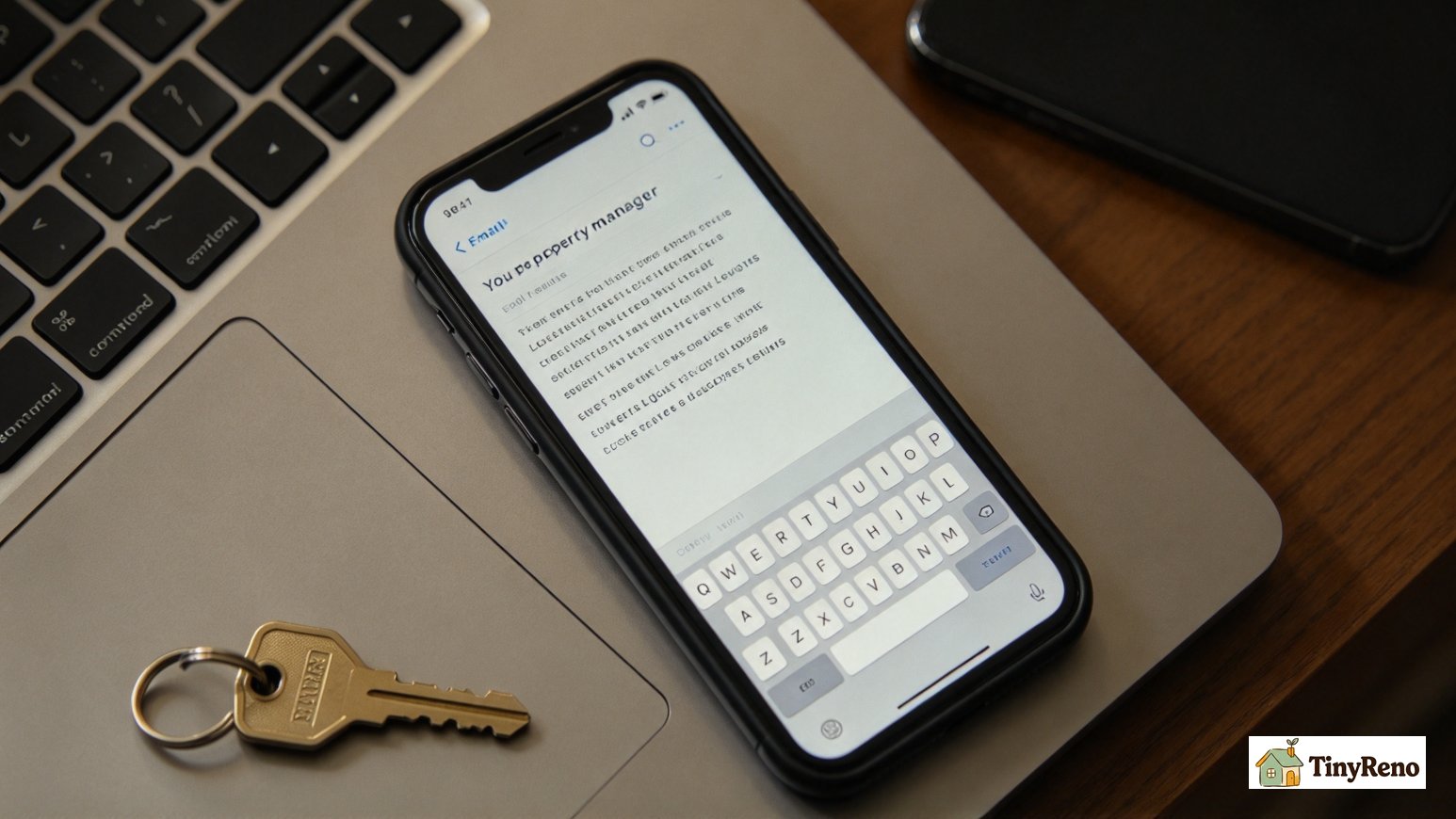
What I proposed, in writing, was this. The re-pin of the two cylinders was $95 including labour and four key blanks. The seizure and replacement of the deadbolt cylinder was a wear failure on a fixture that was at the end of its life, and I attached the move-in photos, the text message from March where I reported the deadbolt being hard to turn, and the technician's own note that no new hardware was installed. I proposed to pay the re-pin, which I agreed was fair because my keys had been in circulation and no reasonable person could verify where every copy had ended up, and I proposed that the cylinder replacement be split.
Ray came back with $75. That was the re-pin plus half of the cylinder labour, with the parts on the landlord. The reasoning he gave was that he had found my text about the deadbolt and he should have acted on it in March, and that the cylinder would have failed anyway, and that he was not going to sit in his office relitigating a deadbolt with a tenant who had already moved to a new place. That is a good reason. It is also, I think, the reason landlords settle these things when they are given a way to settle them.
What I want to stress is that the winning move was not the argument. It was the invoice. The locksmith's invoice said "no new hardware," and that single clause was the difference between a repair and an upgrade, and therefore the difference between what my deposit was worth and what a landlord might reasonably have thought it was worth.
The Two Questions That Decide Everything
If you take two things from this, take these.
The first is: ask for the invoice, not the summary. A summary says "rekey 2 locks, $185." An invoice says what was re-pinned, what was replaced, whether the hardware was kept, how many keys were cut, and whether the technician found anything wrong. Those are completely different documents and only one of them can be checked against anything. My landlord's summary was not a lie. It was a summary, and I had been arguing with it as though it were a finding.
The second is: the number of locks on the invoice is not the number of locks on the door. If your lease says a lock change will be charged for unreturned keys, that clause presumes a lost key. It does not authorise a landlord to rekey a unit between tenancies as routine practice and charge it to whoever moved out last, and it certainly does not authorise replacing hardware that failed on its own. If the charge is not traceable to something you did, it is not traceable to you at all, and it belongs to the landlord, who is the one who owns the lock and owes the next tenant a working, secure door.
A lock change renter deposit dispute is not a question about whether you like the landlord. It is a question about what a technician physically did to a door, and the answer to that is written on an invoice that somebody has. Get the invoice. Read the verb. Whether the work was a re-pin or a replacement tells you whether this is your bill or the landlord's, and everything after that is arithmetic.
I have thought about this a lot since, because I am aware that I got a good outcome partly because my landlord was reasonable and partly because I had a photograph I took by accident. The part I would repeat, if I were doing it again tomorrow, is the four seconds of counting keys in one frame with the date next to them, and the part I would add is the picture of the deadbolt cylinder. A tenant who has both does not need to be clever. A tenant who has neither is negotiating with a summary, and the summary is always going to win.


Discussion (0)
Sign in to join the discussion