

Who pays when a ceiling fan breaks is decided by a document most tenants never read. My fan started rattling in October and the landlord sent me the electrician's bill for two hundred and seventy dollars. I had a vague feeling I was being set up, and I was partly right. I was not right about how much of it I was responsible for. Three people had something to say about that bill and all three of them said something different, and the reason they differed is that they were answering different questions. That turned out to be the entire mechanism, and it is why I have rewritten this article three times. Here is how it works.
The fan was a five-blade unit in a two-bedroom flat in South Bend, about four years old, with a plain pull chain and a wall control. It had been fine. One evening it started making a rhythmic rattle that got worse over about a week, and then one of the blades started running slightly out of true, so that at full speed the whole thing trembled in the canopy. It still spun, and it still moved air, but it sounded wrong and it looked wrong and I could feel it in the ceiling.
What I should have done, and did not, was photograph and record the problem before touching anything. Instead I did what most people do, which is to open the housing and look, and found a blade screw that had worked loose. I tightened it. The rattle went away for about six days and came back. That six days turned out to matter a great deal, and I will explain why.
The Electrician's Report, Word by Word
This is the part that actually decides these disputes, and almost nobody reads it carefully, because it arrives as a scan of a one-page form attached to an invoice and it looks like paperwork rather than evidence.
The report from the South Bend electrician read, in the important parts, and this is the single most useful document in any ceiling fan dispute: "Ceiling fan motor and blade assembly. Reported complaint of noise and wobble on operation. Replaced 1 blade, rebalanced blade set, tightened blade set screws, replaced 3 mounting screws and 1 downrod. Observed blade wobble at speed, consistent with blade out of balance. No evidence of impact or foreign object damage. Unit appears to be of standard age with wear on blade set. Advise replacement of full blade set as components are original to unit and out of tolerance."
Every sentence in that report is doing something. "Reported complaint of noise and wobble" establishes that this started as a report rather than as an inspection finding. "No evidence of impact or foreign object damage" is a direct exclusion of misuse, written by a professional who was looking for it. "Wear on blade set" establishes age and gradual deterioration. "Components are original to unit and out of tolerance" is the sentence that costs me the most money, because it attributes the failure to the original components rather than to anything that happened during my tenancy.
Now compare it with the one line the property manager actually sent me, which was: "Fan repair per electrician invoice, $270. Charged to tenant deposit."
Nothing in that one line survives the original. The electrician did not say the tenant caused the damage. The electrician said there was no evidence of misuse and that the parts were original and worn. The manager converted a finding about age and wear into a finding about me, and the invoice for it was already attached. That conversion is the whole game, and it happens constantly, because landlords read the bottom line and tenants read the invoice and nobody reads the report.
What the Property Manager Said
The property manager, whose name I am calling Diane because she was perfectly reasonable throughout and does not deserve to be quoted, was clear that this was tenant damage. Her reasoning had three parts, and I want to be fair to her because the first two are the same two things most landlords say.
The first part was timing. The fan broke during my tenancy, therefore it is my damage. The second part was that I had used it heavily, running it daily on high through a hot summer, and that heavy use had contributed to the wear. The third part was that the lease said the tenant was responsible for maintaining the fixtures and keeping them in working order, and a rattling fan is a fan that is not in working order, so my failure to report it promptly was itself the failure.
On the first two points, Diane was half right. She was right that the fan broke during my tenancy. She was right that I had used it a lot. She was wrong to treat those as the same as causation, but the gap between her position and mine was narrower than it looked, and the report was the thing that settled it.
Her third point was the strongest one she had, and it deserved a real answer. The lease said to keep fixtures in working order. I had noticed the rattle and had not reported it for eleven days. In most leases, that is a breach, and it is a breach that can be used to make you pay for damage that you did not cause but that you failed to prevent from escalating. I will come back to why that clause mattered and what I did with it, because it is the part of my case that I still think about.
What I Would Do Differently
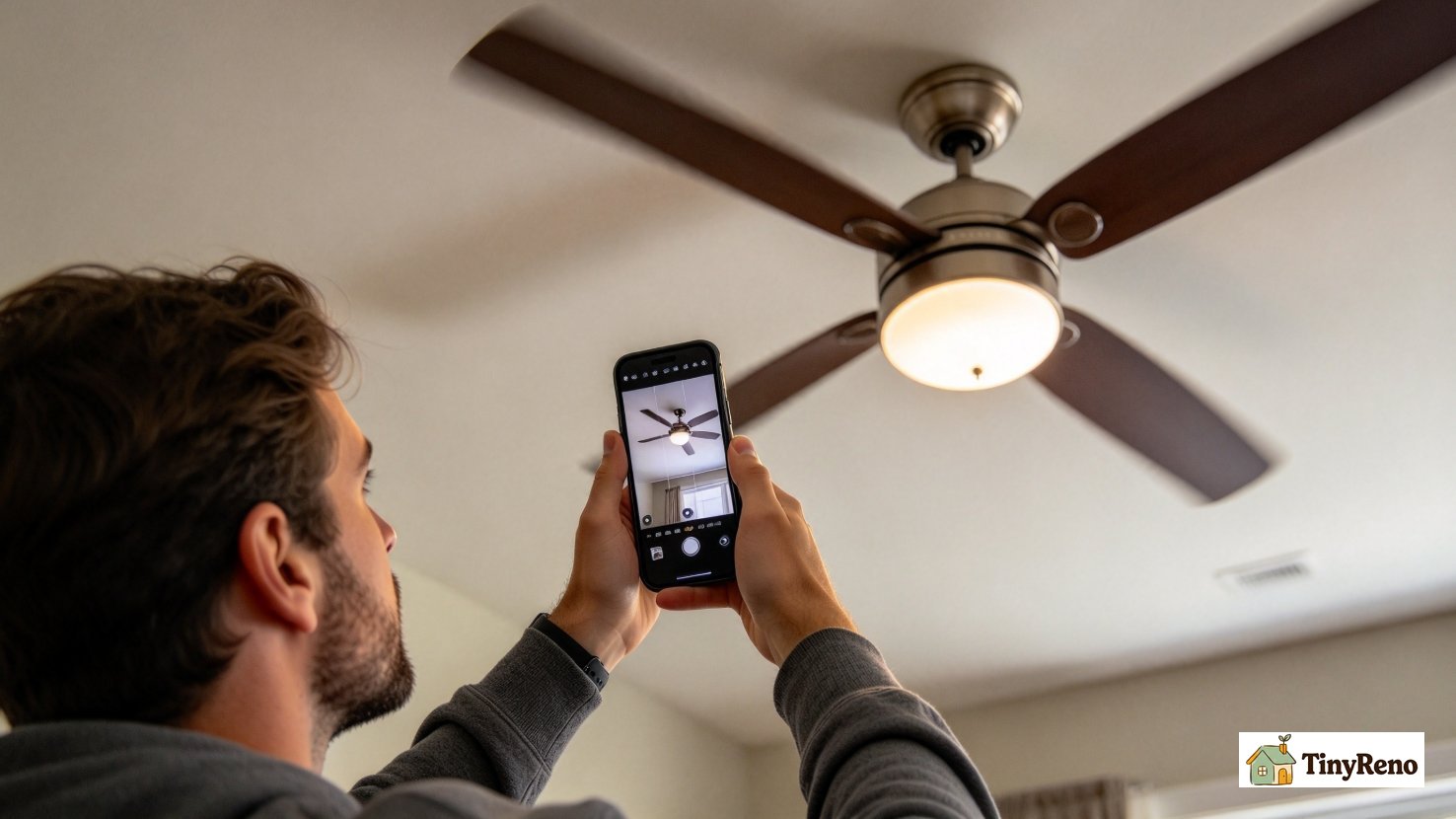
I would record it the day it starts. Video, not just a photograph, because the rattle is the thing that matters and a photograph cannot capture sound. Record thirty seconds of it running at the speed you normally use it. That clip does three things: it establishes when the problem started, it establishes the severity, and it establishes that you knew about it, which is the opposite of what the property manager is going to allege.
I would not open the housing. I tightened a blade screw on day two, and the fact that it loosened again was read as evidence that the unit was loose and neglected. In hindsight I should have left it alone. The technician found the blade set out of tolerance and rebalanced it, and a blade set that is out of tolerance because the blades have warped or the motor bearings have worn is not a loose-screw problem. My tightening a screw did not cause the failure and it did not fix it, and it handed the property manager a sentence about a loose blade.
I would ask for the report in the first message. Not the invoice. If you ask for the invoice you get an invoice. The report is where the cause is described, and it is a document the landlord already has because the electrician gave it to them when they paid the bill. Asking for it signals that you understand what you are looking at, and landlords who do not want their own contractor's report read tend to become more flexible before you have to argue.
And I would report the fault in writing even while I am disputing the cost. These are two separate things and tenants routinely confuse them. Telling the landlord that the fan is rattling and needs attention is not an admission of liability. It is the thing a diligent tenant does, and the report of the fault, dated, is the single best piece of evidence that you are not the kind of tenant who lets things rot. I did not do this and it was the worst decision in the whole episode.
What I Would Ask the Electrician
There is a second conversation available, and most tenants never have it. In a ceiling fan dispute it is often the conversation that changes the outcome, because the electrician is a neutral party who has already written something down. If the landlord used an electrician, you can ask to speak to them, and electricians are generally willing to explain their findings to a homeowner who is paying for the work or disputing it. Ask them three questions.
Ask whether they found any evidence of misuse, impact, or foreign object damage. That is a question with a factual answer and it is the single most important sentence in most of these reports. Ask them whether the components that failed were original to the unit, and how old they estimated the unit to be. Ask them, directly, whether the damage they found would have been caused by normal use over a few years, or whether it would require an abnormal event.
In my case the electrician, to his credit, was straight with me, and that is rarer than it should be in a ceiling fan situation. He said the blade set on that model is known to warp over time, that the motor bearings wear at roughly the same rate, that he had replaced the same unit in a rental in the city a month earlier, and that nothing about what he found suggested someone had hit the fan with something. He had written "no evidence of impact" because he meant it. When I asked him whether he would be willing to say that in an email, he said he could put the statement in the report instead, and I think he did, because the version I was sent had that line in it and my request created that version.
How This Ended
My lease had a clause about fixtures being maintained in working order, so I could not simply argue the fan was old and therefore not my problem. That clause did two things for me in the end, and both of them were about process rather than about money.
It meant the eleven days of silence was a real breach, and I did not try to pretend otherwise. I sent an email that said: I did not report the noise between the date and the date, that was a mistake on my part, and I accept that it weakens my position. I also asked him to note that I had reported it once the rattling had progressed to a visible wobble and had paid for the electrician's attendance at the first point where the fan was unsafe to run, which had been two days before the repair was done.
That framing turned a breach I could not defend into a piece of context. The landlord had a fan with a genuine blade failure that had been developing for weeks, and the two days between my report and the repair were days when a fan running out of true over a person's head could have dropped a blade. A landlord who wanted to be difficult could have made something of the eleven days. Instead the argument stopped being about whether I was at fault and became about the age of a four-year-old blade set.
We settled at a hundred and forty dollars, which was roughly what the blade set and the labour would have cost as a straightforward repair rather than a full replacement. I paid that, the landlord kept the rest of my deposit, and the electrician's invoice was reduced rather than voided. I did not get the fan replaced, which I still think was wrong on the merits, because the honest answer was that the unit was four years old and had a known failure mode and might well have failed for the next tenant too.
The Two Questions That Decide Everything
If you take two things from this, take these. The first is: read the electrician's report, not the invoice. The report contains the cause. The invoice contains only the price. A landlord who is genuinely confident the damage was yours will not mind you reading the report, and a landlord who is passing on a bill without reading it will be relieved that somebody finally did.
The second is: separate the fault from the cost. You can concede that you should have reported the noise and still argue about two hundred and seventy dollars. Most tenants do not do this, because they think conceding anything concedes everything. It does not. In my case, conceding the reporting failure and then winning on the cause and the age of the components is what turned a two-hundred-and-seventy-dollar bill into a hundred and forty dollars, and the property manager and I ended the conversation without either of us feeling beaten down.
A ceiling fan question sounds like a question about who broke something. It is really a question about three documents: what the tenant noticed and when, what the professional found, and what the landlord chose to do with both. Everything else is arithmetic.
Where That Fan Is Now
It is still in that ceiling. The landlord did not replace it, and neither did I. It runs on the same blade set with a slight wobble I no longer notice. The blades are straighter than the ones that came out, the rattle is gone, and the fan works.
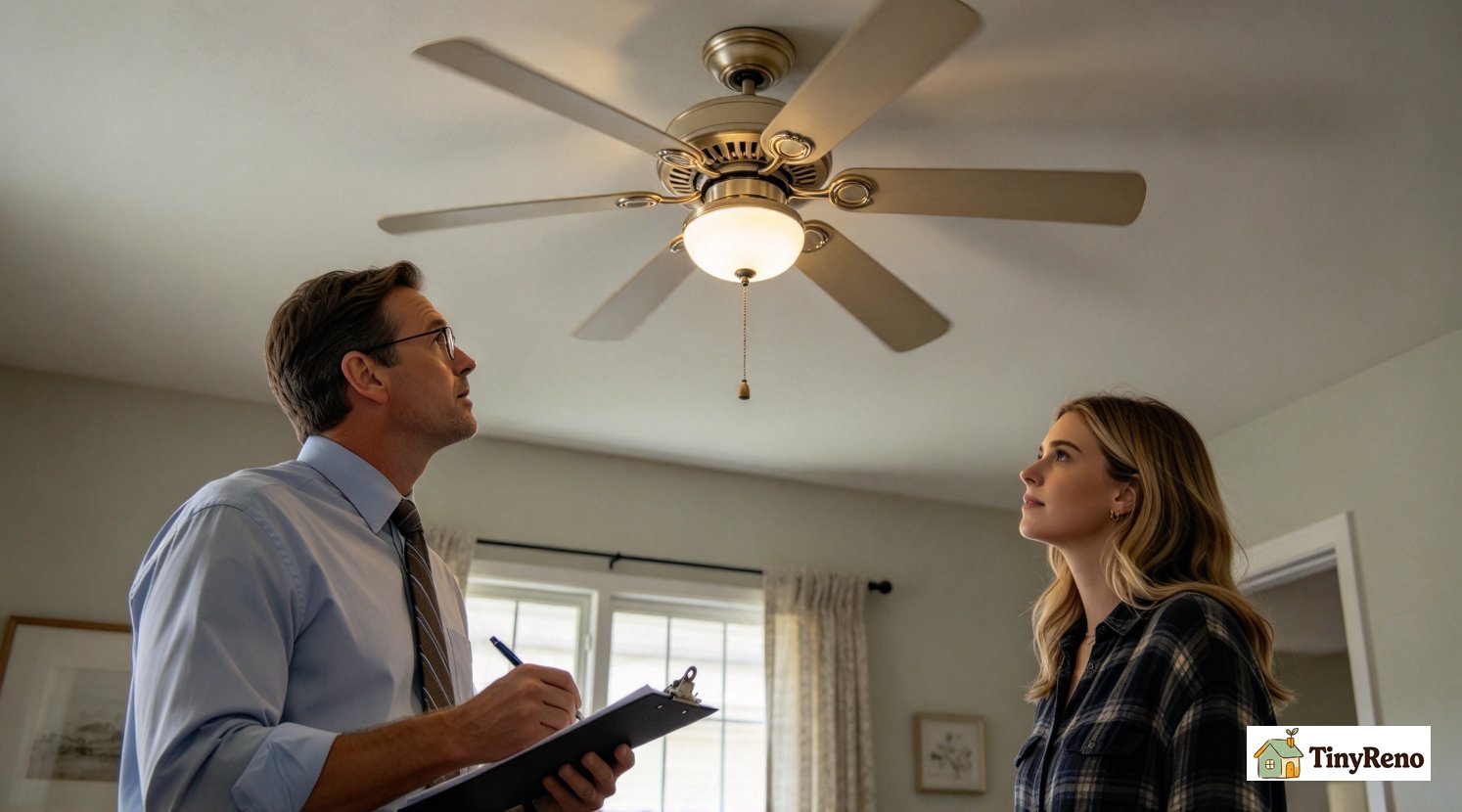
When I moved out the following summer, the inspection sheet noted the fan as “operational, original blades, minor wobble at speed,” and there was no charge. I have thought about that line more than the $140. Someone wrote down what was actually there instead of what was billed, and that mattered more than the money.
What I take from this is that fans fail, and the failure is usually written down in the electrician’s report before anyone decides whose fault it is. If a fan in your rental starts making a noise, record it on the day, report it in writing, and ask for the report rather than the bill. Those three things cost nothing and can be the difference between a $270 deduction and an inspection line that says “minor wobble at speed.”


Discussion (0)
Sign in to join the discussion