

A carpet cleaning charge on a deposit usually starts with one number on a move-out statement. Ray Ferrell found out that the number can be broken down, and that asking for the paperwork is often what changes it. He rented a two-bedroom apartment in Evansville in the spring of 2024 and moved out eleven months later. He vacuumed. He believes he vacuumed well. What he did not know, and what nobody tells a tenant, is that the carpet cleaning charge on a deposit is not about whether you cleaned. It is about which category of cleaning your landlord decided to buy, and that decision is entirely theirs, and it can swing the cost by three hundred dollars.
Ray's deduction sheet had one line against his deposit. Carpet cleaning, three hundred and twenty dollars. No breakdown, no receipt shown to him, no explanation of what had been cleaned. Every case that ends well turns on a document, and this one would as well, but only if somebody asked for it. His first instinct was to argue that he had cleaned, and that instinct was correct and also completely useless, because the landlord was not claiming he had failed to clean. The landlord was claiming the carpet required a professional deep clean, which is a different claim entirely.
The interesting thing about these disputes is that the tenant's own behaviour, for most of the tenancy, has almost no effect on the number at the end. Ray could have vacuumed twice a day and it would have made no difference to the three hundred and twenty dollars. What would have made a difference was a conversation he did not have in June. Here is how that conversation goes, and what the boundary actually is.
Where the Cost Boundary Sits
There are three tiers, and the tiers are priced very differently, and the tier your landlord buys is the single biggest determinant of what you pay.
The first tier is what a tenant does with a vacuum cleaner. This is ordinary and free to the tenant, and it covers most of what a carpet accumulates in a rental: dust, hair, tracked-in grit, and the general grey film that makes a carpet look tired. Many leases expect some level of vacuuming, though not all spell it out. If the carpet needs nothing beyond a vacuum, a landlord usually has no cleaning claim.
The second tier is what a landlord or a carpet cleaner calls a rental or basic clean, which is a machine clean with a detergent and some extraction. This is what most landlords put in a lease as the required state of the carpet at move-out. The relevant wording is usually some version of "carpeted floors must be professionally cleaned to a reasonable standard", and the ambiguity in that phrase is where disputes live.
The third tier is a deep clean, also called a restoration clean, which involves hot water extraction with high pressure, pre-treatment of traffic lanes, and sometimes steam cleaning and deodorising. It is a significantly more expensive service, typically two to three times the price of a basic clean, and it is the tier most landlords actually purchase for a property that has been tenanted. On a three-bedroom property it can run to three or four hundred dollars.
Ray's landlord bought the third tier, billed it at the third tier, and treated the whole amount as Ray's cost. Whether that was legitimate is the question, and it depends on three things: what the lease said, what the carpet actually looked like, and what the landlord could show.
Why Vacuuming Does Not Reduce the Charge
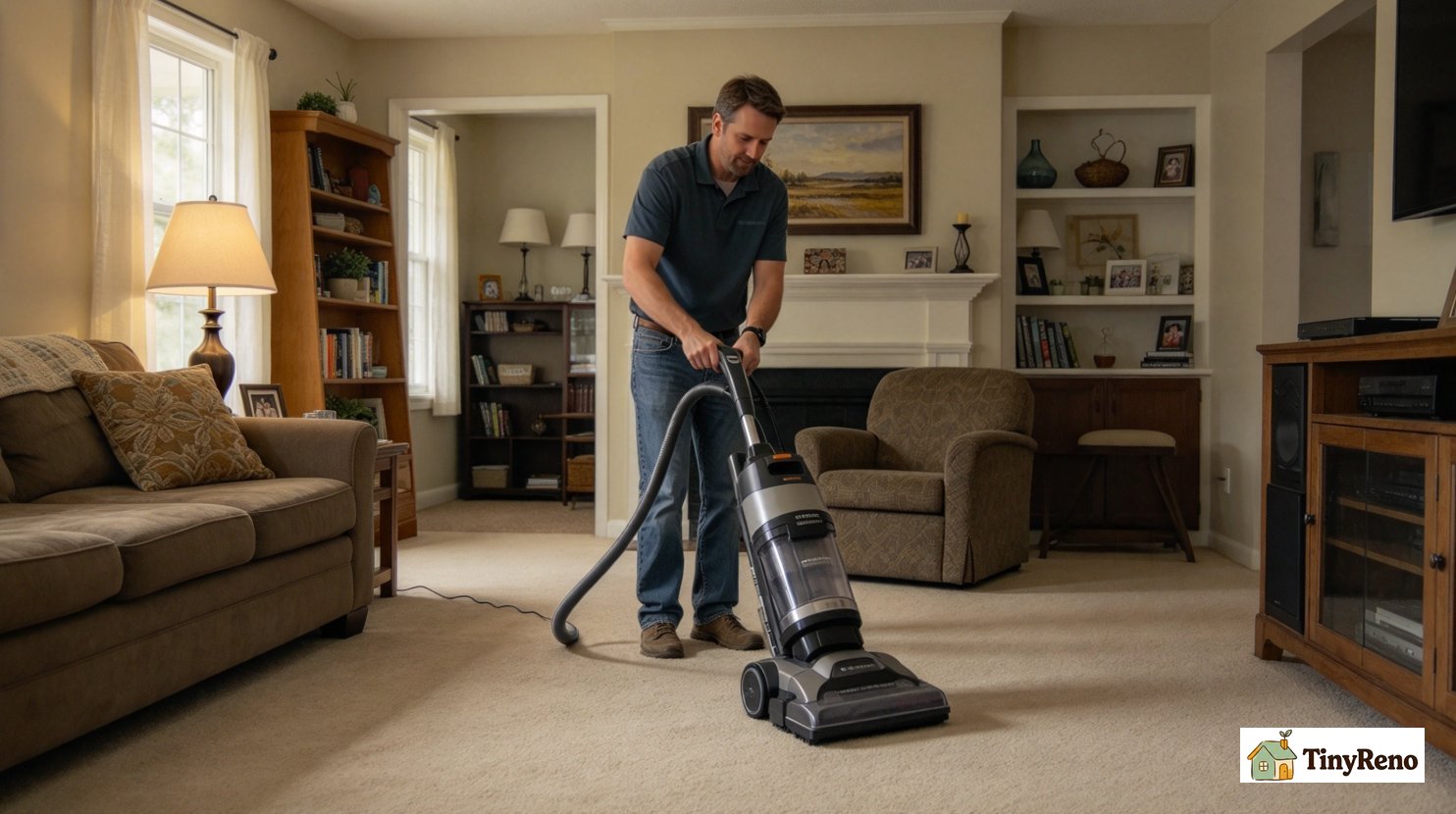
This is the part that catches people out and it is worth being blunt about. A landlord is not usually billing you for the dirt you left, in the sense of grime that a vacuum would have removed. They are billing you for the service they bought to restore the carpet to a condition they are satisfied with. Your vacuuming, over eleven months, is almost invisible in that calculation. It might reduce the bill by a small amount if the cleaner finds less to do, but it will not change the tier, and the tier is where the money is.
The uncomfortable implication is that cleaning more may not change the service tier the landlord chooses. It can affect how much work the cleaner finds, but it usually will not determine whether the landlord buys a basic clean or a deep clean. What you can affect is the documentation, the lease wording, and the timing, and all three matter before the inspection.
The first is the deposit itself. If you are getting a full deposit back for anything else, you can afford to let a carpet cleaning charge go and consider it the price of a hassle-free move-out. It is cheaper than small claims fees and lost weekends.
The second is the lease. Ray's lease said "all carpets must be professionally cleaned by the tenant at the tenant's expense prior to vacating". That sentence is the landlord's single strongest asset and it is also the one that is worth reading properly, because it decides whether the tier was the landlord's choice or yours.
The third is timing. A carpet cleaning charge quoted after a walkthrough can sometimes be negotiated down by agreeing to a lower tier of service, or by accepting the charge in exchange for a faster deposit release. Both are legitimate trades and both are worth asking about.
What Ray Did, and What It Cost Him
Ray's response to the deduction was to write a polite email disputing it, which is a reasonable first move and accomplished nothing, because a polite disagreement with an unitemised number is a request for the same number back.
Then he did the thing I would recommend to anyone in his position, which was to ask a question that could be answered yes or no. It is the single most useful move in any cleaning charge dispute and it takes one sentence to write. He asked the landlord for the invoice from the carpet cleaning company, with the date of service, the address of the unit, and the description of the service purchased. That single request turned the conversation into something manageable, because landlords routinely have that invoice and do not think to attach it.
The invoice arrived. It showed a deep restoration clean, three rooms plus a hallway, with a pre-treatment line item, at three hundred and twenty dollars. Ray could see two things immediately. The service was dated two days after his move-out, which was normal and did not help him. But the address on the invoice was for a different unit in the same building.
This is worth pausing on, because it is not an unusual discovery and it is not always a sign of anything sinister. Cleaning companies service several units in a building on the same day, invoices are frequently billed to a property manager with the unit number in a field rather than the address, and landlords sometimes hold the original invoice for the whole property rather than a per-unit one. So Ray did the right thing and he did not accuse anyone of anything. He asked, politely, whether the invoice could be reissued showing the unit number, and asked for the itemised breakdown of the service.
The reply came back with the breakdown. And the breakdown showed the answer to his question. The three hundred and twenty dollars covered four rooms. Ray's unit had three rooms and a hallway, and two of the four rooms cleaned were in another tenant's unit, not his. Stripping his actual area out of the invoice brought the charge to a hundred and ninety-five dollars.
Ray asked the landlord to reduce the deduction to the amount that actually corresponded to his unit. The landlord did, without much argument, and the final deduction was a hundred and ninety-five dollars for the carpet. Ray considers himself lucky. He had asked a narrow question about one field on one document and got a hundred and twenty-five dollars back, and it had taken two emails.
The Three Questions That Usually Get a Response
Ray’s email worked because it asked for documents instead of arguing. If you are in the same position, these three questions are where the leverage usually is. Ask them in one message rather than one at a time.
Ask for the invoice. Not for a reason, not aggressively, just the invoice or receipt showing the service, the date and the address. Landlords have it. The question costs you nothing and its absence is itself informative, because if there is no invoice then the number was estimated rather than established, and you are entitled to ask about an estimate.
Ask for the service description. "Deep restoration clean with pre-treatment" and "basic rental clean with extraction" are different products with different prices, and a landlord who has paid for the expensive one and passes on the whole cost without addressing the difference is making a decision you should understand. Ask whether the carpet required that level of service, and what specifically about the condition of the carpet required it.
Ask for the basis of the allocation. This is the question Ray's case turned on and most tenants never ask it. If a cleaning covers several units, what portion corresponds to yours? If the carpet is still in a condition that a landlord's own inspection sheet, or your own photographs, show was clean at move-out, then the charge is a decision about the standard rather than a response to damage.
Send all three in a short email, keep it factual, and include a specific proposal. Ray proposed a figure. Proposing a number, rather than refusing a charge, is far more effective, because a refusal asks the landlord to do the work and a proposal asks them only to choose. He wrote something close to: "The invoice covers four units. Based on the areas served, my share is around one hundred and ninety-five dollars. I am happy to pay that directly rather than have it taken from my deposit, in exchange for the deposit being released in full within a week." He got both.
How to Tell Whether Your Carpet Actually Needed It
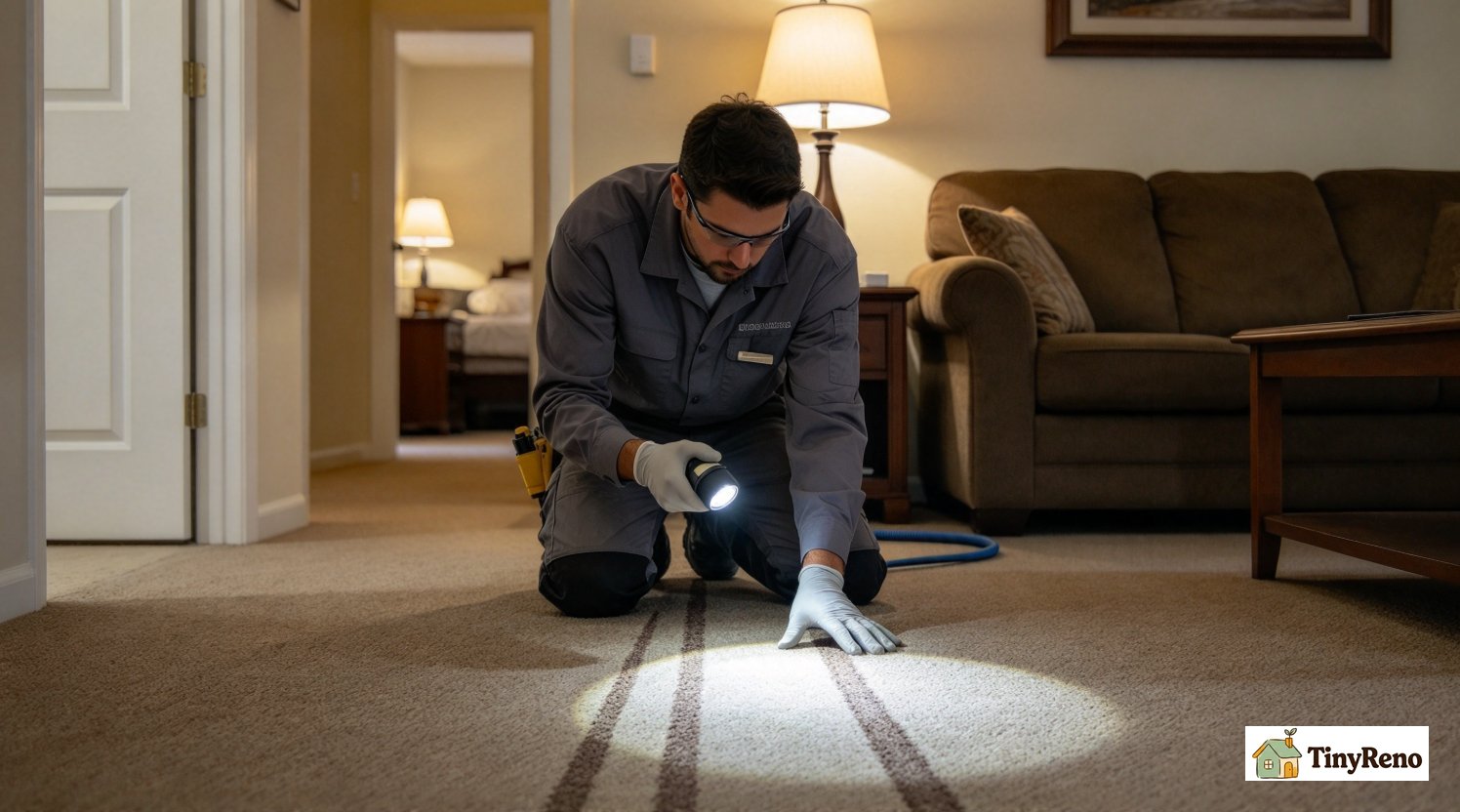
There is a version of this dispute where the landlord is right, and it is worth being able to recognise it. If the carpet has a genuine grease spot, a wine stain, a pet urine mark, or a traffic lane worn down to the backing, then a deep clean is a reasonable response and the cost is more defensible. Ordinary wear is not the same as a spot, and a landlord cannot invoice you for the general age of the carpet.
The most useful thing you can do about this is photograph the carpet yourself during the tenancy, in good light, in more than one room, and again in the last week. Pay attention to the traffic lanes, under the sofa and bed, in front of the door, and behind where the bins were. If you move furniture for any reason, photograph the carpet underneath it, because that is the cleanest area in the room and it proves what the rest should have looked like.
Also do a check you can do in ninety seconds. Run a clean white cloth across the carpet in a few places. If the cloth comes away noticeably grey or discoloured, there is embedded dirt. If it comes away white or near-white, the carpet is not carrying the kind of soil that a deep clean addresses. This is not a scientific test, but it is a fast one, and it is useful because it tells you whether you are arguing about a cleaning you should pay for or one you should question.

What I Would Do Differently
I would read the carpet clause before I signed anything, and I would photograph the carpet on day one. Ray had neither, and he was negotiating from a weak position the entire time.
I would also find out who the landlord's cleaning company is and how much they charge the landlord, because the landlord's cost and your cost are often different numbers and the gap is the most useful fact in the conversation. If a landlord bills you three hundred and twenty dollars and their invoice from the same company is two hundred and ten, you have a very short question to ask.
I would offer to pay a reasonable charge for the right service rather than arguing about the wrong one. If the carpet genuinely needed a basic clean at $180, and I could establish that, I would pay the $180 and take my deposit. Ray got $125 back partly because he was willing to agree on a number. A tenant who will agree on a number is negotiating. A tenant who refuses to pay anything may turn a solvable dispute into a personal one.
Where Ray's Deposit Ended Up
Ray got back the remainder of his deposit in a single transfer eleven days after his final email, and the carpet cleaning was the only line on the statement. He moved into a smaller place with carpet he owned, and he now owns a handheld vacuum he uses obsessively, which he points out has not once reduced a cleaning charge and which he describes as something he does for his own satisfaction rather than for any financial reason.
That is roughly where this lands. Ray’s carpet was not exceptionally dirty, and his landlord was not necessarily being dishonest. The landlord had bought an expensive service and passed the whole bill on. What broke the number apart was a document nobody had asked to see. The $320 was less about the carpet than about a default charge. Defaults often come apart when you ask for the paperwork behind them.
If you are facing this, most of the fight is in one attachment. Ask for the invoice, the service description, and how the cost was divided among units. It takes five minutes to write, and it is the part that most reliably gets a response.


Discussion (0)
Sign in to join the discussion