

Picture hanging holes are not really a topic most landlords think about, and that is exactly why they turn into an argument at the end of a lease. Two small holes from two picture frames, the kind almost every renter leaves behind, can turn into a $180 deduction because somebody priced the repair wrong. I know because that somebody was me. I am not a landlord and I am not a professional. I am the renter who spent a March weekend learning what a drywall patch actually costs, and who then had to argue about the number afterwards. Here is what I found, written out so that the next person does not have to learn it the same way.
The short version is this: the size of the hole decides everything. It decides which repair method a landlord will use, and it decides the price. A hole that a picture hook made is a fill-and-sand job costing almost nothing in materials and about fifteen minutes of labour. A hole that a shelf bracket, a curtain rod anchor, or a heavy frame made is a drywall patch, and drywall work is priced in a way that turns a five-dollar repair into a two-hundred-dollar line item. The measurement you can take in five seconds on your last day decides which category you are in.
Does Every Picture Hook Hole Get Deducted?
No, and a landlord who tells you otherwise may be overreaching. Many landlords accept a couple of small picture hanging holes in a bedroom wall without charging, because those holes are normal use. Some leases restrict nails or require patching, but many allow small holes. Read your lease before assuming either way. What landlords do charge for is damage that goes beyond the normal use of the room: gouges, filled-in holes they did not ask for, adhesive residue, and holes big enough to need a piece of drywall rather than a dab of filler.
The distinction that matters in practice is between a hole you made and left, and a hole you made and then tried to hide. The first is a maintenance item, in most landlords' minds, and it is one they will either absorb or treat as trivial. The second is a problem, because a badly patched hole is more visible than the hole was, and it usually costs more to fix than leaving the hole alone would have. A hole made by something that was never meant to be on the wall does get charged.
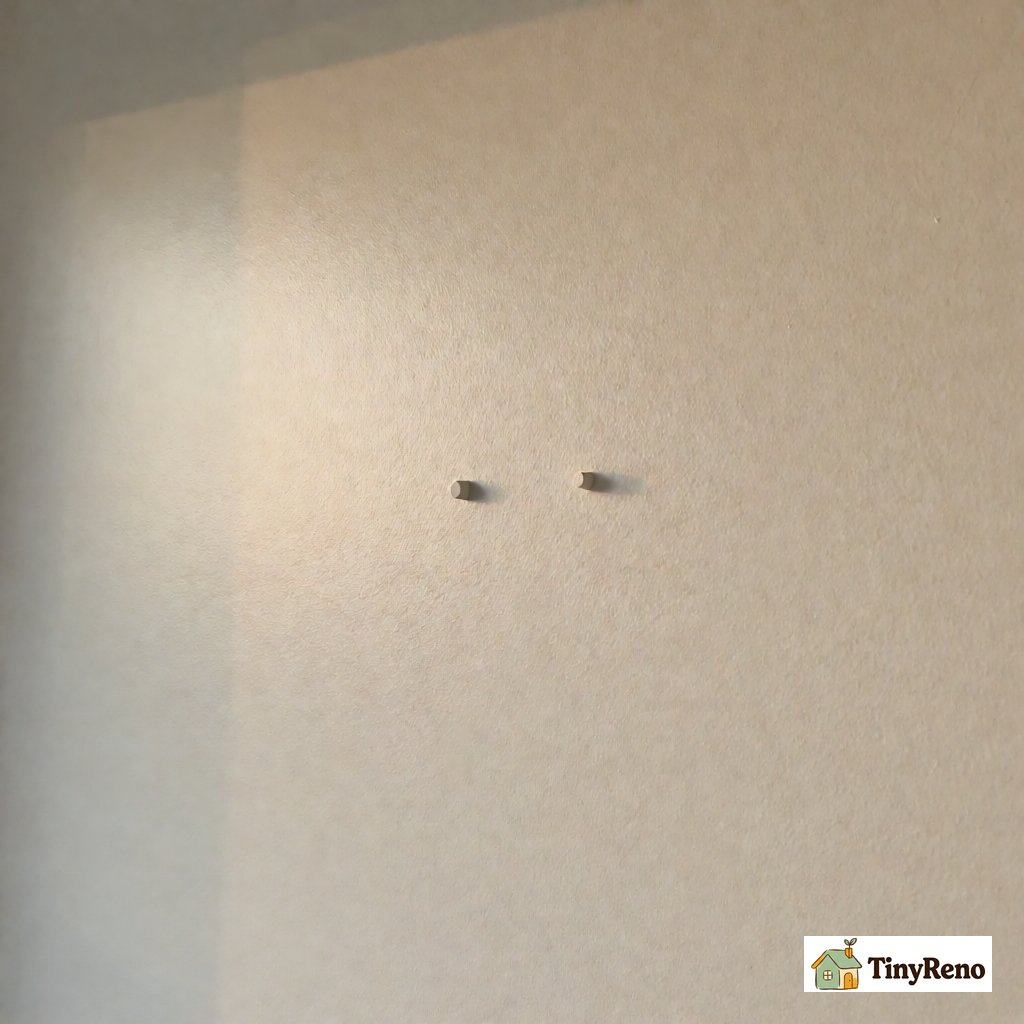
How Do I Fill a Small Hole Without Making It Worse?
You need a tub of lightweight setting compound, a putty knife, a sanding block, and a damp cloth. You do not need the expensive stuff and you certainly do not need to paint over it. Clean the loose edges out of the hole first, because compound does not bond to a crumbling edge and a hole with a crumb in it will fail again in a month. Press the compound in with the knife, slightly proud of the wall rather than level with it, let it dry, then sand it down flush. A damp cloth with a little soap on it cleans the area before you start, and it keeps sanding dust out of the air, which matters more than it sounds.
Stop there before you decide whether to paint. A filled hole that is not painted can be more visible than the original hole, because the compound may not match the wall color. Painting a patch can also be visible if the paint does not match perfectly. If the hole is tiny and the compound blends in, leave it unpainted. If it is visible, either carefully match the paint or disclose the hole instead of leaving an obvious patch. If the room is going to be repainted anyway, leave the fill for the painter.
Timing matters too. If you fill a hole in the last two days of a tenancy, it may still be drying or visibly sanded when the landlord inspects, and that can look like an attempt to conceal damage. If you fill a hole earlier, tell the landlord in writing what you filled and when. If you are in the last week, disclosure is often safer than a rushed patch. Disclosure is a much cheaper position than a patch that looks like an attempt to hide something.
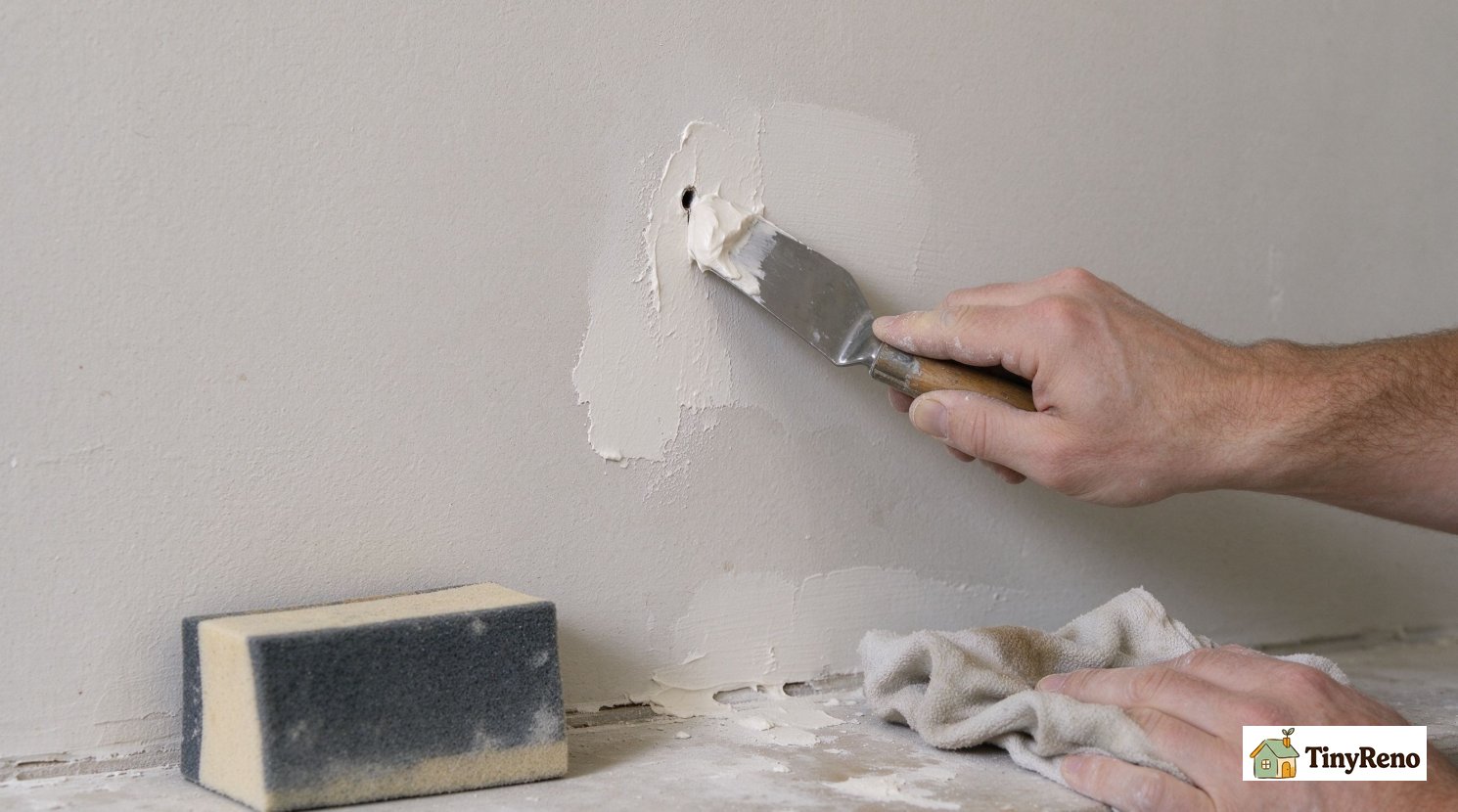
What Size Hole Crosses the Line?
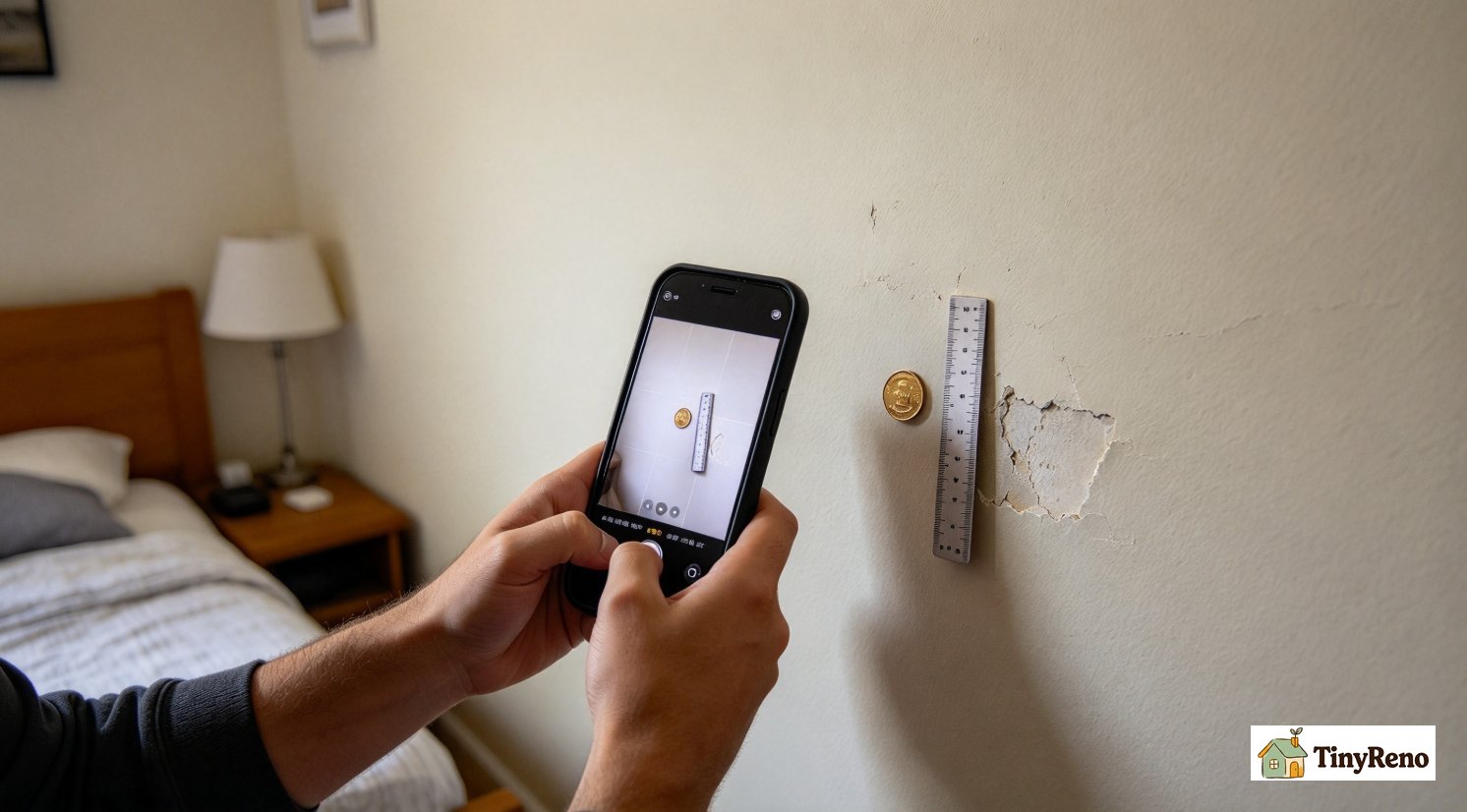
Here is where the measurement earns its place, and where I would put a ruler in the frame of a photograph. A picture hook for a standard frame leaves a hole somewhere between one and three millimetres across. A nail used for a light picture leaves about two millimetres. A picture-hanging strip, the kind with an adhesive hook per frame, can pull out a much larger chunk of drywall behind the paint, and that is the one to watch for. A shelf bracket screwed into a stud leaves a larger screw hole. Whether the landlord charges for it depends on the lease and the size of the hole. Do not assume a stud hole is automatically not damage; photograph it and mention it at move-out.
Get the ruler out before you move anything, and measure the picture hanging holes on the wall rather than the frame. The frame size tells you nothing about what is behind it. Two frames the same size can have left two completely different holes in the wall, because what went into the wall was a hook and not the frame.
Small holes can usually be filled with compound. Around 10 millimetres and above, the repair may need a drywall patch: cutting a piece of plasterboard to fit, taping the seams, sanding, and retexturing. The exact threshold depends on the hole and the landlord’s standard. That is a job that takes an experienced person a couple of hours and that a landlord will price accordingly. The difference between a three-millimetre hole and a ten-millimetre hole is the difference between a twenty-dollar line item and a two-hundred-dollar one.
Measure across the widest part of the hole, not the deepest part. A hole that gouged sideways into the drywall can look deep and narrow and still be trivial, and a hole that is wide but shallow is the expensive kind. If the hole is in a corner or near an edge, measure the piece that is actually missing, because a corner repair is a different job again and prices differently.
What Does a Landlord Actually Deduct?
Three things, and they are worth separating. If your landlord itemises the deduction by repair method rather than by a flat fee, that is already more than most do, and it is worth noticing. First, the repair labour, which is usually the largest part and is priced per hole or per hour. Second, the materials, which for a small fill is a few dollars and for a drywall patch is still only the cost of a sheet and some tape and compound, usually under twenty. Third, painting, which is the item that turns an ordinary deduction into a large one, because a patched area has to be painted, and matching the paint on a wall you did not paint yourself is a small job with a real chance of being visibly different.
What makes the number balloon is a landlord who decides to repaint a whole wall, or a whole room, because patching was not worth doing. That is a legitimate commercial decision when the wall is genuinely marked all over, and it is not legitimate when the wall has two picture hanging holes in it. The lever you have here is simple: if the deduction is for a full repaint of a wall that has two small holes in it, the deduction is not proportionate to the damage, and that is worth saying in a reply.
My own deduction was $180, itemized as drywall repair, paint, and labor, for two holes about four millimetres across. A reasonable figure for those two holes was closer to $40. I did not have the photograph that would have made that argument obvious, which is the main lesson of this article.
Should I Fill Holes at All, or Just Disclose Them?
Disclosure, in most cases, and it is not the obvious advice so it is worth explaining. A disclosed hole is a closed question and an undocumented one is an open argument, and most of these disputes are fought over the second thing rather than the first. Claims about picture hanging holes that arrive with a photograph and a measurement tend to get settled more quickly than claims that arrive with only a total. Filing a hole you made in good faith protects you from the accusation of concealment, and it protects the landlord from a surprise. Filling a hole you made is optional, and it only helps if you do it early, if you do it properly, and if you do not paint over it. The three conditions are rarely all met in the last week of a tenancy, and when they are not, a disclosed hole is in a stronger position than a rushed patch.
There is one case where filling is clearly better, and that is when you want the deposit back and would rather not negotiate at all. A landlord with a filled hole and a short note is in a hurry to close and move on. A landlord with an undocumented hole has a reason to keep the conversation open. If the relationship is already strained, filling is a peace offering. If it is fine, disclosing costs you very little.
The disclosure itself should be short and should include the measurement. A single sentence plus a photograph per hole is enough. Something like "There are two picture hanging holes in the bedroom wall, each about four millimetres, with photographs attached. I have left them as they are because they are within normal use and I did not want to risk making them more visible." That last clause matters, because it shows you thought about it, and it gives the landlord an easy reason to agree with you.
What If the Landlord's Number Seems Too High?
Ask for the itemisation in writing, and ask for two specific things: the evidence behind the figure and the calculation behind it. Claims that come with a broken-down total often end in agreement. Claims that come as a single number often do not. The evidence is the receipt or invoice, the contractor quote, or the name of the person who did the work. The calculation is what you are really after, because it lets you respond to the method rather than the number. A landlord who says the repair cost two hundred dollars and cannot tell you what that two hundred dollars consists of has asserted a figure rather than demonstrated one, and it is entirely reasonable to ask how it was arrived at.
Then make a specific counter-offer rather than a general objection. "Two picture hanging holes at four millimetres each. I am happy to pay for filler and paint, which I would put at forty to sixty dollars, or I can have a contractor do it and send you the invoice if you would prefer it done to your standard." A counter-offer that includes a way to do it their way is much harder to refuse than a refusal.
Ask for the measurement to be taken from your photographs. If you took the picture at the start of the tenancy and again at the end, and the same wall in the same light, then the two images settle whether the hole was there before you moved in. Most disputes of this kind are not about the price at all. They are about whether the damage existed, and photographs settle that in a way that a conversation cannot.
And if the number still will not move, know where you stand before deciding anything. A deposit deduction of this size is a small claims matter rather than a lawsuit, and you can handle small claims yourself. Read your lease for a clause about how disputes must be raised, because some require written notice within a set window, and missing that window can cost you the argument even when you are right.
What I Would Do Differently
I would take one photograph of every wall on the day I moved in, with a coin or a ruler in the frame, and I would do the same on the day I moved out. That single habit would have saved me a hundred and forty dollars and a genuinely bad month. It would also have made every other move-out question I have ever had much easier, because the same photographs answer the paint question, the carpet question, and the furniture question as well.
I would have measured the holes instead of assuming they were small. They were small. That assumption cost me nothing, but the neighbour who moved out the week after me left four holes from curtain rod brackets and paid four times what I did. Measuring would have saved her a lot of money and would have cost both of us about a minute.
I would have sent the disclosure email on the day I handed the keys back, with the photographs attached, instead of waiting to see what the deduction said. The email takes four minutes to write. The argument that followed took six weeks and involved three emails, a phone call, and a threat of small claims, which I did not carry out, because by the time I worked out that I was probably right, the money had gone and the only thing left was the principle.
Where Those Two Holes Are Now
They are filled. The landlord's painter did the work, and the bedroom wall is now a slightly different white from the other three, in a way you would notice only if you went looking. The tenant who lives there now has two nail holes in the same wall for two different pictures, which means the wall I damaged is doing the job it was always going to do.
What I took from the whole thing is a cheap tool and a habit. A small ruler, kept in a drawer with the tape measure and the screwdriver, is about four dollars and it turns an argument into a measurement. The habit is about ninety seconds on the first day of a lease, walking every room and putting a photograph in the folder. I do it now for every room of every place, and it has never once made me feel clever. It has saved me money twice, and the second time it saved me more than the first, which I choose to find reassuring rather than sad.
Two holes in a wall are a minor thing to leave behind, but they are a common reason a deposit does not come back in full. Most of the problem comes down to a measurement and a photograph nobody took on the first day. If you take one thing from this, take the photograph on day one. Most of the rest is dealing with a problem that a phone camera could have prevented.


Discussion (0)
Sign in to join the discussion