

“Appliance wear and tear” is not a phrase a landlord usually uses when sending a bill. The fridge in my last apartment was already old when I moved in. I photographed the serial number plate on the day I arrived and looked it up that night. It was a nine-year-old unit. Twenty-six months later there was a rust-coloured bloom on the inside of the door gasket, the ice maker had stopped making ice entirely, and my landlord sent me a deduction letter for four hundred and twelve dollars that included a line reading "appliance corrosion, replacement required."
Nothing I did caused that rust. But proving it took three weeks, and that is the part nobody warns you about. The argument is rarely about whether you are at fault. It is usually about whether anyone can establish what the appliance was worth before your name was on the lease.
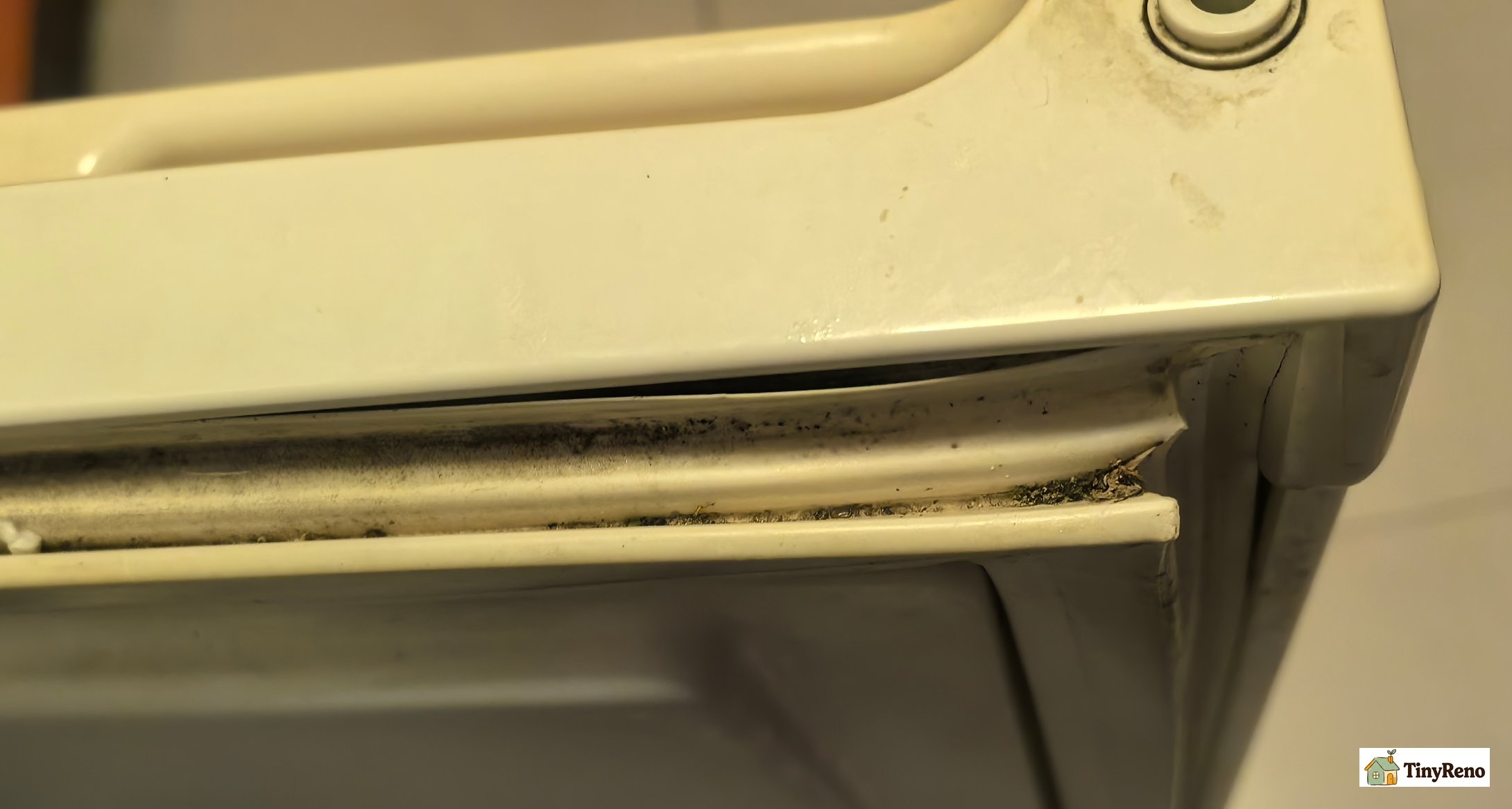
The Fridge That Was Old on Day One
I moved into a one-bedroom on Maple Street in Toledo in the second week of March. The landlord, a man named Garrett who owned about a dozen units, had furnished the kitchen himself at some point in the previous decade and had not replaced any of it. The refrigerator was a big white unit with a freezer in the top half and a small badge on the door that I read as a nine-year-old model. I later confirmed the age from the serial number stamped inside the fresh food compartment.
I noticed three things in the first week and wrote none of them down. The gasket was already stiff at the bottom right corner. The ice maker made a noise like a coin dropping every hour or so and produced ice only if I turned the dial by hand. And there was a faint brownish discoloration on the inside of the rear panel near the water inlet, which I assumed was a stain and which was in fact the first sign of the corrosion that would later be billed to me.
What I Sent Him, and What He Sent Back
My first reply was too emotional. I wrote three paragraphs explaining how unfair it was, attached a photo of the rust, and asked him to reconsider. It came back in a single line: "The rust was not there when you moved in, according to my inspection." I had no move-in photos of the interior panel, because in 2019 nobody photographs the inside of a fridge, and because I had assumed a landlord's inspection sheet was an objective record rather than one party's assertion. It was not. It was a form with a date and some ticks on it, and it did not mention the discoloration because nobody had looked.
That sentence should have told me immediately that I was losing. I had no move-in photos of the interior panel, because in 2019 nobody photographs the inside of a fridge, and because I had assumed that a landlord's inspection sheet was an objective record rather than one party's assertion. It was not an objective record. It was a form with a date and some ticks on it, filled in by whoever had walked through the unit, and it did not mention the discoloration because nobody had looked.
So I went back to basics. I wrote to Garrett asking a short list of specific questions rather than making an argument, and this is the part I would tell anyone in my position to do: I never once told him the rust was not my fault. I asked him what evidence existed. What is the model's age, and does he have documentation of when the refrigerator was purchased or last replaced? Did his inspection sheet record any discoloration on the interior rear panel? If not, what is he relying on to date the corrosion? What is the source of the four hundred and twelve dollar figure, and does it include the ice maker separately? Is he seeking repair or replacement, and what is the repair quote?
He answered the third and fourth questions and ignored the first two. The ice maker was listed as a separate $40 line, so the $412 was a replacement figure for the whole unit rather than a repair figure for the rust. His answer on evidence was a sentence I have quoted since: “It corroded during your tenancy, so it is a tenant responsibility.” That is not a reason. It assumes the conclusion.
What actually moved it was a document from a source I would never have thought to check. The refrigerator had a manufacturer service sticker on the back, and the landlord had been photographing the appliances for his listings for a decade. He had a photo of the same refrigerator in a different unit, in a photograph of the same model in a completely different kitchen, dated the year before I moved in, and in that photograph the same discoloration was visible on the same panel. He had it in his own files, and it made his argument for him.
He reduced the deduction to $138, the amount of a corrosion repair quote from an appliance repair company I found and sent him, not the cost of a new refrigerator. He withdrew the ice maker line entirely, on the grounds that it had stopped working the week I moved in and had been like that when he showed me the unit. This is what a well-run file looks like when it goes well: not a win on principle, but a number that came from a repair quote instead of a price tag.
The Line Between Deterioration and Damage
The distinction is simple to state and hard to apply. Deterioration is what happens to an appliance because of time, age, and normal use. Damage is what happens because a specific person did something. A gasket that perishes, a compressor that fails, a heating element that burns out, rust on a panel in a permanently damp environment, a freezer that stops cycling because the coils have a quarter-inch of frost on them, a refrigerator that no longer holds temperature because the seal no longer holds: all deterioration.
Damage, by contrast, has a mechanism you can describe. A shelf you overloaded until the plastic snapped. A door seal you let go of so many times the magnetic strip lost its grip, and then you ignored the drawer that no longer closed. A unit you transported on its side in a pickup without letting it stand upright first, which is how you destroy the compressor. A freezer you ran for hours with the door open while moving boxes. A dent from a shopping cart driven into the door panel. Scratches from stacking boxes on top of a unit never designed to carry a load.
The service life question does the most work and is the one tenants skip. A refrigerator is generally expected to last ten to fifteen years depending on the design, and a lot of the appliances in rental stock are well past that when a tenant arrives. That does not mean they are all failing. It means that when something on a twelve-year-old unit fails, the landlord is not entitled to assume your two years caused it. A tenant who quotes a service life in their reply is doing something the landlord’s letter almost never does, and it often changes the conversation.
The Three Repairs That Are Actually Your Fault
I am not going to tell you that appliances in rentals are always the landlord's problem, because that is not true and it is not good advice. There are three categories of appliance problem in a rental that are mine, and I have paid for all three.
The first is overloading. A refrigerator shelf has a weight limit, and the limit is not “whatever fits.” A glass shelf that cracks under a load of bottles does not crack because the shelf is old. It cracks because I stacked two gallons of milk on it. A freezer that will not hold temperature because it was packed solid and air could not circulate is my problem, and so is the ice dam that builds up in the evaporator. It is cheap to fix if you catch it early and expensive if you do not.
The second is neglect of a known fault. If the ice maker stops making ice in month one and I never report it, and by month twenty it has seized, I have a problem, because I had notice and did not act. I had exactly this with a garbage disposal that started humming instead of spinning. I left it for two months because I disliked the sound. It eventually jammed and the motor burned, and the landlord was right to charge me for the repair, and I paid it without arguing, which is the correct outcome and a rare and welcome one.
The third is damage from moving or misuse. Dents, scratches, a door left off its hinge, an appliance you dropped a cast-iron pan on, a microwave you ran empty for eleven minutes because you walked away while making tea. These are yours. There is no wear-and-tear argument available, and trying to make one will cost you credibility on the parts of the claim you could otherwise win.
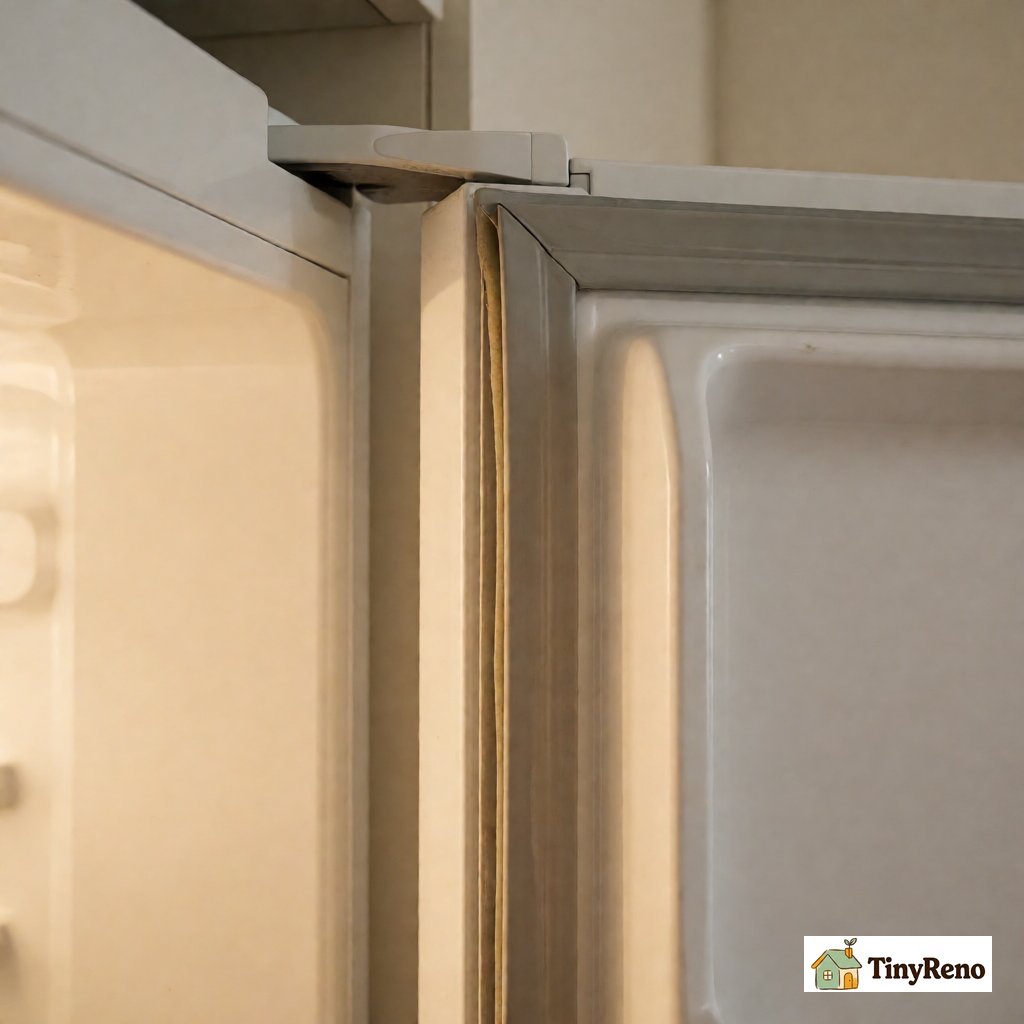
What to Photograph, and When
The specific reason my rust argument failed is that I photographed the serial number and not the condition. The serial number proved the age, which was useful, but age alone did not disprove that the corrosion formed during my tenancy, and the burden stayed with me. What I needed was a photo of that interior panel in March 2019.
So the photo list for an appliance, taken in the first forty-eight hours, is longer than it sounds. The serial number and model plate, close enough to read, because age is a fact you can establish. The front and back of the unit as a whole. The interior of the fresh food compartment, including the rear panel where corrosion starts. The door gasket, pulled back so the foam seal is visible, at all four corners, because hardening seals are the most common thing I see fail. The freezer compartment and its walls. The ice maker, if there is one. Any scuff, dent, or mark anywhere, including the ones that look trivial, because the landlord will find them and you will not.
Take those photos on your phone, in the same session, and send them to the landlord the same day with one sentence. I now use a template that I keep in my notes app, and it has been copied and pasted into more emails than I would like to admit: "Hi, moved in today, photos of the fridge attached including the serial plate and the interior. There is existing discoloration on the rear panel and the gasket is already stiff at the bottom right. Happy for anything else you need photographed."
Repeat the photos at the end of the tenancy. Every point, same angle, same lighting if you can manage it, and send them the same way. The end-of-tenancy set is what you use if a deduction arrives, and the difference between a claim you can fight and a claim you can only pay is very often whether you took eleven minutes in the last forty-eight hours of the lease.
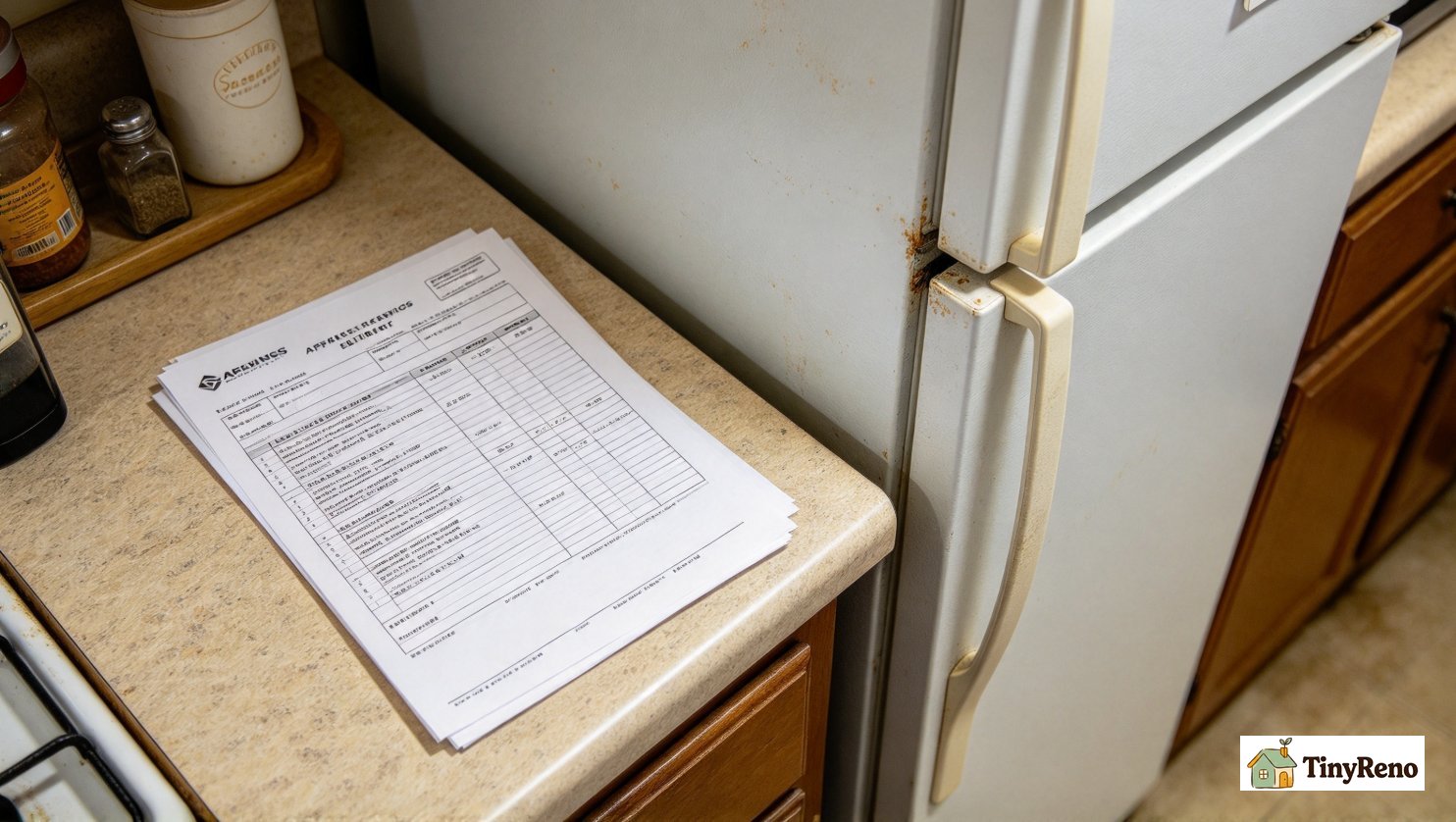
If the Letter Has Already Arrived
Do the same thing I did badly, which is to answer with questions rather than with feelings. Every tenant I have watched succeed did it the same way, and every one I have watched fail started with a paragraph about how unfair it was.
For each line, ask the three questions. Did this exist when the tenancy began, and what evidence establishes that? What is the mechanism by which it happened, and whose action caused it? Is the figure a repair quote or a replacement price, and what is the source of the number? Ask for the repair quote rather than the replacement price, because repair is what the actual damage costs and replacement is what a new unit costs, and the difference is often the whole dispute. Ask for the appliance's service history if it exists, and ask for the service sticker photo you may find in their own files, which is how my own case turned.
Then make a specific offer, with the reasoning in one sentence, and include a date. An offer that says "I am willing to pay a reasonable amount for the corrosion repair, roughly the quoted figure, and I would like this resolved before the deposit is returned" is a sentence a landlord can say yes to. A sentence that says the charge is unfair and you will not be paying it is a sentence that requires a hearing, and hearings cost more than corrosion repairs.
And know when to stop. I paid for the garbage disposal motor because I had ignored it for two months and I knew I was wrong. I negotiated the fridge from four hundred and twelve dollars down to one hundred and thirty-eight because I had a document proving the discoloration predated me. Both were right calls, and they looked nothing alike from the outside. One involved paying, the other involved winning, and the difference was entirely about whether the fault had been visible and whether I had done anything about it.
Where That Fridge Ended Up
I never saw that refrigerator again after I moved out, and I have no idea who lives with it now. Garrett sold the unit to the tenant who came after me, the deduction came out of that tenant's deposit for something unrelated, and the rust on the interior rear panel of a nine-year-old refrigerator in Toledo is presumably still there, growing very slowly, doing exactly what it was always going to do.
What I kept is the photograph of the serial plate, and the eleven-minute habit it taught me, and a rule that has saved me a great deal of money since. Every appliance I have rented since 2019 has been photographed on day one and photographed again on the last day, and I have never once paid a corrosion deduction. The last fridge I rented was eight years old when I arrived and it is eight years and two months old now, and it still works, and the man I rent from has never questioned a single appliance charge because there was never one to question.
The photograph of the other refrigerator, the one with the rust, is still in that folder. It is a picture of a number stamped on the inside of a door, taken by a person who had no idea yet what she would need to prove three weeks later.


Discussion (0)
Sign in to join the discussion