

Whether you pay for a landlord's broken furniture is not really about who broke the chair. Eleven years ago I broke one that I did not own, and I paid for it twice. The first payment was the two hundred dollars the landlord took out of my deposit, which I deserved, because I had genuinely broken it. The second payment was a hundred and forty dollars I still owe, because the landlord also replaced the chair, and nobody told me the chair had been replaced, so I bought one too.
I have thought about that chair more in the last year than in the previous decade, because I have now been on both sides of the argument, and the mechanics of it are stranger than either side admits. The question is not really whether you are liable. That depends on the chair and on what it looked like before you moved in. The question that decides your deposit is whether you can prove what the chair looked like before you touched it, and almost nobody photographs a chair.
The Chair, and the Month I Misread It
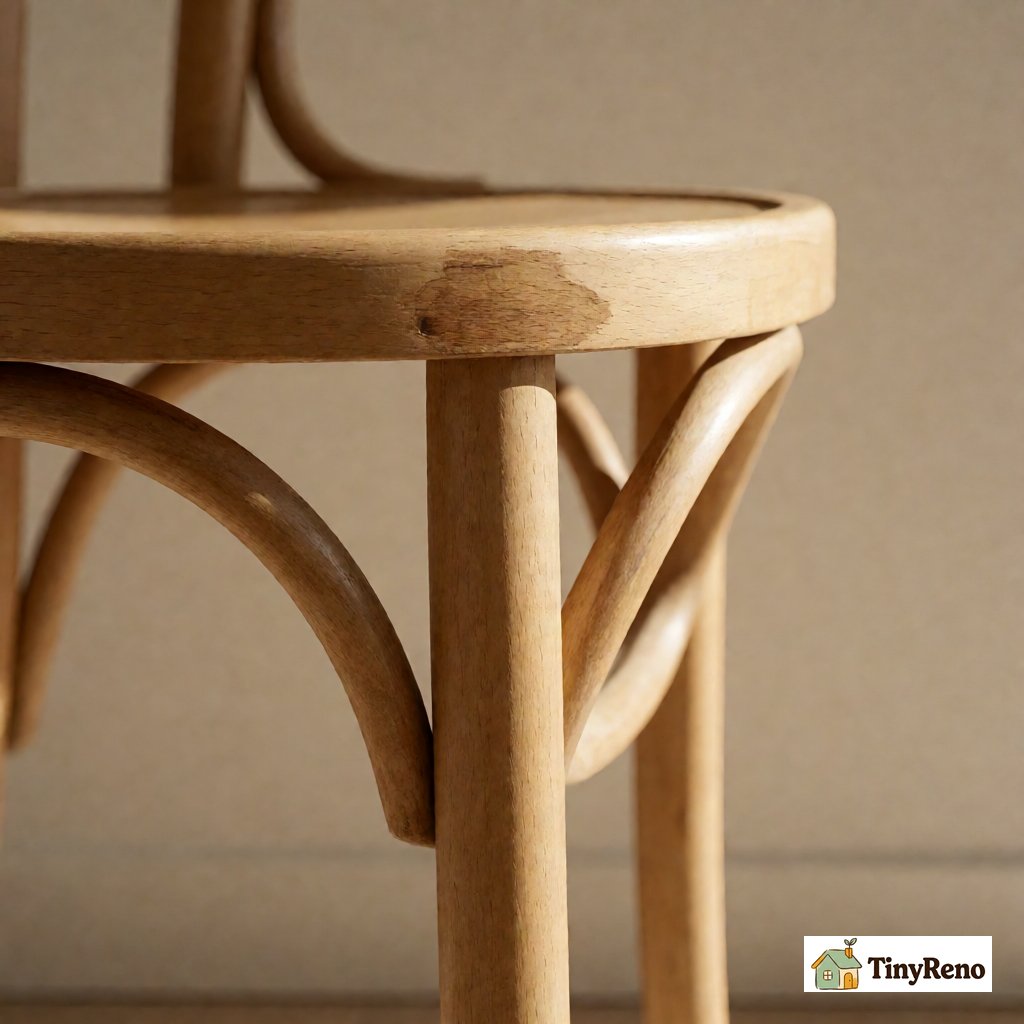
It was a bentwood kitchen chair, one of four, part of the landlord's own furniture in the house he had owned since 1994, and the way I understood it at twenty-four was simply that if I broke it, I paid for it without argument. I had a cast-iron pan and a temperamental radiator, and I had a habit of standing on the chair to reach the top kitchen shelf because the step ladder belonged to my downstairs neighbour and I did not want to be the sort of person who borrowed one without asking.
The chair did not collapse. It tilted, one rear leg came slightly out of its socket joint, and by the time I noticed, the frame had a visible wobble. I did not report it. I tightened the joint with a screwdriver, and the chair sat level again for another four months. Then in the last week of my tenancy I moved a heavy box by holding the chair back as a brace, and the joint let go and the back leg split along the grain.
What I did not know at the time was the value of that chair. It was not an antique. It was a bentwood chair from a factory in the 1970s, and a new one from the same manufacturer cost about a hundred and forty dollars. His move-out inspection sheet listed the chair as "broken, splitting, replacement required" at two hundred dollars, and that was the number that came out of my eleven-hundred-dollar deposit. I did not fight it, because I had broken it, and the argument felt like it would be humiliating.
The humiliation was the actual cost. What I lost was the belief that a landlord's invoice is an estimate of what happened. It was not. It was a number he had decided was the value of his property, and my job had been to either accept it or prove it wrong, and I had shown up with nothing.
What I Learned Watching My Own Landlord Do It to Somebody Else
Eleven years later I became the landlord, which I mention because it turned out to be the most useful education of my life, and because I do not think many renters get to see the other side from the inside.
I had a two-bedroom in a building I bought, furnished with secondhand stuff, mostly whatever was in my parents' garage. There was a dining table, six mismatched chairs, and a couch with a permanent dent. When tenants moved in, I made what I thought was a generous decision: the furniture was included and I would not charge for ordinary use. I said it because I did not want to be the landlord who itemises a coffee ring on a table in a one-bedroom, and also, if I am honest, because I did not want to be the landlord who has to argue about a coffee ring.
Then a tenant sat on the arm of the couch, and the arm came off at the seam, and it was not repairable. And I did what landlords do: I photographed it, I got a quote, and I sent the deduction letter.
The quote was for four hundred and fifty dollars, the cost of a new couch, and my reasoning was that the couch was ruined and therefore I should be made whole. But my tenant wrote back asking a question I had not considered, which was: what did this couch look like before? I sent her the move-in photo, and the answer was that the arm was already sagging, the fabric was already faded on the left side, and the seam already had a gap about two inches long. She was right that my number was about a new couch, and wrong about everything else, and the two things were not separable.
We settled at ninety dollars. My replacement cost for the arm reattach was thirty dollars from an upholsterer, plus the seam reinforcement, and her deposit was a thousand. She paid ninety, I did not re-key the place, and we both moved on. I wrote the check without anger, and I learned something that has shaped every answer I give about this kind of dispute: the landlord's number is never a measurement of the damage. It is the landlord's number.
Dave, the neighbour I mentioned at the start, was in the middle of exactly this fight in 2016, over a kitchen table. His landlord wanted three hundred and fifty dollars for a solid oak table with a water ring, a burn mark, and a crack. Dave had done something I have since stopped doing, which is to photograph furniture on the morning he moved in, including the underside of the table and the burn mark that was already there. He sent the move-in photos and a receipt for a refinishing kit. The landlord dropped the number to sixty dollars, the cost of the refinishing kit, and Dave paid it and kept the receipt as a habit he has never broken.
The Three Questions That Decide a Furniture Deduction
Once you understand that the invoice is a position rather than a measurement, the whole fight gets simpler. Almost every furniture dispute I have seen from both sides turns on the same three questions, and the order matters, because a landlord who answers the third question first has not answered anything.
First, did the damage exist at the start of the tenancy? Not the furniture, the damage. A chair with a wobble on move-in is a chair whose wobble is not yours. This is the question your move-in photos answer, and you cannot answer it later if you did not photograph on day one. With no move-in documentation for a piece of landlord furniture, you are negotiating from weakness, and the most useful thing you can do is stop treating the deduction as a fact and start asking what evidence exists.
Second, did your act cause it? This sounds obvious and it is the question most often skipped, because tenants and landlords both assume that a broken thing in a rented flat was broken by the person who lived there. The chair I broke had a pre-existing loose joint that I had tightened, twice, without telling anyone. I caused the split, but I did not cause the looseness. Where damage is cumulative, the honest question is what each contribution was worth, and that is a conversation a landlord can have and a tenant cannot force.
Third, is the number a reasonable replacement cost? This is where most disputes are won and lost, and almost nobody argues it properly. A landlord's replacement cost for a bentwood chair is what a new bentwood chair costs today, minus what the chair was worth in the condition it was actually in at the end of the tenancy. Not the price of the most expensive chair available, and not the price of replacing something that was already half broken. A two-hundred-dollar deduction for a chair whose four matching siblings are still in service and whose original purchase is unverifiable is a landlord asserting a value nobody has established.
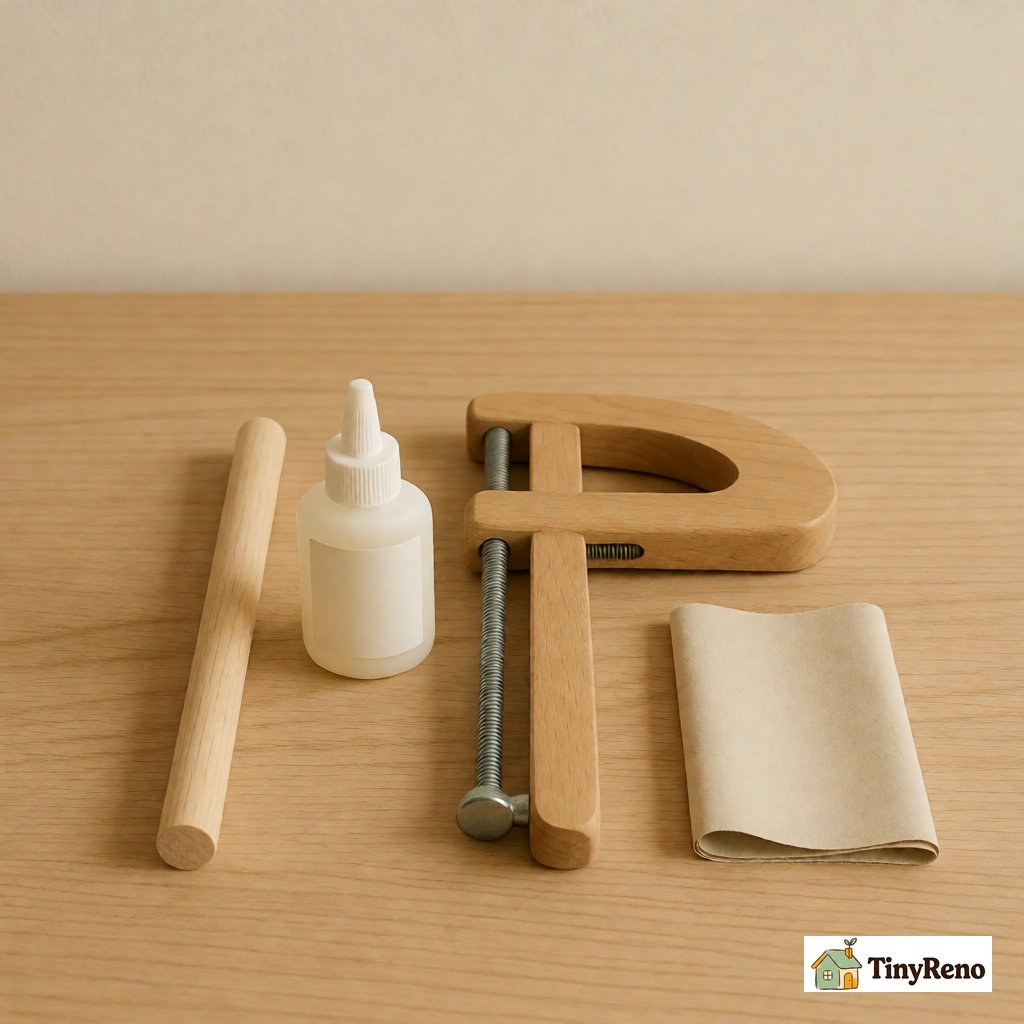
There is a fourth thing that is not a question but functions like one, and in the middle of any furniture dispute it is the thing I would have most wanted to know in 2015: repair versus replace. A split leg on a bentwood chair can often be repaired with a length of dowel and wood glue for a few dollars, or at minimum the chair can be made safe and usable, which reduces what it can be said to have cost the landlord. When I replaced that chair, I should have told my tenant I was replacing it, and I should have shown her the old one. Instead she bought a second chair. That is on me, and it is the kind of thing that turns a two-hundred-dollar dispute into a permanent grudge on both sides.
What to Do in the First Ten Days, Before Anything Breaks
None of this is useful if you have already moved out. So here is the part that only works if you read it before the chair breaks, which is what I would tell my twenty-four-year-old self if I could go back.
Photograph every piece of landlord furniture on day one, and photograph it the way a landlord would rather than the way a tenant would. The whole piece, from a normal standing height, because that shows general condition. Then the specific damage, close up, with something for scale, like a coin or a ruler held next to it. Then the underside, the back, and the joints, because that is where a landlord's claim lives. Then the serial number or the manufacturer's label, because a model number is the most useful thing you can have when a replacement cost is disputed: it lets both sides look up what the thing actually retails for.
Ask the landlord in writing, once, a short list of questions: which pieces of furniture are included, who is responsible for repairs, and what happens if something breaks. Put the answer in the lease or an email. This is not an aggressive act. It is two people agreeing in advance who pays for what, and it costs nothing while everyone is getting along.
Keep a small record of anything you repair. Not because you expect to be thanked, but because you want a paper trail that says you were the one who tightened the joint in month four. If a landlord later says a chair was solid at move-in, a single dated photo of you tightening it in month four is a powerful piece of paper, and it takes ten seconds to take.
And buy your own furniture for the things you actually use. This is the cheapest advice in the article. I bought a folding table from a hardware store for thirty-eight dollars and it survived four moves. For the entire time I was renting I had exactly zero deductions for furniture damage, not because I was careful, but because the things I used were mine. The landlord's furniture sat in the corner doing nothing, and therefore nothing. If you want to live somewhere you are not accruing liability, the strategy is not better behaviour. It is ownership.
When It Has Already Happened: The Order of Operations
If you are reading this after the deduction letter, the sequence matters more than the argument, and the same sequence works whether the item is a chair or anything else you are liable for. I have watched people win the argument and lose the process, because they replied too fast, too emotionally, or with too much.
Do not refuse to move out over a furniture deduction, and do not threaten anything. Deposits get withheld for exactly this reason, and a tenant who refuses to leave over two hundred dollars risks far more than the two hundred dollars.
Reply in writing, within a few days, and separate the line items. If the deduction lists a chair at two hundred dollars and a door at forty, treat them as two disputes with two different evidence situations, because they are. For each one, ask the three questions: did the damage exist before, did I cause it, and is this a reasonable replacement cost. Ask for the landlord's evidence for each: photos, receipts, quotes. Ask what the repair would cost as opposed to the replacement. A landlord who has a line item and no documentation behind it has a position, not a case, and that difference is most of your leverage.
Then make an offer. If your evidence supports a smaller number, offer a smaller number, with the reason attached in one sentence. Landlords take deals more often than tenants expect, because the cost of pursuing two hundred dollars through a small claims hearing exceeds two hundred dollars in their own time, and a tenant who replies once, calmly, with documents, is much cheaper to settle with than one who replies nine times.
If the landlord refuses and the amount is worth the hearing, file. Bring your move-in photos, your repair photos, your receipts, and the landlord's own itemised deduction sheet. Bring them in date order, because a chronological story is easier for a judge to follow than a folder of unrelated photographs. If you have no move-in photos, you can still argue the replacement-cost question, which does not depend on your memory, and you should not abandon the whole dispute because the first question is weak.
And if the amount is not worth the hearing, pay it and write it down. I paid the two hundred dollars in 2015. I am not proud of it and I do not think I was wrong to. I had no documentation, no argument, and a chair I had genuinely broken. The lesson cost me two hours of shame that eleven minutes of photography would have avoided, and what I took from it was not to be more careful. It was to own my own furniture, and to photograph the next landlord's.
What the Chair Became
The chair is still in my dining room. It is the one that broke, not a replacement, and I glued the leg and left the split visible, because I could not bring myself to sand it down and pretend it had never happened.
My tenant's tenant broke a different chair at a party in 2017, and I did not deduct anything, because I had the move-in photos and the photos of the arm that was already sagging, and because I knew what a number without evidence was worth. She bought me a bottle of wine, which I did not accept and which she left on the counter, and which I drank on the anniversary of the chair I broke in 2015, in the apartment I have since bought, with my own dining table and six chairs that I chose and that nobody else has ever been liable for.
I still have Dave's receipt for the refinishing kit. It is in a folder with a dozen other move-in photos from apartments I have since left, and every time I open it I think about the fact that the whole system of liability for a landlord's furniture rests on one astonishingly cheap thing: somebody being willing to take a photograph of a chair on the first morning.


Discussion (0)
Sign in to join the discussion