

Two years ago I lost a $180 pair of headphones to a guy in a hoodie who lifted them off my doormat while I was at work. The courier had followed my note to the letter: "leave at the side gate." The side gate was locked, so he left the box on the mat anyway, snapped a photo, and marked it delivered. By the time I saw the notification on my phone, the box was gone. That day I stopped treating parcel safety as a decorating problem and started treating it as a timing problem.
The usual advice is to add a safe place instruction at checkout and pick a spot the courier "would not think is a good hiding place." It is better than nothing. It is also weaker than most people believe, because the instruction is not a rule. The person who decides where your box actually goes has zero obligation to follow it, and in most cases he will not even read it.
That is the whole difference between the two options people argue about. A safe place note rearranges the risk. A collected point removes the risk window. Once you see that, the choice becomes obvious for anything worth real money — and obvious when the note is genuinely enough.
There is a third option people forget, which is asking a neighbour to take it in. It is free. It is also the option most likely to fail, because it depends on somebody else's day. Worth understanding why before you lean on it.
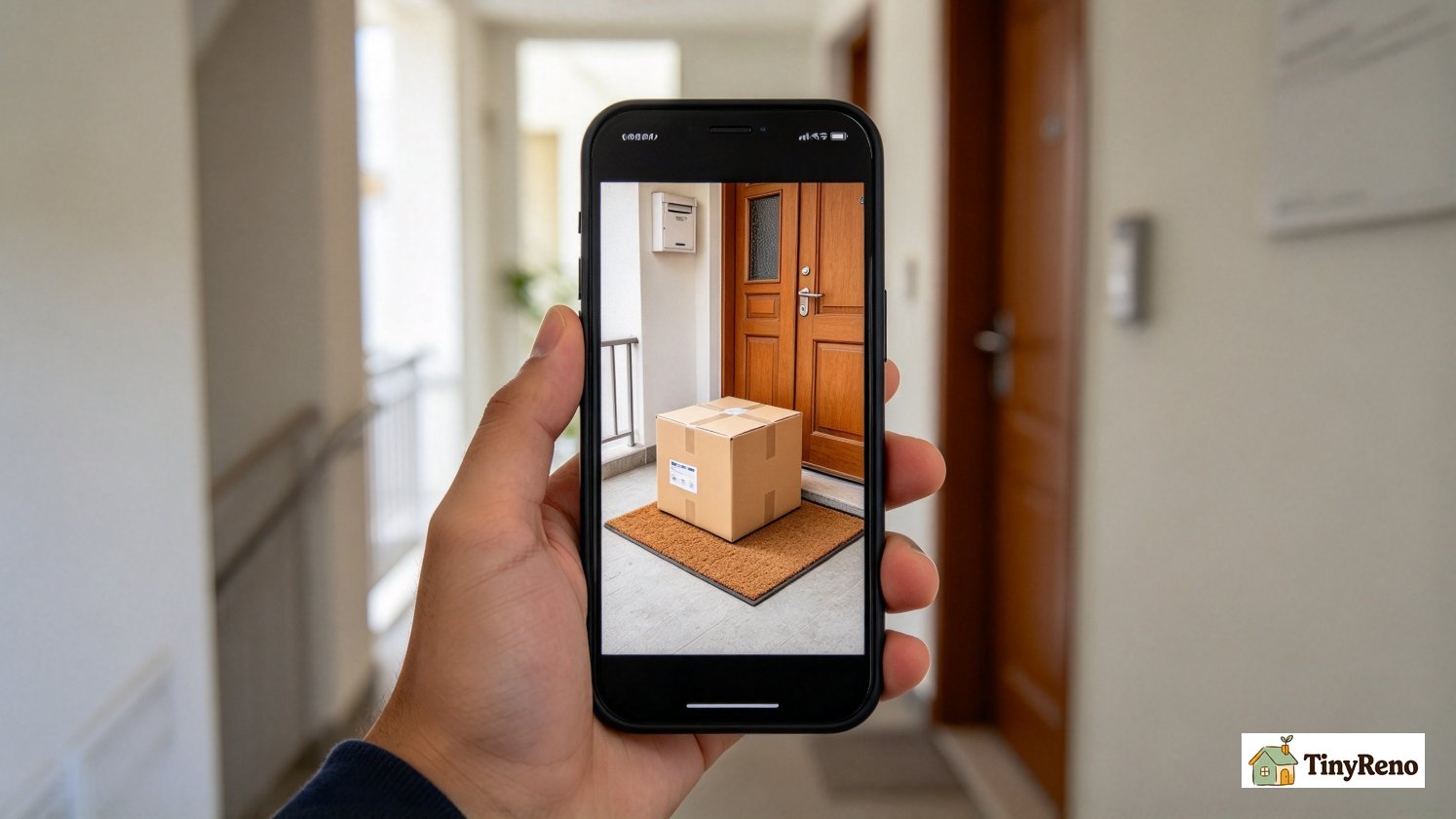
What parcel theft in an apartment building actually looks like
The thing I had to unlearn is that parcel theft is rarely opportunistic. A stranger walking past your door does not glance at a box and decide to take it because it looked expensive. What actually happens is that somebody watches the entrance of a building over several days. He notes which door the courier goes to, how long he spends at each door, and learns the rhythm. Then he follows the courier up, or snatches the box during the ninety seconds the courier is walking back down the stairs, or simply waits for a day when the household is out.
This is why the timing of your deliveries matters more than the hiding place. If your groceries arrive every Tuesday at four in the afternoon and you are never home then, that pattern is learnable. A safe place instruction does nothing about it, because a hidden box on a step is still a box on a step, and it is still a box that arrives at four on Tuesday.
It also explains why some deliveries go missing and most do not. A building where the entrance requires a buzz, a fob, or a gate a courier cannot get through has a very different theft rate from a building with an open street door. The single most effective change many renters can make is not about the parcel at all. It is about who can get into the building while a delivery is happening.
One more thing worth knowing, because it changes what evidence you will have. In most thefts, the parcel never even leaves the courier's hands on camera. The app records the delivery, usually with a photo, and that photo shows the box on your step or in the corridor. That photo is the most important piece of evidence you will have, and it disappears on a schedule. If a parcel goes missing, the first thing to do is download the delivery photo and screenshot the delivery record before anything else. The retailer and the police will both ask for it, and the courier will not keep it forever.
Why a safe place note is weaker than it looks
A safe place instruction works, sometimes. It is worth understanding exactly how it works so you do not rely on it for the wrong boxes.
The instruction is not enforced. When you type a safe place into the delivery notes field, there is no verification step, no confirmation that the parcel went there, and no consequence for a courier who leaves it somewhere else. A courier following your note is doing you a favour. Some do. Many do not, particularly where the instruction asks for something awkward, and particularly where the safe place is not obvious from the door. The realistic assumption is that a safe place note is followed for the easy cases and ignored for the awkward ones, and you have no way of knowing which happened until you look.
Which is why a safe place note can actually make things worse. This was exactly my headphone situation: I told the courier to leave at the side gate. The side gate was locked. He left the box on the front step in full view because that is where the box was going to go anyway. My instruction bought me nothing, and I had no idea there was a gap. This is the single most common failure mode, and it is avoidable only by picking a safe place that is genuinely reachable and genuinely concealed at the same time.
That is the constraint. A useful safe place has to be somewhere a courier can drop a parcel without leaving the delivery incomplete, and somewhere an opportunistic passer-by cannot see it. Those two conditions fight each other. A doormat, a plant pot by the door, a recess under a window, a covered porch, a corridor with a blind spot. What does not work is a spot that requires a key, a code, or a phone call, because a courier under time pressure will leave the parcel and walk away rather than untangle a delivery that has become complicated.
The note is also the wrong tool for the most valuable parcels, and the reason is worth saying plainly. You cannot put a note on a box telling a thief not to steal it. The only thing that changes the outcome for a high-value parcel is that the box is not reachable by anyone who is not you at the moment it arrives. No instruction accomplishes that.
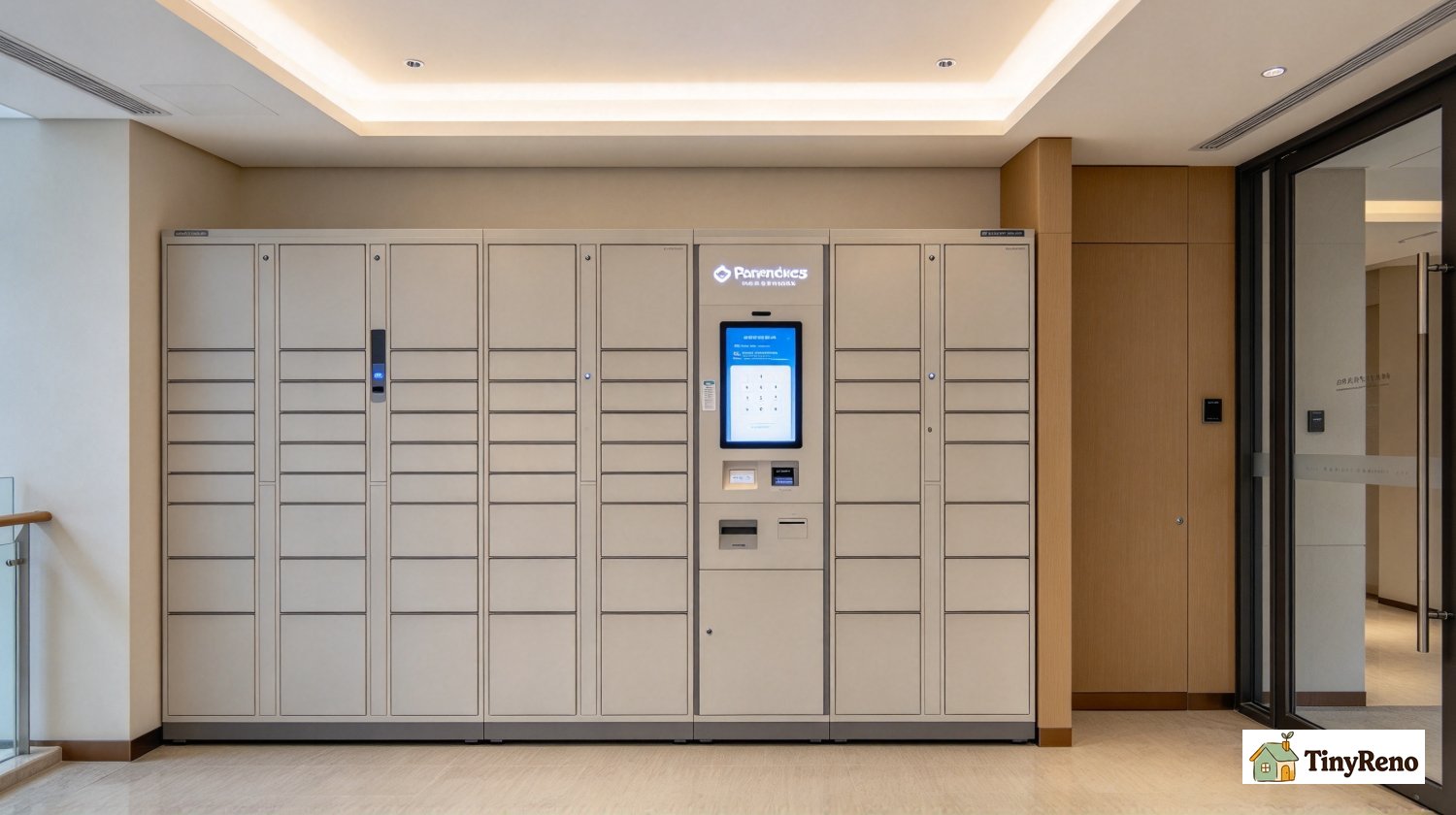
What a collected point actually changes
A collected point means the parcel never sits where it can be seen or taken. It goes into a locker compartment, a post office, a carrier's own collection point, or a key safe, and it stays there until you open it with your own code or your own key. The parcel is still unattended for a period, but it is unattended somewhere that is either locked or monitored. That is the difference that matters.
There are three versions of this and they cost different amounts.
The building locker is a set of compartments in a lobby, each with its own code or fob. If your building has one, this is usually the cheapest real answer, because the marginal cost to you is sometimes nothing and sometimes a monthly fee bundled into a lease clause. The thing to check, in writing, is whether the fee exists and whether it is refundable when you leave. In some buildings it is a legitimate rent add-on; in others it is a line item that appears without much explanation. Ask at the same time as anything else, and keep the answer.
The post office or carrier collection point is free and universal. The downside is the journey. You have to get to a sorting office or a local depot during opening hours, which in most cities means a specific post office rather than any, and which for a large building full of people means a queue. For a parcel you order once a month this is entirely reasonable. For the thing you order weekly, it is not. Be honest with yourself about that before you commit to it as your default.
The key safe is a small lockbox that a courier can open with a code and you can open with a code. It is the most flexible option and the least standard, and it has a specific weakness: it is a fixed box, and a fixed box outside a door is a fixed target that an observant person can watch, learn the code from, or simply try. It works best in a location with some cover and a code that is not the building's main entry code. It works badly in a visible spot on a street-facing wall.
What all three have in common is that they convert an unattended parcel from a public place into a locked place. That is the entire mechanism, and it is why the answer to a high-value delivery is one of them rather than a cleverer hiding place.
Choosing between the two, and the neighbour option
So the rule that follows from the mechanism is straightforward. For anything you would be genuinely upset to lose, use a collected point. For the ordinary weekly shop that is replaceable, a safe place instruction is fine and costs nothing, provided you pick a spot that is genuinely reachable and genuinely concealed. And for a delivery arriving at a time when you are home anyway, just take it in. That is the best available outcome and needs no policy at all.
That is the whole decision in one sentence. Write it down before you set anything up, because the most common mistake is spending money on a locker for a delivery worth four pounds while leaving the expensive order to a note on the app.
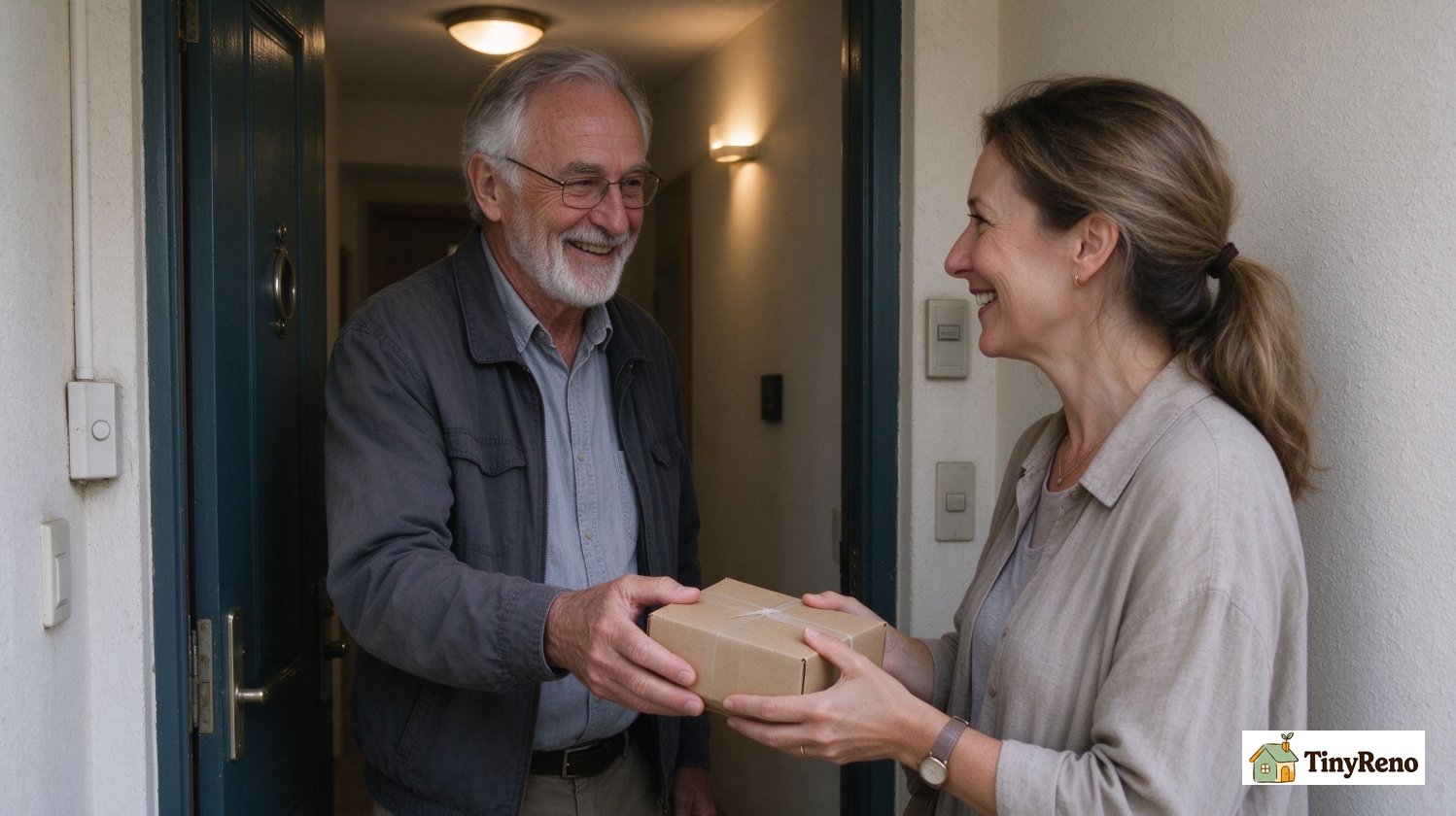
The third option, the neighbour, is the one people like because it is free and it feels friendly. It is also a dependency, and it is worth being precise about which dependency you are taking on. You are relying on them being home, their willingness to hold a box for four days while you are on a shift pattern, their door security, and their memory. A neighbour who has agreed to take one small box is quite reliable. A neighbour who has agreed to take anything, at any time, for a month, is not.
If you go this way, agree the terms at the point of agreeing, not later. Which sizes are fine, which are not. How long they will hold it before they put it somewhere else or return it. What happens if they are not in when the courier comes, and whether the courier will leave it with another neighbour or take it back. Whether a neighbour who is not expecting a delivery is being asked to accept responsibility for something valuable, which is a bigger ask than it sounds.
It is also worth being honest that a neighbour arrangement is only as safe as the least careful moment. The parcel is sitting at a stranger's door, in a building that may have other people in it who do not know the arrangement, and the door is not one you control. A collected point is stronger because the security is in the mechanism rather than in a person remembering to be careful.
One more thing to check before you decide anything, and it costs nothing to check. Your building may already have a policy on parcels that you have not read, and it may determine which options are even available. Some buildings require deliveries to be held at the front desk, some forbid leaving anything on the stairs for fire safety reasons, and some require a specific instruction format. A quick message asking what the building's parcel policy is will save you from setting up a system that gets a note left on your door.
If a parcel is actually gone
There is a sequence here and the order matters, because the evidence degrades as you go.
First, and before you do anything else, download the delivery photo and screenshot the delivery record from the courier app or retailer app. The photo shows where the parcel was put. If it shows the parcel on your step and it is not there, you have a delivery that was completed and a parcel that has gone, which is a much stronger position than a parcel that was never delivered. If the photo shows it somewhere you did not instruct, you also learn whether your safe place instruction was followed, which is useful for the next delivery.
Second, report it to the retailer. They issued the refund, so they are the party that can give you money back, and most major retailers will refund a parcel recorded as delivered but not received, subject to their window and their policy. The window is often short, sometimes as little as a few days, so do this immediately rather than after you have worked out what happened. The retailer will usually ask for the delivery record, which is why you took the screenshot first.
Third, report it to the delivery company, and then to the police, and get a crime reference number. People skip the reference number because it feels like an extra step, and it is the step that makes everything else faster. A retailer can usually process a refund with a delivery record alone. A retailer asked for a police reference will move much more quickly, because a reference number shows the loss is on a police record rather than being a customer complaint.
If the building has entrance CCTV, ask for the footage before it is overwritten, and ask in writing so there is a dated record of the request. This matters for a specific reason: a delivery record showing a completed delivery that nobody can explain is a weak case, and a delivery record plus footage showing the parcel being taken is a different thing entirely. Do not skip this because you assume the police will handle it. The police will not chase building CCTV for a routine theft, and the footage usually exists for a few days only.
And then the last part, which is the part that actually changes the odds for the next delivery. If the parcel was stolen, something about the setup gave it away, and it is usually one of four things:
- A delivery time that is perfectly predictable.
- A door that a stranger can get through.
- A safe place that was not actually concealed.
- A building where parcels are visibly accumulating at the entrance.
Work out which of the four it was, because each one has a specific fix, and the fix is what stops the second one.


Discussion (0)
Sign in to join the discussion