

The first time I found a clothes moth in a rental, I did what everyone does: I bought lavender sachets, sprayed the wardrobe, and told myself the apartment must be dirty. Three weeks later I found webbing in the sleeve of a wool coat I had not worn in a year. The flat was not dirty. The coat was the food, and I had been spraying the container instead of emptying it.
Wardrobe moth problems almost always get diagnosed wrong. The default story is that the apartment is dirty, the tenant has not cleaned the wardrobe, and the answer is more spray and a lavender sachet. That story is wrong, and buying into it wastes money and, worse, leaves the actual cause sitting in the corner eating a cashmere jumper.
The larvae of these moths eat protein. Specifically, they eat keratin, the structural protein in wool, cashmere, mohair, felt, alpaca, and any coat or blanket that contains it. They are not attracted to a dirty wardrobe. They are attracted to a wardrobe that contains natural animal fibre. A spotless flat with a wool rug and a stored winter coat can have an infestation, and a genuinely filthy flat full of polyester will not.
That distinction changes the whole job. You are not cleaning. You are removing a food supply, then removing the insects that were eating it.
The damage is in the fabric, not the room
Larvae feed silently for weeks or months before you see an adult. The evidence is rarely a moth flying around the wardrobe in daylight. Look for the things the larvae actually leave behind: fine silken webbing between the folds of a jumper, a loose silken casing on a shelf, a small pile of loose fibres and fine dust on a wardrobe floor, and small ragged or pinhole holes in the item.
The hole pattern can help, but it is not perfect. Carpet beetle damage often looks like irregular small holes or surface grazing, and you may find fuzzy brown larvae or shed skins. Clothes moths leave irregular holes, often in a seam or tight fold, and webbing is the giveaway.
Before you commit to a moth problem, rule out other causes. Clothes moth larvae eat animal fibre, so a hole only in cotton or polyester is less likely to be moth damage. If the damage is only in synthetics, consider other insects, physical wear, or a source elsewhere in the building before assuming moths.
What to store first, and what to leave alone
The practical decision is simpler than most product pages suggest: sort by fibre, not by value or season.
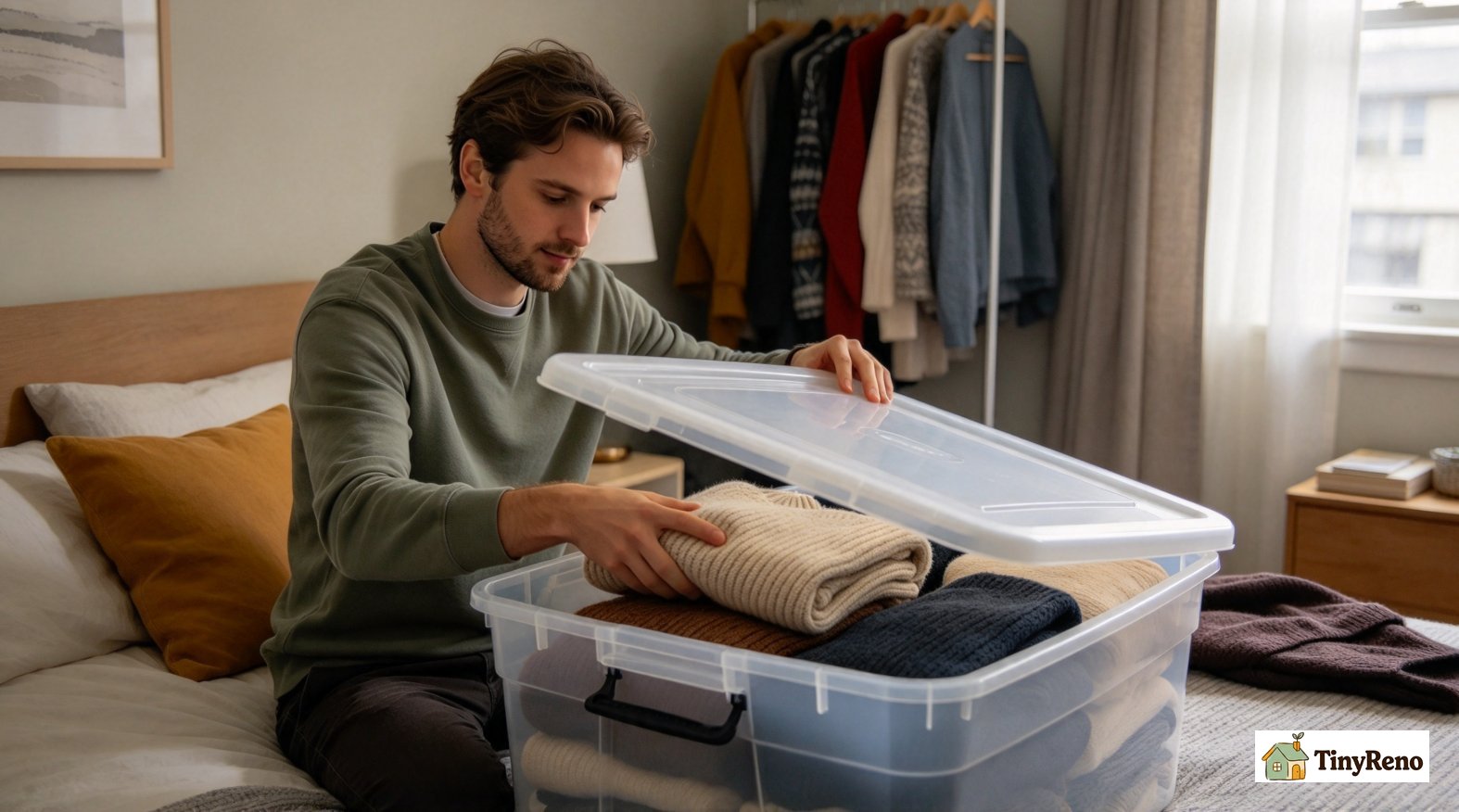
Store in sealed containers: wool, cashmere, mohair, felt, alpaca, and any garment with a wool content above about a third. These are the food. If you own one good winter coat, that coat gets the airtight bin and the moth trap goes in the same wardrobe.
Leave in normal drawers: polyester, nylon, acrylic, cotton, linen, and denim. These are not food for these larvae. You are wasting money and space if you pay for vacuum bags full of t-shirts.
Two things people often forget. A rolled wool jumper sitting on a top shelf since last winter is a complete meal in a place nobody checks. Felt—wool felt hats, wool blankets, felted bags—is also easy to ignore because it does not look like clothing. Check both before buying anything.
Why mothballs and sprays do not work in a rental
Mothballs are a smell. They work by vapour concentration, which is why the label tells you to use them in a sealed container at a stated dose, and why the same label warns you about ventilation and children. In a small rented bedroom the concentration you can safely achieve is far below anything that affects a larva already inside a jumper. What you get instead is a strong chemical smell and a false sense of having done something.
Spray insecticides have the same problem in a different form. They land on surfaces. The larvae you need to reach are inside a tightly rolled sweater, inside a pillowcase of winter clothes, inside the seams of a carpet, and inside a wardrobe carcass. A surface spray does not reach into any of those. A fogger is worse, because it fills a room with a chemical that cannot reach the food source and then needs ventilating before you can sleep in it.
The same logic applies to the “spray the whole wardrobe every month” routine. You are spraying the container, not the food source inside it. The treatments that actually work all attack one of two things: the food supply, or the insect itself.
What actually works, in the order you should do it
- Interrupt the food supply. Move every natural animal fibre out of the wardrobe and out of the bedroom into sealed plastic boxes with lids that actually close, or into vacuum bags with the valve sealed. This step alone starves the population over a few months. It is free.
- Break the life cycle. Vacuum the wardrobe interior, the drawer runners, the corners and the floor beneath the rail with a crevice nozzle, and empty the vacuum bag outside rather than back into the wardrobe. Pay attention to the underside of the top shelf, where the casing and webbing collect. Then vacuum the affected garments themselves and any carpet under the wardrobe.
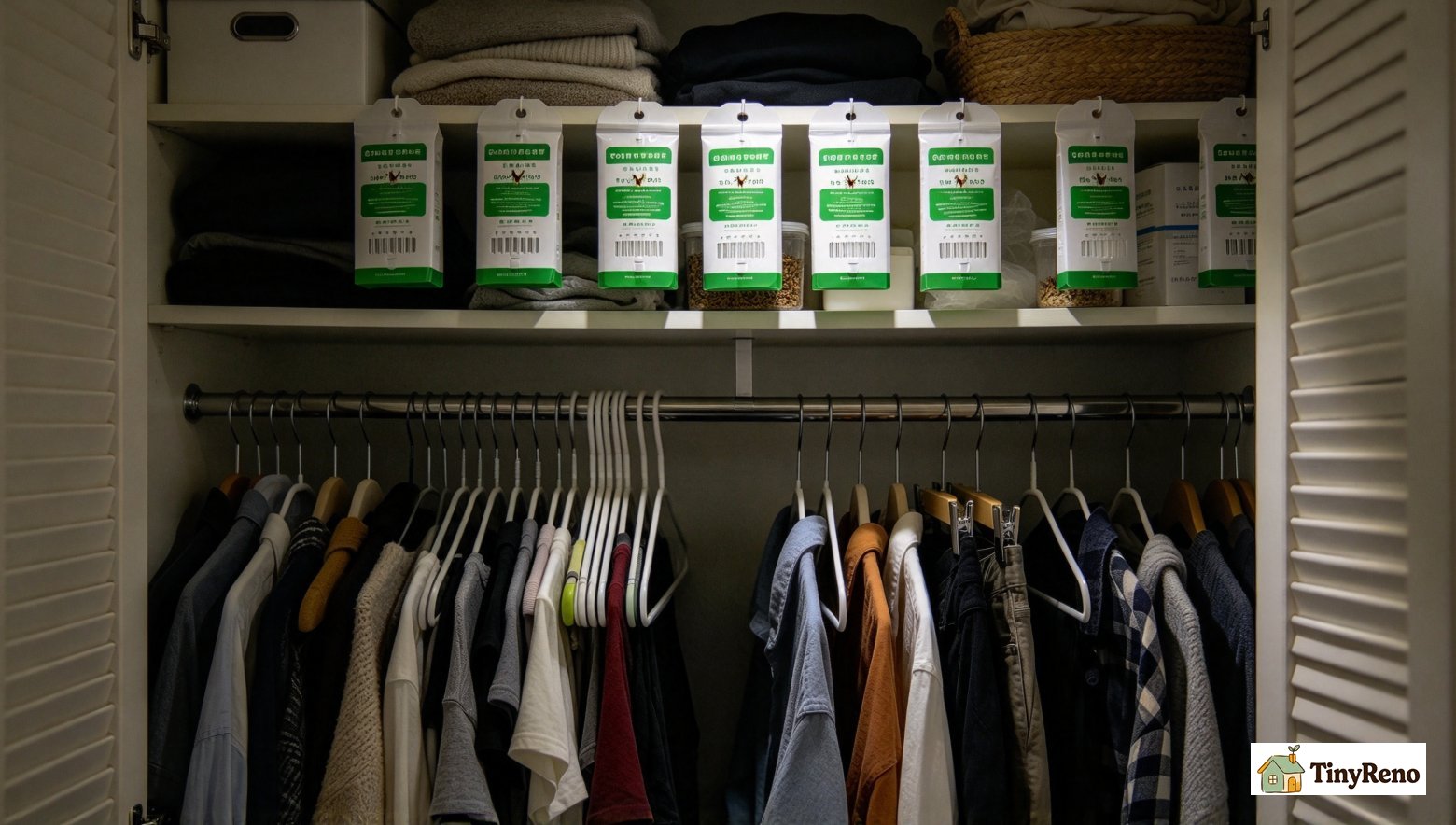
- Trap and monitor. Pheromone traps work on the adult male, which is drawn to the lure and then stuck. You are not trying to catch the larvae, because the traps do not reach larvae. You are using the trap as a signal: if you catch adults, there is still an active population, and if the traps stay empty across a season, the food removal has worked. Place several traps, not one, spaced apart, and replace them on the schedule the packaging states.
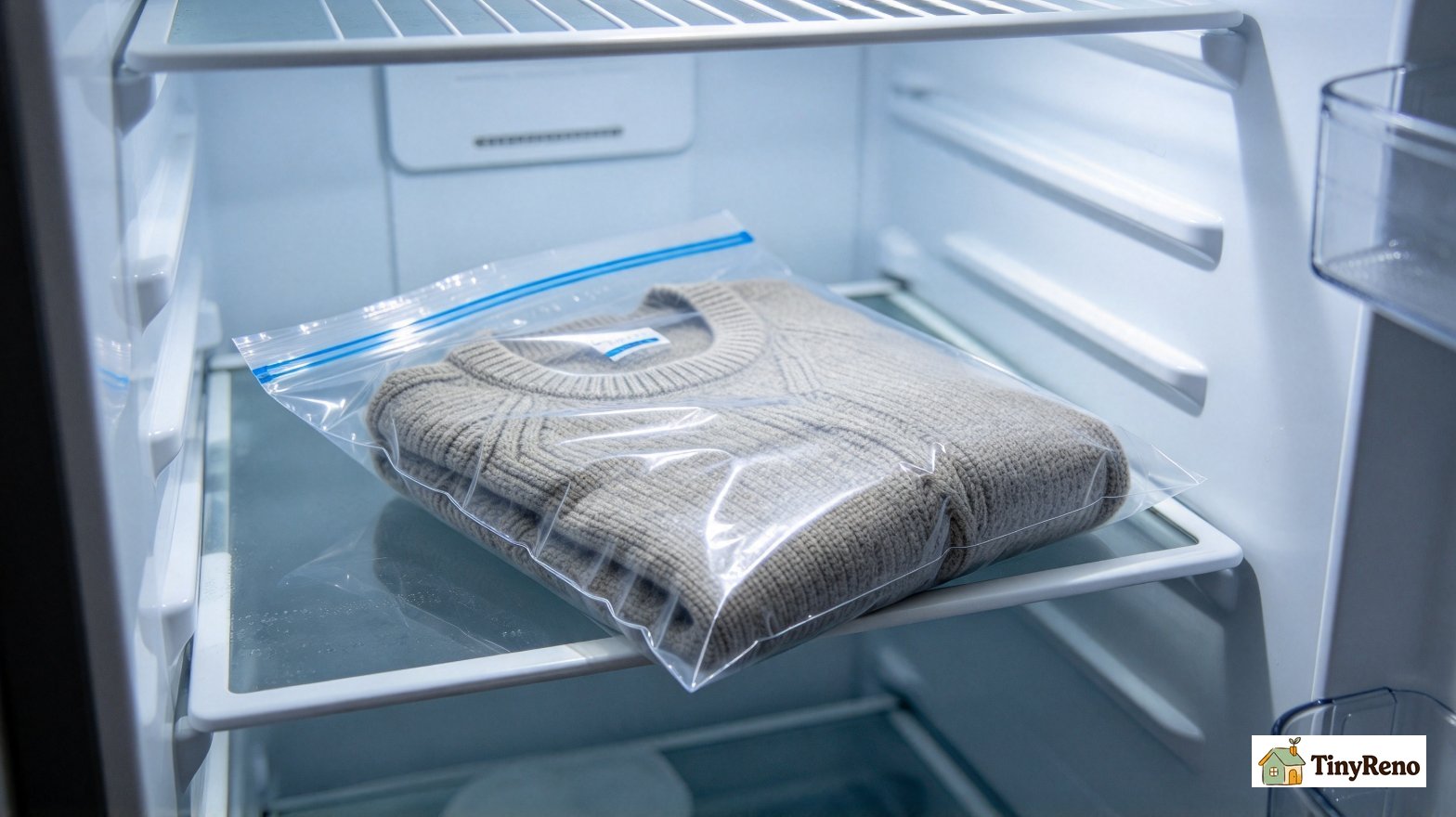
- Treat the item, not the room. If a single valuable item is already damaged, cold treatment works and costs nothing. Put the garment in a sealed bag and leave it in a domestic freezer for at least 72 hours. Then let it come to room temperature inside the sealed bag so condensation does not form on the fabric. Freezing kills eggs and larvae. Do not dry a treated garment on a radiator; heat and moisture can set any remaining damage.
- Escalate only if it is in the building. If you find larvae in the carpet, in the sofa, in a neighbouring flat's ceiling void, or in a shared hallway, the infestation is not yours and no amount of wardrobe-level work will clear it. That is a landlord conversation, and it needs evidence rather than a description.
Keeping a record, because this is a deposit question
A wardrobe moth problem in a rented apartment is not only a nuisance. It is a money question at the end of the tenancy, and the evidence you gather now is what decides it later.
Photograph the inside of the wardrobe and the affected items on the day you find the problem, with the date visible on the photos or on a note beside them. Keep a written log of what you did and when: trap replaced on this date, garments sealed on this date, landlord notified on this date, in whatever form you notified them. Keep receipts for traps, bags and any professional treatment. If you have the check-in condition report and any inventory or schedule of condition, look at it now, because the single most useful document in a dispute is the one that says what the carpet looked like before you moved in.
Then talk to the landlord in writing, and keep the writing. The message to send does not need to be long. Say what you found, where you found it, what you have done, and what you would like them to do about the parts you are not responsible for. Ask for a written reply. A landlord who treats a small infestation early, with a treatment cost, is far cheaper than a landlord who replaces a carpet and a sofa at the end of the lease.
If the infestation began in your own stored wool and spread to the carpet from where you stored it, expect to share some of that cost. If the carpet was already showing signs at move-in, that argument runs the other way, and dated photographs are the difference between a conversation and an argument.
The bottom line
A wardrobe moth diagnosis has three parts. Find the food: wool, cashmere, felt, and anything containing them. Take it out of the wardrobe and seal it, because that is the step that actually works. Then clean, freeze, trap and monitor. Skip the mothballs, skip the fogger, and skip the monthly spray, because none of them reach the larvae and all of them cost you money and leave you smelling of chemicals in a room you have to sleep in.
Everything above is a renter-level intervention using things you can buy this afternoon. Escalate when you find larvae in the carpet, in soft furniture, or in shared parts of the building. Those are landlord issues once you can show evidence.


Discussion (0)
Sign in to join the discussion