

A mold problem in a rented apartment is not a shopping problem, and I learned it the expensive way in an apartment I rented for two years. There was a black patch behind the armoire in the bedroom, about the size of a dinner plate, and I cleaned it with bleach three times over the course of a winter. Each time it came back bigger. Each time the paint underneath it went more yellow, until there was a permanent yellow-brown stain the size of the original patch, and the paint around it had started to go soft and flake away. What I had actually been doing was killing the surface of the mold and destroying the paint at the same time, twice a month, for four months, while the thing causing the mold never got touched at all.
The reason I am writing this down is that mold is one of those problems where the intuitive response and the correct response point in opposite directions, and almost every piece of advice you will find online makes the intuitive response sound right. Mold remover products are sold on the promise that a stronger chemical gets the job done. For mold in a rented apartment, the chemical is usually the least important part of the answer. In my case, bleach was the worst thing I did.
So the question I would answer is really three questions, and none of them is which bottle to buy. What is actually causing the moisture, because that is the only thing that makes it come back. What can you clean without making the surface worse, which is a much shorter list than most people expect. And what do you write to the landlord, because in a rental this is a building condition and not a tenant problem, and the cleaning you do yourself is a holding action rather than a fix.
What the mold is telling you
Mold needs four things to grow: a surface to attach to, moisture, warmth, and oxygen. In a domestic wall the surface and the oxygen are not the problem, because a painted wall, a papered wall, a tiled wall and a plastered wall will all grow mold given the right conditions. The moisture is the variable, and if you can identify where the moisture is coming from you have already done most of the work, because every possible source points to a different conversation with your landlord.
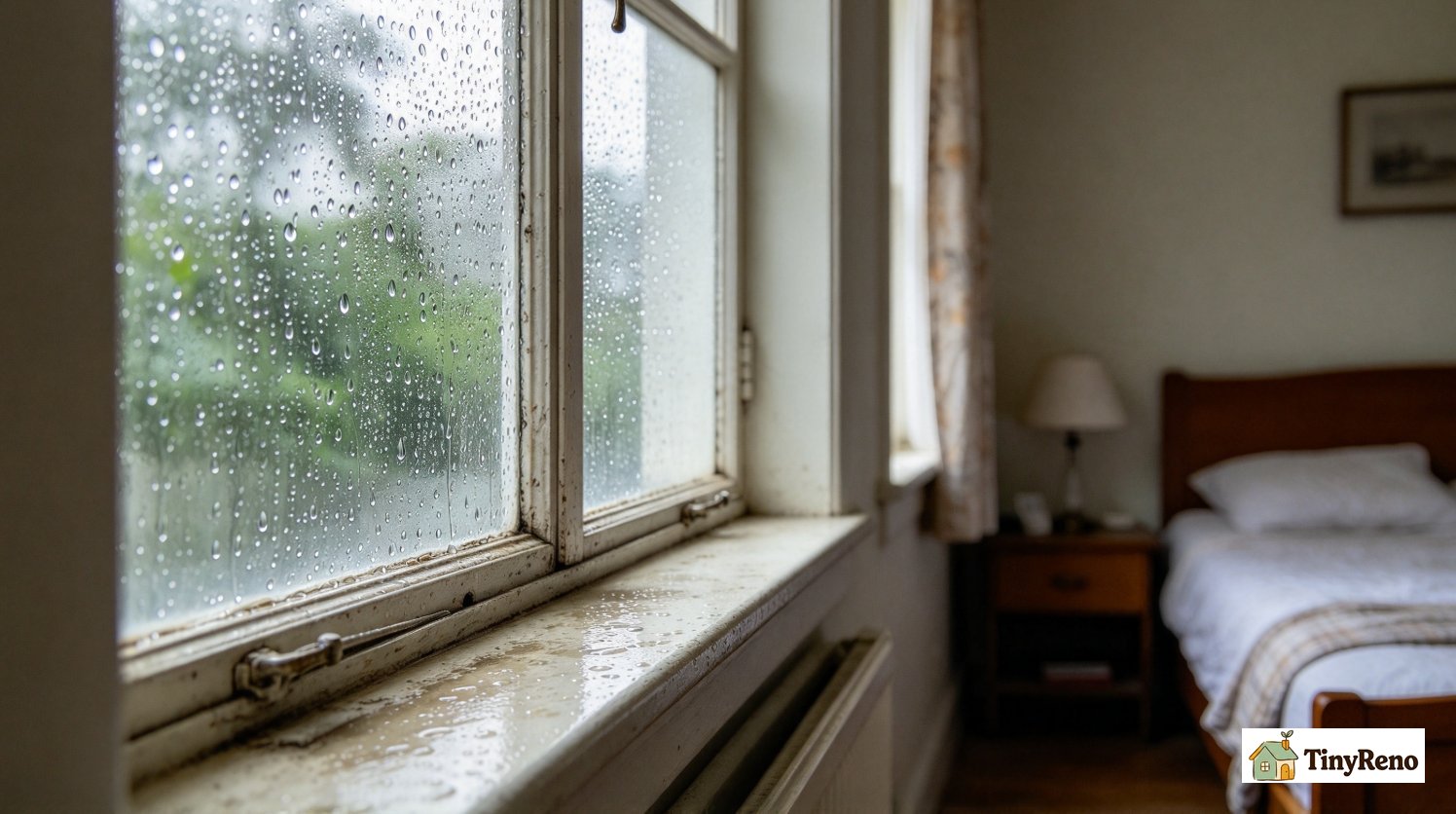
Condensation is the most common one in a rental and the easiest to recognise. It shows up as water on the inside of windows, and it happens because the glass is the coldest surface in the room and the warm moist air in the room condenses on it when it hits that cold glass. A single glazed window in a cold month can put enough water onto a sill every day to keep the wall behind it damp. The tell is that the mold appears around and below windows, and it appears on the outside face of the wall where the furniture is against it, and it is worst in the corner of the room where the two cold surfaces meet.
The second is a failed exhaust fan, and it is the one that is most often missed because the fan still spins. A bathroom exhaust fan that is disconnected, blocked, or on a timer that has been set to the minimum does not remove anything, and the humidity it creates has nowhere to go. If you run the shower for ten minutes and the mirror is still completely clear afterwards, that is not a well-ventilated bathroom, and a landlord who is told that will act on it. I found mine this way, in an apartment where the fan sounded fine and had never once been connected to anything outside.
The third is a leak, and it is the one to look for first because it is the most serious and the most fixable. Look for a tide mark up a wall, for paint that is soft or blistered at the bottom of a section, for a ceiling that is stained in a shape with a defined edge, and for a smell that gets worse when it rains. Leaks behind a bath panel, under a sink, and around a radiator valve are the usual suspects in an apartment, and a landlord who is shown a photograph of a tide mark can usually have it fixed quickly.
And the fourth is the one that is partly your fault, and I would rather say so than have you discover it later. Drying laundry indoors with no window open, running a shower with the door shut and no exhaust fan, and an armoire pushed tight against a cold exterior wall are all things that put moisture into a room that would not otherwise have it. This does not mean mold is your fault, but it does mean that a landlord can reasonably point at it, and the strongest version of your message changes if you also acknowledge it and say what you have changed.
What bleach does, and what it damages
Let us be fair to the product, because bleach is not useless here. The active ingredient decomposes on contact with organic material and it will destroy visible mold growth and the spores sitting on the surface of a hard surface. For a small patch on a non-porous surface, a bleach solution genuinely does make it disappear, and I am not going to tell you it does nothing. The problem is what it does at the same time and what it does not do afterwards.
The damage is to the paint, and it is permanent. Bleach is a strong oxidiser, and it reacts with the binder in the paint film, and where that reaction happens the paint changes color and becomes brittle. On a white or a cream wall the result is a yellow or tea-brown stain that no amount of further cleaning will remove, because it is not on the surface any more, it is in the paint itself. You can paint over it, but if you are leaving the apartment at the end of the tenancy, a yellow-brown patch in the corner of a bedroom is the kind of thing that gets photographed at check-out. And a soft, flaking patch of paint is a bigger problem than the mold was.
The second limitation is the reach. Mold that has grown into a porous surface, behind a wall finish, underneath a layer of paint, or into the edge of a piece of furniture that is sitting against a wet wall, is not going to be reached by anything you spray on the surface. Bleach kills what it touches, but it does not penetrate into the plaster or the wood where the roots are, and within weeks the visible growth comes back through. And the third, which is the reason people think bleach does not work, is that even after the surface is clean, the conditions that let it grow in the first place are still there, so the patch comes back as soon as moisture returns, which is why the patch came back bigger in my case each time, because I was killing the visible part and leaving the damp wall that feeds it.
There is one more thing to know about bleach, and it is a safety point rather than a cleaning point. Never mix bleach with anything else. Vinegar, ammonia, and most other household cleaners all produce a gas when combined with bleach, and the ammonia one in particular produces chloramine gas which is genuinely dangerous in a small enclosed bathroom and can cause serious respiratory damage. This is not a theoretical warning, it is the single most common way people hurt themselves while trying to deal with mold in a rental, and it happens because the bottle says one thing and the person in front of it has three other products open on the same shelf.
What to use instead, and what not to do
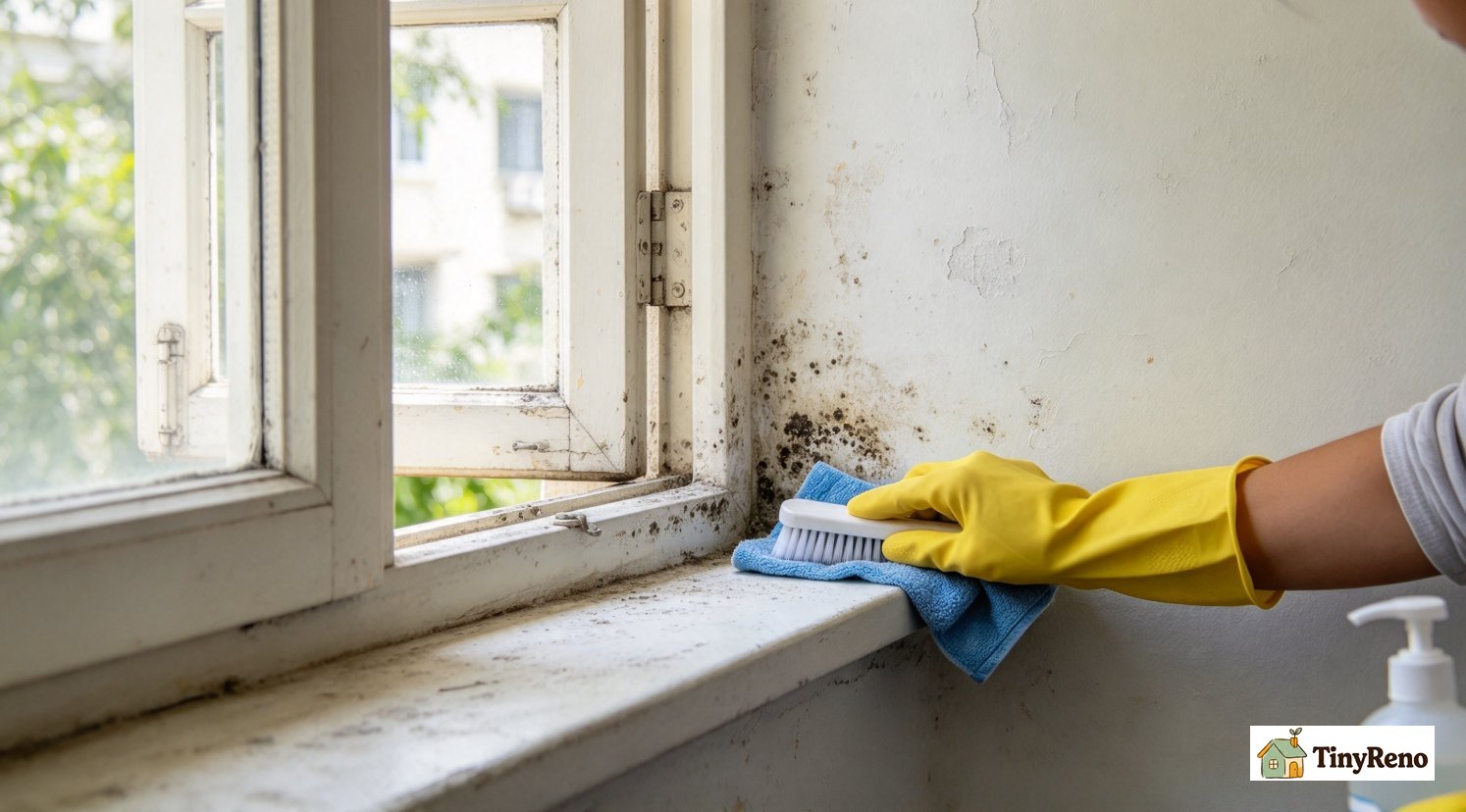
If you are going to clean the surface yourself, use something that kills the growth without eating the paint. The honest truth is that no consumer product is as effective at killing mold on contact as diluted bleach, but bleach is also the one that damages paint and fabric. The middle ground is a product based on quaternary ammonium salts (the active ingredient in most professional mold sprays), or a borax solution, both of which kill the surface growth without the bleaching effect that yellows paint. Hydrogen peroxide is a gentler option and it is fine on bathroom tiles and glass, but it is not as persistent as bleach or quats, and it breaks down quickly once it is on the surface. On a small patch of a non-porous surface, a stiff brush and ordinary washing-up liquid in warm water works, once the growth has been killed and loosened, and it is gentler on the surface than any specialist product. The point of the brush is the texture, not the detergent, because mold on a painted wall is a mat of fine filaments that has to be physically lifted off the surface rather than dissolved in place.
Then there are the things not to do, and they are more important than the product choice. Do not use a steam cleaner. The heat does very little to the mold and the steam forces water deep into the wall while lifting the spores into the air, and you end up with a clean patch, a damp wall and a room full of the thing you were trying to remove. Do not dry-brush it either. A dry brush aerosolises spores and they land on everything, including on you, and the apartment is dirty for a week afterwards. If you are going to clean it, use a damp cloth and keep it damp, and change it often.
Ventilate properly while you work, and ventilate properly after. Open the window, even in winter, for a good half hour after you have finished, because the spores you have disturbed need somewhere to go. Wear gloves, and if the growth is more than a small patch, wear an N95 or P100 respirator, not a simple cloth mask. A cloth mask does not filter mold spores; they are far too small. And do not do any of this without thinking about where you have put the water, because a rented wall that was already damp is one bad cleaning job away from being damp enough to need repainting, and that is a conversation you do not want to be having in month eleven of a tenancy.
One more piece of advice, and it is the piece that stops the whole cycle. Dry the area completely afterwards. Mold that is cleaned but left damp will start again within days, and a bathroom corner that you wipe down and then leave to air out with the door shut is not drying, it is creating a sealed warm damp box with a fresh food source. A window open, or an exhaust fan running for twenty minutes after, makes an enormous difference to whether the cleaning lasts a month or a week.
One more thing worth knowing, because it is the line between a weekend project and a professional job: if the affected area is larger than about ten square feet (roughly the size of a bath towel), or if it is on a ceiling, or if someone in the home has asthma, allergies, a weakened immune system, or is a young child, do not try to clean it yourself. Mold spores are a respiratory irritant and a known allergen, and a large patch releases enough spores to cause symptoms. In that case, document it, report it to the landlord, and let them arrange professional remediation. The cleaning you do yourself is for the small, manageable patches, not the ones that will make you sick.
What to send the landlord, and what to expect
Send it in writing, and frame it as a building condition rather than a pest or cleaning issue, because that framing is what makes it actionable. You are not reporting that your apartment is dirty. You are reporting that there is persistent moisture in a specific place, and that it is causing visible mold growth, and that you would like it investigated. Condensation, exhaust fan failure, leaks and cold bridging are all building conditions that landlords are typically obliged to maintain, though the exact legal standard varies by location.
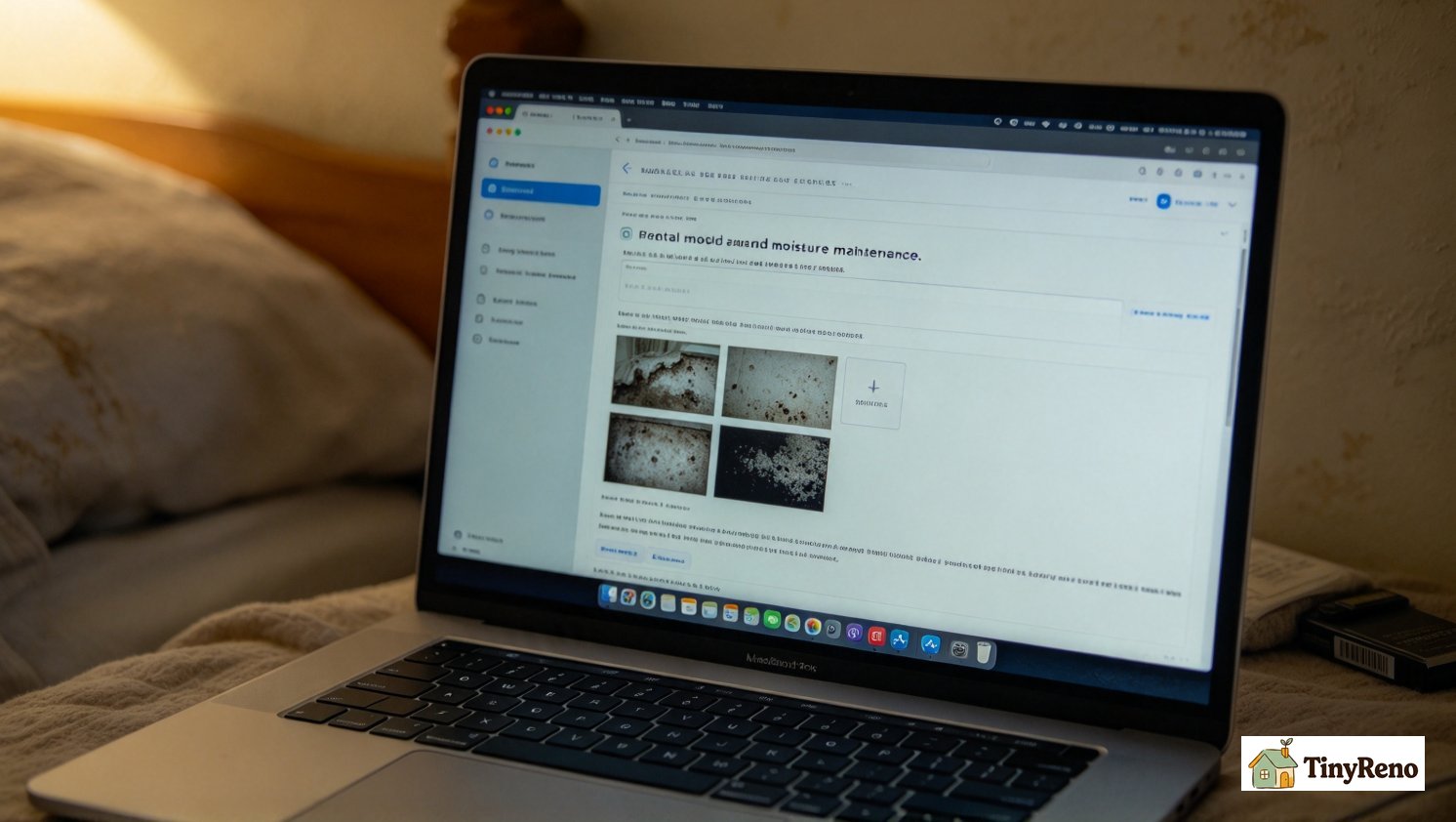
What goes in the message. The date. The room and the specific wall, described precisely enough that somebody else can find it, so the bedroom wall behind the armoire on the outside wall, not just the bedroom. Then the evidence, and evidence is photographs rather than adjectives. Take one wide shot that shows the mold in the context of the room so the location is unambiguous, and one close shot that shows the texture of the growth, and put something next to it in the close shot for scale, because a patch photographed on its own is genuinely hard to judge the size of. Then add the conditions you can actually observe, because the conditions are what tell a landlord what to do: condensation on the window, the exhaust fan fan running with the mirror still fogged afterwards, a tide mark up the wall, the paint soft at the bottom.
You will also want to say what you have done yourself, and this is not a confession, it is positioning. The landlord is being asked to fix a building condition, and a tenant does not have to fix the building condition. Say that you have cleaned the surface with a non-bleach product and dried the area, that you have improved the ventilation, and that you have stopped drying laundry in that room. If the landlord replies that the mold is due to your own habits, you have already taken those habits off the table, and all that is left is the building condition, which is where the argument was going to end up anyway.
And then there is the question of the paint. If the paint is stained yellow from a previous bleach clean, or if it is soft and flaking, that is a redecoration issue and it is worth asking about explicitly, in the same message, rather than hoping it is not noticed. Repainting a mold-damaged wall is a normal consequence of a damp problem, and landlords generally know that. What does not get covered is a stain you caused yourself, which is why the cleaner you use matters as much for your deposit as for the mold.
At the end of the day, it comes down to four things:
- Work out where the water is coming from, because condensation, a failed exhaust fan, a leak and your own laundry all lead to different conversations, and the mold is only the visible part of that question.
- Clean the surface with something that will not attack the paint, and never mix bleach with anything else, because the stain and the gas are both worse than the mold. Wear an N95 if the patch is more than small.
- Ventilate, dry the area completely, and expect it to come back if the moisture is still there. If the patch is larger than about ten square feet, or someone in the home is vulnerable, call in a professional rather than fighting it yourself.
- Put it in writing with dated photographs, because in a rental this is a maintenance request, and a landlord who receives a dated photograph of a specific patch in a specific room has very little room to argue with.


Discussion (0)
Sign in to join the discussion