

A silverfish problem in a rental apartment is not a cleaning problem, and I wasted about three weeks and two cans of spray finding that out. They had appeared in my bedroom in a rented apartment, small silvery things that shot away from the baseboard whenever I turned the light on, and I read that they meant the place was dirty. So I cleaned. I vacuumed behind the wardrobe, I scrubbed the baseboard with a paste of baking soda, I threw away a box of books that had been in a closet since I moved in, and I sprayed every board in the room twice over the course of two weeks. They came back into the same corner within three weeks, and this time they were higher up the wall. That is when I started paying attention to what they were actually doing rather than what I assumed they meant.
What they were actually doing was eating the wallpaper paste. And the reason there was wallpaper paste for them to eat, and the reason there was enough damp for them to breed, was a blocked exhaust fan in the bathroom next door and a wardrobe I had pushed tight against the external wall of the bedroom because the room is small and I needed the floor space. Neither of those things is about how clean the apartment is. Both of them are about a specific corner of one room being wet enough, for long enough, to be a nursery.
The insect is a symptom rather than a cause. A silverfish sighting usually means there is a damp, sheltered spot with a starchy food source nearby. High humidity makes breeding more likely, and many sources point to roughly 75 percent relative humidity or above as favorable, but you do not need an exact number to act. A persistently damp corner is enough reason to investigate. That is the whole diagnosis behind any silverfish problem, and it is why the same corner keeps getting them back. Everything you do about the silverfish directly is treating the alarm rather than the fire, and that is why the sprays keep disappointing people, and why the same corner keeps getting them back no matter how thoroughly you clean.
What they eat, and where that sends you
Silverfish feed on starch and cellulose. That single fact is what makes them predictable, and once you know it you can stop guessing and start looking. They will not eat bare wood, they will not eat wool, they will not eat plastic or glass, and they are not interested in your kitchen surfaces or your crumbs. What they are interested in is anything with starch in it, and in an apartment that means a specific short list:
- Wallpaper paste. This is the big one in any European or North American rental with papered walls. Paste is starch-based, it is applied to the wall in a layer, and the insects work at the seam where two lengths of paper meet, or where the paper has lifted slightly at a corner and left a gap where the paste is exposed. This is why you see them along a baseboard and then progressively higher up the wall, and it is why a small patch of wallpaper that has bubbled or come away from the plaster is a silverfish magnet. The nibbled silvery patches they leave behind are the wallpaper, not the wall.
- Bookbinding glue. Also starch-based, and this is the thing that makes people throw away books. A paperback is a perfect silverfish food, because the glue spine is full of exposed starch and the pages themselves are cellulose. Hardbacks are safer because the spine is covered in a paper layer, and cloth-bound books are safer still. If you find nibbled pages and a scattering of fine greyish dust, that is what you are looking at. By the time you have seen the damage, throwing the affected books away is usually the right call, because the paper is already compromised and the insects have usually spread to the books around them.
- Cardboard. Which is why a move-in apartment with a lot of flat-pack boxes stacked in a corner is a silverfish magnet, and why they show up in the room where you have been storing things rather than the room you spend most time in.
- Textiles with starch or cellulose content. Most modern synthetics are less attractive, but cotton, linen, and paper-based materials can be. That is why a wardrobe of natural fibres may draw more attention than one full of polyester.
- Some adhesives and binders. Silverfish are more reliably attracted to starch-based wallpaper paste, bookbinding glue, and cardboard than to modern paint itself. A few products may contain starch or dextrin in their binders, but paint is usually a secondary concern compared with wallpaper seams and stored paper.
One more source explains the ones you never find: the pipes and the gap behind a kitchen unit or wardrobe. Silverfish travel along damp pipework and along the gap between furniture and the wall, and a wardrobe pushed tight against an external wall creates a cool, permanently damp, completely sheltered channel that runs from the baseboard right up to the top of the room. That channel is not where you see them. It is where they live.
Why your apartment is humid enough in the first place
Here is the part that changes the conversation with your landlord, because it moves the problem from pests to building condition. Silverfish need sustained high relative humidity to breed and to hatch their eggs, and the threshold most people cite is around seventy-five percent, though some sources put the breeding requirement a little lower. What matters is not a reading you take once. It is a condition that persists for weeks.
A bathroom used every morning without a working extractor, a bedroom with condensation on a cold exterior wall, a fridge or dryer installed with no gap behind it, and a ground-floor apartment with a solid wall that holds damp can all produce a permanently humid corner.
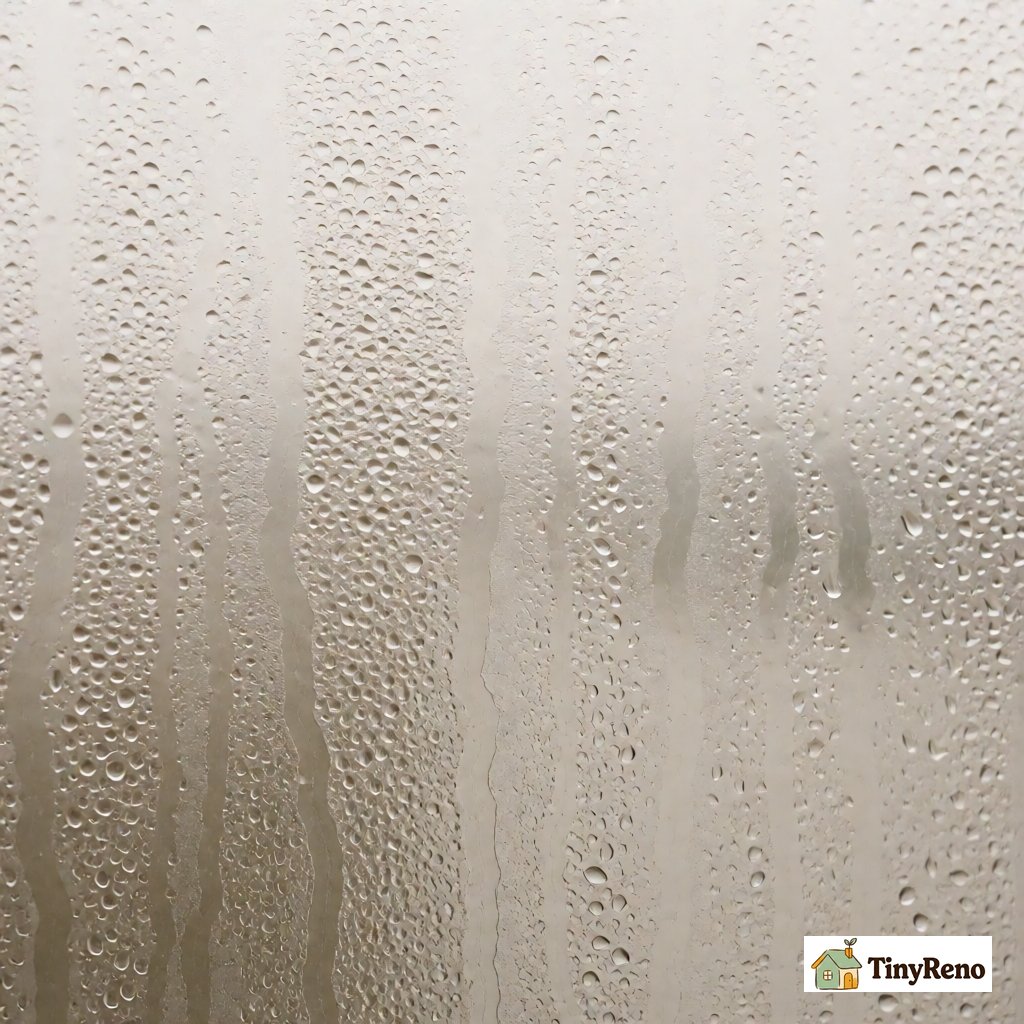
To find yours, look for evidence rather than buy a meter. Condensation on windows in the morning is the classic sign, and so is black mold in the corners of a room that is not obviously wet, and a bathroom mirror that fogs and takes an hour to clear. Soft, swollen, or peeling paint at the base of a wall is a stronger sign still, because it means water has been sitting against the surface. Wallpaper that lifts, bubbles, or comes away from the plaster at the seams is a sign, and it is the one that is most directly connected to silverfish, because that is where they are feeding.
And the layout of the room is part of the answer, not just the building. A piece of furniture pushed tight against an external wall blocks the airflow that would otherwise dry that surface, and it creates the sheltered damp channel they travel along. Moving it four inches out, or pulling it away from the wall entirely and putting it somewhere else in the room, is free and it changes the conditions. That is not a silverfish treatment. It is a humidity intervention, and it is one of the very few things in this whole subject that you can do yourself without the landlord's permission.
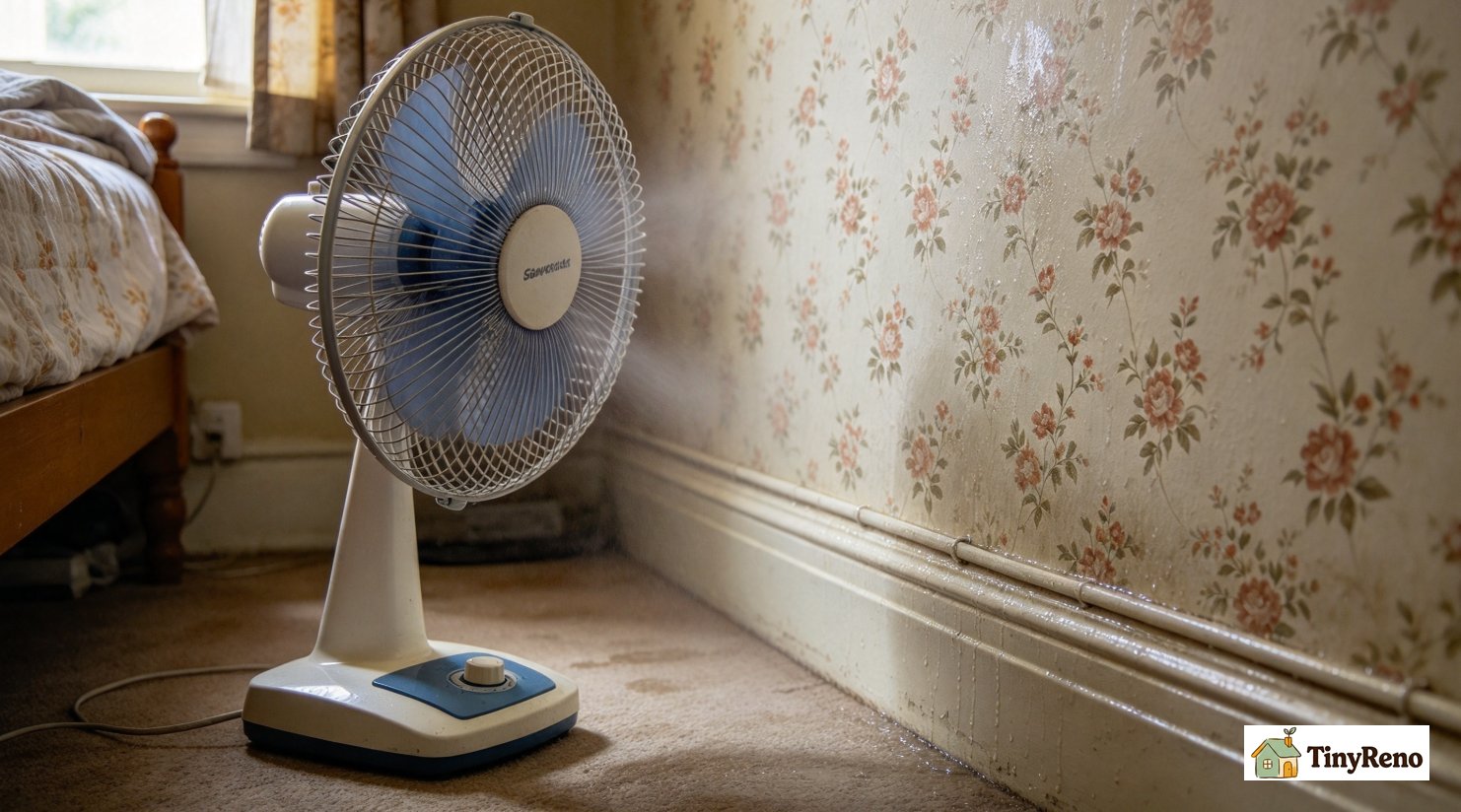
There is one more thing you can do yourself, and it is the single most effective thing. Silverfish need humidity to breed, so anything that lowers the humidity in that corner works, and the cheapest and most effective version of that is air movement. A fan in the room, even a small one on a desk, moving air across a damp wall, dries that wall. Open the window when the outside air is drier than the inside, which in winter during a dry spell is most of the time. Dry your laundry somewhere other than the bedroom. A dehumidifier, if you have one, or the desiccant sachets that people use in wardrobes, which work for the same reason.
What actually works, in the order that works
Everything below is free or nearly free, and I am putting it in the order I would actually do it, because the order is the thing that makes the difference. If you only do one thing, do the first one, and if you can only do two, do the first two.
- Move the furniture. Any wardrobe, any sideboard, any shelving unit that is touching an external wall gets pulled out from it. Four inches is enough to change the airflow across that surface, and it also breaks the sheltered damp channel they travel along behind the furniture. This costs nothing, it is reversible, and it is the single change I would bet on making the biggest difference in a small bedroom. If you have a small room and you have pushed everything to the walls to make floor space, this is the trade you should reconsider, because the floor space you gained is sitting in a damp channel.
- Move the air. A desk fan pointed at the damp wall, or even just the window open in the bedroom when the outside air is drier than the inside, dries that surface over a few days. You are not trying to dehumidify the apartment, you are trying to dry one surface, and air movement does that faster than anything else you own. In an apartment where the laundry is dried indoors, the bedroom is the worst room in the property for humidity, and moving the drying rack out of it is a third free win.
- Remove the attractant. Silverfish follow starch residue on baseboards, wallpaper seams, and floor corners. Wipe those areas with warm soapy water and a cloth to physically remove dust and residue. Baking soda does not break down starch; it is only a mild abrasive and cleaner. Repeat every couple of months, because dust and residue return. This is not cleaning for its own sake. It removes part of the food supply.
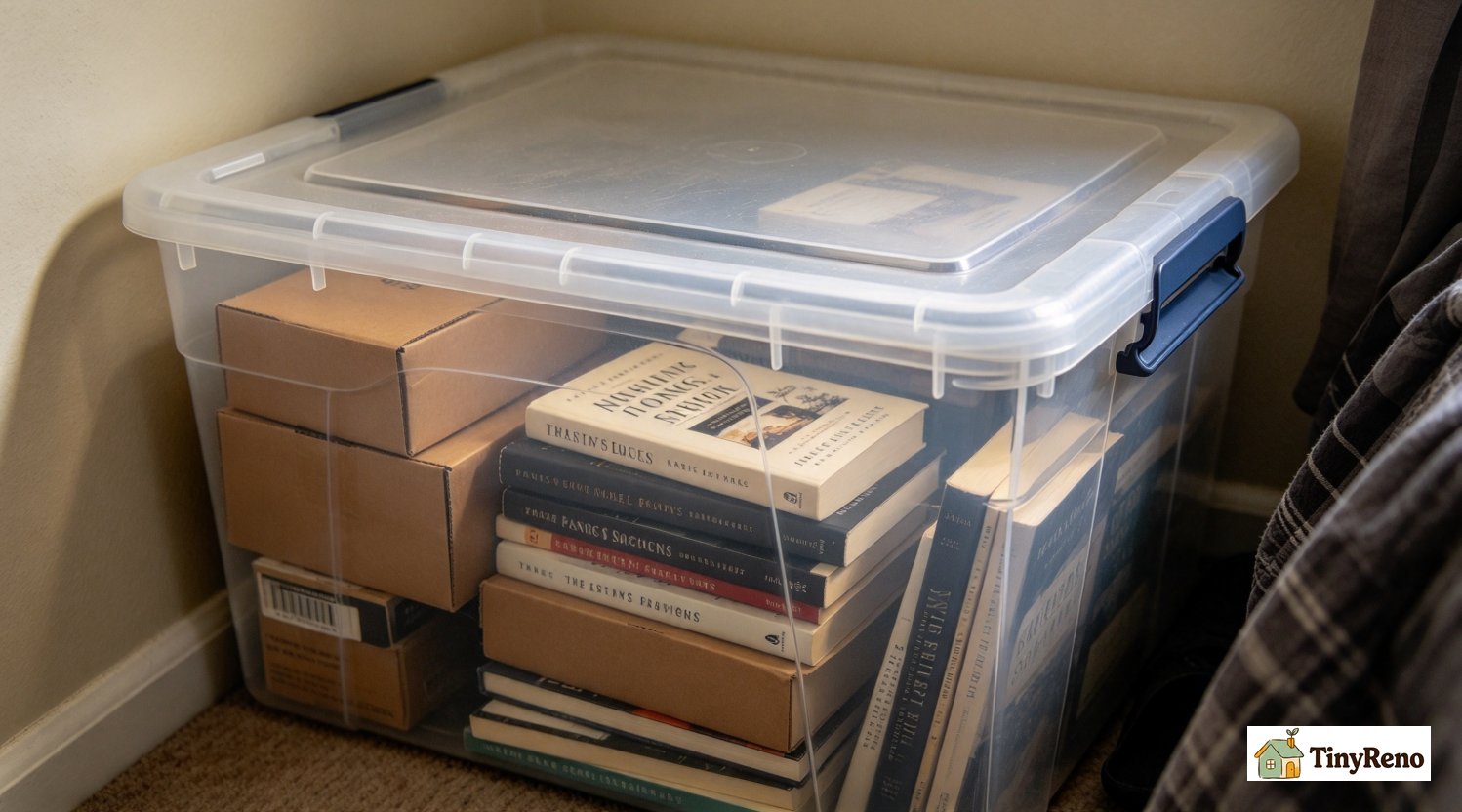
- Seal the starch. Cardboard boxes, paper, and books go into a sealed plastic container or a lidded box, not stacked against a wall and not left on top of a wardrobe where the ceiling void is warm and damp. If you keep books, a hardback in a closed bookcase is much safer than a paperback on an open shelf, and it is not worth the effort to move a whole library, but it is worth moving the stack that is in the corner that gets them.
- Desiccant or dehumidifier, only if the first four have not worked. A desiccant sachet in a closed wardrobe, or a small dehumidifier if the landlord has agreed to it. Both work, and both work because of the humidity, not because of any chemical. What I would not do is keep spraying, because aerosol sprays deposit a film on exposed surfaces, and silverfish spend very little time on exposed surfaces, so you are mostly coating your own baseboard. They also do not reach into wall voids, behind baseboard, or along the damp pipe channel, which is where the actual population lives.
What to write to the landlord
Write it as a maintenance request rather than a pest complaint. You are not telling the landlord the apartment has insects. You are reporting persistent damp in a specific place and asking for it to be inspected. Damp and ventilation problems are often the landlord’s responsibility, but the exact rule depends on your lease and local law. A pest complaint sounds like something you should handle; a damp report sounds like building maintenance.
Four things go in the note, and the fourth is the one people leave out:
- The date.
- The room and the specific wall, not just the room.
- What you have observed, described in terms of conditions rather than opinions — condensation on the window, mold in the corner, wallpaper lifting at the seam, a bathroom extractor that does not seem to be running.
- The evidence that it is damp rather than your housekeeping. For me that was a photograph of the condensation on the bedroom window taken in the morning, with the date visible. I did not have a hygrometer, and I did not need one. A dated photograph of water on the inside of a window is more persuasive than a number from an app.
While you wait, do not keep spraying. Aerosol sprays coat exposed surfaces, and silverfish spend little time there. They also do not reach wall voids, behind baseboards, or damp pipe channels where the population may live. Eggs can survive a spray cycle, so new silverfish can appear if the humidity stays high. A desiccant sachet in a closed wardrobe can help by lowering humidity, not by killing insects chemically.
The practical sequence is short. Move furniture off the exterior wall. Get air moving through the room. Wipe baseboards and wallpaper seams with warm soapy water to remove dust and residue. Put cardboard, paper, and books in sealed containers rather than against a wall. Check that the bathroom extractor actually vents outside; a fan that spins but is disconnected is a common hidden fault. If silverfish keep returning after that, you likely have a building damp problem, and the written maintenance request is the right next step.
At the end of the day, it comes down to four things, and none of them involve the spray:
- Work out what they are eating, because that tells you where they are living, and it is usually a wallpaper seam, a book, a box, or a wardrobe back.
- Find the damp, because above about seventy-five percent is the condition that makes them possible, and the damp in a rental is nearly always a building condition worth reporting.
- Report it in writing as a damp problem with dated photographic evidence, because a silverfish complaint gets ignored and a maintenance request does not.
- In the meantime do the two free things that actually change the outcome: move the furniture off the cold wall and get air moving in the room, because those two change the humidity, and humidity is the only thing that was ever really in charge.


Discussion (0)
Sign in to join the discussion