

Choosing an area rug for a small rental living room is something I got wrong twice, and the second time it cost me real money. My flat has a living room that is roughly three and a half by four metres, which is the least generous size a room can be and still qualify as a room. The first rug I bought was small and looked like a doormat for a very large door. The second rug I bought was as big as I could find, and it turned the whole room into one flat beige rectangle with nowhere to put your eyes. The room looked smaller than when it was empty.
That is the counterintuitive part, and it is the whole reason this article exists. The instinct in a small room is to cover as much floor as possible, because bare floor feels like wasted space and a rug is the fastest way to make a room look finished. But a rug does not create floor. It covers it, and by covering it in the same surface that already covers the whole room, it cancels the thing that was making the room feel like a room in the first place, which was its edges.
So here is what I settled on after the expensive mistake: leave visible floor around the rug, and let the furniture anchor the rug rather than the other way around. That is the sizing rule I now use every time.
Why a bigger rug makes a small room look smaller
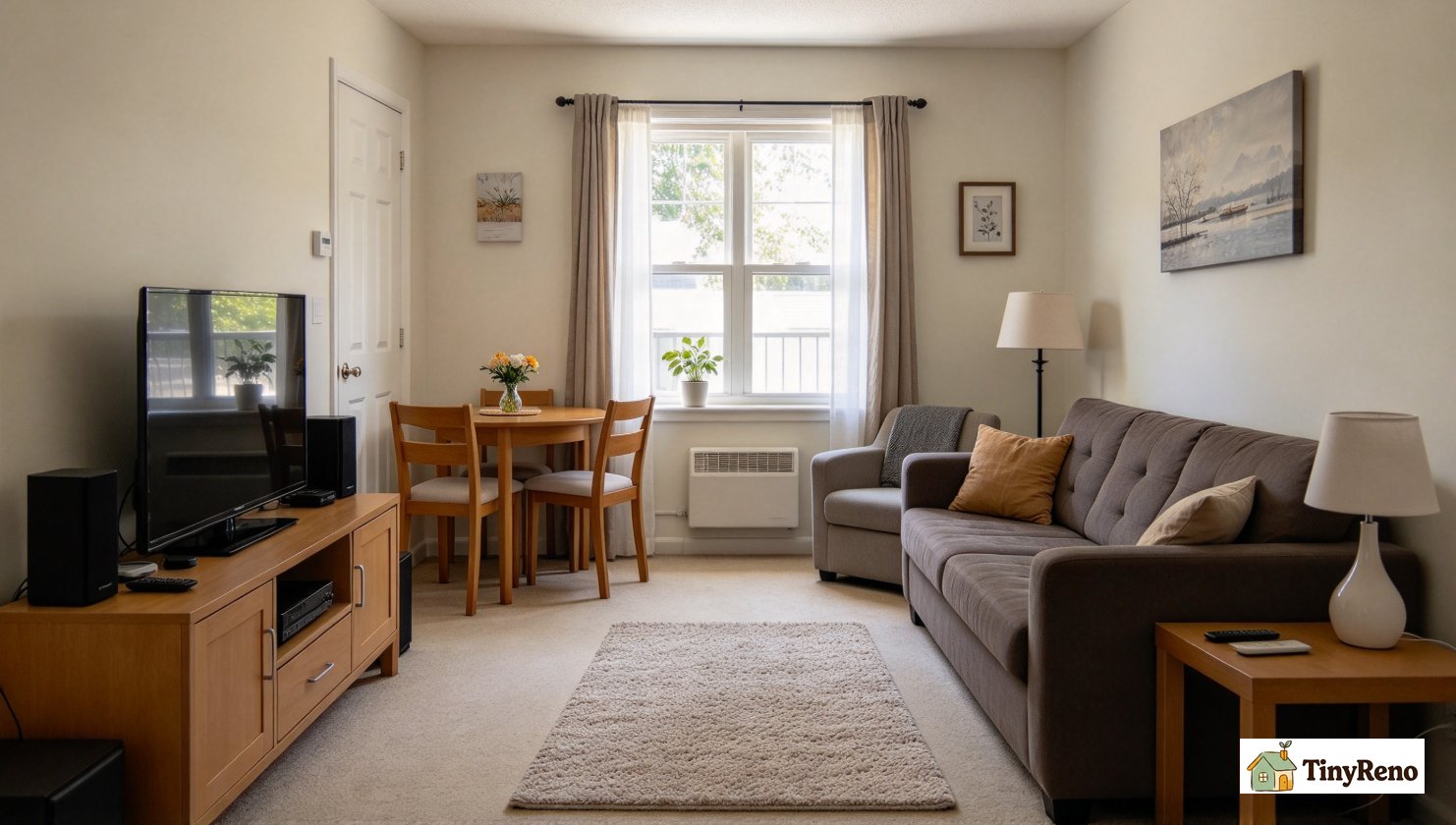
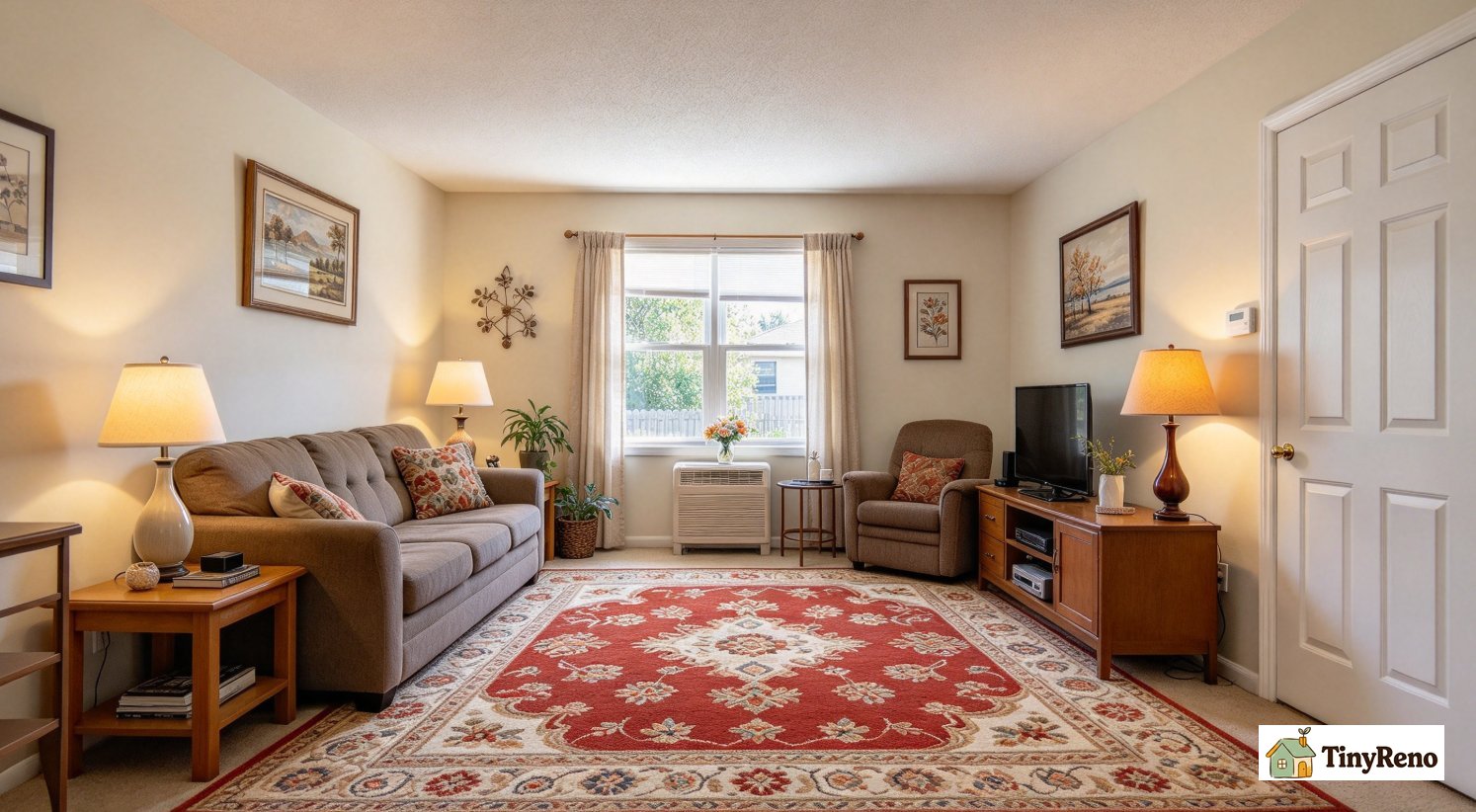
Here is the mechanism, because it is not a matter of taste. When a rug stops well short of the walls, the eye reads the room as a floor area with a defined zone sitting on it. That zone has a boundary, and a boundary is information. It tells you where the sitting area is, which is what a living room is for. The remaining bare floor around it works as a frame, and the frame is what gives the middle of the room somewhere to be.
Now take the large rug. If it touches or nearly touches the walls, there is no frame left. The flooring underneath is the same colour and texture as the rug, or close enough, so the eye no longer detects a change of surface at the edge. The room becomes one continuous plane with no corners, no depth, and no place for the eye to rest. It reads as a single big empty rectangle, and a single big empty rectangle is the least interesting thing a small room can be.
A large rug on a small floor is a common mistake in rented flats, but it is not automatic. A large rug can work if it has a clear border, a contrasting tone, or furniture arranged to define zones. The failure case is a rug that nearly matches the floor and covers almost everything, because then the room loses its edges. The person who makes that mistake often assumes they bought the wrong rug rather than the wrong size, and then buys an even bigger one.
The rule: leave 20 to 30 cm of bare floor on every side
Here is the practical version. A good starting point is to leave roughly 20 to 30 centimetres of visible flooring between the edge of the rug and the wall on all four sides. That is a guideline, not a hard rule. In a very small room it can feel like a lot, because the rug becomes an island in the middle of the floor. The point is to keep a visible border so the room still reads as a room, not as one continuous surface.
There is one exception and it matters: if the rug is going in a narrow hallway or a galley kitchen, run it lengthwise along the corridor and let it extend nearly to the walls at the far ends. A runner in a hallway is meant to connect the space, not divide it, because there is no sitting zone for it to define. The rule above is for a living room where furniture defines a seating area.
The ceiling matters too. In a low-ceilinged room, a very busy rug or a heavy border can make the floor feel loud and the room feel lower. A plainer low-pile rug in a muted tone is often easier to live with, but this is a matter of taste and light. The goal is not to ban pattern. The goal is to avoid a floor that competes with everything else in a small room.
Everything above assumes one thing, which is that the rug has a job. A rug in a small flat is not decoration, it is a way of telling a room where the sitting is. If you are choosing an area rug small apartment living room renter setup from scratch, the job comes first and the colour comes after.
Get the furniture on the rug, not the rug under everything
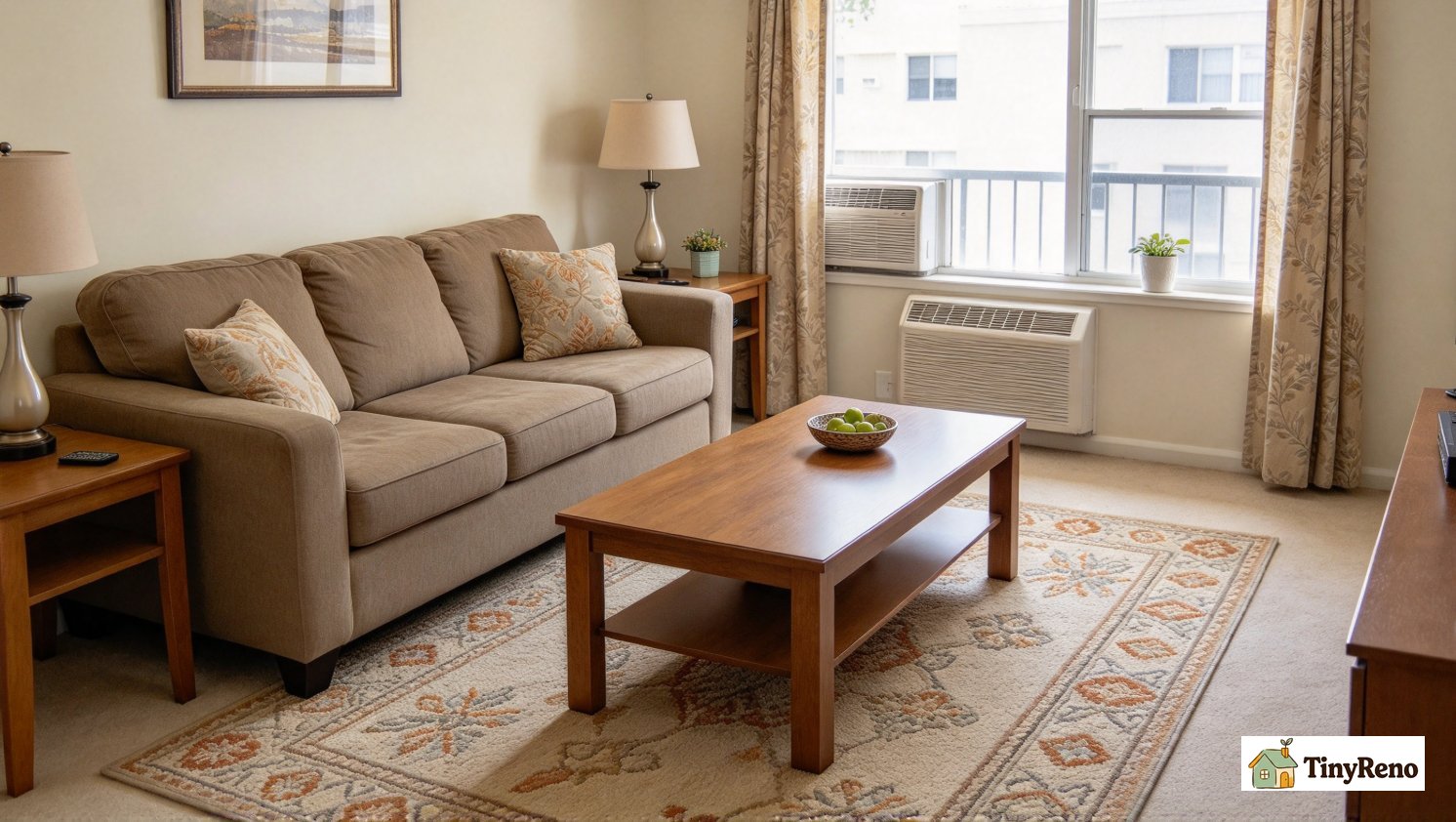
Here is the second half of the rule, and it is the half people skip. A rug reads as intentional when the front legs of the main seating pieces sit on it. The back legs can hang off. The rug is doing its job when the furniture is anchored to it, and the furniture is doing its job when the rug defines where the furniture belongs.
The common failure is a rug in the middle of the room with the sofa pushed back against the wall, entirely off the carpet. That can look like a mat on the floor rather than a defined sitting area. If the sofa cannot get its front legs onto the rug, the rug is probably too small or in the wrong place. If the sofa is too big for the room, a bigger rug will not fix it. A smaller sofa or a different layout might.
For a coffee table, the same idea applies but with more room to move. Ideally the table sits entirely on the rug with clearance around it, or it sits just off the rug with at least its front legs overlapping. What you are avoiding is a table floating in the gap between the sofa and the rug, which is the single most common layout problem in small rented living rooms and is also the easiest thing to fix by moving two objects.
This is also the part where renters should slow down more than everyone else, because a rug that will live in a flat you might leave in a year is a purchase with a deadline attached to it, whether the shop knows that or not.
Measure before you buy, and ask about the return policy
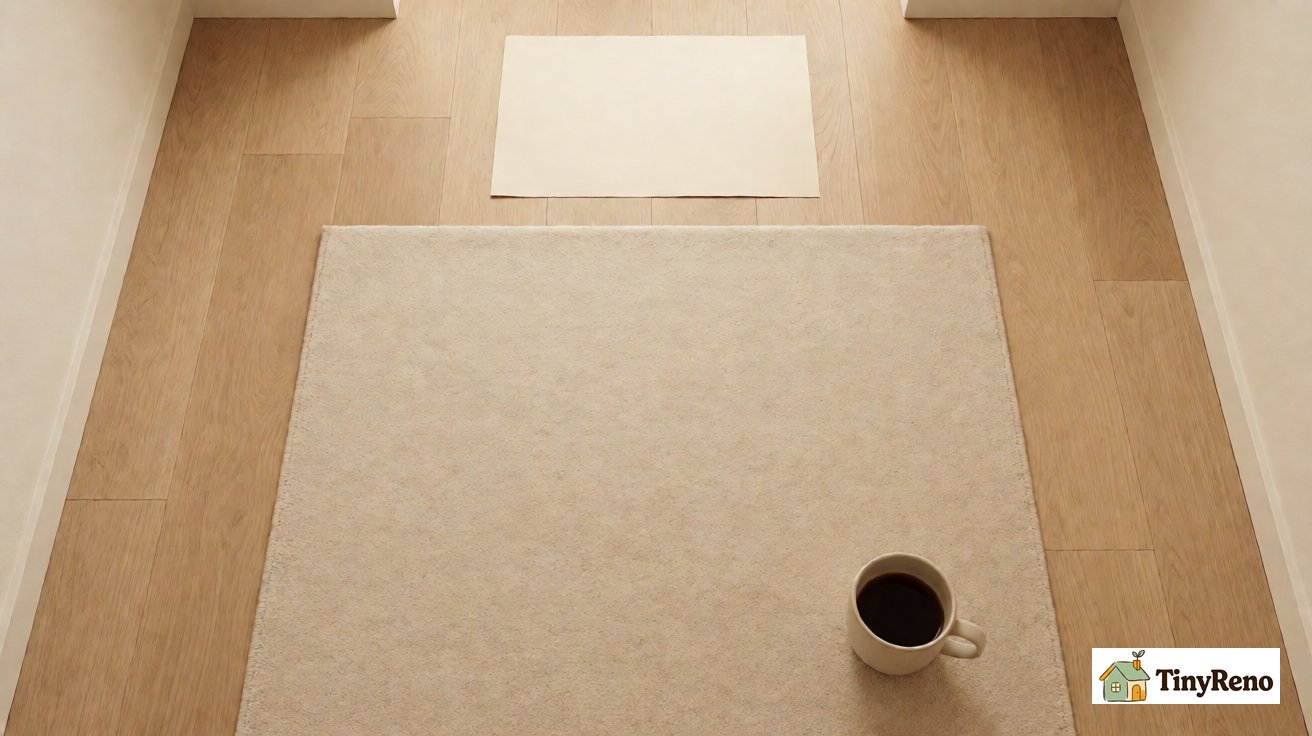
Two pieces of admin that save the whole transaction. First, measure. Do not measure the room, measure the floor area where the rug will go, then measure your sofa width and add roughly 20 to 30 centimetres on each side. That gives you the width you need. If the number you get is bigger than anything you can find in a shop, that is useful information and it should stop the purchase, not delay it.
Second, check the return window before you order. This matters more in a rental than in a house you own. Rugs are hard to judge from a photo, because pattern scale, color, pile depth, and backing all look different in your light and on your floor. Look for a return window that is long enough to test the rug in the room, and check whether the clock starts from the order date or the delivery date.
If you are waiting on a delivery slot, ask the store to date the window from delivery. This came up for me: the rug took nine days to arrive, and the thirty-day clock had already run for six of them by the time it was in my hands. The store was fine about it once I asked, but I had to ask. If you are in a rental where you might need to get rid of the rug quickly, the return policy is not a detail, it is the whole transaction.
One more thing: protect the carpet you are renting
Most apartments with wall-to-wall carpet are actually the easier case for a rug, and I only realised this after a year of treating the carpet as a problem to avoid. A rug over carpet is doing you a favour. It takes the wear, the spills, and the traffic from the carpet underneath, which is exactly the carpet you will be judged on at the end of your lease when the deposit is decided.
One thing to watch is a rug with a thick rubber or vinyl backing laid directly on good carpet. In some conditions that can trap moisture or leave an imprint when you move the rug. A low-pile rug with a breathable cloth or jute backing is usually safer for carpet and for a concrete subfloor, which is common in pre-war buildings. If you are not sure, ask the landlord or use a thin rug pad made for carpet.
So the whole question comes down to two decisions that cost nothing to get right: leave visible floor around the edges, and get the sofa's front legs onto the rug. Pattern, color, and price matter, but they are secondary to size and placement. Most people spend their attention on the secondary stuff and get the primary decision backwards.


Discussion (0)
Sign in to join the discussion