

Dressing in layers for a winter rental apartment is the heating strategy that finally worked for me, and it took me three winters and two bad heaters to arrive at it. The thermostat was doing its job. I was the problem, in the sense that I was trying to solve a body-temperature problem with a machine, and machines are bad at that job. The thing that finally worked was the free option I had been ignoring for two years, which is what this article is about, and it starts with the least glamorous layer.
Before I get into the layers themselves, I want to be clear about what they are and are not, because there is a version of this advice that is a lie told to people who do not want to spend money. Clothes do not generate heat. Nothing you wear creates warmth out of nothing. What clothing does is slow heat leaving your body, and that is worth a surprising amount once you get the structure right. But you cannot wear five layers and stop paying your heating bill, and anyone who tells you otherwise is selling you something.
What layers do buy you is range. You can be warm at 66 degrees without overheating at 73, and you can be comfortable in the kitchen for twenty minutes without peeling off everything you have on. That range is what actually cuts your heating use, because it lets you turn the thermostat down a degree or two and lets you use a heater for half as long. Here is how I structure it.
Layer one goes against your skin and it is the one that matters
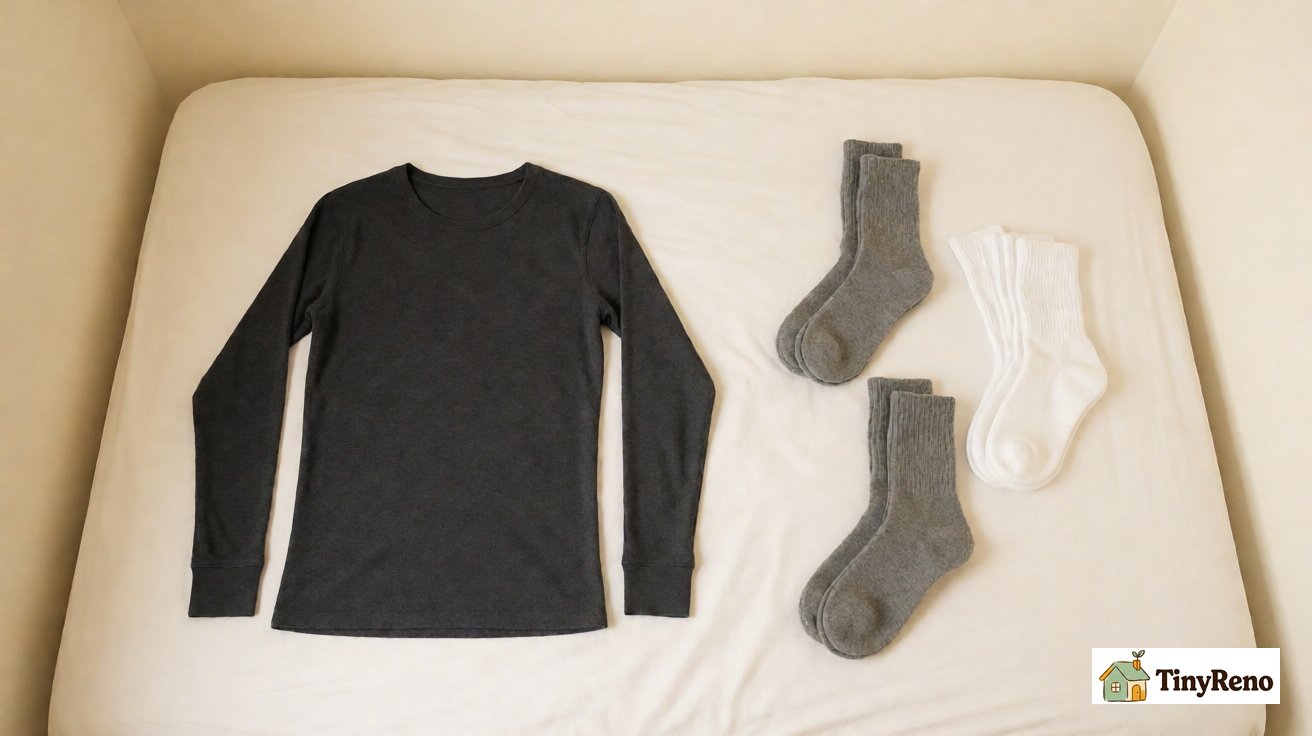
The base layer is the only layer doing something no other layer can do. Your skin sweats even when you feel cold, and that moisture is the enemy. Cotton next to the skin absorbs sweat and holds it there. A damp cotton layer can feel colder than a dry layer because water conducts heat away faster than trapped air. It is not literally worse than wearing nothing, but it is a poor base layer in the cold. A synthetic or merino base layer wicks that moisture outward into the next layer and leaves your skin dry, which is the entire job.
When I first heard this I thought it was marketing language for a more expensive shirt. It is not. The difference is that a wet cotton layer against a cold back is a cold back, and there is no amount of fleece on top of that fixing it. Merino also has the useful property of staying warm when it is slightly damp, so a base layer that has picked up a little moisture on the walk home does not collapse the way cotton does.
This is where I would spend money first if I had none to spare. A three-pack of thin merino base layers often costs less than a good fleece jacket, though prices vary. It does a lot for how you feel in a cold apartment because it sits next to your skin, where moisture management matters most. If you buy one thing from this article, buy these.
Before I get to the second layer, one thing I should say plainly: the whole point of this approach is that you can adjust one piece at a time. That is what makes it work in a rented apartment where the thermostat is not yours to change.
Layer two traps air, and air is the actual insulation
Here is the mechanism that makes the middle layer work, and it is worth understanding because it changes what you buy. What traps heat is not the wool or the polyester itself. It is a layer of still air held between fibres. A fleece works because its long pile traps a thick, still layer of air. A wool sweater works because the yarn structure holds air in place. A dense, tight, thin shirt traps almost nothing, which is why it feels pointless in the cold no matter how much you paid for it.
So the middle layer should be fluffy and loose, and it should be the layer you add or remove first. I wear a fleece, and I have a thinner one for the milder days when the base plus a shirt is enough. The mistake I used to make was owning one heavy mid layer and then being either too hot or too cold with it.
One more thing about the middle layer: it works best slightly loose. A tight compression layer pressed flat against you has less air in it, which means less insulation. If your mid layer fits like it was vacuum packed, it is doing less work than you paid it to do.
The first winter I tried this routine, I got the base and mid layers right and still felt cold in the evenings. The gap was the outer layer, and it was the gap I had been ignoring for years because it seemed like a minor detail.
Layer three blocks drafts, and indoors it should be light
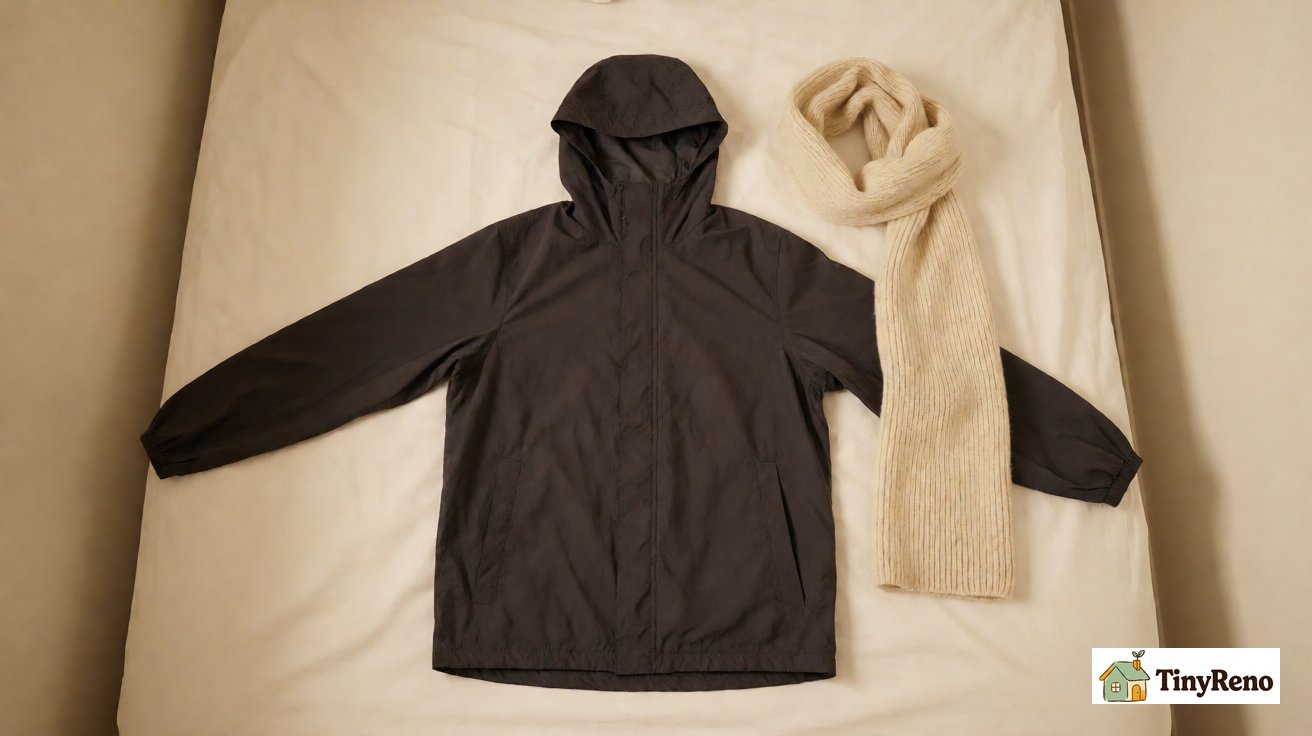
The outer layer has one job, and it is not warmth. It is stopping moving air from replacing the warm air at your skin. Wind does that far more effectively than cold does, which is why a windproof shell keeps you comfortable at a temperature that a thin cotton jacket cannot.
But here is where most people get this wrong indoors, and I was one of them for years. Your winter coat is engineered for a very different environment. It traps a large volume of air, and that air is the insulation, and that volume of trapped air is precisely what makes it too hot the moment you step into a heated room. Wearing a good coat indoors means you are overheating, which means you take it off, which means your body cools, which means you feel cold again. The coat creates a cycle that ends with you feeling uncomfortable and having paid for the coat.
Indoors, the outer layer should be thin, windproof, and easy to push up over your arms. A shell, a light overshirt, or a cardigan does the job. You want to be able to get it off in ten seconds without thinking about it, because the moment it becomes annoying you will stop taking it off, and then you are just warm with a coat on indoors, which is not a thing anyone should enjoy.
What actually goes wrong: feet, then head, then the draft at the door
Layers on your torso are the part everyone thinks about, and they are not where most of the loss happens. I want to give you the ordering I found by measuring, because it changes what you buy on a tight budget. Feet first, then head, then the specific places where cold air moves through your apartment.
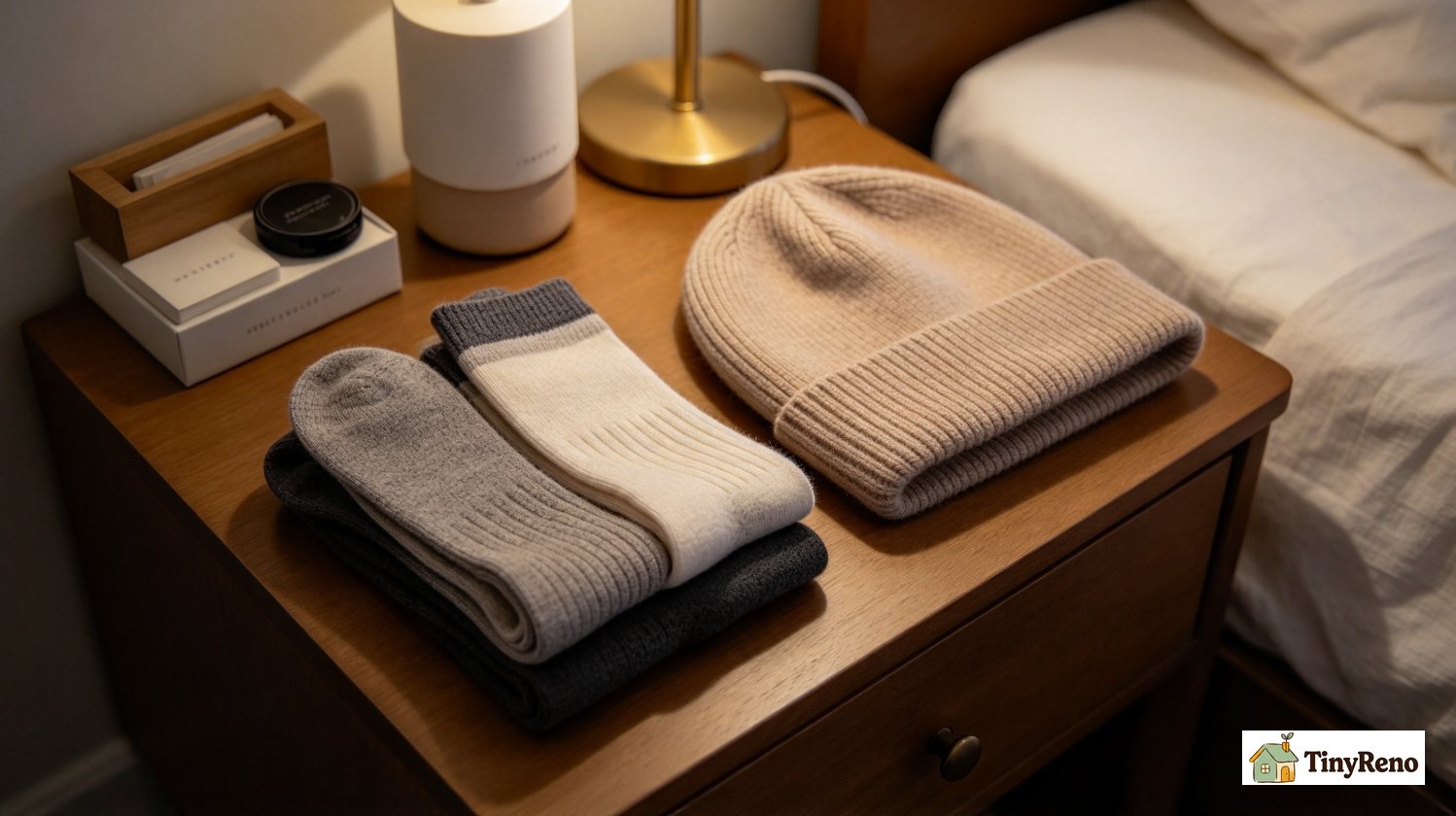
Feet are one of the cheapest fixes in the article. Two thin wool socks can be warmer than one thick pair because one layer moves moisture and the other traps air. The catch is fit: if two pairs make your boots too tight, use one pair and keep the boots loose enough for circulation. A pair of good wool socks costs a few dollars and I would argue it is the single best value in the whole list. Keep a second pair by the bed, so you can change the moment you get home instead of waiting for your feet to recover.
Head next. I resisted this for a long time because a hat indoors felt ridiculous. A thin beanie does help, but not because “most heat escapes through your head.” That claim is exaggerated. Your head and face are often exposed, wind and damp hair increase heat loss, and covering them makes you feel warmer. A thin beanie costs almost nothing and is easy to take off. I do not wear one all day. I wear one for the first twenty minutes after coming in from the cold, and then it comes off. That twenty minutes is when you are deciding whether you are going to spend the evening shivering or not, and a hat settles that question in your favour.
Third, and this is specific to renting: the drafts at your own front door. A gap under the door is a direct, measurable channel for cold air into the room you are paying to heat, and it is a problem you can fix for under a dollar without touching anything the landlord owns. I have put a rolled towel along the bottom of my door in every apartment I have rented since 2019, and it makes a bigger difference than any single clothing item I own.
If you take one idea from this, make it the system of base, mid, outer, and then the feet and the head. The order of where you spend money matters more than the amount.
What it actually costs, and what it actually saves
Here is the honest arithmetic, because the version of this advice that promises dramatic savings is not true. Layers do not generate heat, so they cannot make your heating bill go to zero. What they do is let you set the thermostat a degree or two lower without feeling cold, and let you run a space heater for half as long instead of all evening. Across three winters, my own bills suggested savings in the low double digits per month, but that depends on your climate, electricity rate, and how leaky the apartment is. It is real money, not life-changing money.
The larger benefit is not on the bill. It is that a warm apartment is a place you can sit still in. Before I worked out the layers, I spent my evenings in a heavy cardigan with a blanket over my knees, waiting for my hands to stop being cold enough to type. I was paying for that blanket in comfort. Now I am not, and I did not get there by buying a better blanket.
If you want a spending order: merino base layers first, wool socks second, a decent fleece third, a windproof shell fourth, and a hat last. The free steps—closing door drafts, wearing what you already own, and adjusting the thermostat—come before all of them, and they are the part most people skip.


Discussion (0)
Sign in to join the discussion