

Apartment Trash Room Rules: What the Two-Line Notice Actually Means
Trash room rules are often the least documented rules in a building, and they can generate written warnings faster than almost any other building policy. Ours is a two-line notice taped inside the door. In one week, a single pizza box in the hallway produced written notices for three different units.
Three of us share a two-bedroom in Chicago. In February, someone left a pizza box in the hallway outside the trash room. Not inside the room. In the hallway. Management sent a written notice to every unit on the floor, including the unit of the person who took a photo and emailed the super. None of the three units had touched the box. The notices were issued because the box was visible, on the floor, in a traffic path, and already starting to smell.
That episode made me read the whole building policy, which I recommend to anyone who has just received one. Here is what is actually enforceable, what is only folklore, and the checklist I now give to anyone who moves in here.
What the policy actually says, verbatim
Our notice reads, in full, two lines: bagged refuse only. Cardboard must be flattened and placed in the designated recycling bin. No refuse outside the room door, on the floor, or in the hallway at any time.
That is it. Everything people believe about trash room rules beyond those two lines is inference, and some of that inference is wrong in ways that cost people comfort for no reason.
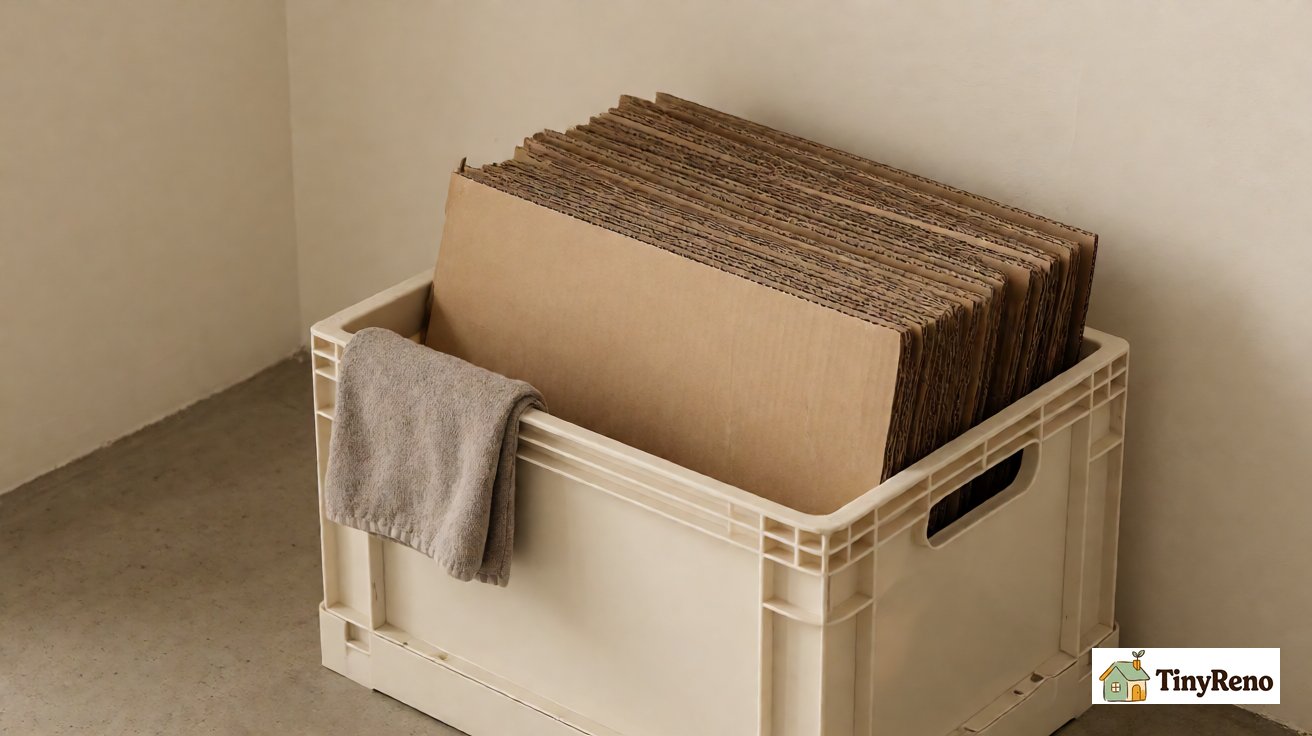
Cardboard in the recycling bin, flattened, is explicitly allowed. This is the one most people get wrong. About a third of the complaints in this building have been about pizza boxes, and the actual policy permits them in the recycling container as long as they are flat. An unflattened box is the violation. A flattened box in the wrong bin is also a violation. A flattened box in the right bin is fine.
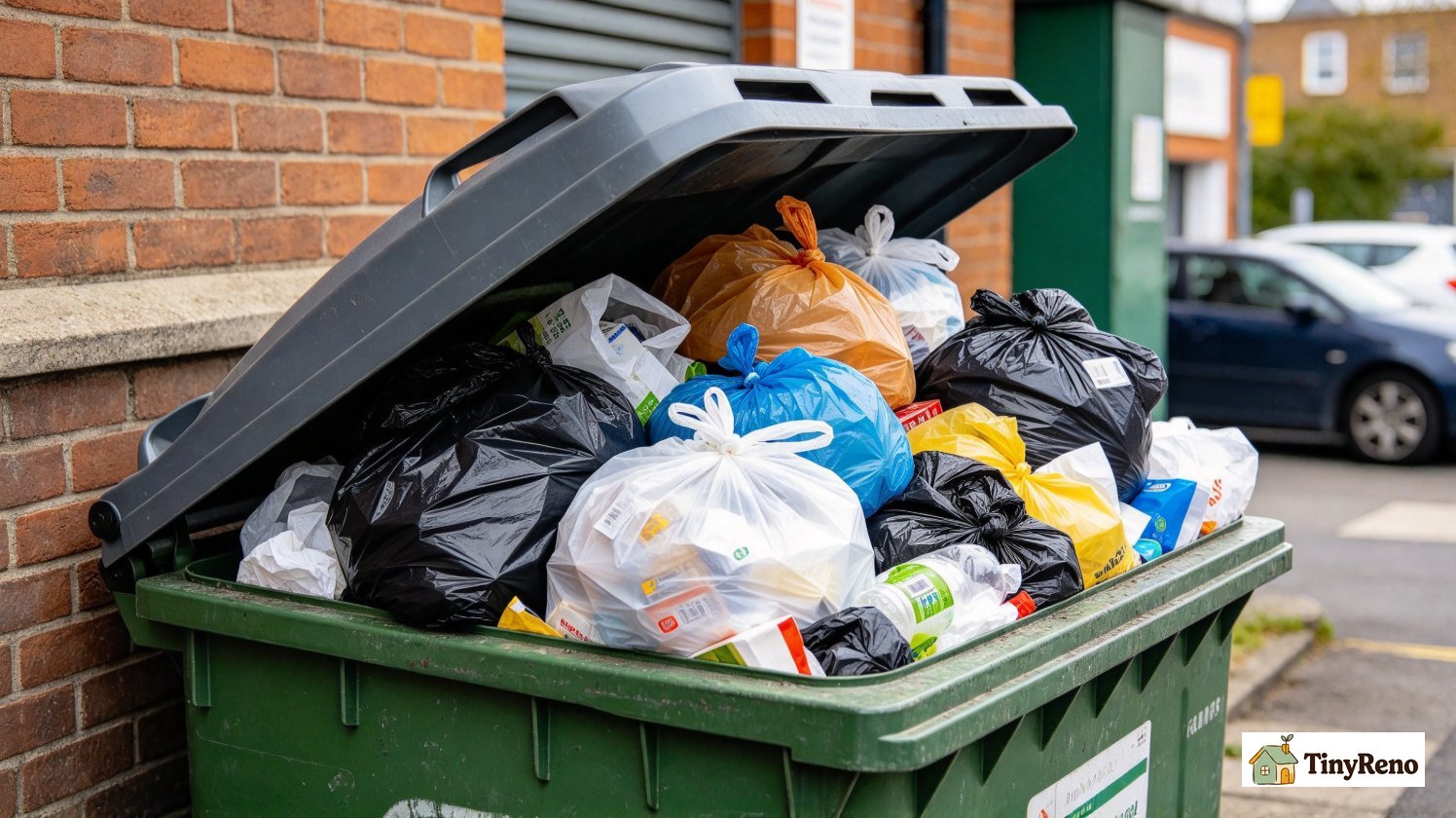
Bagged refuse only. Loose bags, a stack of boxes without a bin, or a bin so full the lid will not close is what generates the odours that produce most formal complaints. The person complaining rarely knows or cares who made the mess.
The checklist: eight rules that actually get enforced
This is the list I give people, in the order they matter.
- Flatten cardboard. A box that is flat takes up a fraction of the space and cannot be called an obstruction.
- Cardboard goes in recycling, refuse goes in trash. This is the rule people break by optimising, putting the pizza box in the trash bin because it was already full.
- Lid closes. If the lid cannot close, the bin is over capacity and that is the violation people get written up for.
- Never leave anything outside the door. Not for two minutes. Not to go to the car. This is the single most commonly enforced rule and the only one I would call genuinely strict.
- Bags, not loose. Loose refuse in the bin is fine in most buildings, loose refuse on the floor of the room is not.
- Tie liquid bags. A leak from soup or juice in a bag is the fastest route to an infestation complaint, and infestations get handled by a company at landlord expense.
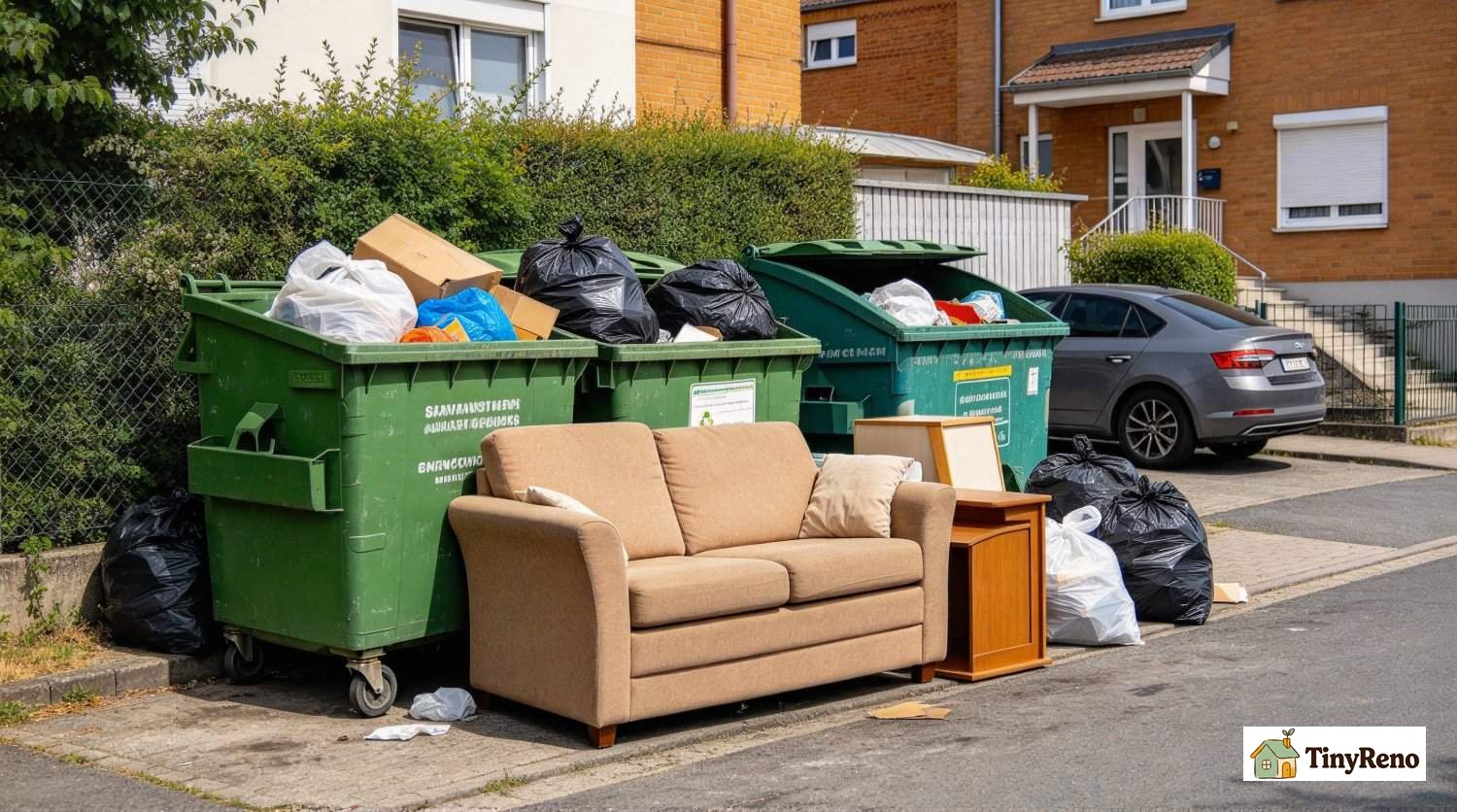
- Break down bulky items. If it will not fit with the lid closed, it does not go in. Bulky furniture is a scheduled pickup or a trip to somewhere else entirely.
- Wipe the rim and the floor in front of the bin. Almost nobody does this and it removes the majority of the complaints you would otherwise receive.
None of the apartment trash room rules on that list are controversial and none of them are hard. They are simply the difference between a trash room that smells fine and one that a management company has to deal with.
What is not worth fighting
Three things people get heated about that are usually not worth arguing over.
The bag you use. Our notice says “bagged refuse” but does not specify a bag color, size, or type. If your lease or building notice does not specify it, a super is unlikely to write you up for it. Arguing about bag type at 11 p.m. is rarely worth the energy.
How often you take trash out. Unless your lease or the notice sets a schedule, there is usually no fixed frequency. But if trash left in the unit creates an odor or attracts pests, the lease’s general sanitation clause may still apply. The practical test is what the trash room looks and smells like, not how many times you carried a bag down.
Recycling contamination. If your building has no specific sorting notice, one plastic container in the recycling bin is unlikely to be a written-warning offense. It may still get a note on the door. Treat the note as a reminder, not necessarily as a formal violation.
What actually triggers a written warning
After watching this happen about a dozen times, I would describe the pattern this way. In this building, written warnings usually come from one of three situations.
An identifiable mess. Refuse in the hallway, on the stair landing, or beside the bin is visible and easy to attribute. That is the most direct route to a notice.
A smell or pest problem. Once there is a pest complaint, management may bring in a company, document the problem, and issue notices to every unit on the floor. You can be written up for someone else’s mess in that scenario.
A bin left over capacity. A bin packed above the rim, or a second container beside it, can be treated as an obstruction even if nobody knows who filled it.
The pizza box triggered more than one of these at once. It was visible, it was on the floor in a traffic path, and it started to smell within an hour. That is why one box produced notices for three units, not because three people had each done something different.
Where the package locker boundary sits
This is the area people get genuinely confused, so I will be specific rather than clever.
The trash room is for refuse and recycling. It is not a parcel room, and it is not a package staging area. If a box arrives at your door from a delivery and you bring it down to the trash room instead of leaving it in your apartment, that is not a trash room rule, it is a delivery problem, and the carrier handles it.
The genuinely correct move when a parcel is too large for your unit is to take it inside, open it, flatten it, and then it is recycling like anything else. A sealed box left by the trash room door or in the hallway waiting for a friend is the exact scenario that produces the notice we opened this story with.
The distinction that matters: cardboard that is refuse becomes recycling when you flatten it. A parcel is not refuse until you open it, and until then it is a delivery belonging to you.
Four questions to ask in your first week
Any of these can be answered by the super in a text, and all four prevent the most common first-month violation.
- Where is the recycling bin, and is cardboard allowed in it?
- Are there items that are not permitted, and where do those go instead?
- Is there a pickup schedule for bulky items, or a specific day?
- Is there any container I need to bring down myself, or are bags provided?
Question one is the one that resolves the pizza box situation permanently in the right direction. Most buildings permit cardboard in recycling and almost nobody knows it, so a lot of perfectly good recycling gets thrown away because people assume boxes are banned.
The short version
Most trash room problems come down to three conditions: nothing visible outside the door, the bin lid closes, and nothing smells. Flatten your cardboard, bag and tie your liquids, wipe the rim, and keep the hallway clear.
Every conversation I have had about this building’s trash room since then has come back to the same two lines taped inside the door. The pizza box produced written notices for three units and taught me to read a two-line policy properly. I have passed that reading on to about twenty people who moved in after us, and the hallway has stayed empty since.


Discussion (0)
Sign in to join the discussion