

A heat outage in a rental apartment is decided in the first hour, not after you decide to escalate. Our building lost heating for nineteen hours in January with a six-week-old at home, and the difference between our neighbor's freezing apartment and ours was eleven minutes of ordering.
I am going to walk the actual sequence, including the two things I did that I now think were mistakes, because the version of this you can follow at 4am is a checklist and not a story. This is that checklist, with the reasoning attached.
Minute zero to ten: establish whether it is you or the building
Before anything else, find out whether the problem is your unit or the whole system. Check whether your neighbors have heat by knocking, or by asking in the building group chat if one exists. This single question determines everything that follows. If the whole building is cold, that is a heat outage owned entirely by the landlord, and your job for the next ten minutes is reporting it, not repairing it.
If the entire building is cold, it is a landlord emergency, not a tenant problem, and you should be calling, not fiddling. If only your unit is cold, it may be a valve, a bled radiator, or a thermostat that has slipped, and those are different problems with different urgency.
Also do the one diagnostic that costs nothing and is skipped constantly: put a hand on the radiator. A radiator that is cold while the boiler upstairs is running points at your own loop, not the building.
Minute ten to thirty: the first call, and how to make it count
When you call the emergency line, the first thing they will ask is what kind of heat you have. Have this ready before you call, because being asked four preliminary questions at 4am delays the actual dispatch.
Know your heat type: forced air through vents, hot water baseboard radiators, a wall unit you control, or a building boiler with no in-unit control. Know whether the building has an after-hours number that a human answers. Know whether there are children, elderly residents, or anyone with a medical condition in the unit, because that changes your priority and you should say it in the first sentence rather than the tenth.
Get a reference number or a ticket name. This sounds bureaucratic and it is the single thing that makes the follow-up call land differently. Without it you are calling cold and getting told the system is already aware. With it you are calling as someone who was given a ticket.
Minute thirty to ninety: what you are allowed to do yourself
This is the part where people make expensive mistakes, so here is the honest list:
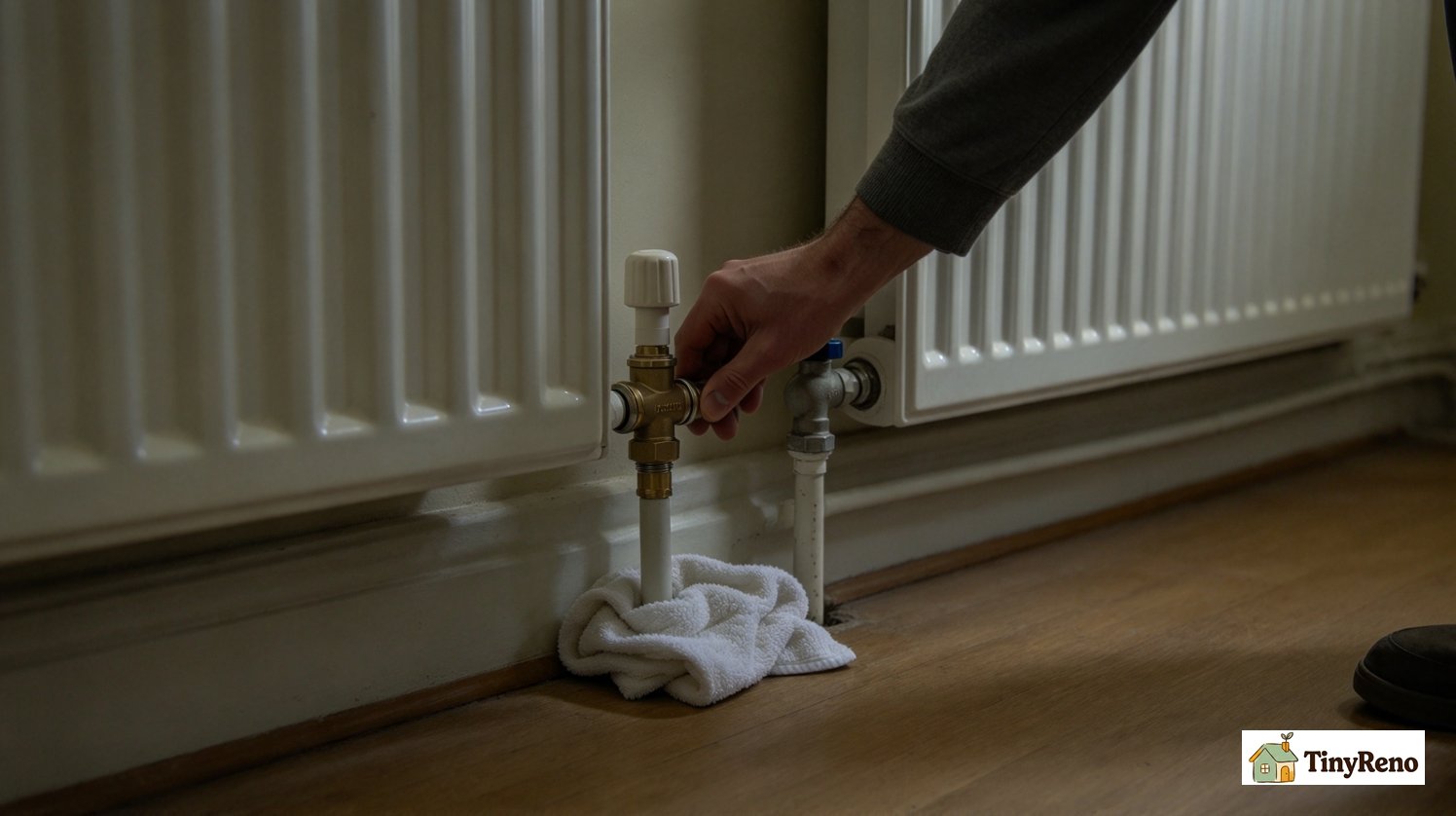
- Bleed a radiator. Usually fine, once. If your building uses hot water radiators and you have a bleed key, bleeding a cold radiator is routine, you can do it, and it fixes the single most common cause of a cold unit in winter. Put a towel down, open the bleed screw a quarter turn slowly, let it hiss until water comes out, close it, then check that it is warm along its length. If it warms from the middle outward, that was the problem. If it does not warm up after one bleed, do not keep bleeding it — continued bleeding just drains water from the system and does not fix a pump or valve fault. That is the point where you wait for the landlord.
- Do not bleed a boiler, or any system you do not recognise. If what is on your wall is a tank, or if the pipes are copper running out of a closet, stop. Those are not tenant systems and releasing pressure from one can leave the whole building without hot water. Do not touch anything with a pressure gauge on it.
- Check for a tripped breaker only if the heat is electric and you know why. This is reasonable for a baseboard electric system where one circuit serves the heating and it tripped when something else overloaded. It is not reasonable to start pulling breakers in a panel you cannot label, in a building where you do not know which circuits are shared.
- Never, under any circumstances, restart a boiler yourself. I want this in bold because people do attempt it. It is unsafe, it is almost certainly against your lease, and if it goes wrong the liability is yours. This is the first thing on the list of things I would never do again, and it is on the list because a neighbor told me he was about to and I talked him out of it.
Hour two onward: warm the people, not the apartment
Once you have reported it and done the tenant-level checks, your goal shifts. You are not trying to get the living room to 70 degrees. You are trying to keep one room at a survivable temperature and get through the hours until someone comes.
What actually works, in order of how much it helped us:
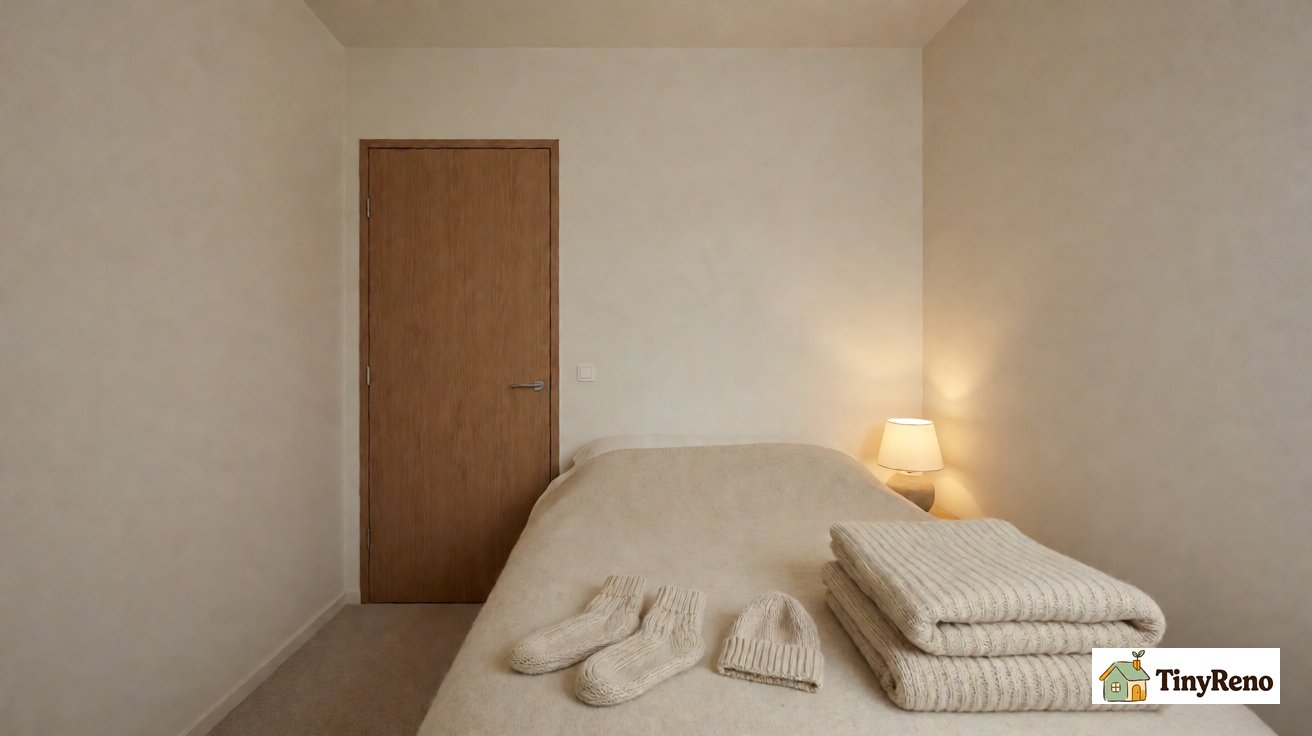
- One room, closed off. Pick the smallest room you can live in, close its door, and put everyone in it. This is counterintuitive and it is the most effective thing available to a tenant. Heat escaping into a 900-square-foot apartment all night is what drains a residual system; heat confined to a bedroom with the door shut stays.
- Heat people, not air. A space heater warms a region of the room. An electric blanket warms the person. For an infant especially, warmed bedding and a swaddle beat a room-temperature room every time. Body heat is a heat source and a blanket preserves it. But remember the electric blanket rule: warm the bed before you get in, then turn it off. Do not run it all night under your body weight.
- Oven heat is not a heating plan. Turning a gas oven on and leaving it does not heat a room, and it introduces carbon monoxide risk into a space you are sleeping in. I considered it once. Do not. And if you have any combustion appliance running — a gas oven, a kerosene heater, anything with a flame — open a window a crack and make sure you have a working carbon monoxide detector. If you do not have a CO detector, do not run any combustion heater indoors, period. CO is odourless and it kills people in their sleep in exactly this scenario.
- Layer from the inside out. Wool or synthetic next to skin, cotton over that, and the loose layer on top. An adult generates meaningful heat and the whole task of clothing in a heat outage is to stop it escaping. Two socks matter more than one heavy coat.
- Do not use candles for heat. People reach for candles when the power and heat both go out, and a candle does almost nothing to warm a room but does a great job of starting a fire on a curtain or a pile of laundry. Use a flashlight. If you need light, battery light is the safe version.
When to give up and leave
This is the part that almost every heat outage guide skips, and it is the most important one. You can only layer and huddle for so long. Once the indoor temperature drops below about 59 degrees — and faster if there is a baby, an older adult, or someone with a medical condition in the unit — you are no longer in "wait it out" territory. You are in "go somewhere warm" territory. A building common room, a neighbor's apartment, a library, a community centre, a warming shelter. Bundle up, take the baby, and go. Huddling in a cold apartment past that point is how people end up in the emergency room, and no amount of documentation is worth that.
The other trigger is simpler: if anyone starts shivering uncontrollably, stops making sense, or the baby is unusually lethargic, leave immediately. Those are hypothermia signs, not "it's a bit chilly" signs.
Document while it is happening, not afterwards
This is the part people skip and it is what turns a bad night into money or into nothing.
Photograph the thermostat reading on a clock face. Photograph the radiator cold. Time-lapse your phone on the corner of the room and let it record, because a video with a timestamp showing the temperature climbing over an hour is much stronger evidence than a photo taken at the worst moment.
Write down the call time, the reference number, the name you spoke to, and what they said. Our super told us at 4:40am that a boiler part was needed and would arrive in the morning. That sentence, written down at the time, is the entire basis of how we later got our electric bill handled.
Keep receipts for anything you buy to cope: the space heater, the electric blanket, the fuel for driving to a warming centre. In most places those are recoverable if you have documented the failure and did not wait unreasonably before spending.
What I now keep in one bag
Every heat outage night since has begun the same way, with someone standing in a cold apartment trying to work out who to call. A bag that is already packed removes the only part of an emergency that actually goes wrong at 4am.
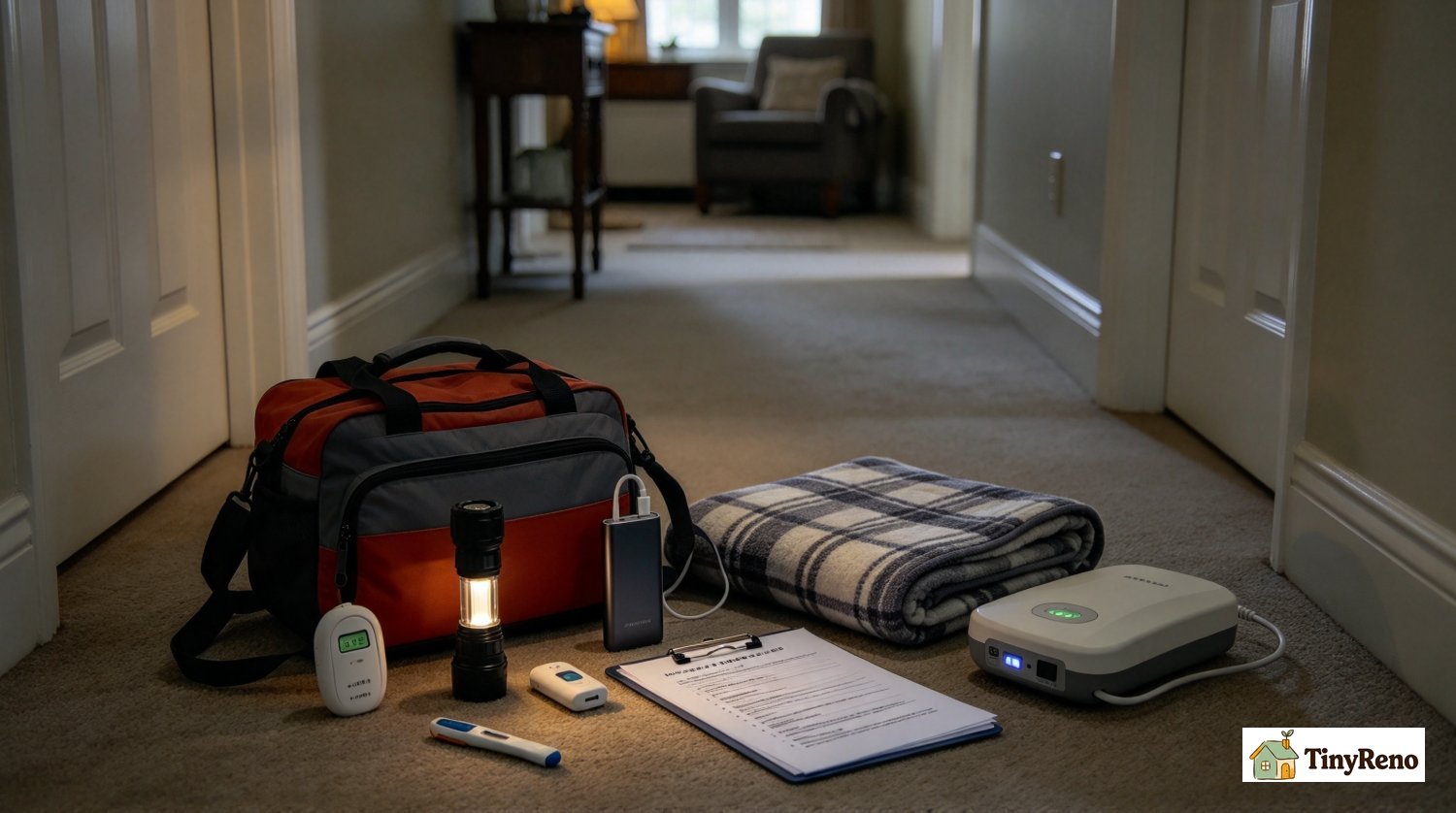
Nineteen hours is long enough that at 4am you do not want to be deciding what to search for. This is the drawer that now exists in our hallway, restocked twice since:
- One space heater, working, with its cord — and plug it directly into a wall outlet, never a strip. Two heaters on the same circuit will trip the breaker, which is the last thing you need at 4am.
- One electric blanket sized for the bed, for pre-warming, not all-night use.
- A battery-powered carbon monoxide detector, with fresh batteries. If you ever run anything with a flame indoors, this is non-negotiable.
- Power bank, because the thing tracking the outage timeline is also the thing you cannot charge.
- Flashlight and two spare batteries, since a power cut takes the overheads with it.
- A list of every number: emergency line, super's personal cell, landlord's email, gas emergency line, utility outage line, and the address of the nearest 24-hour warming centre.
- Thermometer, and a pen. Both are for the same reason.
The thermometer is the item people find silly and it is the one that generates the only useful evidence. A number written down at 2am is what turns a complaint into a claim, and you cannot produce that number a week later. It also tells you when to leave, which is more important than any claim.
The five questions before the first cold night
I would ask these in the week you move in, not during an outage:
- What type of heat does my unit have, and can I be expected to maintain it?
- What is the after-hours emergency number, and does a human answer it?
- Where is the boiler or the main riser, and which parts of it are definitely not mine to touch?
- What does my lease and my local law say heat must be provided, and in what timeframe? In many places the landlord is required to restore heat within 24 hours in winter, but the exact standard varies by location.
- Where is the building's warming centre or common room, and is it accessible without going outside? Where is the nearest 24-hour public warming space?
Question five is the one nobody asks and the one that matters most at 3am with a newborn. If your building has a common room that stays warm, that is a better plan than any heater you own.
Bottom line
A heat outage has an order of operations and the first hour sets the outcome. Establish scope, make one call with your heat type and a reference number, do only the tenant-level fixes you recognise, then stop trying to heat the apartment and start keeping one room warm. Know when to leave — below about 59 degrees indoors, or anyone showing hypothermia signs — and go somewhere warm.
Nineteen hours, a six-week-old, and a radiator I bled myself at 4:20am that came warm from the middle outward by 4:45. The rest of the night was a nursery, two blankets, and a door shut. Heat was back at 11pm the next day, and the bill dispute was settled in four days because I had a timestamped video and a written note of what the super said.
None of that was clever. It was just doing the right eleven minutes in the right order, and knowing in advance which drawer the flashlight is in — and knowing where the door is when the room gets too cold to wait.


Discussion (0)
Sign in to join the discussion