

The decision between an electric kettle and a stovetop one in a small apartment took me about a year to get right, and then four years of using both. The answer changed twice. Here is the case for each, and the specific situation where one of them is the wrong choice.
The setup: a room with two hot plates, one 24-inch counter, a sink that takes up a third of that counter, and no dishwasher. I wanted to stop heating water in a pot, because a pot on a hot plate boils water correctly and pours it badly.
Case one: the electric kettle I bought first, and why
I bought an electric kettle in September because it seemed obviously better. Water in, switch on, pour. It was $32, it was fast, and it did exactly what I wanted.
It also sat on my counter taking up a 7-inch circle for four years, and here is the part I had not thought about when I bought it: an electric kettle is a permanent counter fixture. Not a tool you pull out, an object that lives somewhere and pushes everything else off.
On a 24-inch counter with a sink taking 8 inches, I had 16 inches of usable length. A 7-inch kettle footprint is nearly half of that. That is the cost of the electric kettle, and it does not appear on any spec sheet.
The other thing I did not anticipate is the cord. An electric kettle needs a dedicated outlet or at least a reachable one, and the cord has to live somewhere on the counter or run behind an appliance. Mine ran behind the hot plate to an outlet on the far wall, which meant the kettle could only be filled from one side of the sink.
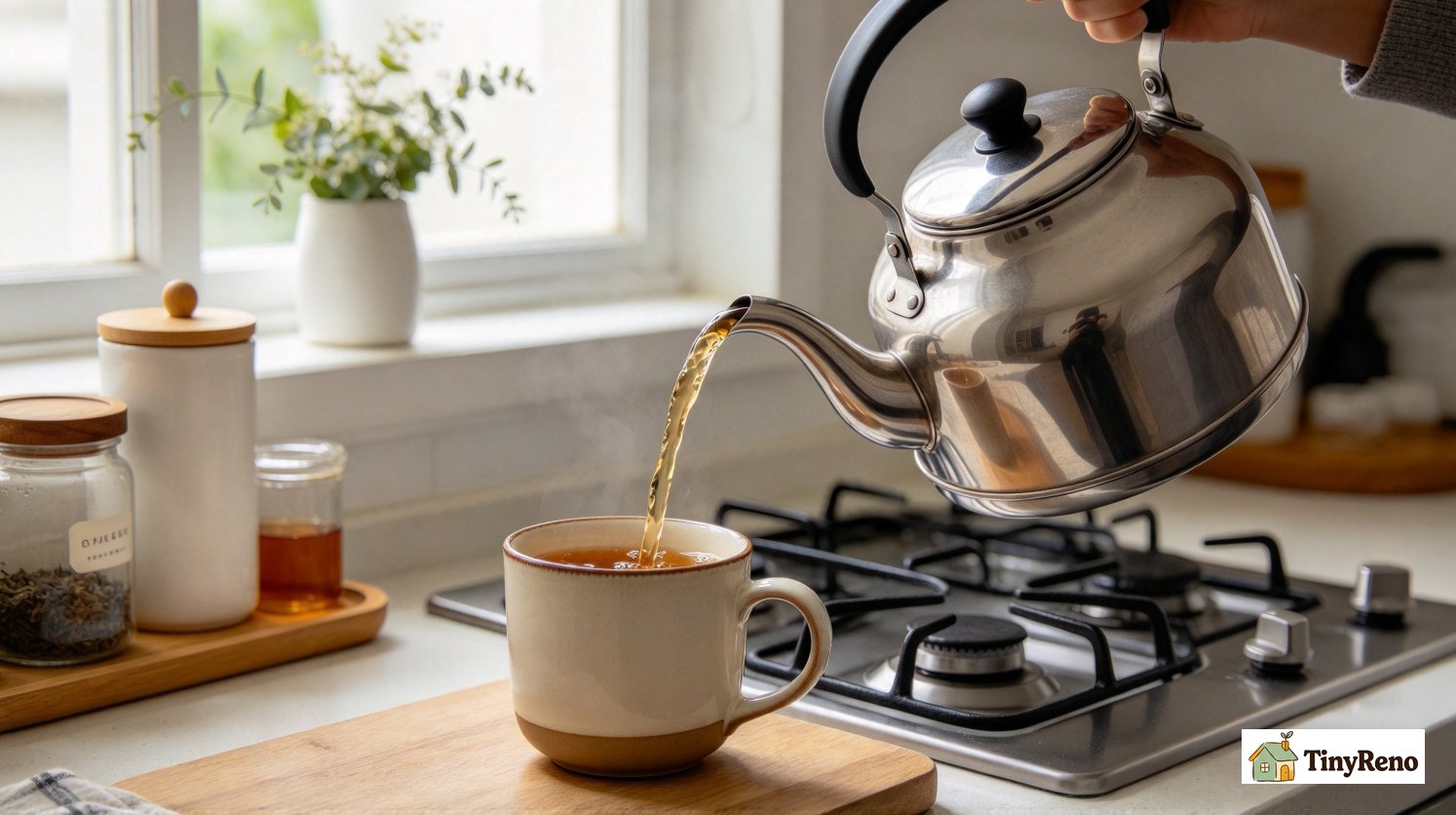
Case two: the stovetop kettle that was in the way
The pot-and-hot-plate method I started with had three real problems, only the first of which was about pouring.
A regular saucepan has no spout, so pouring into a narrow mug means either a slow careful tilt that cools the water on the way, or a steady pour that splashes the counter. A kettle-shaped stovetop pot with a proper gooseneck spout fixes this entirely, and costs about the same as the cheapest electric kettle.
The second problem is that you cannot leave it. A pot on a hot plate is an unattended hot surface, which means you stand there. You do not go do something else. In a room that is also a bedroom, a study and a living area, being pinned to the hot plate is worse than the pouring inconvenience.
The third problem is the sound. Not the boiling, which is fine, but the hot plate itself is a resonant element you can hear through a door. A stovetop kettle does not make the hot plate quieter. What changed was that I no longer had to stand next to it. With a kettle, I could walk away and come back when it boiled.
So I switched to a stovetop kettle in the spring. It solved the pouring. The hot plate still hummed, but I heard it less because I was not standing over it.
The comparison, honestly
Four years of using both, in the same room, is enough to be specific about this:
- Boil speed. The electric kettle wins, and it is not close. A 1-liter boil went from about 4 minutes 20 seconds on my hot plate to about 3 minutes 10 seconds. The gap is real but it is not the whole story, because an electric kettle does this on its own dedicated element while a hot plate has to share with whatever else is cooking.
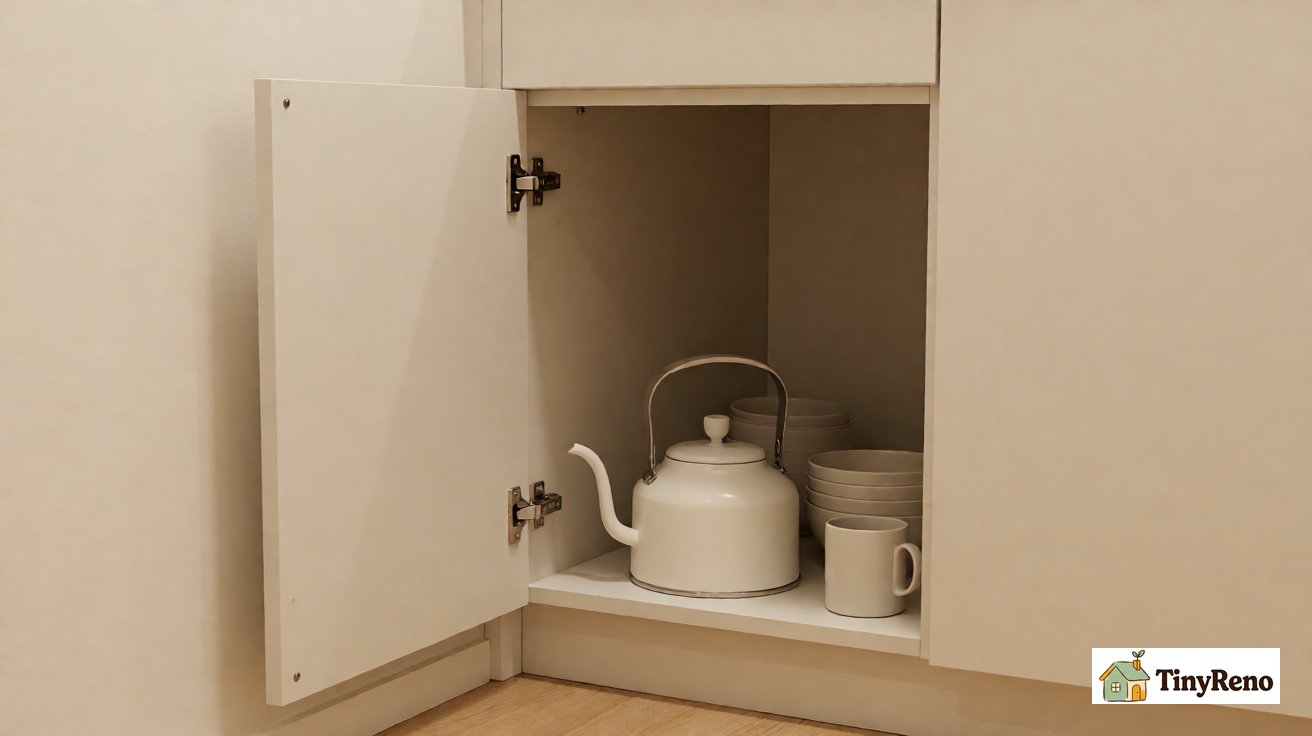
- Counter space. The stovetop kettle wins by a wide margin and this is the deciding factor in a small room. A stovetop kettle lives in a cabinet until you need it. An electric kettle lives on the counter forever. In my 24 inches, that difference was the whole argument.
- Safety. This one goes the other way, and I want to be careful because it is a real risk, not a preference. An electric kettle turns itself off. A stovetop kettle on a hot plate does not, and it will boil dry and damage the element if you walk away. I set off my smoke alarm in October 2023 by forgetting a pot of water, and I was in the next room with headphones on. That happened once in four years and it was enough to change my recommendation for anyone who is distracted, tired, or sharing a space with someone who does not know you left something on.
- Control over temperature. A variable electric kettle can hold water at a specific temperature indefinitely. A stovetop kettle heats or it does not. If you use something that benefits from water at a specific temperature below boiling, this matters. If you are making tea or instant coffee and you want it near boiling, it does not matter at all.
Where each one is the wrong choice
These are the cases where I would tell someone to pick the other option:
- Buy a stovetop kettle if you have less than about 30 inches of counter, or if you share a kitchen with more than one person. Shared kitchens kill electric kettles. Two people who both want hot water at the same time is exactly the case where a permanent counter fixture becomes a negotiation, and where boiling from a cabinet you can put away is better than boiling from an object that is always in the way.
- Buy an electric kettle if you are the only one who uses the kitchen, you have counter space, and you have ever boiled dry or come back to a ruined pot. The auto-off is worth real money in that situation. I now use the stovetop kettle because my counter is small and I am disciplined about it, and I would buy an electric one the moment I moved somewhere with more counter.
- Buy neither and use the hot plate directly if you only make one or two drinks a day and never pour into anything narrower than a mug. A pot with a lid, poured by pouring into the mug while the pot is still on the burner, loses less heat than people think. The whole category of kettle exists to solve pouring, and if you do not have the pouring problem, you do not need the object.
What I actually own now
A stovetop kettle, stored in a cabinet, used approximately five times a day, and it has outlived two roommates and one building.
The reason, stated as a single sentence: in a small apartment, the correct kettle is the one that is not on the counter when you do not need it.
What I would add is one caution about the auto-off advantage. An electric kettle filled past its max line can boil over, because the sensor is designed for normal fill levels. Auto-off protects against a kettle being left half full and boiling dry. It does not prevent a boil-over if someone overfills it and walks away. A boil-over can damage the base or cause a scald risk, even if it is not a dry-boil fire risk.
That happened to my roommate once, in a kettle that was not mine. So the correct statement is that an electric kettle is safer than a stovetop kettle in the common case, not that it is safe.
Five questions before you buy either
Condensed from buying this twice, which is one time more than necessary:
- How much counter do you actually have after the sink? Measure, do not estimate.
- Is anyone else going to use this kitchen? If yes, plan on two at once.
- Do you pour into anything narrower than a mug? If yes, you need a spout, which means a kettle.
- Are you the kind of person who forgets things on a burner? Answer honestly, because it decides this.
- Do you need water held at a specific temperature? If no, ignore the variable-temperature models entirely.
Every debate about which kettle to buy eventually arrives at the same two numbers and neither of them is price. Mine was 24 inches of counter and one person, which made the answer obvious in a way that I did not appreciate until I had already paid twice.
Total spend either way is between $18 and $60. The expensive part is not the appliance, it is the counter space one of them takes permanently, and no spec sheet will tell you how much that costs in your particular kitchen.
Bottom line
The comparison has a simple answer once you accept that the real constraint is space rather than speed. The electric kettle is faster, safer by default, and demands a permanent home on your counter. The stovetop kettle is slower, needs watching, and can be put away.
In a room with two hot plates and 24 inches of counter, I picked the one that goes back in the cabinet. In a kitchen with more room than I have, the auto-off alone would probably flip my answer.
So if you want the one-line version of the choice, it is this. Count the counter you will actually have left after the sink, count the people who will use the kitchen, and if the second number is more than one, buy the kettle that lives in a cabinet.


Discussion (0)
Sign in to join the discussion