

A small bathroom heater question has a disappointing answer and a useful one. The disappointing answer is that you probably cannot install a wall heater. The useful answer is that the heater was not the main problem.
We share a two-bedroom apartment in Philadelphia, two adults, one bathroom, no fan in the vent at all. In January that bathroom sat at 56°F while the rest of the apartment was 68. Showers were fine. Everything before and after a shower was miserable, and the floor stayed wet for an hour because there was no air moving anywhere in that room.
Here is the decision tree I walked, including the branch where I was wrong about what my lease allowed.
Step one: is the vent actually an exhaust vent?
Before buying anything, look up. There is a grille high on the wall, and it is worth confirming it runs outside rather than into the attic or a soffit.
Ours did, which we established by turning on the kitchen exhaust and feeling air pull slightly at the bathroom grille. Not definitive, but it is the test you can do without a ladder. If your grille is a return-air vent rather than an exhaust, adding a fan to it does nothing useful and may push moist air into a cavity where it does damage.
If there is no vent at all, that is a different problem with a different answer, and it is worth asking your landlord about before you spend anything, because adding an exhaust vent in a rental is unambiguously a landlord job.
Step two: read the lease for the actual word
This is where I was wrong. I had assumed any plug-in appliance was fine, because it uses your own outlet. Our lease says something close to: no alteration to electrical, plumbing, or ventilation systems, and no installation of wall or ceiling mounted fixtures without prior written consent.
A plug-in fan is not on that list. So the fan was in. And I want to be careful here, because the version of this story where a landlord is the villain is the version that sells blankets on the internet, and it was not that. Our landlord answered the ventilation question in an email within a day and did not object to anything I ended up doing. She simply did not know the grille had no fan, because nobody had reported it.
The lesson worth keeping: an unasked-for question produces a fast, useful answer. A silent problem produces a slow one.
Step three: choose the fan
Once you know the vent exists and a plug-in fan is permitted, the choice narrows to airflow, noise, and controls.
CFM should match the bathroom size. A small bathroom often needs 50–80 CFM; a larger or steamier one may need more. Check the manufacturer’s sizing guide.
Noise is measured in sones. A fan around 1.0 sone is quiet; many people will notice a fan above 2.0 sones every time it runs. Most complaints about bathroom fans are about noise, not ventilation.
A humidity sensor or timer helps, but only if the fan has power. If the fan is wired to the light switch, it cannot run independently when the light is off. A humidity sensor only works if the fan has constant power, which usually means an electrician or landlord. If you want a plug-in fan, choose one with a pull cord, wall switch, or its own control, and confirm the lease allows it.
Mine is a 70 CFM plug-in unit with its own switch. It is not beautiful. It is the correct one for our bathroom.
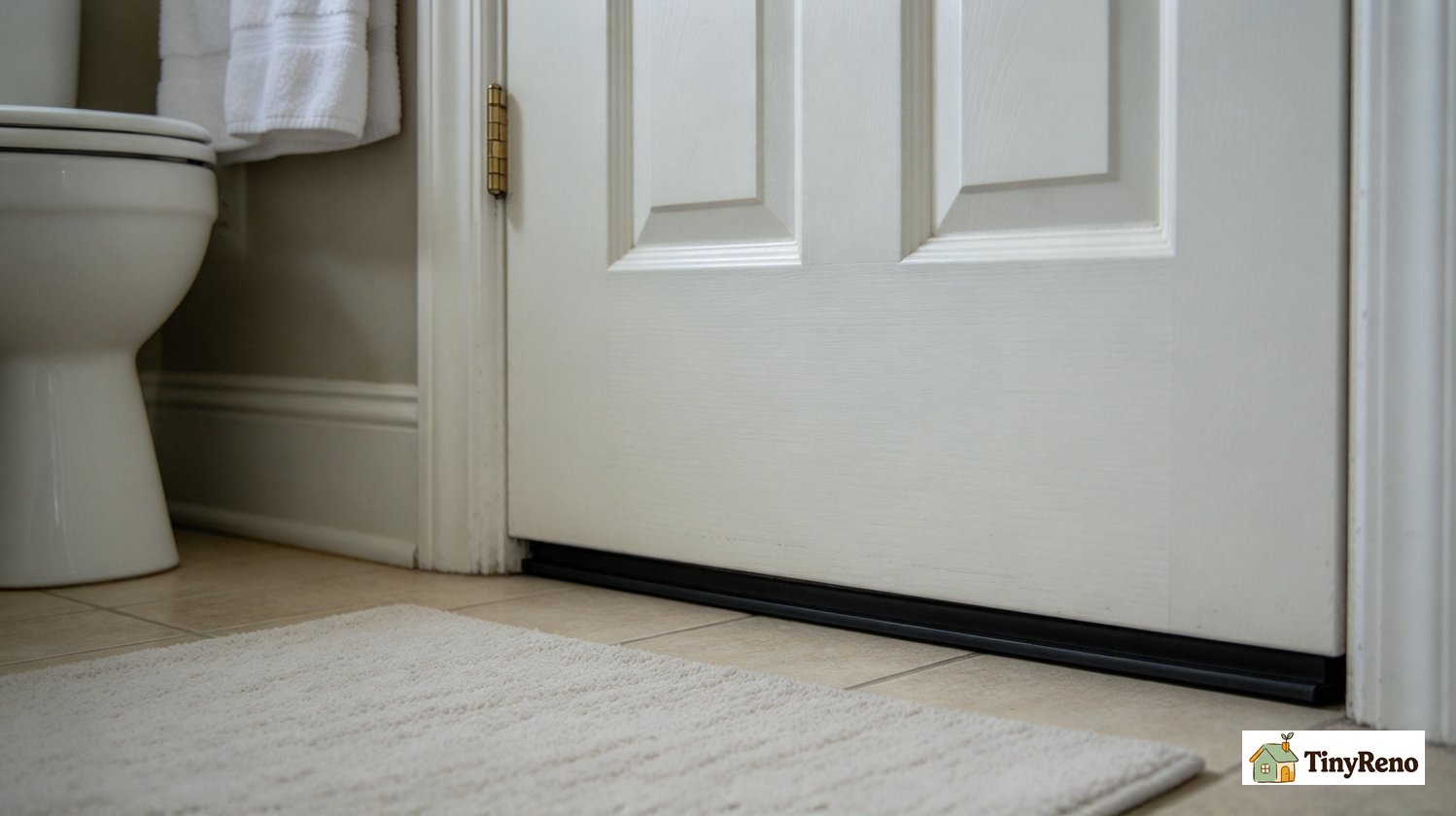
Step four: the door undercut, which is free and did more than the fan
After two weeks with the fan running, the room was warmer and drier, and the floor dried in about fifteen minutes instead of an hour. It should have been a bigger change, and it was not, because the bathroom had no supply air.
Many bathroom ventilation setups run into this problem. Air has to come in for air to go out. Ours could only enter through the gap under the door, which on an uneven old floor was about half an inch on the high side and almost nothing on the low side. The fan was pulling from a mostly sealed room.
The fix costs a few dollars. A door-bottom vent or an adjustable door sweep can keep a consistent gap of about 3/8 inch to 1/2 inch under the door, enough for air to enter while still blocking most water and sound. Check the fan’s instructions for the recommended gap. It is not a permanent modification, it does not touch the frame, and it is removable at move-out.
If you only do one thing from this article, do this one. It costs less than the fan, takes minutes, violates nothing, and the effect on drying time was larger than the fan’s.
Step five: what about the heater itself
You will still want the bathroom warmer, and here is where the safety matters more than the temperature. A standard space heater in a bathroom is a genuine hazard. Bathrooms are wet, and a heater that is not rated for bathroom use can and will short out if it gets splashed. Worse, most bathroom outlets in older apartments may not be on a GFCI circuit, which means there is no protection if a person touches a live heater while standing on a wet floor. This is not a theoretical risk. It is the reason building codes in the US require GFCI-protected circuits in bathrooms, and it is the reason you should not plug a regular space heater into a bathroom outlet.
What you can do instead:
- A built-in bathroom heater fan — the kind that replaces the existing vent grille and is hardwired, not plugged in. This is the correct product, and it is a landlord job, because it requires wiring into the vent circuit and should be GFCI-protected. If your bathroom is consistently below 60°F in winter, ask the landlord about this in writing.
- Warm the bathroom from outside. A space heater in the hallway just outside the bathroom door, aimed at the open doorway, will warm the air that comes in under the door. It is not as direct, but it is safe, and it means the heater itself is never in the wet room.
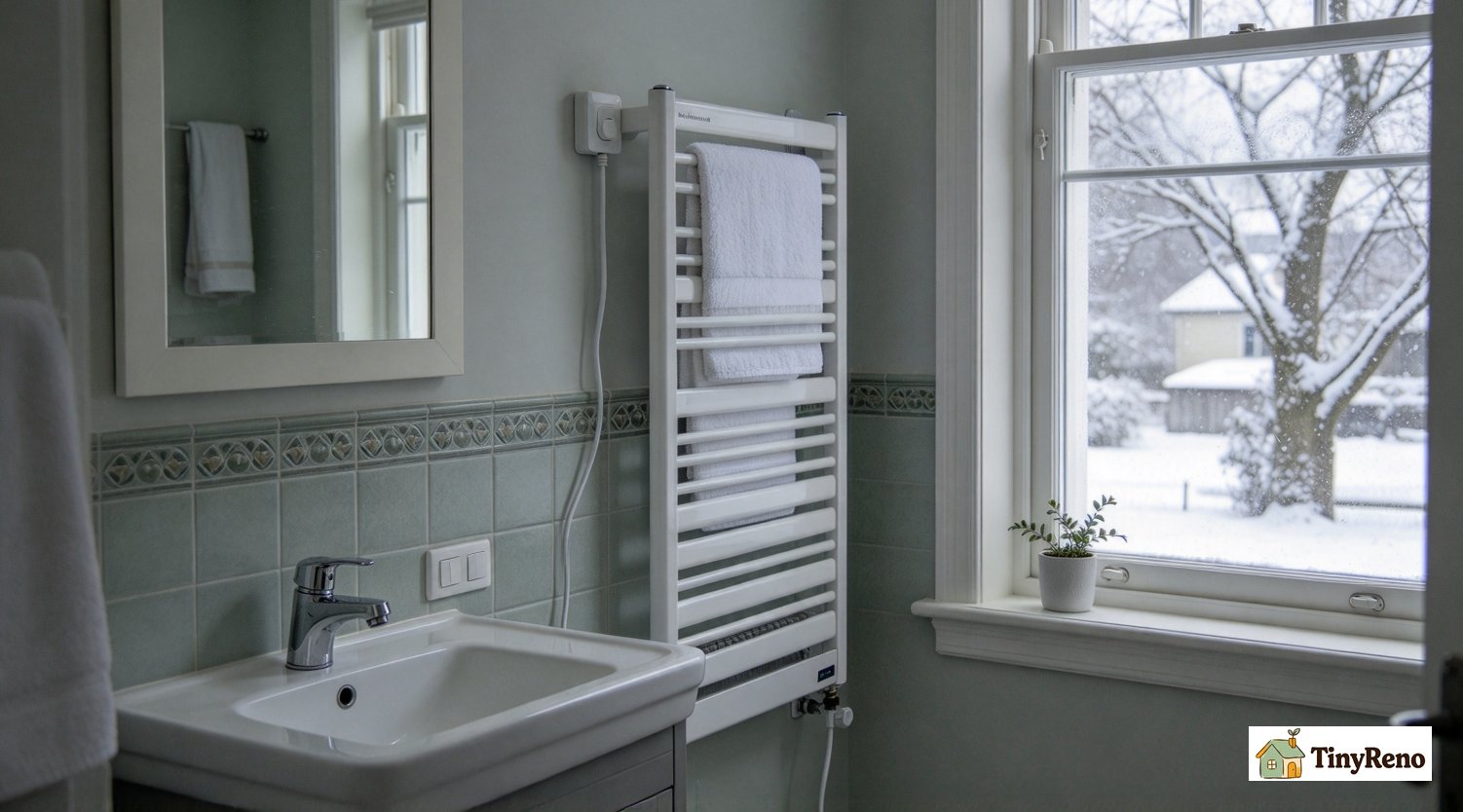
- A heated towel bar or towel rack plug-in unit. Low wattage, designed for damp environments, and it warms the small space around it just by being there. This is the closest thing to a safe bathroom heater a renter can buy without touching the wiring.
What you should not do: bring a regular 1500W space heater into the bathroom, even if you think you will not get it wet. Condensation gets everywhere in a bathroom, and a heater that survives a month will fail eventually, and it will fail at the worst possible moment.
The habits that matter more than the hardware
Three habits, none of which is a heater, and all of which I would rank above anything I could buy:
- Run the exhaust fan during and for twenty minutes after every shower. Not before. During and after. The moisture is the problem, and moisture is what you are removing.
- Wipe the wet zone down after use. A squeegee, or a microfiber towel kept on the sink specifically for this. This sounds trivial and it is the difference between a floor that is wet at 8am and a floor that is dry. Two people, one squeegee, four seconds.
- Keep the door closed while the fan runs — but keep the undercut clear. This is the part people get wrong. If the door is wide open, the exhaust pulls from the hallway instead of the wet room, and you have ventilated your apartment into the bathroom rather than the bathroom to the outside. But if the door is shut tight with no gap under it, the fan starves and moves no air at all. The door closed with the undercut doing its job is the sweet spot: air comes in under the door, passes through the wet room, and goes out the vent.
With those three, plus the fan and the undercut, our bathroom now sits at 64°F instead of 56°F, dries in fifteen minutes, and has no visible condensation on the mirror in the morning. None of that required a heater, and none of it required permission.
The five questions, in order
This is the tree I would walk again next time, condensed:
- Does the vent grille actually exhaust outside, or is it a return-air vent?
- Does your lease say anything about ventilation, electrical, or wall-mounted fixtures?
- Ask your landlord in writing what is permitted. Send it by email so there is a record.
- What is the fan rated at in sones at low speed, and does it run on the vent light circuit?
- Is there a gap under the door, and if not, is a sweep allowed?
Bottom line
A bathroom heater conversation usually starts in the wrong place. You cannot install a wall heater. You can probably install a fan. But the reason the bathroom is cold is not the missing heater, it is the missing air path, and a five-dollar door undercut plus three habits about when to run the fan will do more than any product you are allowed to buy.
And whatever you do, do not put a regular space heater in a wet bathroom. It is the one thing on this page that can actually hurt you, and the alternatives — a hallway heater aimed at the door, a heated towel bar, or asking the landlord about a proper vent-mounted heater — are all safer and all work.
We went from 56°F and a wet floor to 64°F and a dry one. The fan was $45. The door-bottom vent was $7. Asking one question by email was free, and it turned out to be the most valuable of the three.


Discussion (0)
Sign in to join the discussion