

A couch blanket decision comes down to coverage first, and coverage is not about softness. It is about how much of your body the blanket actually covers once it is draped on a couch.
My couch seats two. My first blanket covered one of those seats and left the other one as a decoration. That is the entire problem, and it took me four blankets and two winters to accept that I had a sizing problem rather than a shopping problem.
Grade A: the 50 by 60 inch throw, and why it is the default
This is the size every store pushes, and on a small couch it is the size that almost always fails. A 50 by 60 throw is 3,000 square inches. A seated adult with legs extended needs roughly 18 by 48 inches of coverage, or about 864 square inches, plus some extra for arms and shoulders. Call it 1,200 to 1,500 square inches of surface to cover.
So a 50 by 60 blanket sounds generous, and it is not generous for two people. A throw is not a rectangle you lie under. It is a rectangle you drape, and draping loses area to folds, overhang, and the fact that you are sitting up. Effective coverage is closer to 2,000 square inches, which is enough for one person sitting up with hands free.
That is a good blanket. It is just not a blanket for two people, or for one person who wants to cover their feet and shoulders with nothing left over.
Buy this if you sit up to read, work on a laptop, or watch television for two or three hours without wanting to move. It is also the right size for a loveseat where one seat is decorative.
Skip this if you read in bed and pull the blanket up to your chin, or if you have a couch where both ends get used. In both cases 50 by 60 leaves you exposed at one end, and being warm from the waist up while your feet are cold is a strange specific kind of miserable that people describe as "the blanket doesn't work."
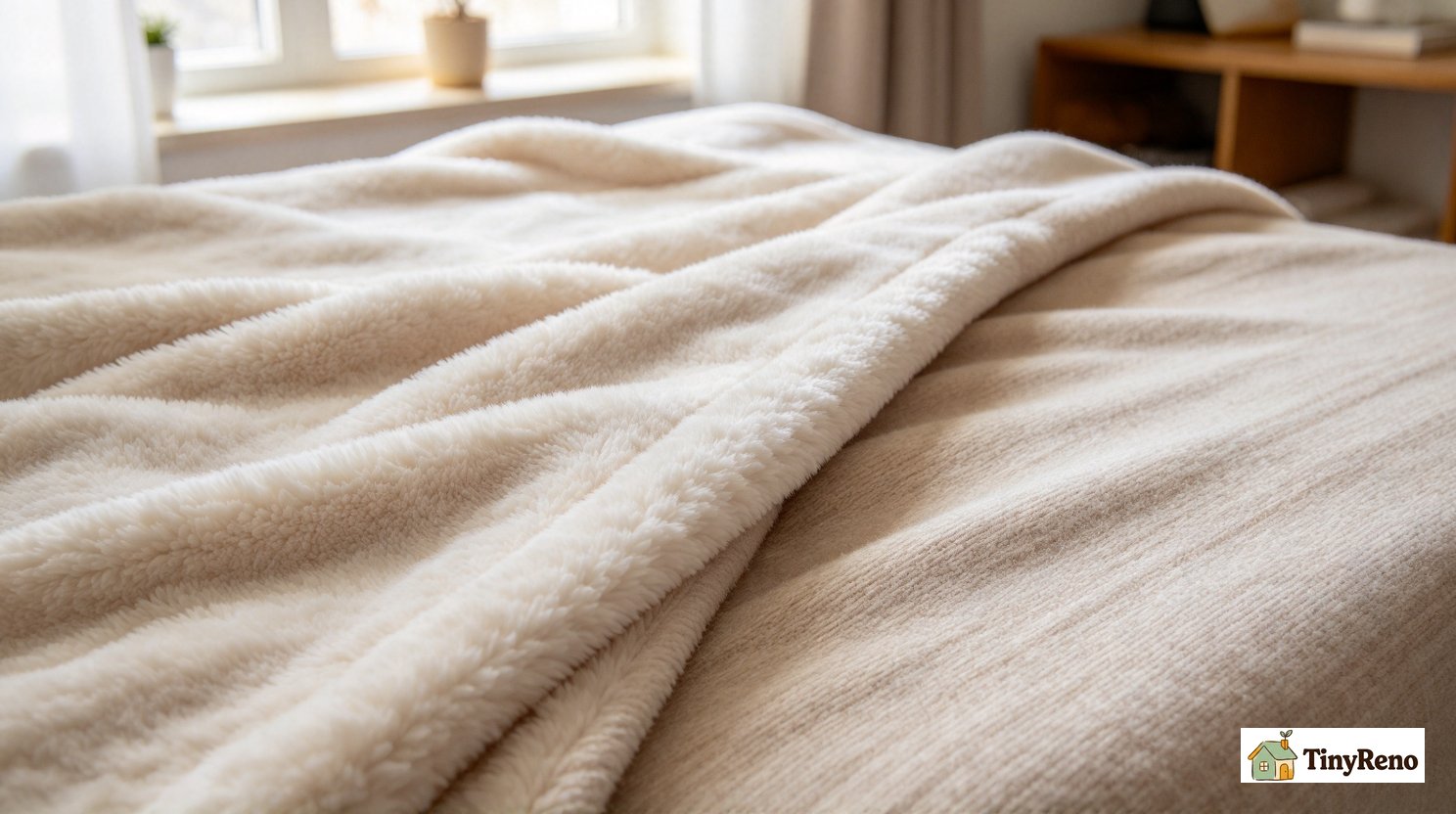
Grade B: the 60 by 80 inch throw, the one that actually fits a couch
This is the size that solved my problem. It is 4,800 square inches, roughly 60 percent more surface than the standard throw. On a 70-inch couch, an 80-inch-long blanket reaches from one arm to the other with about a foot of overhang at the front edge, which helps it stay put when you sit down and pull it up.
Of everything in this guide, moving from 50 by 60 to 60 by 80 was the single change that fixed it. Same room, same couch, same winter, three more sizes of blanket.
So take one measurement before buying: measure your couch length and compare it with the blanket’s long side. A 70-inch couch generally works well with an 80-inch-long blanket, which gives about 10 inches of overhang.
This size is not the default because of price and perception. A 60 by 80 reads as a bed blanket rather than an accent throw, and an 80-inch-long blanket can hang low on many couches, which looks heavy in a listing photo. I do not care about listing photos. I care about the couch.
The one caution: 60 by 80 is heavy enough that on a light-framed loveseat the weight can press cushions flat over a year of use. Mine is a wood frame with separate cushions and has been fine for two seasons. If you have a single-cushion futon-style seat, check that the blanket weight is not going to visibly compress the seat, because a permanently dented cushion looks worse than a short blanket.
Buy this if your couch is 70 inches or wider, if you share it with someone, or if you fall asleep on it regularly. It is the single most useful size and I think it is underrated because it does not look like a "nice" blanket.
Grade C: 50 by 70 inches, the compromise that surprised me
Between the two standards there is a size that gets no marketing attention at all, and it is the one I would now buy first. 3500 square inches is not much more than 50 by 60, but the extra 10 inches go to length rather than width, and length is what matters more than width on a couch.
Here is the reasoning. Width on a throw determines how much you can fold the top edge over your chest, which matters for shoulder warmth. Length determines whether your feet are covered, which matters for everything below your knees. In practice the lower half of your body is a larger share of your perceived warmth than your shoulders, because your head and torso are usually against something warm or a pillow.
So a 50 by 60 is wide and short, covering shoulders and leaving feet out, which is exactly backwards from what people want. Adding length instead of width fixes the feet problem for about a third less money than going full 60 by 80.
Buy this if your couch is under 65 inches, if you sit cross-legged, or if you want couch coverage without the bulk of a bed-size blanket.
Grade D: the 40 by 60 lap throw, and when it is genuinely right
Forty by 60 is 2400 square inches and on a couch it is too small for warmth. It exists for a chair, a car seat, or a couch where you occupy one specific corner and do not move. If you spend your evening in a specific spot on a specific cushion, a 40 by 60 does that job for less money and less visual bulk than anything else.
This is where most buying goes wrong. People reach for a smaller, softer, prettier blanket to solve a coverage problem, when softness was never the variable they were short on.
Most of my blanket mistakes came from treating the blanket as a comfort object. It is a coverage object that happens to be comfortable.
I want to be fair to it, because lap throws get dismissed. But there is a real use: an apartment renter who reads in one chair for three hours a night, in a room too cold to sit still in without something over the lap, will find 40 by 60 completely adequate. My complaint with it was never warmth. It was that it looked like an afterthought draped over one arm of a two-seat couch.
Buy this if you have a specific chair rather than a shared couch. Do not buy it for a couch.
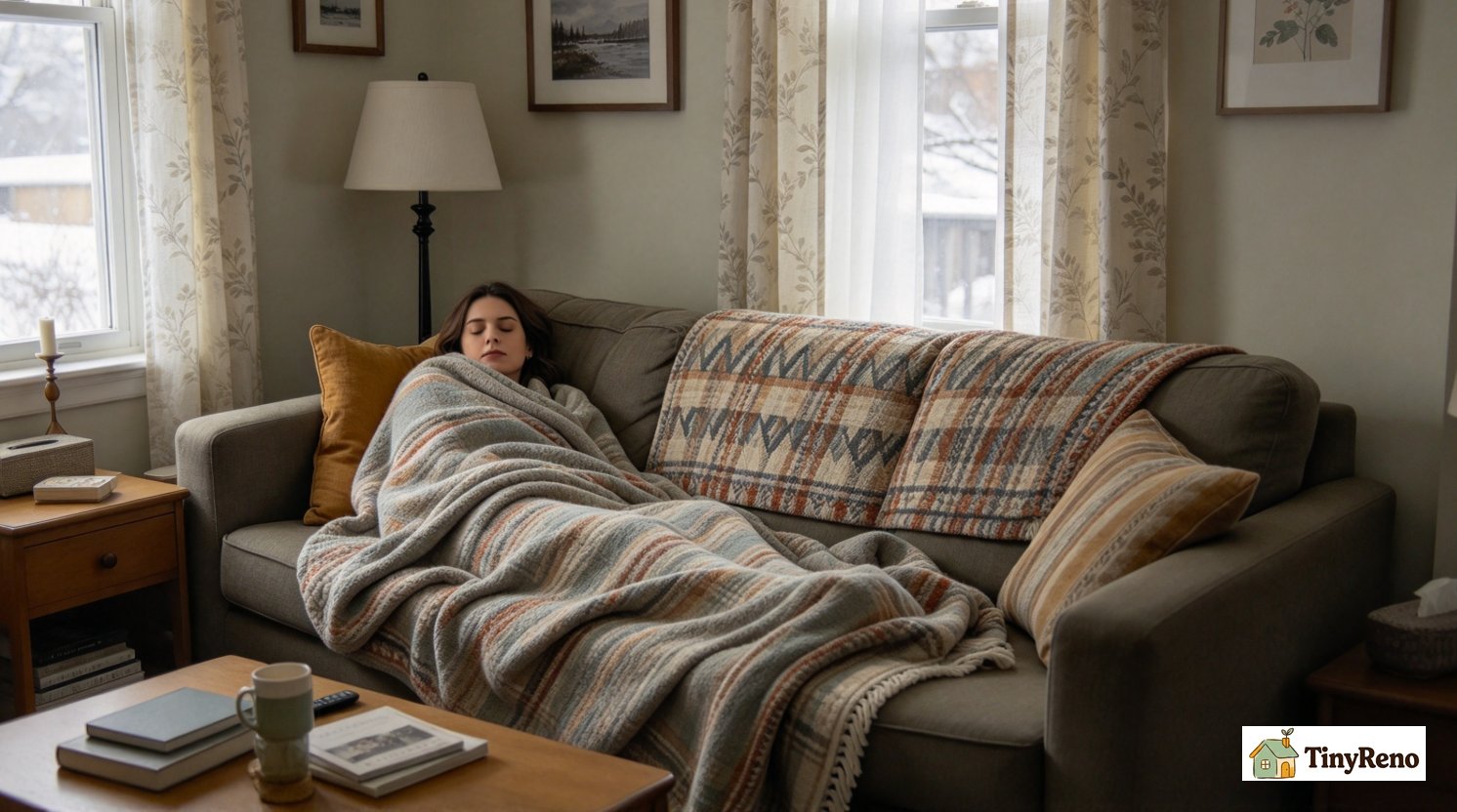
Weight and weave, the second decision
Once size is settled, there are three things that actually change how warm it feels, and none of them is the fiber content on the label.
Brushed versus flat weave. A brushed fleece-style surface traps more air against your skin and feels warmer for the same weight. If you are cold rather than merely cozy, brushed wins. If you run warm or use the blanket in a heated room in April, flat weave breathes better and does not trap as much.
Gram weight over label fiber. Two blankets both labeled 100 percent cotton can behave completely differently, because one is a thin woven throw and one is a brushed fleece. The number that matters is the weight per square yard, usually listed as GSM or described in the spec sheet. As a rough guide, above about 250 GSM you are getting real warmth, and under 150 GSM it is more of a decorative layer. GSM is not a perfect measure, but it is more useful than the fiber label alone.
Material matters more than thickness. Cotton is common, but it is often a poor choice for staying warm on a couch. Cotton absorbs moisture, and a damp cotton layer can feel clammy and pull heat away from your body. A thick cotton blanket can still be warm, but wool, fleece, and microfiber usually handle moisture better. Wool, fleece (polyester), and microfiber all repel moisture to some degree and keep insulating even when slightly damp. If you tend to get warm under blankets, a wool or fleece blend will keep you comfortable without the clammy feeling that cotton gives you an hour in. This is the same reason hikers wear wool instead of cotton, and it applies on the couch too.
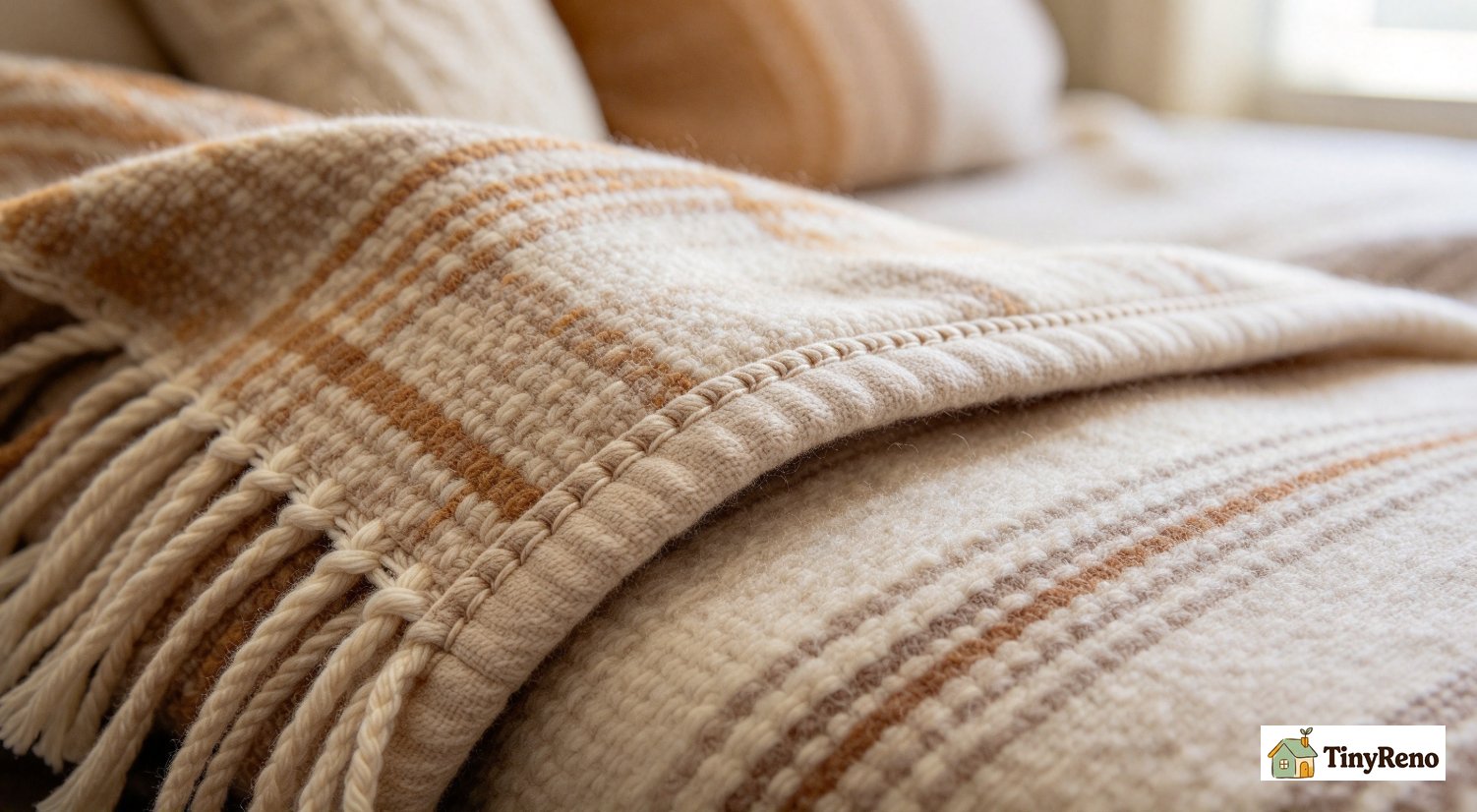
Hem, not fringe. This sounds trivial and it is not. A blanket with a bound or stitched hem keeps its shape when folded and does not develop a stretched, saggy edge after a year of being pulled. Fringed throws look decorative and shed their fringe into your washing machine. If you are going to use it daily, hemmed is the correct choice.
I wash mine every three weeks on a cold cycle and air dry. Everything I own that needs to survive an apartment is washable, because a blanket you are afraid to wash is a blanket you stop using.
What I would buy again
Three blankets, in order of how much I liked them, for a small couch in a one-person apartment where the couch is also the bed on weekends.
First choice: 60 by 80, hemmed, brushed, above 250 GSM, in a color that hides dog hair if you have a dog. It is the most blanket, and it costs the most, and it is the one I would replace first if the apartment caught fire.
Second choice: 50 by 70 if you are on a budget, and you should absolutely consider it, because 60 by 80 is often priced like a bed blanket and 50 by 70 solves the same problem for a third less.
Third choice, and the one I would skip entirely: 40 by 60 on a couch. It is the right object for the wrong room.
The thing nobody tells you about sizing is that the failure is almost never warmth. A 50 by 60 is warm. You are warm under it. What it fails at is coverage, and coverage is what makes a couch feel like somewhere you can spend three hours instead of twenty minutes adjusting your shoulders.
That is the whole of a couch blanket review, and it took me four blankets and two winters to be able to write it.


Discussion (0)
Sign in to join the discussion