

When the boiler stopped heating our apartment, the problem turned out to be less about the boiler and more about the paper trail. Our boiler died on a Sunday night in January. We got heat back by Friday evening, about six days later. The difference between a six-day outage and a two-week outage was one short letter with four specific lines in it.
I want to be clear about the sequence, because most advice online stops right where the useful part starts. Everyone will tell you to call the emergency line. Some of them will tell you to document the temperature. Very few will tell you what to write, or that the writing is what actually moves the repair.
Before: Sunday night, 8:40pm
We were on the fourth floor of a pre-war walk-up, radiators on the north side, a boiler in the basement that the building shares between twelve units. I came upstairs from a bath and knew something was off before I touched the thermostat. The hallway was cool in a way it had never been, and the bedroom window had a faint fog on the inside.
Inside fog on the window in January in Brooklyn means the apartment is warmer than the glass, which means the radiators are still giving off some heat. That distinction mattered later, and I did not appreciate it at the time. I was annoyed at the window for fogging and annoyed at myself for not having checked the basement first.
Phone thermometer on the nightstand read 61°F. The thermostat was set to 68 and the lever was physically on. So the tenant-side troubleshooting was already finished. The building's heating system was the variable.
Before: the emergency line, Monday morning
I called the after-hours number at 9am Monday. A recording told me to call the utility for gas emergencies and the management office for repairs. I called the management office. The person there explained that a building-wide boiler is a building-wide issue and that it gets prioritized against a queue, and asked if my radiators were cold. They were not fully cold. That answer appeared to reclassify my call from urgent to routine.
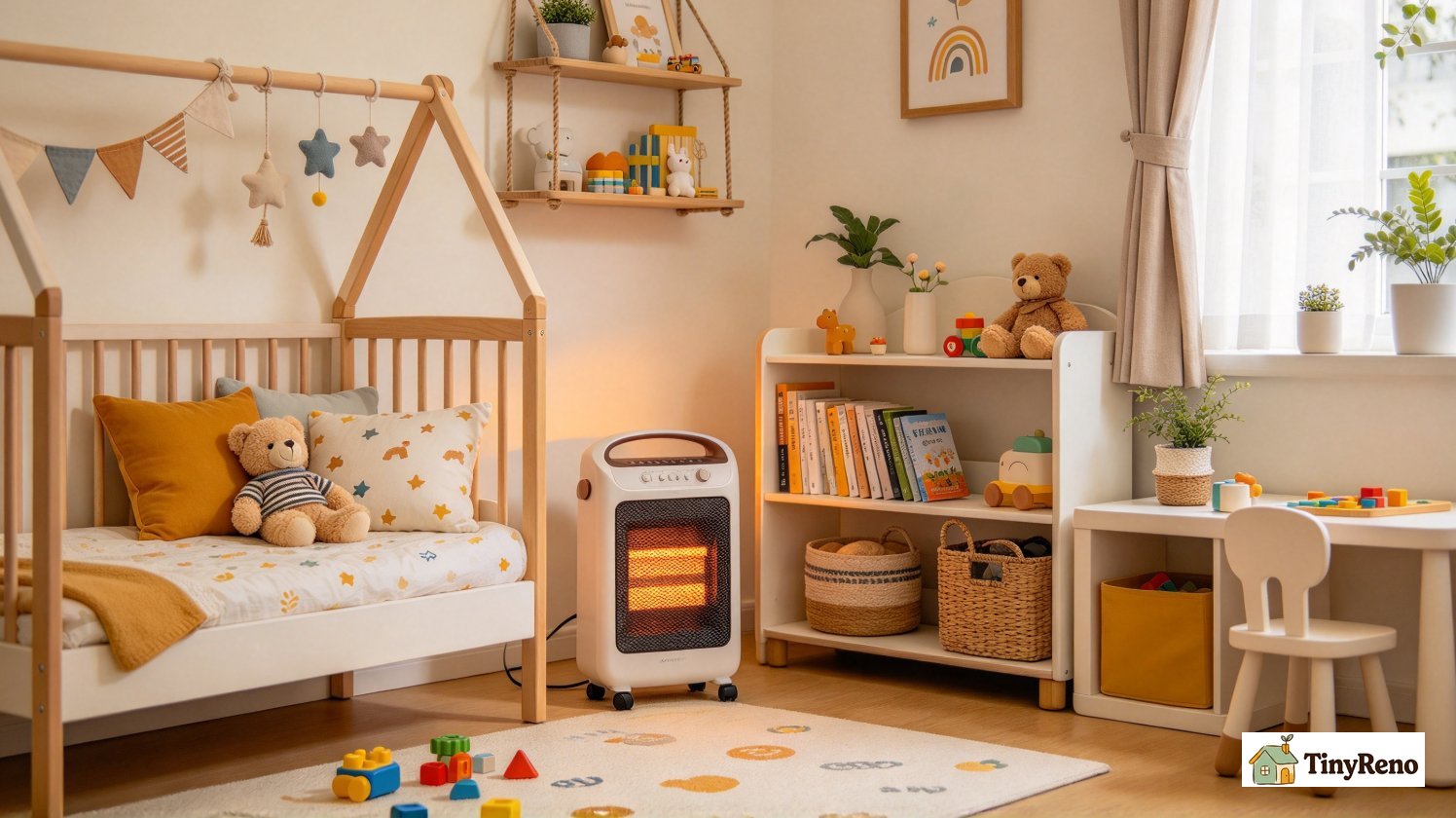
This is the trap. Partial heat reads as not-a-problem to anyone listening to it over the phone, and by Tuesday the temperature had settled at 59°F in the living room and 55°F in the bedroom corner nearest the exterior wall. I have a space heater. I have two. They do not heat a fourth-floor apartment with two exterior walls and a draft under the living room window, but they kept the nursery above 66 and that was the entire goal.
Tuesday I made the mistake that costs renters the most leverage: I waited one more day hoping it would resolve itself. It did not. By Wednesday the radiator was cold to the touch and made no sound when the system should have been circulating, which suggested the water had stopped moving. That is a more serious failure mode than a radiator that is merely lukewarm.

The letter: four lines that do the work
Boiler not heating in an apartment is almost never ambiguous about who has to fix it. Heat is a habitability item in every state I have checked and most that I have not. What is ambiguous is how hard the landlord will work on it, and that is entirely a function of how clearly you have documented the failure. So the letter is short, and it has four moving parts.
That is the logic behind the letter. You are not asking for a favor. You are building a record that makes delay the more expensive option for the person who owns the boiler.
Line one: the specific failure and the date it started. Not "the heating is not working." Mine read: "The building boiler has been failing to heat my fourth-floor apartment continuously since Sunday January 11 at approximately 8:40pm, a span of four days." Specific dates turn an annoyance into a record. A landlord cannot negotiate with "a while" but they can absolutely negotiate with a week, and they will.
Line two: measurements. I listed three thermometer readings with timestamps and locations: 61°F Sunday 8:40pm in the bedroom, 59°F Tuesday 7am in the living room, 55°F Tuesday 7am in the bedroom corner nearest the exterior wall. Three readings from three places is a pattern. One reading is an anecdote. I took the readings with the same thermometer in the same units every time, which sounds pedantic and is the entire reason the readings were usable.
Line three: what you have already done and what it ruled out. This is the line that separates a tenant who is being difficult from a tenant who has done their part. Mine said: thermostat confirmed set to 68 with the lever engaged, radiator water confirmed circulating Sunday and confirmed stopped Wednesday, no local shutoff valve found on the unit, one space heater in use and inadequate for the floor area.
Line four: the specific ask and a deadline. Not "please fix it." Mine read: "I am requesting that a licensed HVAC technician inspect the building boiler and confirm in writing whether the fault is on the boiler, the circulating pump or the building-side valve, and I am requesting that heat be restored within 24 hours of this message. If heat cannot be restored, I am requesting that alternate heating or relocation costs be discussed."
That last sentence is the one that gets attention. It is not a threat, it is a sentence about money, and landlords respond to money faster than they respond to discomfort.
Total length: one page. No legal citations, because citing wrong law in a first letter makes you look like you copied something, and copied-sounding letters get filed instead of read.
After: what changed the same day
Sent Wednesday at 4:12pm by email to the property manager with the paper copy hand-delivered to the office Thursday morning, countersigned receipt requested. The receipt matters more than it sounds, because it converts "I sent it" into a dated document in a mailbox.
The property manager replied in fifty minutes. Not with a fix, with a question: which bedroom corner, and did I have a photo of the radiator. I sent both. The photo was the most useful thing I have ever taken in a rental, and it took four seconds.
Thursday afternoon a technician came, and the fault was a failed circulating pump on the boiler loop, which is a building system component, which means it was never my problem to begin with. The technician also flagged that the building's boiler had been serviced eleven months ago and that the log showed two earlier no-heat calls from other units that autumn. The building knew. My letter just made it expensive to keep not fixing.
Heat was back by Friday evening. Total elapsed: six days. Total cost to me: none. Two space heater electric bills that month were roughly double, which is not reimbursement territory but is the honest number.
That outcome was not luck, and I would not repeat it as a system. It happened because the complaint, written as four specific lines instead of one angry paragraph, gave the property manager something concrete to hand to a technician. Specificity is what turns a complaint into a work order.
What I would write differently
I would write the first letter on day one instead of day four. Every day I waited was a day the landlord could later argue about how serious the situation was, and there is a version of this story where my two days of hesitation cost me the conversation.
I would photograph the radiator on day one too, not on day five. The image of stopped water in the radiator is what a technician actually needs, and it is a picture of a thing that looks identical whether it works or not until you know what you are looking at.
I would have asked about the emergency heat law earlier. Most jurisdictions require a working heating system in winter as a condition of habitability, and a violation carries real remedies, including the ability to withhold rent in some states and to recover the cost of alternative heat in others. The specific remedy depends entirely on where you live, which is why I am not going to hand you a generic legal theory that will be wrong for half the country. What I will say is that the words habitability and written notice are doing real work in a landlord's head even before any lawyer gets involved.
The five questions before the cold snap
I keep these ready now instead of writing them in a panic at midnight with a baby monitor going off in the next room.
- Does my lease say who maintains the heating, and does it name a specific system?
- What is the after-hours number, and who actually answers it on a Sunday night?
- Where is the shutoff valve for my radiators, if there is one?
- What does my state require when heat is out, and does my landlord have to put it in writing?
- Do I have two working space heaters, and are they rated for the square footage of my worst room?
Question one sounds bureaucratic and it is the one that prevents everything else. Twelve units sharing a boiler means a system failure is a landlord obligation with twelve people behind it, and a landlord with twelve simultaneous complaints behaves differently from a landlord with one polite email.

The short version
A boiler not heating apartment renter complaint gets resolved by evidence, not volume. Date the failure, measure the temperature in three places, state what you ruled out, ask for a specific action with a specific deadline, and send it where a receipt is generated. Then keep the paper.
Six days is what we lost by waiting. The letter was eleven lines long, and it was the only thing in that whole week that actually worked.


Discussion (0)
Sign in to join the discussion