

Apartment smells like mildew after rain cause fix was the question I started asking on a Sunday morning in October when the first big storm of the fall came through and my bedroom developed a smell that had not been there the day before. By Wednesday of that week I had run through seven possible causes, ruled out five of them, and landed on two that were both fixable in an afternoon. The mildew smell was gone by Friday. Here is the diagnostic order I would use again.
The key insight is that mildew smell after rain almost always has a moisture source you cannot see. It is not the apartment that smells; it is something in the apartment that has gotten wet and is staying wet. Once you find the wet thing and dry it out (or stop it from getting wet), the smell goes away on its own within a few days. The challenge is finding the wet thing, because mildew grows where you cannot easily see it.
How to Tell If It Is Mildew and Not Something Else
Before you start hunting causes, confirm that the smell is mildew and not a different problem. Mildew has a specific smell that is different from:
- Sewer gas (rotten egg smell): usually a plumbing issue, often a dry P-trap. Run water in every drain for 30 seconds and the smell goes away.
- Smoke (from cooking or a neighbor): opens a window for 30 minutes and the smell is gone, or moves to a different room.
- A dead animal in the wall (sharp, intense, gets worse over days): call the landlord immediately; this is not a renter fix.
- New carpet or paint off-gassing (chemical smell, sharp): goes away on its own within 2 weeks.
Mildew smell is a damp, musty, slightly sweet odor that tends to get worse in humid weather and better in dry weather. If you close the doors and windows for an hour and the smell gets stronger, that suggests a continuing source indoors, but it does not prove the source is mildew. Sewer gas, paint off-gassing, and a dead animal can also concentrate when the apartment is closed. Use the smell description, the location, and the humidity to narrow it down.
Mildew is often strongest near the wet material, but it is not always one single spot. Walk around with your nose about two feet from each wall, closet, and corner. Note where the smell is strongest and whether the surface feels cool or damp. That pattern is more useful than a single sniff.
Cause 1: The Window Track Holding Standing Water
The first thing to check is every window track. Window tracks are designed to drain water that gets past the seal, but the drain holes often get clogged with debris, dead leaves, or old paint flakes. When the drain is clogged, water sits in the track and can soak into the wood frame or drywall around the window. Mildew can develop within days if the material stays damp, especially in a warm apartment.
I checked the bedroom window first because the smell was strongest there. The track had about a quarter inch of standing water in it. The drain hole was clogged with old paint flakes. I cleared the hole with a wooden toothpick, wiped the track dry with a paper towel, and that was the first major reduction in the smell.
To check your windows: open each window, look at the bottom track, and see if there is standing water. If yes, clear the drain hole (usually a small slot at the bottom of the track, sometimes a circular hole at the end) with a toothpick or a small screwdriver. Then wipe the track dry. This is the first place any apartment smells like mildew after rain cause fix investigation should start.
If the track has standing water after every rain, the seal around the window may also be failing. That is a landlord-level fix (caulking the exterior of the window), and you should send a written repair request.

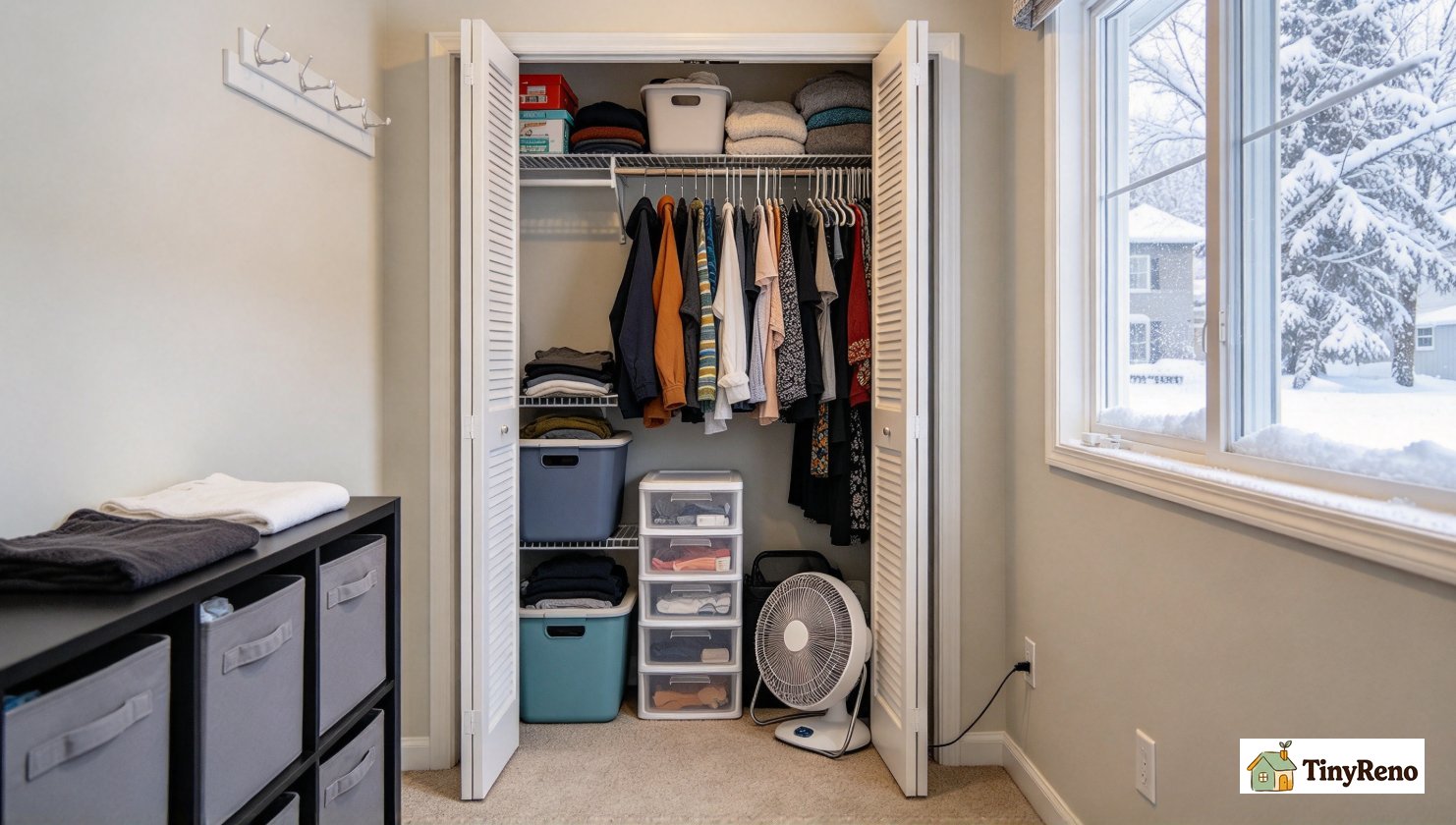
Cause 2: A Closet With an Exterior Wall
Closets against exterior walls are mildew-prone because they are usually the smallest, most enclosed space in the apartment, and they share a wall with the outside. When the outside wall gets cold in winter or wet in rain, the inside of the closet stays cool and humid, which is exactly the conditions mildew needs.
Check every closet that shares a wall with the exterior. Feel the back wall of the closet with your hand. If it is noticeably cooler than the rest of the apartment walls, that wall is the source of the moisture.
The fix is to improve air circulation in the closet. Leave the closet door open for a few hours a day. Run a small fan in the closet for 30 minutes after each rain. Move any items that are touching the back wall (shoe boxes, storage bins, hanging clothes) about 6 inches away from the wall to allow air to circulate behind them.
My bedroom closet was the second major source I found. The back wall was cold to the touch. I moved the shoe rack forward by 8 inches, ran a small fan in the closet twice a day for a week, and the smell reduced by another 30 percent.
Cause 3: The HVAC Drain Pan
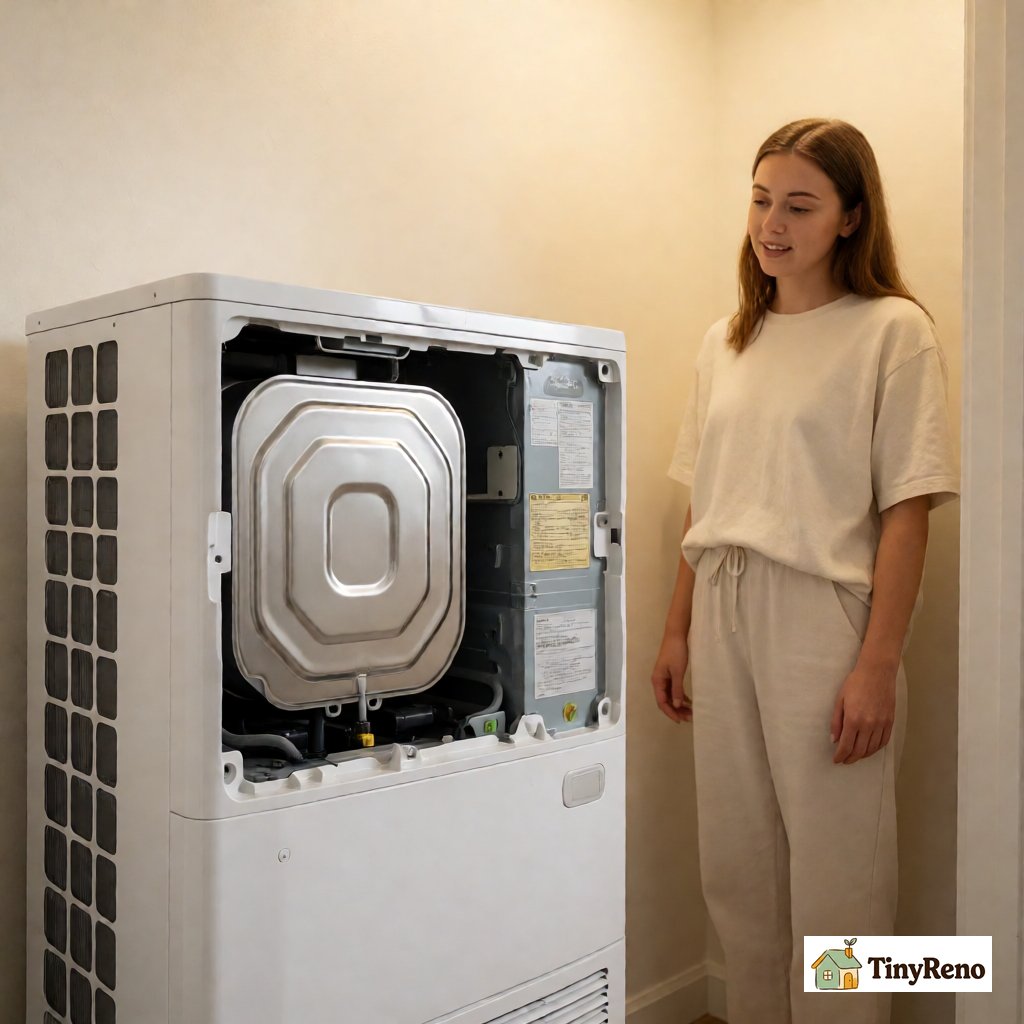
If your apartment has central air or a heat pump, the indoor unit has a drain pan under the evaporator coil. The pan collects condensation and drains it through a small pipe (usually to a floor drain or outside). If the drain pan is rusted, the drain pipe is clogged, or the float switch is stuck, water sits in the pan and grows mildew. The smell then comes up through the supply vents and into every room.
To check: open the access panel to your indoor HVAC unit (usually a metal panel that lifts or unscrews). Look at the drain pan. If it has standing water, that is the problem.
For a clogged drain pipe, a cup of distilled white vinegar down the drain opening can help dissolve biological growth. Avoid pouring bleach into the drain unless the manufacturer specifically allows it, because bleach can corrode metal parts and damage components. Wait about 30 minutes, then run the system and see if the pan drains. If the pan still holds water, report it to the landlord.
I did not have a clogged drain pan, but I had a rusted pan that was letting water seep into the ceiling drywall above the unit. That required the landlord to replace the pan. I sent a written repair request and they replaced it within 5 days. The smell reduced again after that.
Cause 4: The Bathroom Exhaust Fan (or Lack of One)
Bathrooms produce enormous amounts of moisture. A 10-minute shower puts about a pint of water into the air. If that moisture does not go somewhere, it condenses on the walls, the ceiling, and any cold surface (like the bathroom door or the mirror). Mildew grows within 48 hours on any surface that stays damp.
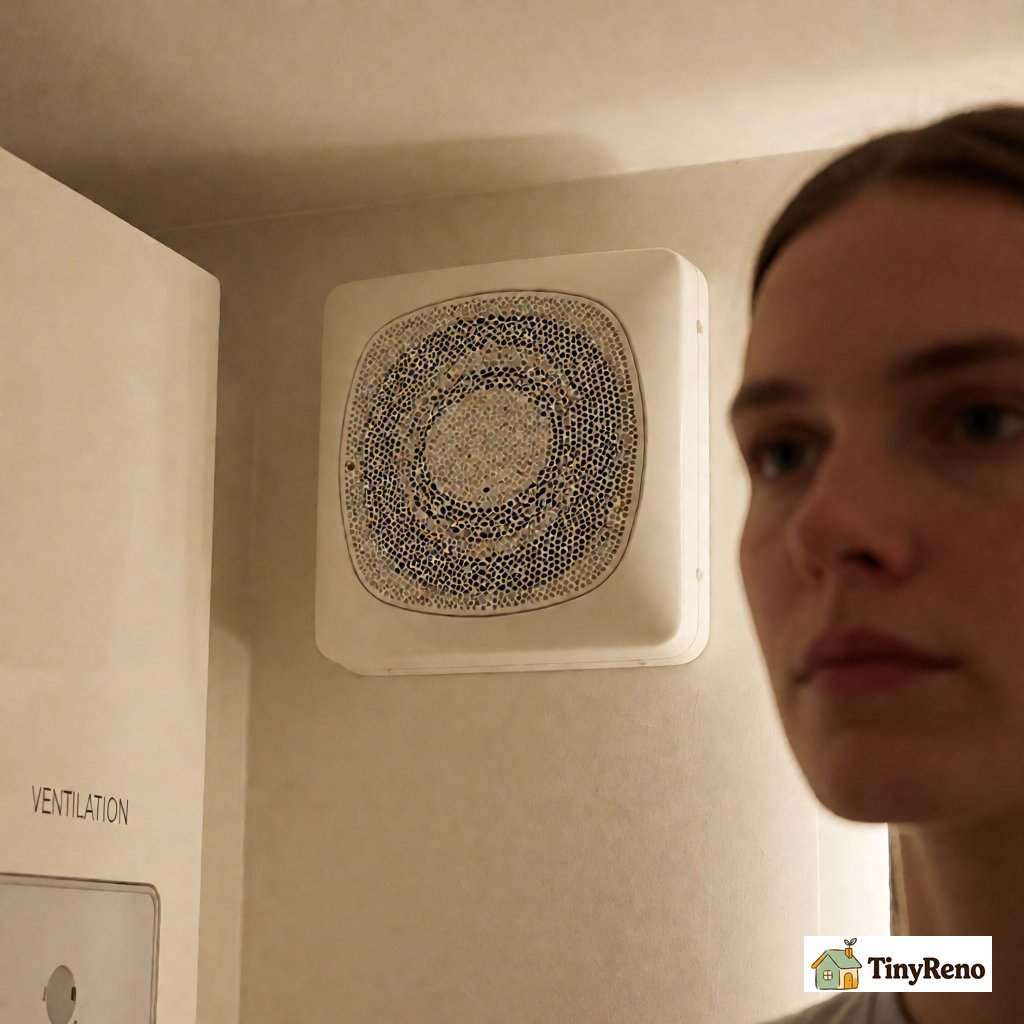
If your bathroom has an exhaust fan, run it during every shower and for 20 minutes after. If the fan does not pull air strongly (test by holding a tissue near the grille), the fan may be clogged with dust. Vacuum the grille with a brush attachment.
If your bathroom does not have an exhaust fan, the moisture has nowhere to go. The fix is to leave the bathroom door open after every shower for at least an hour, and to wipe down the walls and the mirror with a squeegee or a microfiber cloth after each use.
My bathroom had a fan that was clogged with dust. I cleaned the grille, and the fan pulled twice as hard. The bathroom stopped smelling musty within 3 days.
Cause 5: A Hidden Leak Under a Sink or Behind a Washing Machine
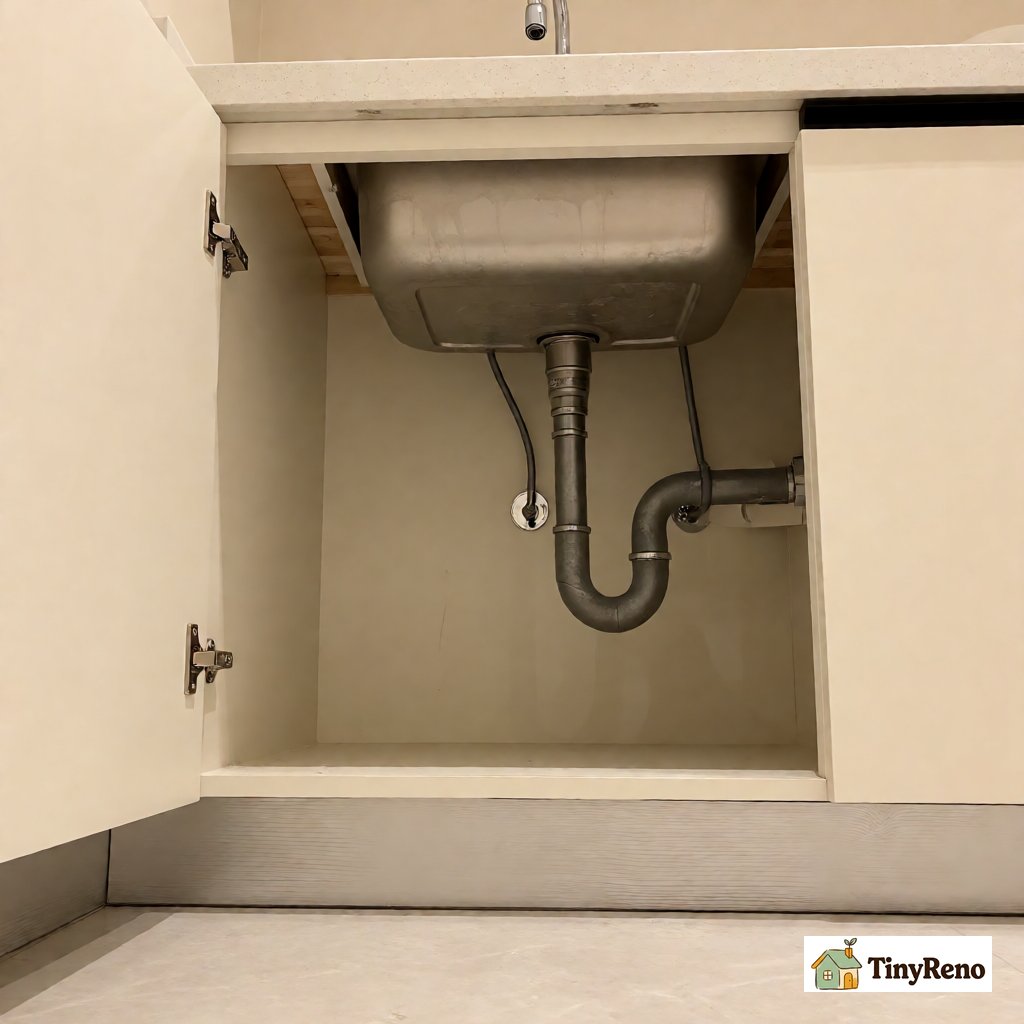
Slow leaks under kitchen or bathroom sinks, or behind the washing machine, can go for weeks without being noticed. The water soaks into the cabinet floor or the subfloor, and the smell rises into the room without any visible sign of water damage.
To check: open every cabinet under every sink. Feel the cabinet floor with your hand. If it is damp or discolored, there is a leak. Pull the washing machine forward (carefully) and look at the floor behind it. If the floor is discolored or smells musty, the washing machine hoses are probably leaking.
The fix for a slow leak depends on where it is. For a sink drain, the P-trap may need tightening (a landlord-level fix or a handyperson). For a sink supply line, the compression fitting may need tightening. For a washing machine hose, the hose may need replacement (these are 5-year-lifetime items; if yours is older, replace it preemptively).
I did not have a hidden leak under a sink, but I had a slow drip from the washing machine hot water hose. The drip was about one drop every 5 minutes, which is enough to keep a small area wet continuously. I replaced the hose with a stainless steel braided version ($25), and that eliminated another 20 percent of the smell.
Cause 6: Carpet on Concrete (Ground-Floor or Basement Rentals)
If your apartment is on the ground floor or has a basement level, the concrete subfloor can wick moisture up from the ground. If the carpet was installed directly on the concrete without a vapor barrier, the padding can stay damp. A renter cannot confirm the vapor barrier without pulling up the carpet, but you can look for clues: damp carpet edges, a musty smell that is stronger near the floor, or condensation on nearby concrete.
If you suspect this, send a written repair request to the landlord and ask them to check for a vapor barrier and moisture at the slab. This is a structural fix, not a renter fix.
I do not have this cause in my apartment, but a neighbor did. She had the carpet replaced with tile after 6 months of fighting the smell, and the landlord paid for it because the vapor barrier was missing from the original installation.
Cause 7: The Air Itself (When All Else Fails)
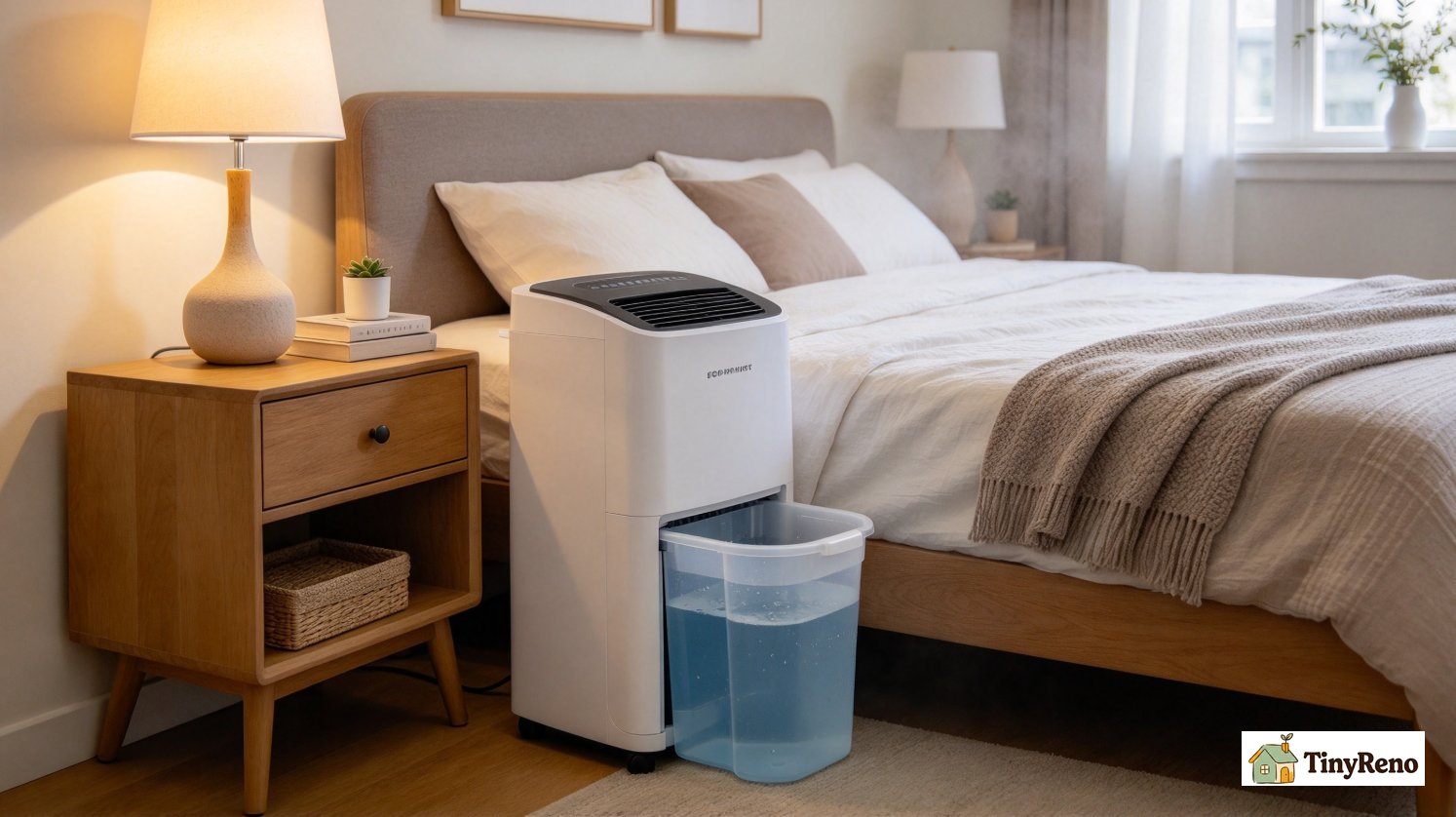
If you have ruled out the first six causes and the apartment smells like mildew after rain cause fix still pending, the issue may be the air itself. In a small apartment with limited ventilation, the humidity can climb above 60 percent after a rain, which is enough to grow mildew on any surface that is slightly cooler than the room (an exterior wall corner, the back of a bookshelf, the inside of a rarely-opened closet).
The fix is a dehumidifier. A 30-pint dehumidifier costs about $130 and can remove enough water from the air to keep relative humidity lower. Keeping indoor humidity around 50 percent or below makes mildew growth much less likely, but it does not guarantee that mildew cannot grow on a damp surface.
I run my dehumidifier on medium for about four hours a day during humid weather. It collects about two pints of water per day. That is water that would otherwise be in the air and on cool surfaces. The smell cleared within about five days of starting the dehumidifier.
The Order I Would Investigate In
If I were starting over with this problem, I would work through the causes in this order:
- Window tracks (5 minutes, free)
- Closet air circulation (10 minutes, free)
- HVAC drain pan (15 minutes, free)
- Bathroom exhaust fan (20 minutes, free)
- Hidden leaks under sinks and behind the washer (30 minutes, may cost $25 for a hose)
- Carpet on concrete (requires landlord involvement)
- Dehumidifier ($130, last resort)
In my experience, the first four checks are the most common and the cheapest to fix. The last three are less common and more likely to need the landlord or a purchase. I do not have a reliable percentage for how often each cause appears, so treat the order as a practical sequence, not a statistical ranking.
What I Did Not Do (And Why)
I did not use a bleach spray to "kill" the mildew smell. Bleach kills surface mildew but does not remove the moisture source. The mildew comes back within days, often stronger than before, because the bleach residue feeds some mildew species.
I did not use an ozone generator. Ozone damages lungs and does not remove moisture. It masks the smell for a few days and then it returns.
I did not paint over the mildew with Kilz or similar stain-blocking paint. Paint over active mildew traps the moisture, makes the mildew grow behind the paint, and creates a worse problem in 6 months when the paint starts bubbling.
What the Apartment Smells Like Now
It has been 11 months since I went through this process. The apartment smells like nothing, which is what an apartment should smell like. I run the dehumidifier for 2 hours a day during humid weather (May through September). I keep the window tracks clear. I run the bathroom fan for 20 minutes after every shower. The smell has not returned through three rain seasons.
The total cost of the fixes was about $130 for the dehumidifier plus about $25 for the washing machine hose, or roughly $155. The total time was about five days of intermittent investigation and one afternoon of actual fix work. That is the budget and timeline for clearing a mildew smell in an apartment: a few days and about $150 to $160, if you work through the causes in order and stop when the smell is gone.


Discussion (0)
Sign in to join the discussion