

The question I typed into my phone at 5:14 a.m. on a Tuesday in February was simple: what do I do when the power goes out in my apartment? The entire fifth floor of my building went dark, and the hallway smoke alarm started a slow chirp. That chirp usually means low battery, not an active alarm, though a power loss can also affect hardwired alarms with battery backup. By the time the power came back six hours later, my fridge food was still cold, my phone was charged, my neighbor had stopped panicking, and I had figured out the order of operations that every renter needs to know.
I have lived through three apartment power outages in the last 18 months. The first one I spent the first 20 minutes doing things in the wrong order (looking for the circuit breaker before I knew it was a building-wide outage, opening the fridge repeatedly to "check on" things, which let the cold out). The third one I had a checklist that took me 30 minutes and left me ready for anything from a 2-hour outage to a 2-day outage.
This is the checklist, in the exact order I now use it. It assumes you are in the apartment when the power goes out and that you have no idea whether this is a 10-minute event or a 48-hour event.
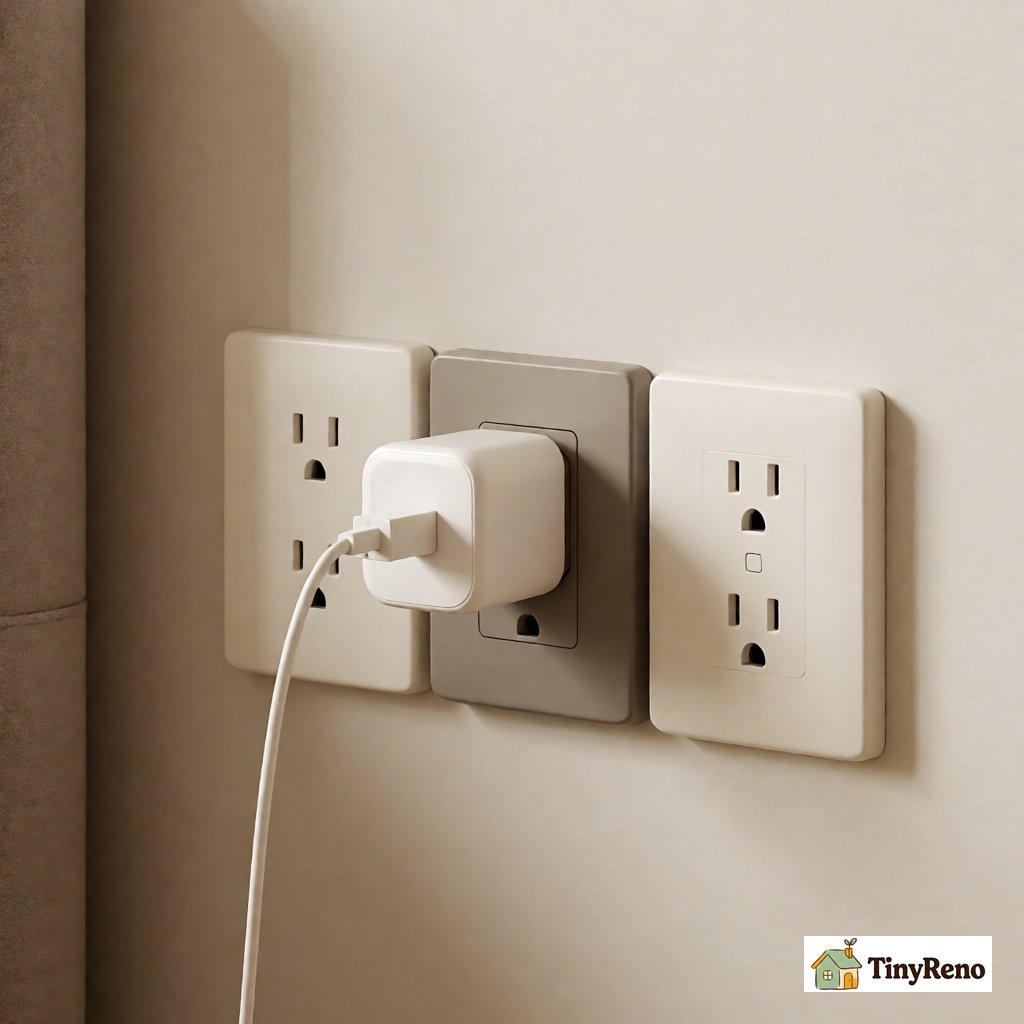
Minute 0 to 5: Confirm It Is Not Just Your Unit
The very first thing to do is walk to your kitchen, your bathroom, and one outlet in the living room. Plug in a phone charger (the kind with the little LED light) or any small appliance with a power light. If all three rooms have no power, you have a building-wide outage. If only one room or one outlet is dead, you have a tripped breaker or a single outlet failure.
For a single-outlet failure, the fix is usually in your circuit breaker panel (more on that in a minute). For a building-wide outage, you are in the category this checklist covers. Do not waste time on the breaker panel for a building outage; the problem is not in your apartment.
How do you confirm it is building-wide? Open your front door and look at the hallway lights. If they are out, the outage may cover more than your unit, but hallway emergency lights or separate circuits can make this unreliable. Check with a neighbor or the building notice channel if you can.
Minute 5 to 10: Check the Building Announcement Channel
Most buildings with more than 20 units have an announcement system. In order of likelihood:
- A building management text or email: if you are on the resident list, the property manager will usually send a message within 30 minutes. Check your email and your text messages.
- A building app: many newer buildings use an app like BuildingLink, AppFolio, or a custom one. The outage notification will be on the home screen.
- The lobby notice board: if you do not get a digital notification, walk down to the lobby and look at the board. Most buildings post outage notices within an hour.
- The elevator panel: if the elevators are also out (which is likely in a building-wide outage), the elevator company will usually post a notice on the main floor.
If you find a notification that gives an estimated restoration time, write it down. Most estimates are wrong, but having one helps you decide how aggressive to be with the rest of the checklist.
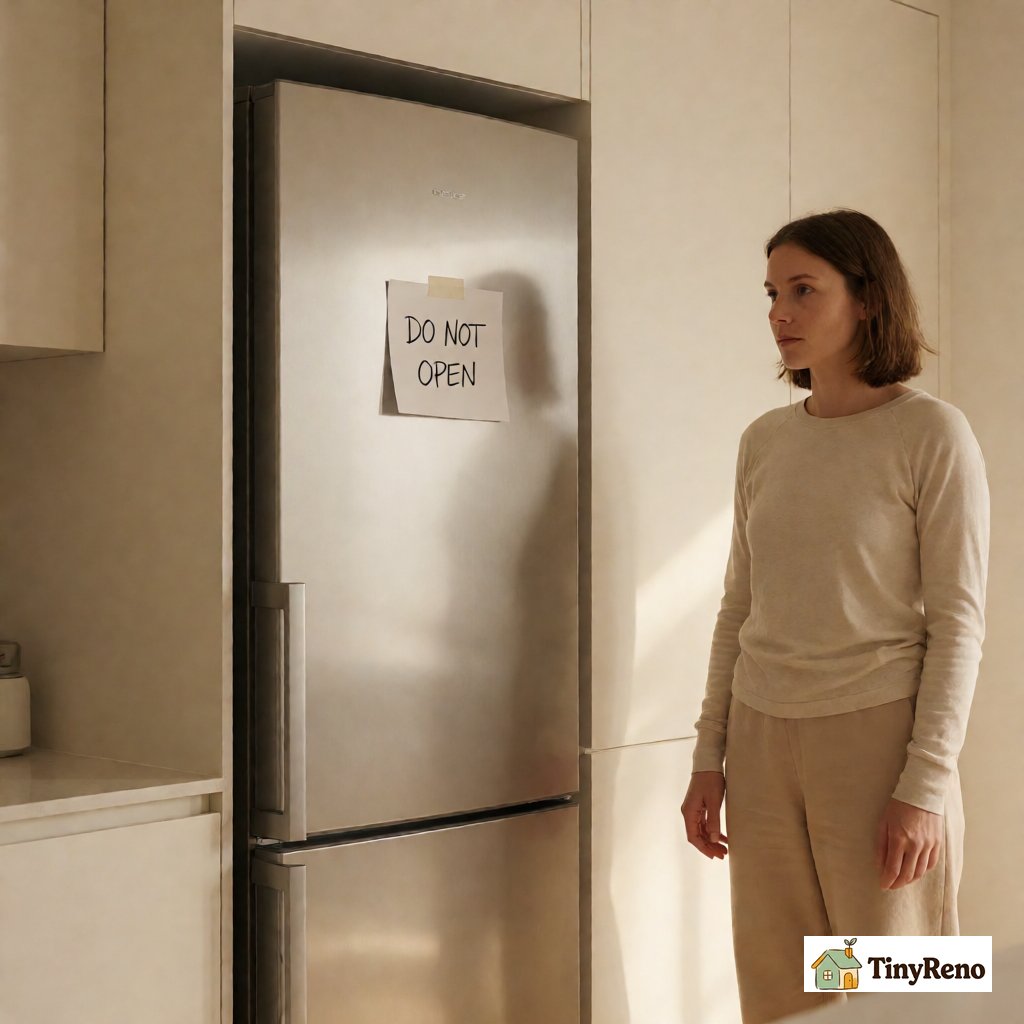
Minute 10 to 15: Save Your Fridge and Freezer
This is the step most people do wrong during a power outage. The rule for keeping food cold is: close the door and do not open it.
An unopened refrigerator generally keeps food safe for about 4 hours. A half-full fridge warms faster than a full one, but there is no fixed two-hour rule. A full, unopened freezer keeps food frozen for about 48 hours; a half-full freezer is closer to 24 hours. The clock starts when the power goes out. Knowing this single fact turns the food safety question from a panic into a checklist.
What I do, in order:
- Do not open the fridge. Stand in front of it, take a breath, and walk away. The food inside is currently at 38°F. It will still be at 38°F in an hour if you do not open the door.
- Check the freezer. If the freezer is full, leave it closed. If the freezer is half-empty or less, group everything into the smallest possible space (a cluster in the back, a tight stack in the front) so the frozen mass holds its cold longer.
- If you have a cooler and ice, transfer the most perishable items (raw meat, fish, milk, eggs) into the cooler with the ice. This buys you up to 24 extra hours on those items specifically. The rest stay in the closed fridge.
The mistake I made the first time was opening the fridge every 15 minutes to "check" if the power was back. Each open let the cold out. By the fourth hour, the fridge was at 52°F, which is above the food-safe limit. I had to throw out $80 of groceries.
If the outage goes past the window (4 hours for a full fridge, 48 for a full freezer), the rule of thumb is: if the food still has ice crystals on it or feels as cold as a refrigerator, it is safe to refreeze or cook. If it has been above 40°F for more than 2 hours, throw it out. When in doubt, throw it out. Food poisoning is not worth saving a $10 package of ground beef.
Minute 15 to 20: Find or Build Light
Phone flashlights are obvious. Here is the part people get wrong: do not light candles. I know every emergency kit on the internet has candles in it, and they are a terrible idea in a power outage. You are tired, you may be sitting on the couch, and a candle left unattended is the number one cause of house fires during outages. In a building with other units around you, a candle fire affects everyone. LED candle lights exist, they last 50+ hours on a couple of AA batteries, and they look the same. Use those instead.
What I use:
- A headlamp for moving around the apartment. It leaves your hands free and it points where you are looking.
- A battery lantern on the kitchen table for general light. It lights a whole room instead of a small circle.
- LED flicker candles for atmosphere, zero fire risk.
Minute 20 to 25: Protect Your Phone and Battery
Your phone is your lifeline. It is your news source, your communication tool, your flashlight, and your building management contact all at once. Treat the battery like it is the only thing that matters, because it is.
- Put the phone on low power mode immediately.
- Turn off Wi-Fi and Bluetooth unless you are actively using them.
- Dim the screen to the lowest readable level.
- If you have a power bank, plug in when you are at 50%, not at 5%. You want to top up gradually, not drain and charge.
- Conserve calls. Text messages use far less power than voice calls, and building management replies better to a text anyway.
Minute 25 to 30: Safety Check
This is the five-minute check that prevents the most common post-outage problems:
- Close the fridge and freezer doors. Double-check them. A door that is slightly ajar will warm everything in a few hours, and you will not notice in the dark.
- Unplug sensitive electronics. TVs, computers, game consoles, and routers can be damaged by power surges when electricity returns. A surge-protected power strip helps, but if you do not have one, unplug the expensive items.
- If you have a carbon monoxide detector, check it. If the outage lasts into the evening and you are tempted to bring in a portable heater or run the oven for warmth, do not. CO is odorless and it kills people in their sleep during outages. Battery-powered CO detectors exist for $20. If you do not have one, do not use any fuel-burning appliance indoors, period.
- If you are on an upper floor and the elevator is out, decide now whether you need to leave or whether you can wait it out. Walking down 15 flights in the dark is doable once, but if you have mobility issues, small children, or pets, it is worth knowing your options before you are tired and it is pitch black. Do not force open elevator doors. If someone is trapped in an elevator, call 911 or the elevator emergency phone first. The building emergency number can be called as a backup, but a trapped person is an emergency.
When the power comes back
The moment the lights flicker on is not the moment to relax. It is the moment to run through the restart checklist:
- Check your fridge and freezer temperatures. Put a thermometer in the fridge. If it is above 40°F, start moving food to a cooler.
- Reset your circuit breakers if any tripped. Power surges trip breakers for a reason. If a breaker keeps tripping after you reset it, do not keep resetting it — call an electrician.
- Check that the heat or AC is working. If it is winter and the heat is not coming on, you have a different emergency.
- Run hot water from the tap for 2 minutes. If the water is brown or rusty, the building's water system picked up sediment during the outage. Let it run until it clears.
- Inspect the apartment for damage. Power surges during restoration can blow out light bulbs, damage electronics, and trip breakers. Walk through and check.
- Plug back in the things you unplugged. One at a time, not all at once. Plugging everything in at once can cause another surge or trip a main breaker.

What I Now Keep in My Apartment Power Outage Kit
After the third outage, I committed to a permanent power outage kit in a single kitchen drawer. Here is what is in it:
- One battery-powered lantern ($25)
- Two small LED flashlights ($8 each)
- One headlamp ($15)
- LED flicker candle lights ($10) — no fire risk, 50+ hours on AA batteries
- One 20,000 mAh power bank ($35), kept charged above 50% at all times
- One 10-foot phone charging cable ($12)
- One battery-powered carbon monoxide detector ($20), with fresh batteries
- One small first-aid kit ($15)
- Two gallons of bottled water, rotated every six months. The FEMA recommendation is one gallon per person per day for at least three days, and you do not want to be figuring this out in the dark.
Total cost: about $160. Total weight: about 8 pounds. Time to assemble: 15 minutes the day I decided to make the kit. After three outages in one winter, this is the kit I wish I had bought before the first one.
One thing that is deliberately not in the kit: a gasoline generator. Generators are for houses with yards, not for apartment balconies or windows. Running one indoors, even in a garage, even with the door open, can kill everyone in the building from carbon monoxide. If you need generator-level power, you need a hotel room or a shelter, not a generator on your fire escape.
What I Learned After Three Outages in One Winter
The first outage made me buy the lantern and flashlights. The second outage made me buy the power bank. The third outage made me buy the LED candles and assemble the full kit. Each one taught me a specific lesson:
- Outage 1: do not open the fridge. Cold air leaves faster than warm air enters.
- Outage 2: phone battery is the most important resource. Protect it first.
- Outage 3: have a single drawer with everything. Do not search the apartment in the dark.
The kit is what makes the next power outage a 30-minute inconvenience instead of a 6-hour crisis. That is what a renter's power outage checklist is actually for.
When the next outage arrives, and many renters will face one eventually, this is the checklist I want open in a browser tab on a charged phone. The first 30 minutes follow a similar pattern whether the outage lasts 2 hours or 48 hours, though the details change with the season and the building.


Discussion (0)
Sign in to join the discussion