

The search I typed into my phone at 6:42 AM on a Sunday in January was simple: what are my rights when the heat goes out in my apartment? The outside temperature was 11°F and my apartment was at 49°F. I was wearing two sweatshirts, a wool hat, and gloves indoors, and the only hot water I had was a kettle I kept refilling on the stove. By the time I had working heat again, I had learned seven specific rights I did not know I had, written a letter that got a 36-hour repair, and figured out exactly how the system works when a landlord does not want to move fast.
A quick note before the list: tenant rights vary significantly by state and even by city. This is general guidance based on what worked for me in Massachusetts, not legal advice. If you are in a serious dispute, your local tenant rights organization or a housing clinic can tell you exactly what applies where you live. That said, the broad principles below hold in most of the US.
This is what I wish someone had told me at 6:42 AM, before I spent three days convincing my landlord to treat the situation as urgent.
Right 1: Heat and Hot Water Are Part of the Implied Warranty of Habitability
Most US states recognize an implied warranty of habitability, and heat and hot water are usually part of it. Some states spell this out explicitly; others include it under a broader habitability rule. The exact rule varies, so check your state’s tenant statute or local housing code. The general principle is that a landlord must keep the apartment fit to live in, and no heat in winter is usually a breach.
The required temperature and timing vary by locality. New York City, for example, requires 68°F during the day and 62°F at night when the outside temperature drops below 55°F. Other cities have different numbers. The practical minimum is that the apartment must be able to maintain whatever temperature your local housing code requires during the heating season.
For hot water, most codes require it to be available at all times, typically at a minimum of 110-120°F at the tap. If your apartment cannot meet either of these minimums because of a broken heating system, you are inside the legal framework for every other protection on this list. With the warranty, the conversation stops being a favor and starts being an obligation.
Right 2: The Landlord Has a "Reasonable Time" to Repair, and "Reasonable" Has a Clock
Many state tenant laws give the landlord a “reasonable time” to make emergency repairs. Some states define that timeframe; others rely on courts or local codes. In practice, no heat in winter is often treated as urgent, and many jurisdictions expect a response within 24 to 48 hours. No hot water is also commonly treated as an emergency, but the exact window varies.
If your heat is out in January, a prompt response is expected. If the landlord does not act within a reasonable time, you can escalate. What counts as reasonable depends on your state, your local code, and the severity of the conditions.
The escalation options, in order of least to most aggressive:
- Send a second written notice referencing the first one and stating the legal timeline.
- File a complaint with the local housing code enforcement office (usually free, sometimes called "code enforcement" or "inspectional services").
- In some states, request a rent reduction or rent abatement through housing court for the period the heat was out.
- In some states, “repair and deduct” allows you to pay for a necessary repair and deduct the cost from rent, but the procedure is strict and usually requires written notice, itemized receipts, and a cap. This option often does not apply to central heating systems, boilers, or work that requires a licensed technician. Check your state’s rule before attempting it.
- In some states, after a much longer window of no repair (often 30 days or more), you may be able to terminate the lease without penalty. The procedure for this is strict and varies widely — do not just move out and stop paying rent.
Important: options 3, 4, and 5 are not available everywhere, and they all have strict procedural rules. Withholding rent on your own, without going through the proper court or agency process, can get you evicted even if the heat really was out. That is the most common mistake tenants make. The safest escalation that works in every state is option 1: another written notice, followed by option 2: a code enforcement complaint. The 36-hour repair I got came from option 1, which is what I recommend trying first.
Right 3: You Can Call Code Enforcement Directly (No Lawyer Required)
This is the right most renters never use, because they assume it requires a lawyer or a court filing. It does not. The local housing code enforcement office, which is usually a city or county department, accepts complaints by phone, online form, or email. The complaint is free. The investigation is free. The inspector will come to your apartment (with notice to the landlord) and write up a violation if the conditions are bad enough.
Once a code enforcement officer writes up a violation, the landlord is on a clock with the city, not just with you. Fines start accruing, and the landlord now has a government agency asking for progress, which changes the priority dramatically. This is the nuclear option of tenant rights, and it works because landlords would rather fix a boiler than pay daily fines.
Right 4: You Are Entitled to a Written Response and a Timeline
You do not have to accept “the plumber is busy” as a final answer. A reasonable response to a written heat complaint includes acknowledgement of the problem, the name of the person or company doing the repair, and an expected date and time. If you do not get that information within 24 hours, it may strengthen your position when you escalate, but whether it is legally required depends on your state and local code.
Right 5: You Can Be Repaid for Emergency Costs
If you had to buy space heaters, stay in a hotel, or eat out because the heat was out, some of those costs may be recoverable. Keep every receipt, and be able to show that you tried to minimize the cost. In some states, you can request these costs as part of a rent abatement hearing, or negotiate them with the landlord directly once the repair is done. Whether they are recoverable depends on your state and local law.
What you cannot do is spend freely and expect the landlord to pay whatever bill you bring. Keep receipts, be reasonable about what you buy, and frame it as "I had to buy X to make the apartment livable while you arranged the repair."
Right 6: Retaliation Protection Exists, But You Have to Document Everything
Most states have anti-retaliation laws that prevent a landlord from raising the rent, ending the lease, or otherwise punishing you for exercising your tenant rights. But these laws only work if you have a paper trail. If you complain about no heat in January and get an eviction notice in March, the retaliation protection helps you in court — but only if you have the emails, the dated photos, the code enforcement complaint number, and the repair invoices to prove the sequence.
This is why the written notice matters as much as the repair itself. It is not just for getting the boiler fixed. It is for the next six months, when you might need to prove that you exercised your rights in good faith.
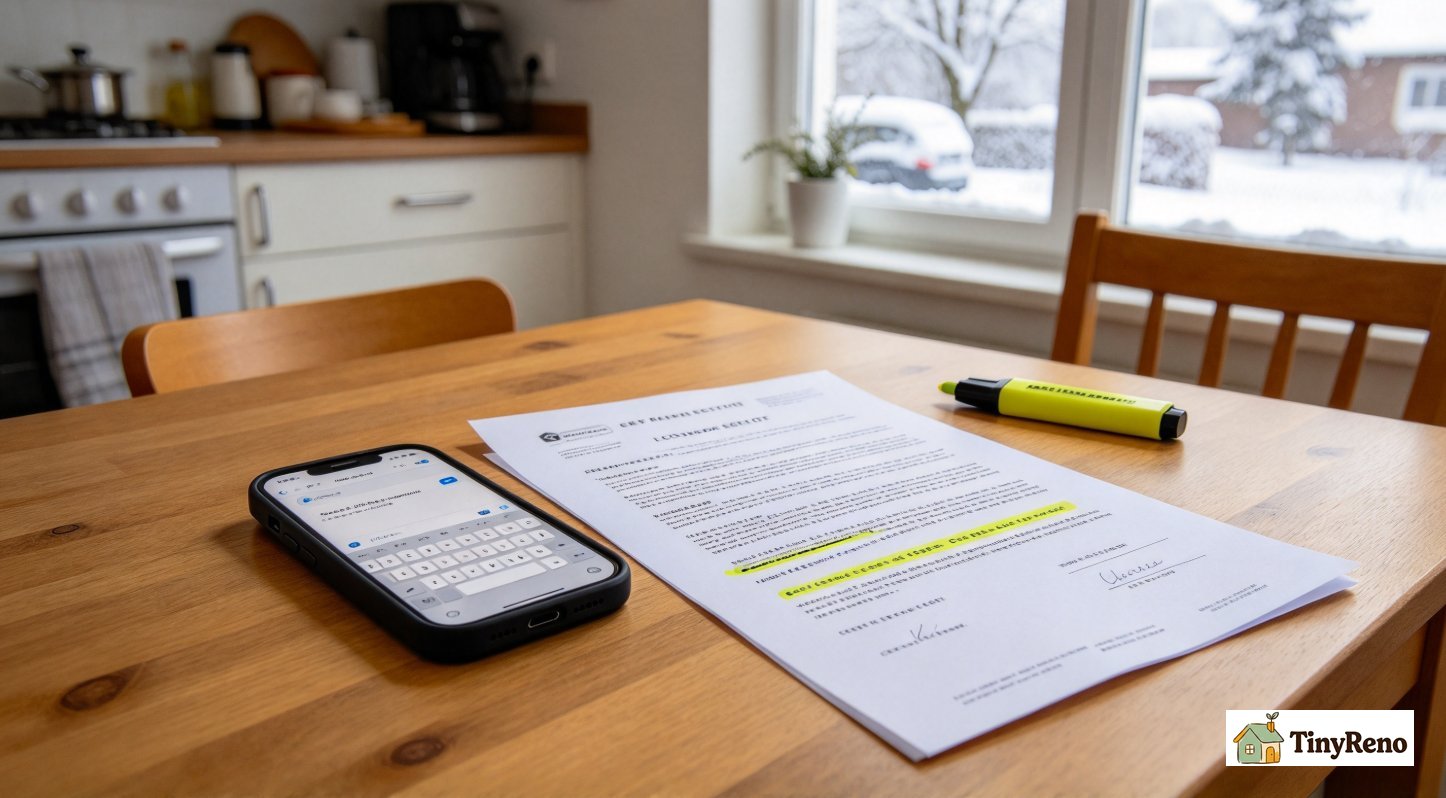
Right 7: The Letter That Actually Works
The letter I sent had three things that made it work, and none of them was pleading:
- It cited the specific statute (Chapter 186, Section 14 in my case, which is the Massachusetts implied warranty of habitability). Look up your state's equivalent.
- It set a specific deadline ("by Wednesday at 8 AM"), not a vague "as soon as possible."
- It named the escalation step ("I will file a complaint with the local Inspectional Services Department"). The landlord now knows the next step is a city inspector with daily fines.
How I Stayed Warm While Waiting (Safely)
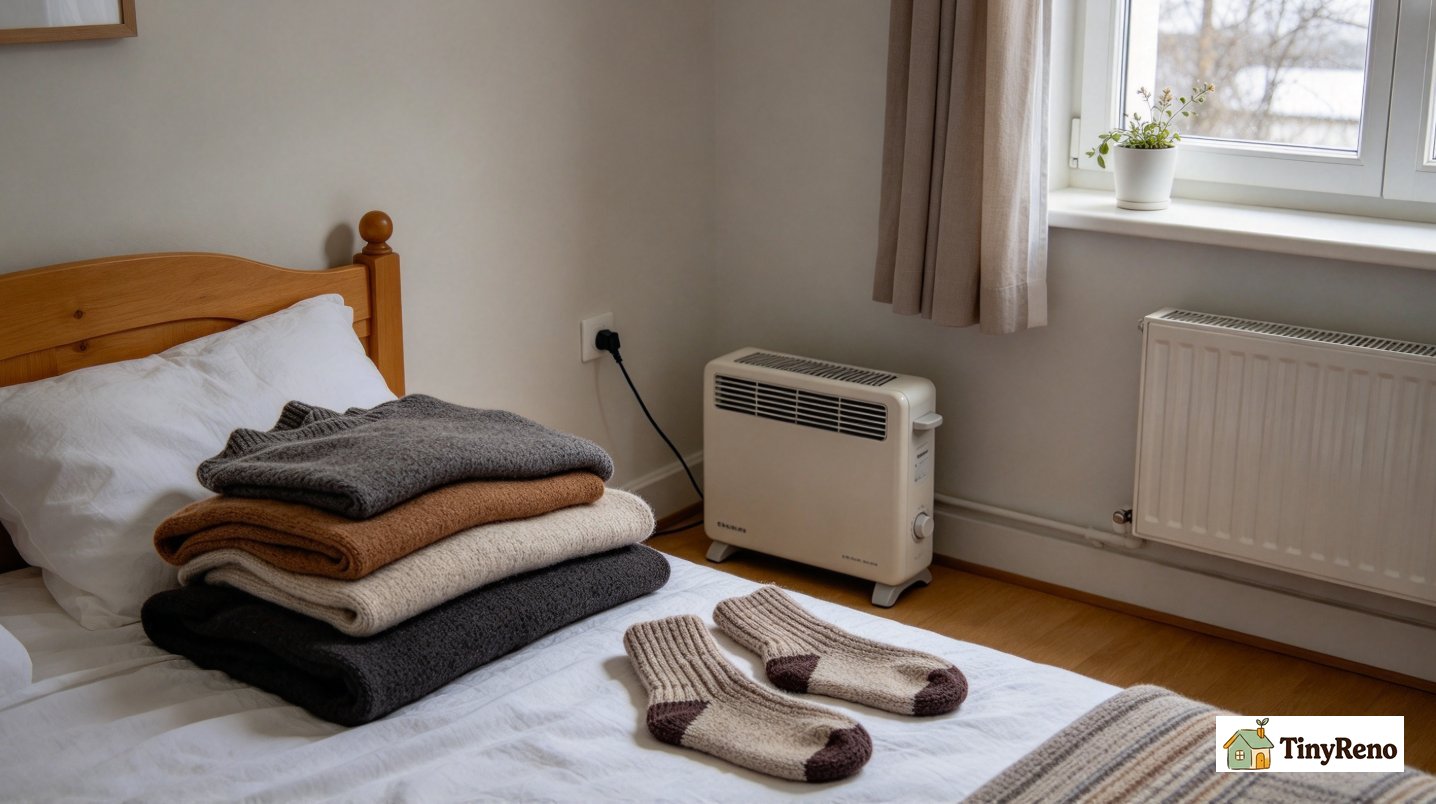
While I waited for the repair, I used tools that kept the apartment above 50°F without creating new hazards:
- One small electric space heater ($45) in the living room during the day, plugged directly into a wall outlet, never into a power strip. A space heater on a strip is how fires start in cold apartments.
- The same heater moved to the bedroom at night, set to low, and turned off before I went to sleep. Do not run a space heater overnight unattended.
- Layers. Wool socks, a sweatshirt, a hat. Body heat is free, and a hat keeps more of it in than people expect.
- The hot water workaround: a kettle boiled on the stove for dishes, sponge baths using water heated on the stove and mixed with cold water in a basin, and careful washing with warm water. Do not pour boiling water directly on your skin, and test the temperature before use.
What I did not do, and what I would strongly advise against: do not use the oven for heat. A gas oven left open for warmth introduces carbon monoxide into the apartment, and it is a real fire risk. I know it is tempting when it is 49°F inside, but the risk of CO poisoning or a kitchen fire is not worth the 20 minutes of warmth. Use the space heater, use layers, and if it gets too cold, go to a warming center or a friend's place rather than turning the oven into a heater.
The total cost for the space heater was $45. I kept it after the repair as part of my normal winter emergency setup. That was the most useful emergency money I have ever spent on an apartment.
What the Apartment Looks Like Now
It has been nine months since the broken boiler incident. The new boiler works fine. The space heater is in the hall closet, ready for the next outage. I have a copy of the email I sent, the landlord's response, and the repair invoice in a folder labeled "Apartment Emergencies," in case I ever need to reference it for a future dispute.
The biggest lesson I took from that Sunday morning is that a no-heat situation is not only a personal crisis. It is also a legal and documentation problem. Once I started treating it that way, with records, deadlines, and a specific statute citation, the landlord started treating it as a priority too. The vague personal-crisis framing (“please fix this when you can”) can delay repairs. The specific framing (“here is the statute, here is the deadline, here is the escalation”) is what got mine done.


Discussion (0)
Sign in to join the discussion