

Dealing with mice in a rental apartment is the question I started asking on a Tuesday morning when I found the first dropping sitting on top of a soup spoon in my silverware drawer. I thought it was a coffee bean. It was not. By the end of that week I had found eleven more, all in the same drawer, all fresh. That is also when I learned that a lot of online advice is written by people who do not seem to have rented.
Step 1: Stop Believing This Is Your Fault
The first instinct I had, and the first instinct most renters have, is shame. You start wondering if you left food out, if your kitchen is too dirty, if you are a bad tenant. None of that is true.
In multi-unit buildings, mice travel between apartments through shared wall cavities, plumbing penetrations, and HVAC ductwork. Your neighbor three floors up who never takes out the trash is feeding the same mice you are seeing. I learned this when I set up a small game camera pointed at a gap behind my stove and watched a mouse walk from my neighbor's unit into mine through a quarter-inch gap around the gas line. The mouse did not enter through my front door. It walked through the wall.
So the first step is to understand that the infestation is almost certainly a building issue, not a tenant issue. This matters because it changes who is responsible for fixing it. Which brings us to step 2.
Step 2: Send Your Landlord a Written Notice (Today)
In many U.S. states, the implied warranty of habitability requires the landlord to handle rodent infestations that are not caused by the tenant. Some states spell this out explicitly; others include it under a broader habitability rule. The exact rule varies by state, lease, and local code, so check your state’s tenant statute or local housing authority. In general, if the infestation is not caused by the tenant, a written repair request is the right first step.
I sent an email at 11:47 AM on the day I found the droppings. The body was three sentences:
Subject: Mouse infestation, kitchen, repair request under warranty of habitability
Hi [landlord name],
I found multiple fresh mouse droppings in my kitchen silverware drawer this morning. This appears to be an active infestation and I am formally requesting pest remediation. I am available for an inspection any day this week.
Thanks,
[your name]
I cc'd my own email address so I had a timestamped record. The property manager replied within four hours and scheduled an exterminator for the following Tuesday. That is what a normal response looks like.
If your landlord does not respond within 48 hours, send a second email referencing the first one and saying you intend to file a complaint with the local housing code enforcement office if the issue is not addressed within seven days. This is not aggressive. This is the legally appropriate escalation step.
Step 3: Document Everything With Time-Stamped Photos
I took three photos that morning: the silverware drawer, a close-up of one dropping on a spoon, and a wide shot of the kitchen. I also took one photo of the gap behind the stove where I later confirmed the mouse was entering.
I did this for two reasons. First, if my landlord tried to claim I was dirty, I had proof of a clean kitchen. Second, if the infestation came back in two months, I had a dated record of when it started.
Take the photos with the date stamp visible (your phone camera does this by default). Email them to yourself so they have a server-side timestamp. This is the single most important step that nobody talks about. Without documentation, you have a complaint. With documentation, you have a legal record.

Step 4: Move All Food Into Hard Containers (Same Day)
A mouse can chew through plastic wrap, thin cardboard, and paper bags in under a minute. They cannot chew through glass, metal, or thick food-grade plastic. The day I found the droppings, I went to the grocery store and bought nine glass containers with snap-lock lids. Every dry good in my kitchen went into one of them: cereal, pasta, rice, flour, sugar, crackers, snacks, bread.
In my apartment, new droppings dropped noticeably within about 48 hours after I moved the food into hard containers, because the mice no longer had an easy food source. I did not measure a precise percentage. They were still in the wall. They were still coming into the kitchen. They just stopped eating my food and started eating my neighbor's food instead.
A few things I learned the hard way:
- The cardboard box your pasta came in is not a container. Throw it out or transfer the pasta into a hard container immediately.
- Pet food is the number one thing renters forget. Mice will eat dry cat food before they eat your cereal. If you have a pet, that bag of kibble is the most attractive thing in your apartment.
- Bird seed, if you have a balcony feeder, is a frequent culprit. The mice I was seeing had been feeding on my neighbor's balcony seed before coming inside.
Step 5: Set Snap Traps Along the Wall, Not in the Middle of the Floor
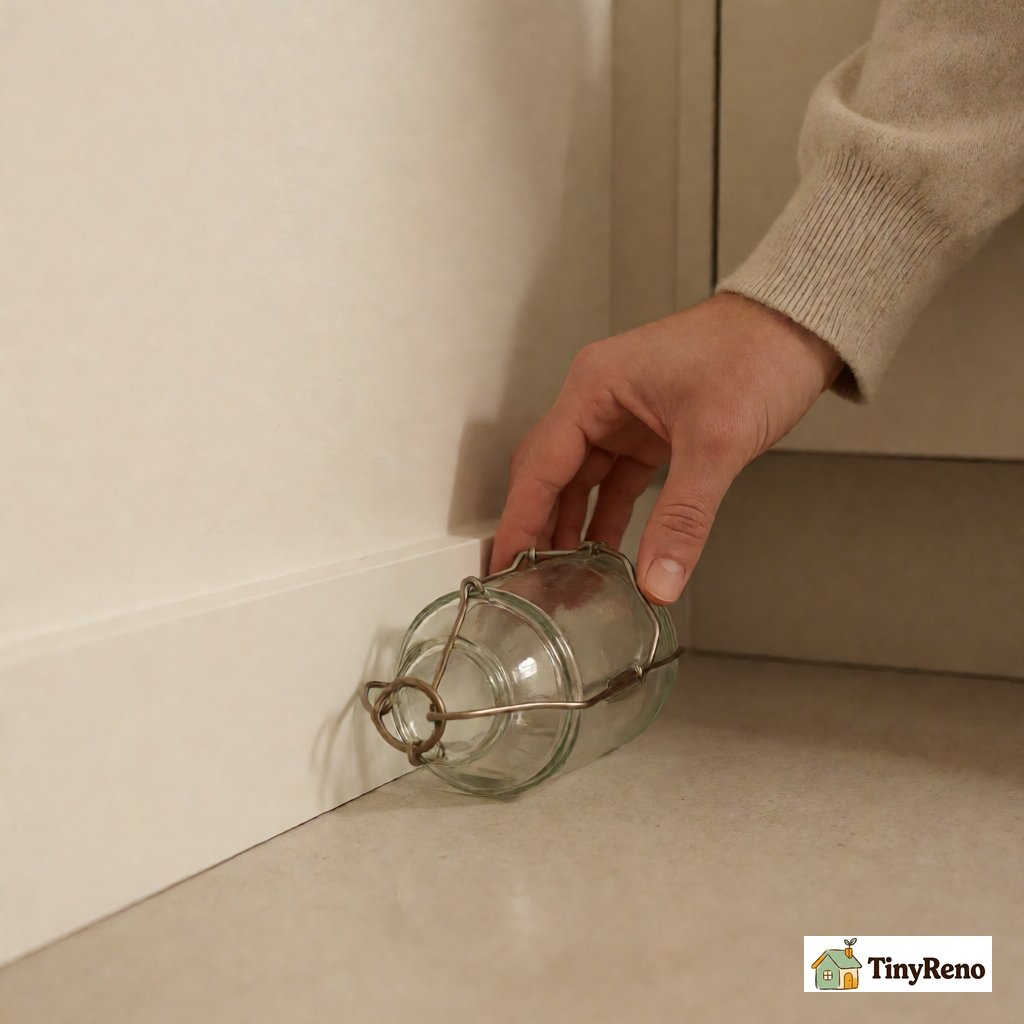
This is the step that is the most counterintuitive for new renters. Mice run along walls, not across open spaces. Their whiskers and eyesight both work better in contact with a vertical surface. A trap placed in the middle of the kitchen floor will catch nothing. A trap placed against the wall, with the trigger end pointing toward the wall, will catch mice.
I bought twelve Victor snap traps at the hardware store for $4. I baited them with peanut butter (a pea-sized amount, smeared inside the trigger mechanism, not on top of it). I set them along the kitchen wall, behind the stove, and under the sink. I checked them every morning.
In the first three days, I caught four mice. In the next four days, I caught one. By the end of week two, none. That is a normal curve for how to get rid of mice in apartment renter situation when the entry point is also being sealed.
If you are uncomfortable with snap traps, live traps are an option, but you have to release the mouse somewhere, and some states have rules about releasing trapped animals. Check local rules. Snap traps are fast and inexpensive, but they must be placed where children and pets cannot reach them. Check them every morning and dispose of mice in a sealed bag.
Step 6: Seal the Gap Behind the Stove (Without Drilling)
This is the step that separates a real fix from a temporary one, but it is also the step where a renter should be most careful. The gas line behind my stove entered the wall through a gap wide enough for a mouse to walk through. I found it on the game camera.
I did not move the stove or seal around the gas line myself. Gas appliances and gas piping are not tenant work. Moving a gas stove can damage the connector, and sealing around a gas line without knowing the required clearance and ventilation can create a safety hazard. I reported that gap to the landlord and asked for a licensed technician to seal it.
For non-gas gaps, I used steel wool and caulk only where it was safe and allowed. I sealed the dishwasher water line, the cold and hot water supply lines under the kitchen sink, and a small hole in the baseboard near the pantry. I did not pack steel wool into the HVAC register or around the refrigerator power cord in a way that could block airflow or damage the cord. Those gaps were reported and handled with removable materials or by the landlord.
Total cost for the non-gas sealing materials was about $11. I did not drill any new holes. Where the baseboard was already attached with small screws, I left it alone. At move-out, removable caulk can be peeled away, and any pre-existing screw holes were already there before I moved in. I documented their condition at move-in.

Step 7: Throw Out the Cardboard (All of It)
Cardboard is the worst material to store things in if you have a mouse problem. Mice can nest in a single sheet of corrugated cardboard. I had four banker boxes of old tax documents in my hall closet. I moved them all to a plastic storage bin with a snap lid the same week I started this process.
If you can see cardboard anywhere in your apartment, get rid of it or seal it inside a hard plastic container. This includes:
- Cereal boxes (empty)
- Amazon delivery boxes (break them down and take them to the recycling bin immediately, do not leave them stacked)
- Pizza boxes (do not leave them on the counter overnight)
- Paper grocery bags
The cardboard rule is easy to miss, because most people think about food and not about nesting material. Nesting material is what keeps them coming back even when the food source is gone.
Step 8: Run a Bathroom Fan Test
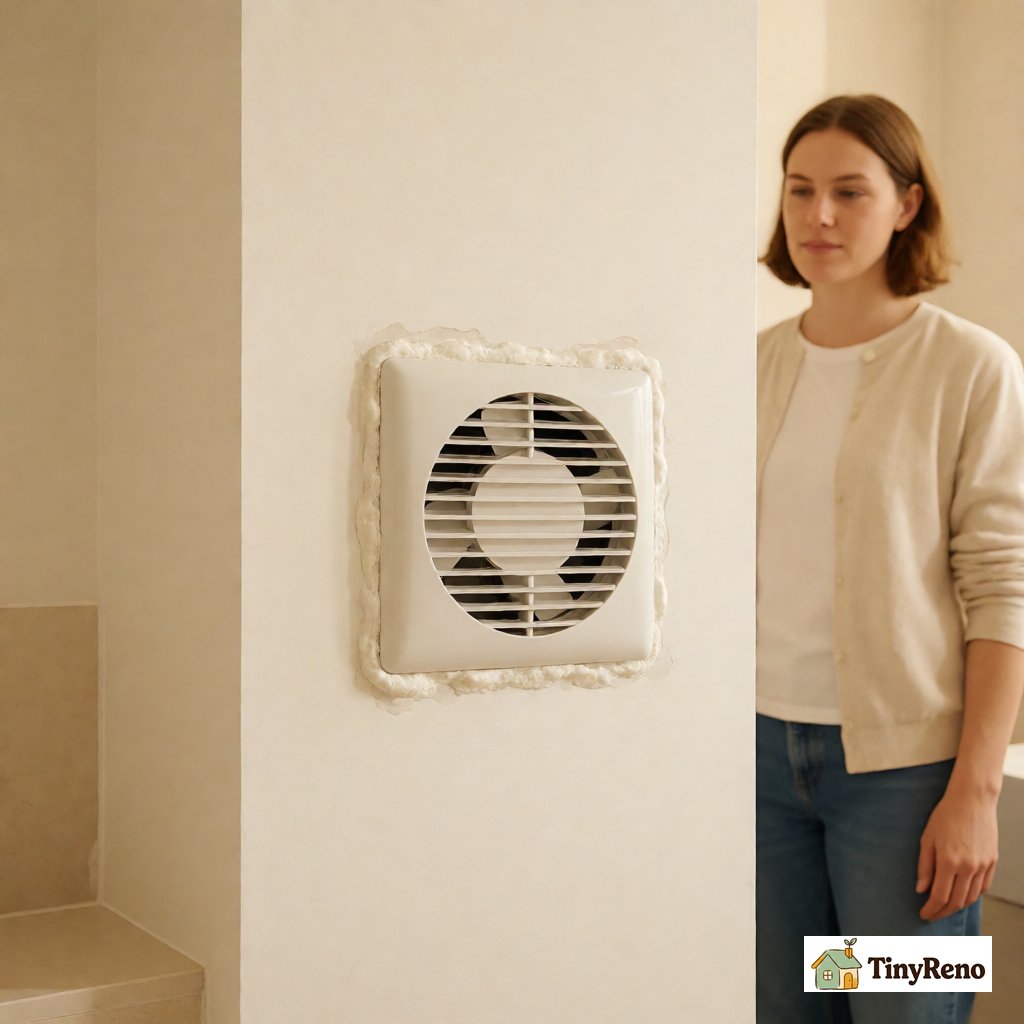
This is the step the exterminator suggested when they finally came for the Tuesday visit. Mice often enter through the bathroom fan vent because the vent cover is plastic and easy to chew through. I went into my bathroom, turned on the exhaust fan, and held a piece of toilet paper near the vent cover.
If the toilet paper gets sucked against the cover and stays there, the fan is pulling air out of your apartment through that vent, which is good. If it falls off or barely moves, the vent is loose and mice can probably push past it.
Mine was loose. Expanding foam around a bathroom exhaust fan can interfere with the fan, wiring, or airflow, so I did not spray it into the vent myself. I reported the loose cover to the landlord and asked for it to be secured properly. A removable seal or a tighter cover may be enough, but the fan still needs to vent correctly.
This step is a one-minute test that catches a major entry point most renters never check.
Step 9: Set a Bathroom Cabinet Trap After the Infestation Is Gone
Once I had gone two weeks without a new dropping, I left one snap trap set in the back of the bathroom cabinet under the sink. It was my early-warning system. If a new mouse got in, I wanted to know about it within 24 hours, not when the droppings showed up again.
This is how I caught the mouse that came back in October, after the property management did exterior sealing on the building's foundation in September. Without that one trap, I would have had another full infestation before I noticed. The single mouse never made it to my kitchen because the bathroom trap caught it on day one.
What I Did Wrong: The Mistake That Cost Me a Week
I want to mention the mistake I made, because every renter will be tempted to make it. After I sent the email in step 2, I waited for the landlord to do something. I did not set any traps. I did not move my food. I did not seal any gaps. I assumed the landlord would handle it.
The landlord took five days to send an exterminator. In those five days, the mice had time to nest in three more places inside my walls. By the time the exterminator arrived, the infestation was bigger than it needed to be. If I had started traps and sealing on day one, I estimate the total timeline would have been a week shorter.
The lesson is that the landlord is usually responsible for the infestation, but you are responsible for protecting your own belongings in the meantime. Do not wait for the exterminator before moving food into hard containers and setting safe traps. But do not move gas appliances, open electrical panels, or seal around gas lines yourself. Those are landlord or licensed-technician jobs.
When You Should Call a Lawyer Instead of Doing This Yourself
A quick note before the legal part: this is general guidance, not legal advice. Tenant rights vary by state, and your local tenant rights organization can tell you exactly what applies where you live. If your landlord responds to your email with hostility, ignores it, or tries to charge you for the extermination, the situation has crossed from a pest problem to a legal problem. At that point:
- File a complaint with your local housing code enforcement office (usually a city or county agency, free to file, no lawyer required).
- Look up your state's tenant union hotline (usually free, usually operates during business hours).
- If the infestation has made the apartment uninhabitable, some states allow lease termination or other remedies, but the procedure is strict and varies. A lawyer’s letter or a tenant rights organization can tell you what applies where you live.
I did not need to escalate. My landlord responded normally, the exterminator came, the infestation ended. But I had the documentation in case I did. That is the entire point of steps 2 and 3.
What the Apartment Looks Like Six Months Later
It has been six months since the last mouse. The silverware drawer is clean. The kitchen cabinets have no new droppings. The baseboard holes from the screws I removed are filled with spackle and will be invisible at move-out.
I still keep one snap trap in the back of the bathroom cabinet as an early-warning system. I still keep all dry food in glass containers. I still throw out cardboard within 24 hours of receiving it. None of those habits is hard, and all of them are reversible.
That is the whole approach: document, seal, trap, and treat the building as the source. Do not blame yourself. Do not wait for the landlord before acting. And do not let anyone tell you the silverware drawer is acceptable.


Discussion (0)
Sign in to join the discussion