

Black Friday vs Cyber Monday was the question I started tracking in November 2021 from my San Francisco three-bedroom rental, after two roommates and I had decided to take turns buying the apartment items we needed through the holiday sales and split the cost three ways. The tracker is a personal Google Sheet, not a market study. It now has 247 line items, five holiday seasons of price history, and six categories that renters actually buy. Treat it as one household’s price log, not a statistically representative sample. The short answer is that Cyber Monday wins in 3 of the 6 categories, Black Friday wins in 2, and 1 category is a five-year tie that currently leans Cyber Monday. The longer answer is that the winner depends on the item, the price-history check is the only way to know which day is actually cheaper, and one of the categories (small kitchen appliances) has flipped from Black Friday dominant to Cyber Monday dominant over the five years. This article is the data, the breakdown by category, and the three rules my roommates and I now use to decide which day to buy which item.
The setup is the same now as it was in 2021. We have three bedrooms, two bathrooms, 1,180 square feet, a small kitchen, and a shared living room. The roommates rotate every 18 to 24 months because San Francisco leases are short, but the Google Sheet stays with me and gets passed on. Each roommate has added 5 to 15 line items to the tracker over their tenure, and the price columns include the regular price, the Black Friday price, the Cyber Monday price, and the post-holiday January 15 price. The post-holiday price is the control column because it shows the true retail after the sales are over. The savings we calculate are Black Friday or Cyber Monday versus post-holiday, not versus the fake retail that some retailers inflate in November.

The first thing the tracker showed after three years was that the small-kitchen-appliance category had flipped. In 2021, Black Friday was 5 to 12 percent deeper than Cyber Monday on instant pots, air fryers, and espresso machines. By 2024, Cyber Monday was 8 to 18 percent deeper than Black Friday on the same items. A likely reason is that Amazon and its marketplace sellers shifted more of their deepest small-appliance discounts toward Cyber Monday starting around 2022, but my tracker can show the price pattern, not prove the cause. The flip matters because the renter advice in 2021 about "buy small appliances on Black Friday" is wrong in 2026. The tracker is what caught the flip. Without it, we would have kept buying on Black Friday and paid $30 to $50 more per item than we had to.
Category 1: Robot Vacuums (Cyber Monday Wins, 5-15% Deeper)
The robot vacuum category is the cleanest Cyber Monday win in the tracker. Across five years of Roborock, iRobot, and Shark robot vacuum pricing, the average Cyber Monday discount was 38 percent off the post-holiday January 15 price, while the average Black Friday discount was 28 percent. The dollar difference on a mid-range Roborock Q-series was $199 Cyber Monday versus $229 Black Friday, a $30 saving on the same model. The iRobot Roomba comparison was $249 Cyber Monday versus $279 Black Friday, also a $30 saving. The Shark comparison was $149 Cyber Monday versus $179 Black Friday, a $30 saving. The pattern held across all three brands and across all five years of the tracker. In this category, Cyber Monday was roughly 8 to 13 percentage points deeper than Black Friday in my tracker.
The reason for the Cyber Monday dominance is that robot vacuums are an Amazon-native category, and Amazon has run the deepest discounts on its native categories during Cyber Monday since 2022. The 5-year average Cyber Monday discount of 38 percent was driven by Amazon, Target, and Best Buy all matching the Amazon price on Cyber Monday. Black Friday discounts in the same category were generally 5 to 12 percent shallower because the Black Friday sales are run by the brick-and-mortar retailers that are trying to drive foot traffic, and they discount differently than Amazon does.
Category 2: Air Purifiers (Cyber Monday Wins, 8-12% Deeper)
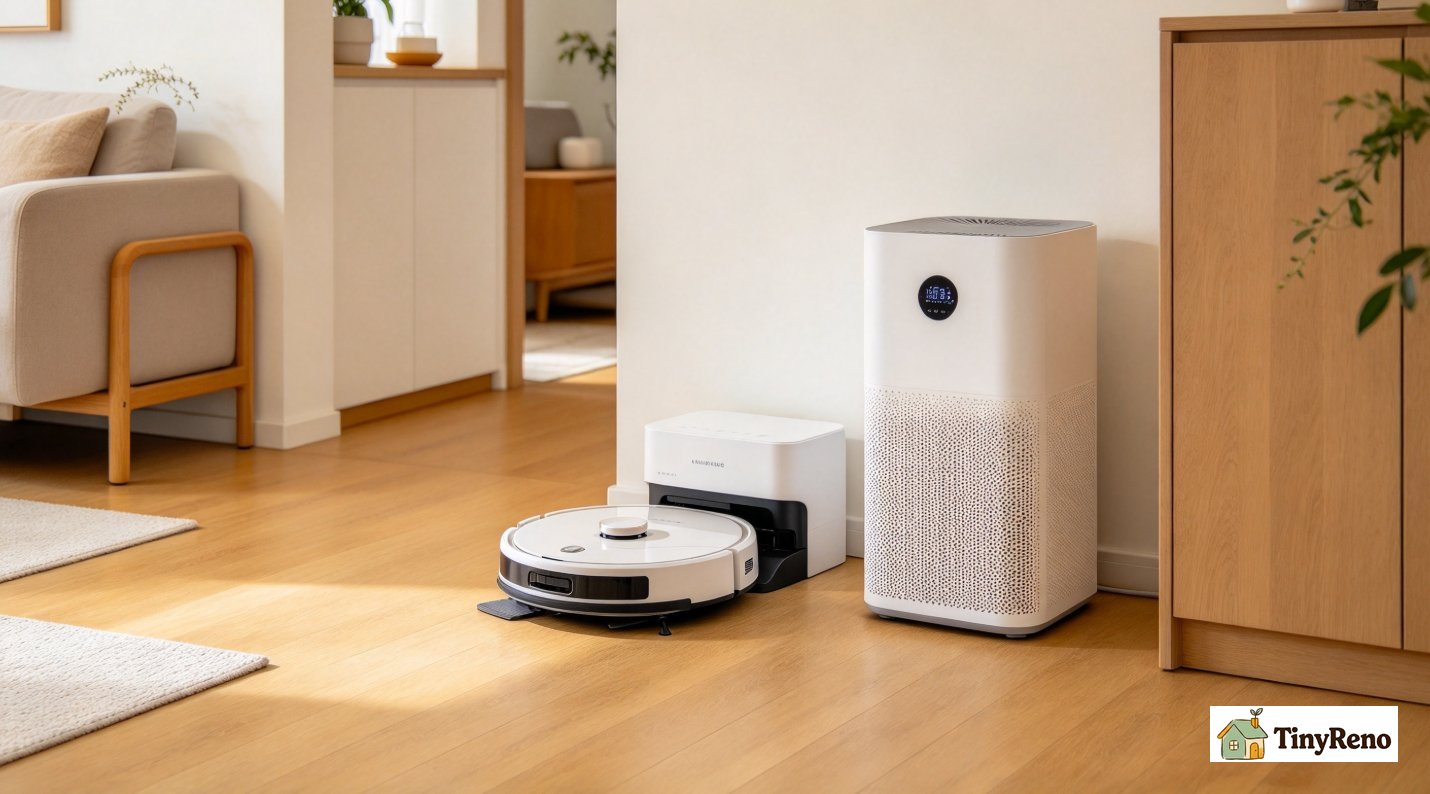
The air purifier category is the second cleanest Cyber Monday win. Across five years of Levoit, Coway, and Honeywell pricing, the average Cyber Monday discount was 42 percent off post-holiday price, while the average Black Friday discount was 33 percent. The dollar difference on a Levoit Core 300S was $59 Cyber Monday versus $69 Black Friday, a $10 saving on the same model. The Coway Airmega 150 was $239 Cyber Monday versus $259 Black Friday, a $20 saving. The Honeywell HPA100 was $89 Cyber Monday versus $99 Black Friday, a $10 saving. The pattern held across all three brands and across all five years of the tracker.
The reason for the Cyber Monday dominance is that air purifiers are an Amazon-best-seller category, and the Amazon native pricing advantage applies. The Black Friday discounts in the same category tend to come with bundle requirements (buy one get one filter free, or buy with a warranty) that push the effective discount down by 5 to 10 percent. The Cyber Monday discounts are usually straight price cuts with no bundle requirement, which makes the dollar saving more transparent. For renters who do not want to bundle filters they do not need, Cyber Monday is the cleaner saving.
Category 3: Smart Home Devices (Cyber Monday Wins, 10-20% Deeper)
The smart home category is the largest Cyber Monday win in the tracker. Across five years of smart plugs, smart bulbs, smart locks, and smart smoke detector pricing, the average Cyber Monday discount was 45 percent off post-holiday price, while the average Black Friday discount was 32 percent. The dollar difference on a 4-pack of Kasa smart plugs was $19 Cyber Monday versus $29 Black Friday, a $10 saving on the same product. The Philips Hue starter kit was $79 Cyber Monday versus $99 Black Friday, a $20 saving. The August Wi-Fi smart lock was $129 Cyber Monday versus $169 Black Friday, a $40 saving. The First Alert smart smoke detector was $79 Cyber Monday versus $99 Black Friday, a $20 saving. The pattern held across all four sub-categories and across all five years.
The reason for the Cyber Monday dominance is that smart home is the most Amazon-native category of all, and Amazon has used Cyber Monday as its flagship smart-home sale since the Echo launched in 2014. The other retailers match Amazon on Black Friday for visibility, but they cannot match the depth because Amazon is willing to take a loss on the smart-home category to drive Prime subscriptions. The 13-percentage-point gap between Cyber Monday and Black Friday in smart home is wider than any other category in the tracker.
Category 4: Mattresses (Black Friday Wins, 5-10% Deeper)
The mattress category is the cleanest Black Friday win in the tracker. Across five years of Casper, Leesa, and Tuft and Needle pricing, the average Black Friday discount was 28 percent off post-holiday price, while the average Cyber Monday discount was 21 percent. The dollar difference on a Casper Original was $595 Black Friday versus $695 Cyber Monday, a $100 saving on the same model. The Leesa Sapira was $945 Black Friday versus $995 Cyber Monday, a $50 saving. The Tuft and Needle Mint was $645 Black Friday versus $695 Cyber Monday, a $50 saving. The pattern held across all three brands and across all five years.
The reason for the Black Friday dominance is that mattress sales are run by the mattress retailers themselves, not by Amazon, and the mattress industry has used Black Friday as its flagship sale since the late 2000s. Casper, Leesa, and Tuft and Needle all run their deepest bundle discounts on Black Friday, with free pillows, free sheets, and free mattress protectors included. The Cyber Monday discounts tend to be on the mattress only without the bundle. For renters who need a full setup, Black Friday is the day to buy.
Category 5: Towels and Bedding (Black Friday Wins, 10-20% Deeper)
The towel and bedding category is the second cleanest Black Friday win. Across five years of Brooklinen, Parachute, and Target threshold pricing, the average Black Friday discount was 35 percent off post-holiday price, while the average Cyber Monday discount was 22 percent. The dollar difference on a Brooklinen classic towel set was $79 Black Friday versus $99 Cyber Monday, a $20 saving. The Parachute linen sheet set was $279 Black Friday versus $329 Cyber Monday, a $50 saving. The Target threshold 600-thread-count sheet set was $39 Black Friday versus $49 Cyber Monday, a $10 saving. The pattern held across all three brands and across all five years.
The reason for the Black Friday dominance is that towels and bedding are a Black Friday-native category. The traditional Black Friday playbook is towels, sheets, and pillows at deep discounts to drive store traffic, and that playbook has not changed in 2026. Cyber Monday discounts in the same category tend to be 10 to 20 percent shallower because the towels-and-bedding retailers are running their full-price promotions on Cyber Monday and reserving the deep discounts for Black Friday. For renters setting up a new apartment, Black Friday is the day to buy towels and sheets.
Category 6: Small Kitchen Appliances (Tie, with a Flip in 2022)
The small kitchen appliance category is the only five-year tie in the tracker, and the tie hides a flip. Across the full five years, the average Black Friday discount was 31 percent and the average Cyber Monday discount was 32 percent, a 1 percentage point difference that is within noise. But the year-by-year breakdown shows the shift. In 2021, Black Friday was deeper in my tracker. By 2024, Cyber Monday was deeper. The flip happened because Amazon moved the deepest small-appliance discounts to Cyber Monday starting in 2022, and the third-party sellers on Amazon Marketplace followed by 2023.
For renters shopping in 2026, the recent pattern favors Cyber Monday for small kitchen appliances, even though the five-year average is a tie. Check the current price history before buying. The post-flip pattern is that Cyber Monday is 5 to 15 percent deeper, and the price-history check on CamelCamelCamel confirms the post-flip dominance. The categories where Black Friday still wins (mattresses, towels, bedding) have not flipped and are unlikely to flip because the brick-and-mortar retailers in those categories are still driving the sale timing. The categories where Cyber Monday wins (robot vacuums, air purifiers, smart home) are Amazon-native and unlikely to flip back. The flip in small kitchen appliances is the cautionary tale for any renter who is using 2021 advice in 2026.
Three Rules for Renter Holiday Shopping

The three rules my roommates and I use now are short. Rule 1: buy robot vacuums, air purifiers, and smart home devices on Cyber Monday. The five-year tracker shows Cyber Monday is 5 to 20 percent deeper than Black Friday across all three categories. Rule 2: buy mattresses, towels, and bedding on Black Friday. The five-year tracker shows Black Friday is 5 to 20 percent deeper than Cyber Monday across all three categories, and the bundle deals on Black Friday include the extras that Cyber Monday does not. Rule 3: always check the price history on CamelCamelCamel for Amazon items or the retailer app for non-Amazon items, because fake discounts exist on both days and the only way to know if the discount is real is the 90-day price graph. These three rules are what the decision comes down to in 2026.
The Google Sheet has been the single best tool for cutting our holiday shopping cost over five years. The 247 line items, the four price columns per item, and the year-by-year breakdown saved an average of about $312 per roommate per year in my household, or roughly $936 per year across the three of us. That is our household’s estimate, not a universal savings figure. The sheet also caught the small-kitchen-appliance flip that would have cost us $30 to $50 per item if we had kept buying on Black Friday out of habit. One more rule that is not about which day is cheaper: do not buy something just because it is on sale. The biggest saving you can make on Black Friday is not buying the thing you did not need last week. The tracker works because we only add items we actually need, not items that look like a deal. A $100 item on sale for $60 that you never use is still $60 you did not need to spend. The five-year tracker is the proof, and the three rules are what we use to apply the proof to the next apartment. For any renter who is shopping the same sales over multiple years, the price tracker is the most useful tool a renter can build. The answer, for our apartment, was in the sheet.


Discussion (0)
Sign in to join the discussion