

Sharing a closet with roommates in a small apartment was the negotiation I lost for the first seven months of my Boston lease. We were three roommates in a three-bedroom in Allston, sharing one hallway closet that was 5 feet wide. By the second month, three extra bins had appeared on the shelf and bar. By the fifth month a passive-aggressive note appeared on the kitchen counter asking us to please respect each other's space. By month seven we sat down and worked out the 3-zone divide that holds the system together. Two years and two lease renewals later, the closet still works. That experience is the standard I now use for small-apartment roommate systems.
Before the 3-zone divide, the closet was a friction source
When I moved in, the closet was arranged by whoever had moved in first. By month two, my roommate Maya had added three plastic bins and a hanging shoe rack. By month four, my other roommate Devon had moved his coat to the floor of the closet because the bar was full. By month five, the bin count was up to four on Maya's side and Devon had put a note on the kitchen counter. The note asked, politely, that we respect each other's belongings. The note was not wrong. The closet was the source of three small arguments a week, and most of those arguments were about who had touched whose coat.
The friction was not about clothes. It was about overlap. Three people, one bar, one shelf, one floor. When any one of us had to move something to get to our own thing, it counted as a touch. By month six the count of touches per week was about twelve, and every touch was a small reminder that someone else's stuff was in the way. The problem was not too many clothes. It was too many decisions happening in the same square foot.

What changed when we sat down and worked out a divide
The conversation that finally worked started on a Sunday morning over coffee. I asked the other two if we could take 20 minutes and agree on a 3-zone divide. I said the word divide on purpose. I printed a piece of paper with the closet drawn as a rectangle divided into three zones. The conversation took 18 minutes. At the end we had three rules that everyone agreed to and that nobody had to ask permission to enforce. The three rules were: each person owns one zone completely, anything outside that zone is borrowable, and overflow goes to under-bed bins that are taped with a name.
After the conversation, the next weekend we redid the closet in 90 minutes. Maya took the high shelf, Devon took the floor, and we split the bar into three sections. The shoe rack came down. The plastic bins went under our three beds. The shared closet space turned into three private zones plus a thin layer of shared bar overflow that rotates by season. Six months later, we had not had a single closet-related argument. Twelve months later, when my lease came up, Maya and Devon renewed together and brought in a third roommate. The 3-zone divide is still the way that closet works.
| Zone | Owns | Where | Rule |
|---|---|---|---|
| Zone 1 — High shelf | One named person | Top shelf only | Off-limits to others |
| Zone 2 — Bar | Rotates by season | Hanging rod, 20 inches each | Equal hanger count |
| Zone 3 — Floor | One named person | Floor below bar | Off-limits to others |
| Overflow bins | Named person, taped | Under each bed | 2 bins per person |
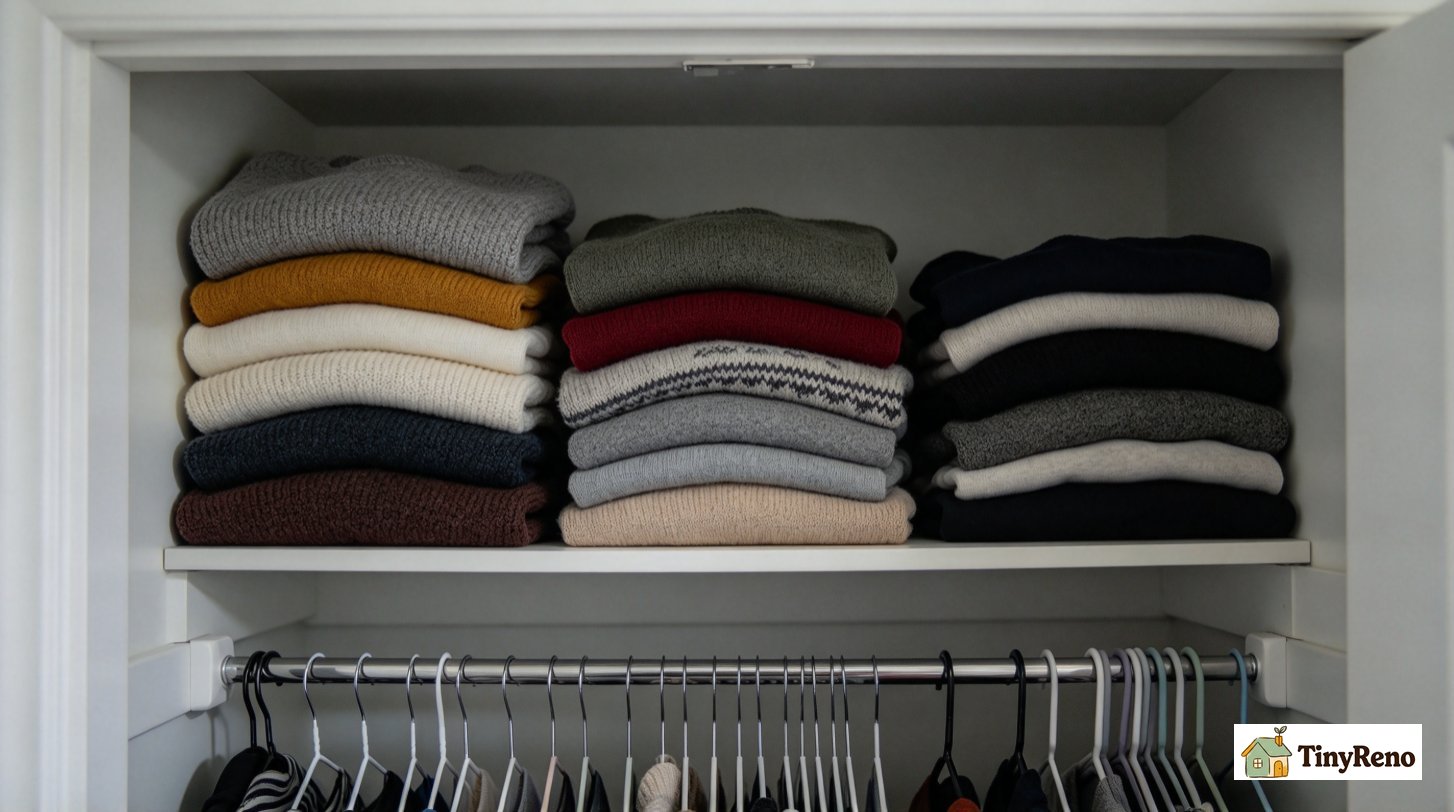
The 3-zone divide, exactly how we drew it on the paper
Zone one was the top shelf. The shelf was 12 inches deep and about 4 feet long. One named person owned it completely. We picked Maya because she had the most sweaters and the sweaters took the most shelf space. The rule was that Maya's shelf was hers and no one touched it without asking. Zone two was the bar. The bar is the most contested space, so we divided the bar by inches. The bar was 60 inches long. Each of us got 20 inches, which is 12 to 14 hangers. In winter, the person with the longest coats can use a few extra inches, and we reset the sections in spring.
Zone three was the floor. The floor under the bar was about 10 square feet. Devon took it because he was the only one of us with boots. The rule was no boots under anyone else's section of the bar. Zone four, which we did not draw, was the overflow bins. Each of us got two under-bed bins with a tape label saying our name. Anything that did not fit in the three zones went into a bin. Nothing sits on the shared closet space outside an assigned home.
The 3-zone divide works because three rules cover almost everything. Each person owns one zone completely. Anything outside that zone is borrowable, meaning if you move someone else's coat to reach yours, you put it back exactly where it was. Overflow goes under the bed in a named bin. The three rules are short enough that everyone can recite them, which is why the system held for two years.
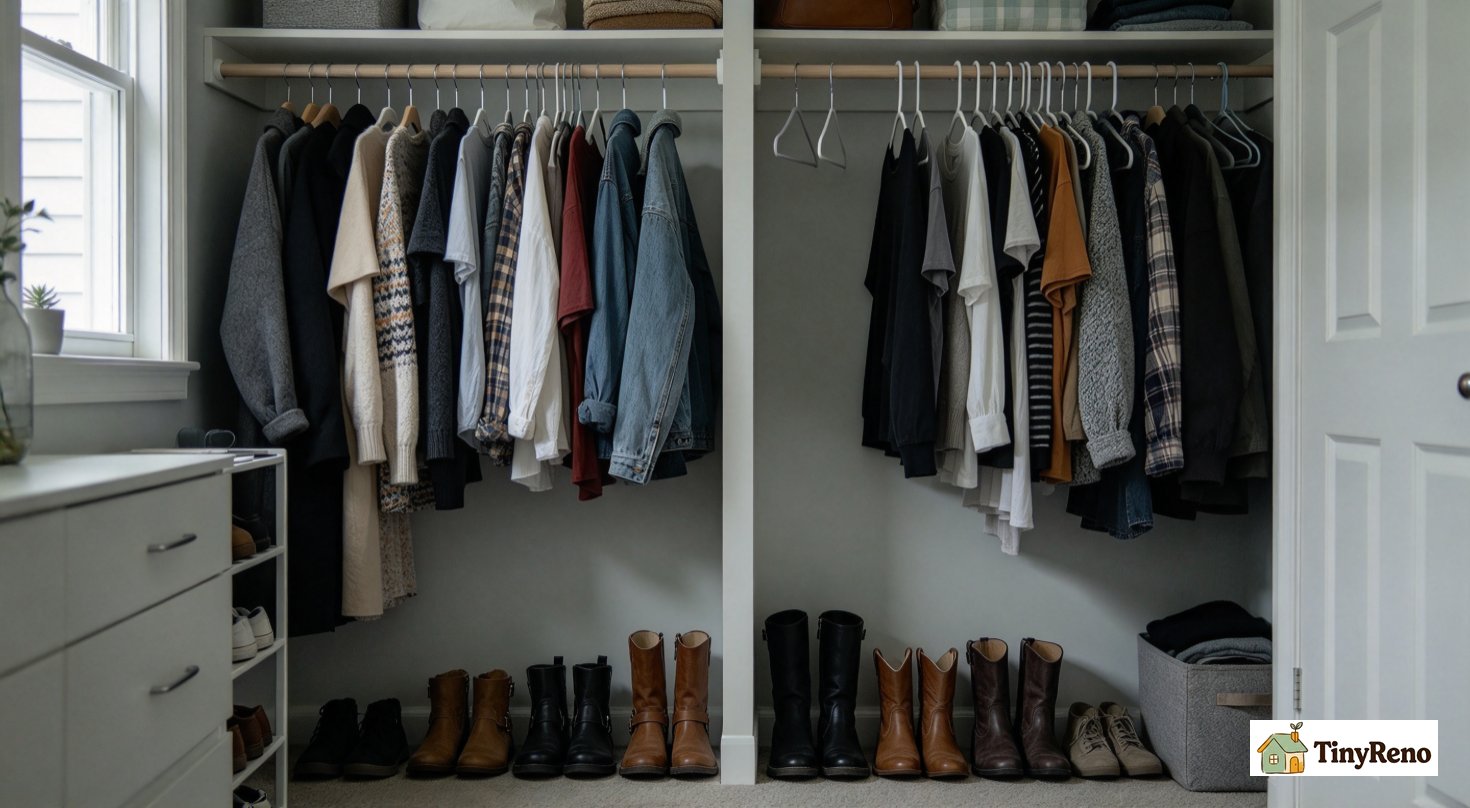
The one conversation that saved us from a passive-aggressive note
The conversation that worked was not the one I expected to work. I had been planning a more formal meeting with a printed agenda and a shared Google Doc. What actually worked was a 20-minute Sunday morning coffee chat. The opener I used was, can we take 20 minutes and agree on a 3-zone divide so none of us is digging through each other's things. The opener framed the conversation as a process request, not a complaint. Nobody felt accused. Nobody had to defend their coat pile.
Three things made the conversation work. The first was timing. Sunday morning is low-stress. Nobody had a deadline. The second was framing. The request was for a process, not an outcome. The third was paper. I drew the rectangle and the three rows before I asked the question. The visual made the proposal concrete. By minute 18 we had all agreed.
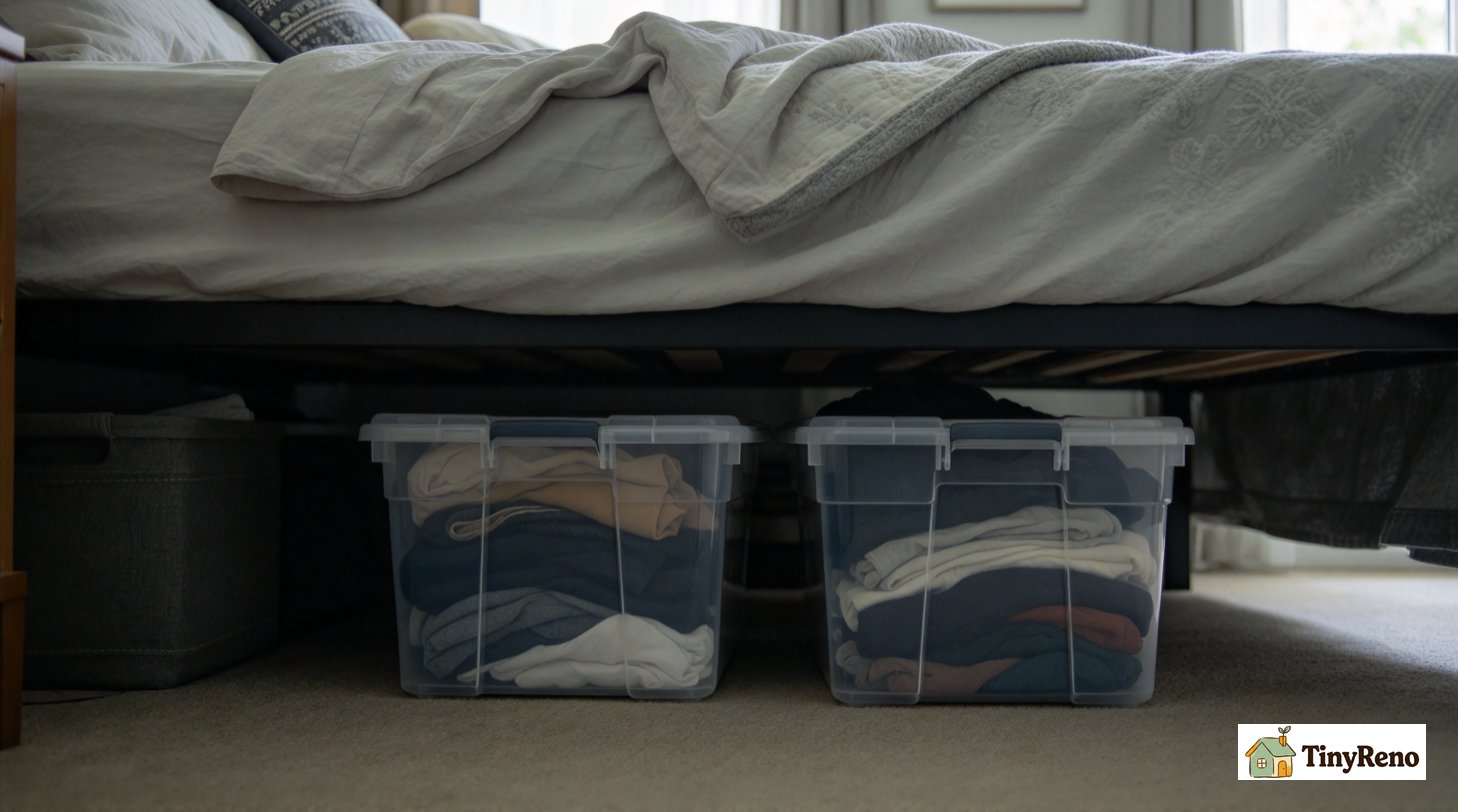
After the divide, the small wins added up
By month four after the conversation, the closet looked the same every Monday. By month six, my roommate Maya told me she was impressed. When the third bedroom turned over, we onboarded the new roommate in 20 minutes using the same paper rectangle. The closet is still the most organized place in the apartment. The passive-aggressive notes stopped the week after the conversation and never came back.
The divide held through one roommate turnover, two lease renewals, and one pandemic winter when three of us were home for four months straight. I would set up the same divide on day one of any future shared rental. It prevents friction from building and gives each person a zone without forcing anyone to share hangers.
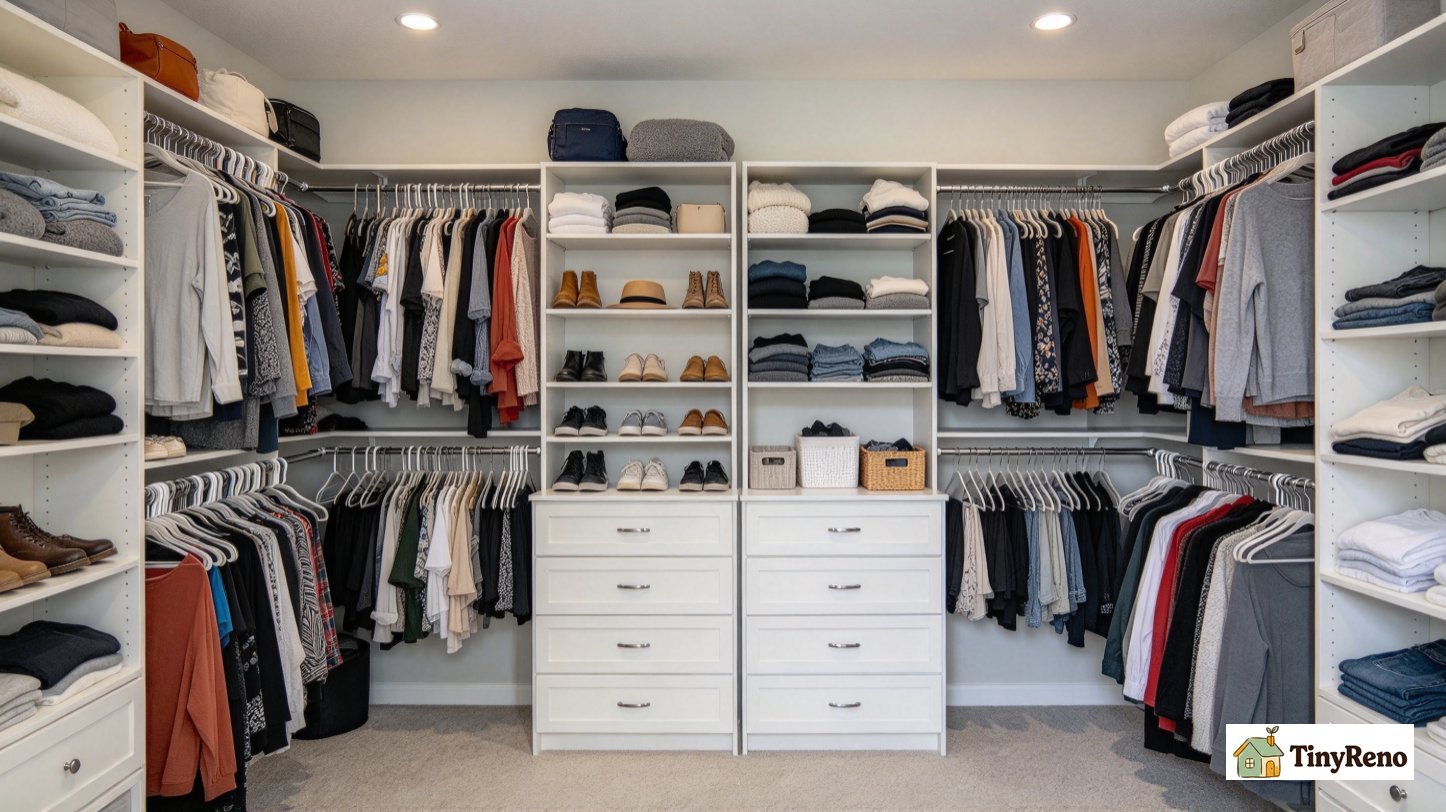
The rules that should be on the inside of the door
Three rules. Each roommate owns one named zone. Anything outside that zone is borrowable, meaning you put it back. Overflow goes under the bed in a name-taped bin. The rules are short enough to print on a 3x5 card and tape to the inside of the closet door. They cover almost every argument I have ever had about a shared closet, including the one I had with my college roommate about a winter coat that never made it home.
If you are moving into a shared rental with one closet and two or three roommates, draw the rectangle on day one. Pick the zones by what each person actually needs, not by who has the most stuff. Tape the rules to the inside of the door. The conversation costs 20 minutes and the system saves you two years of small arguments. That is the trade I would make again, and the trade I have made again in two different leases since.
The divide is not a hack; it is the same rectangle-drawing conversation my parents had in their first duplex in 1989, and the one my college roommate and I failed to have until junior year. The conversation works because it forces three people to commit in writing. Three signatures on a 3x5 card taped inside the closet door lasted longer than goodwill alone, and far longer than a year of passive-aggressive notes about winter coats.


Discussion (0)
Sign in to join the discussion