

I asked Marcus Hale how to decorate apartment bookshelves in a renter-safe way on a Thursday evening in October 2024, after I moved into a one-bedroom in the Crossroads neighborhood of Kansas City and realized I had three Billy bookcases from IKEA, eleven banker's boxes of paperbacks, and a lease that said no holes deeper than a picture nail. Marcus had been the assistant manager at The Rainy Day Books for three years before he quit to do carpentry full-time, and he restocked the fiction tables every Wednesday and Friday during those years. The six rules he gave me that Thursday, written on the back of a pizza menu in my kitchen, are the rules I still follow on every bookshelf I have styled since, in two apartments and one sublet. They come from a bookseller who handled thousands of books a year, and they are renter-safe because none of them requires a hole deeper than a picture nail.
The Crossroads apartment was a third-floor walk-up in a converted brick warehouse on Baltimore Avenue, with 14-foot ceilings, original maple floors, and one wall of floor-to-ceiling windows that faced east. The landlord was a former architect who allowed wall art hung with picture nails but no drilled anchors, and the security deposit was one month's rent, which I wanted back in full. I had two Billy bookcases in the living room, one in the bedroom, and the banker's boxes stacked in the hallway closet. Marcus came over with a tape measure, a pencil, and a slice of pepperoni pizza from Il Lazzarone on Main, and he spent ninety minutes walking the shelves before he wrote the first rule on the back of the pizza menu. He told me he had been thinking about my question since I texted him on Sunday, because what I was really asking was not “how do I decorate” but “how do I decorate in a way that does not damage the deposit and does not look like a college dorm.” The six rules came out of that distinction.
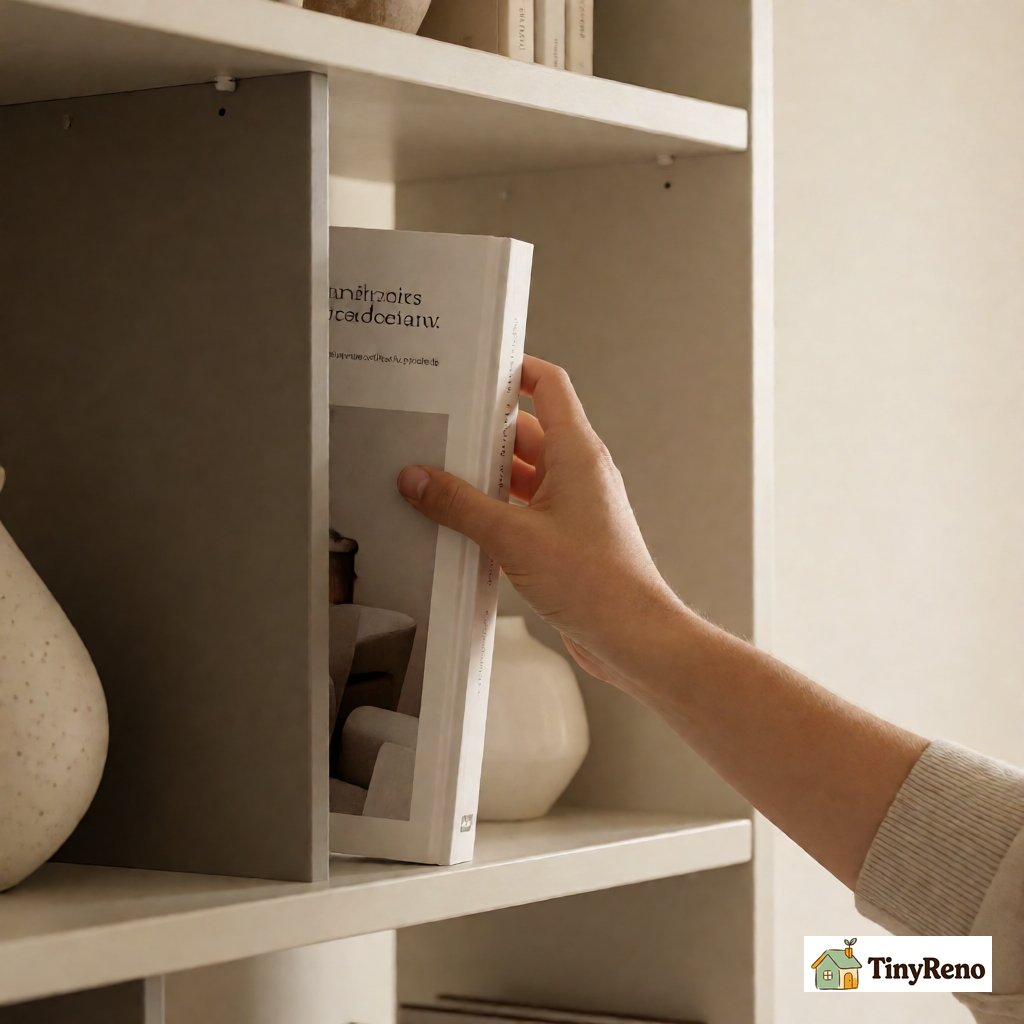
How to Decorate Apartment Bookshelves Renter Safe: The 6 Rules From Marcus
Rule 1 is the rule of thirds. Marcus drew three rectangles on the pizza menu and labeled them books, objects, and air. The rule is that one third of every shelf should be books upright, one third should be objects (plants, frames, baskets, the one thing you brought back from a trip), and one third should be empty space. The empty space is what makes a bookshelf look styled instead of packed, and it is the rule The Rainy Day used on the staff-pick tables. The empty third is the hardest to protect because it is the easiest to fill with books, and it is also the third that most renters skip. I skipped it in October 2024. Marcus saw the skip on his first walk-through and told me to remove four books from the top shelf of the living-room case. I removed four books. The shelf looked better, and the room looked bigger.
Rule 2 is the rule of one anchor per shelf. An anchor is one tall object, one tall stack of books, or one tall plant that sits at one end of the shelf and gives the eye a place to start. Marcus anchored the living-room Billy with a 14-inch ceramic vase from his sister's pottery studio in Lawrence. I anchored the bedroom Billy with a stack of three hardcover art books laid horizontally. The anchor should be one per shelf, not two; two anchors fight each other. He also said, “Never put a family photo as the anchor, because the anchor is the focal point and a family photo makes the shelf look like a shrine.” I had two family photos on the shelf. He moved them both to the objects third. The shelf looked less like a shrine and more like a bookshelf.
Rule 3 is the rule of one texture per shelf. Marcus walked the objects third of every shelf and asked me to name the texture: glass, ceramic, woven, paper, metal, plant. The rule is one texture per shelf, with one exception: the plant can be on every shelf. A shelf with a ceramic vase, a ceramic frame, and a ceramic bookend reads as a shelf of ceramics, not a shelf of objects. My living-room case had three ceramic objects on the top shelf, two metal objects on the middle shelf, and one woven basket on the lower shelf. Marcus moved the woven basket to the middle shelf to break the metal and added a small succulent in a clay pot to the lower shelf. The shelf stopped reading as three separate materials and started reading as one bookshelf. That texture rule made the biggest visual difference.
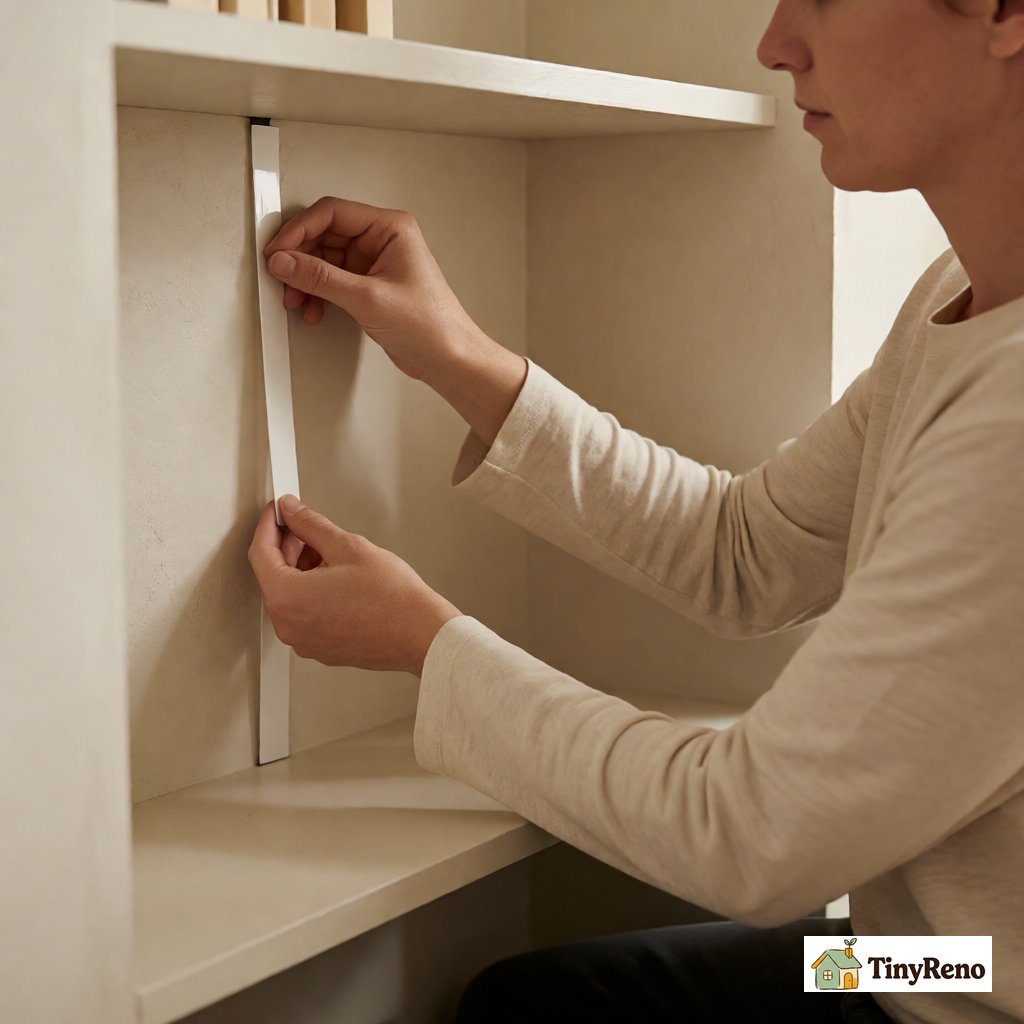
Color Across the Spine, the Horizontal Stack, and the Renter-Safe Hang
Rule 4 is the rule of color across the spine. Books with white spines go together, books with dark spines go together, and books with colorful spines go together, sorted left to right across each shelf. Marcus called this the “rainbow without the rainbow” trick. The bookstore used it on the staff-pick tables because customers see the spines from six feet away and the eye groups colors faster than it groups titles. I sorted my paperbacks by spine color across the shelves in six groups: white, cream, red, blue, green, and black. The bookshelf looked like a gradient instead of a library. One book per shelf can be turned front-out so the cover becomes a visual anchor instead of the spine. The Rainy Day used this trick on the staff-pick table every Friday, and it is the trick that made me buy a copy of The Goldfinch at the bookstore even though I already owned it on Kindle.
Rule 5 is the rule of one horizontal stack per shelf. A horizontal stack is two or more books laid flat on top of each other, used to break the vertical line of upright books. The rule is one decorative horizontal stack per shelf, not two; two horizontal stacks make the shelf look like a ladder. Marcus placed one stack of three paperbacks on the lower shelf of the living-room Billy, between the upright hardcovers and the woven basket. The stack broke the vertical line about 12 inches from the left. I kept a separate small stack for books I was actively reading, and that reading stack rotated every two weeks; the decorative stack stayed put.
Rule 6 is the rule of renter-safe hanging. Marcus did not hang the Billy bookcases from picture nails; a loaded bookcase is far too heavy for that. Instead, he used the manufacturer's tip-over restraint to secure each bookcase to a wall stud with one small screw, then filled the hole with spackle at move-out. If a lease does not allow even that, ask the landlord in writing first. For wall art above the bookcases, he used Command strips rated at 20 pounds, which peel off without damage when removed slowly. In the hallway nook, he used a tension rod only for a lightweight curtain or hanging organizer, not for a shelf. None of these methods requires a drilled anchor, and each one helped protect the deposit.
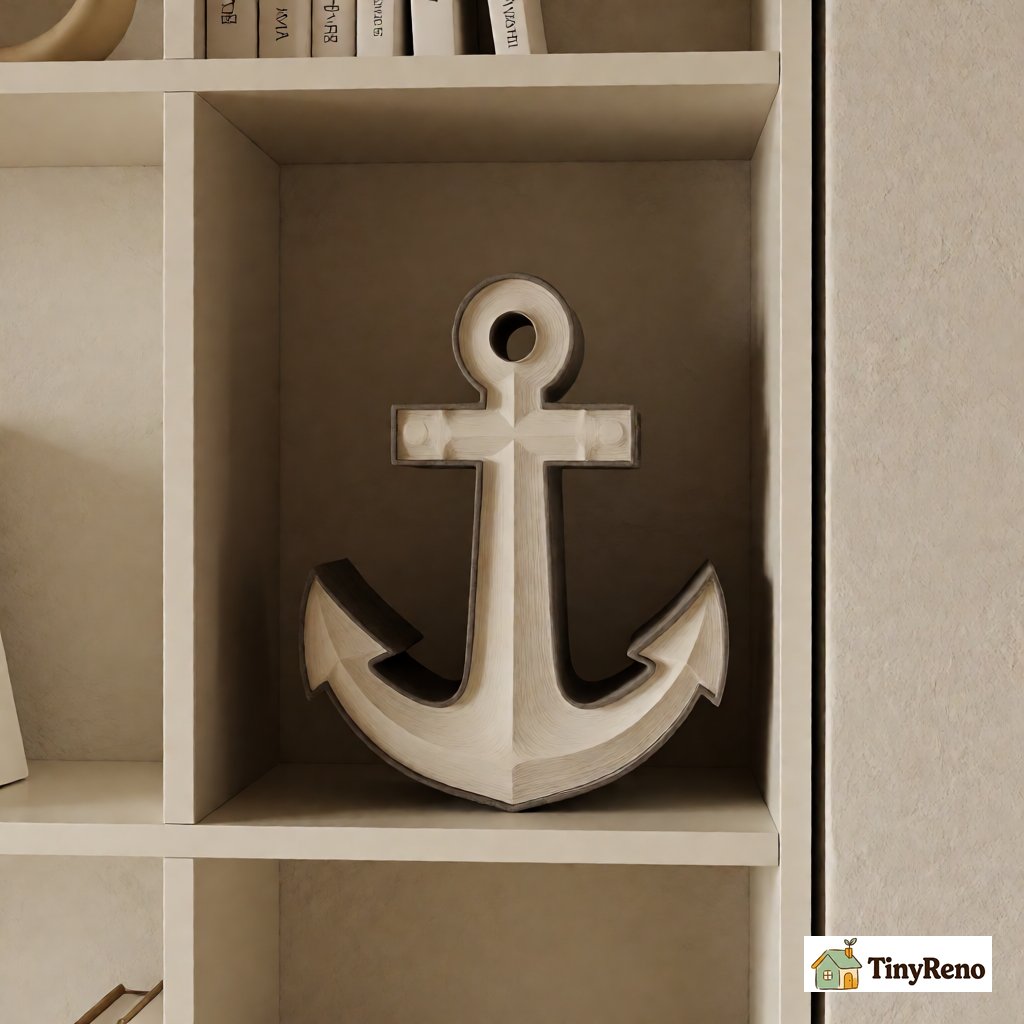
The Three Things I Never Do and the One Anchor That Holds It All
The three things I never do on an apartment bookshelf came from mistakes I made before Marcus came over. First, I never sort books by author or genre. I sorted by author in college, and the shelf looked like a library catalog, not a living room. The Rainy Day sorts by genre on the back tables and by spine color on the front tables; the front tables are what sell books. Second, I never put candles on the shelf. Candles near books are a fire hazard, and spilled wax can cost part of a deposit. Third, I never fill every shelf. Empty space is the cheapest decoration, it keeps the shelf from looking packed, and it makes it easier to dust and check for damage. A shelf with some empty thirds is easier to inspect; a packed shelf invites closer scrutiny.
The principle that holds the six rules together is the empty third. It gives the anchor room to read, it separates texture groups, it keeps a horizontal stack from looking like clutter, and it lets a spine-color gradient breathe at the ends. A packed shelf also puts more weight and stress on any wall restraint, while a sparser shelf is easier to secure and inspect. The empty third is not wasted space; it is what makes the other rules visible.
Two Apartments, One Crossroads Walk-Up, and the Deposit That Came Back in Full
The two-apartment timeline matters here. The Crossroads apartment was the first test, October 2024 to August 2025. The Westport apartment has been the second test since September 2025. The Crossroads landlord walked the apartment with a clipboard on August 31, 2025, and the only deduction was $40 for a carpet steam clean I had negotiated in advance; the rest of the deposit came back in full within 30 days. The bookshelves were untouched. The small restraint holes were filled with spackle. The Command strips peeled off the wall in August with a hair dryer on low, leaving no mark. The Westport apartment has the same six rules on the same three Billy bookcases plus a ladder shelf in the dining nook that I added in March 2026. The ladder shelf is a 30-inch by 12-inch Target unit that leans against the wall and never touches a stud. It holds 38 pounds of cookbooks and a jade plant, and because it is not attached to the wall, it should not appear on the deposit deduction list when I move out.
The rules are less about the books than about the space around them. Marcus taught me that a bookshelf works as a system of threes, and the system works in a 700-square-foot apartment the same way it works on the staff-pick tables at The Rainy Day. The empty third is the hardest part to protect, the anchor gives the eye a starting point, texture creates the break, spine color makes the gradient, and the horizontal stack adds visual breath. None of the six rules requires a drill. The only purchases were about $40 in Command strips and a small tub of spackle. Those rules helped me keep the deposit at the Westport apartment, and Marcus still comes over on Thursdays to walk the shelves. The pizza menu is still on the kitchen counter, with the six rules on the back.


Discussion (0)
Sign in to join the discussion