

Dear Marcus, you texted me last week asking about smart locks versus traditional locks. I am writing from a third-floor walk-up in Hartford, Connecticut, on a Tuesday night in March 2025, three weeks after I pulled the second smart lock off my apartment door and put a traditional deadbolt back in. I first asked the same question in July 2022, and my answer today is different from 2022 and different again from 2024. Three years of trying—two successful installs and three failed attempts in 2025—makes me a poor source for a quick answer but a useful one for the long version. My first smart lock led to a $400 deposit deduction claim when I moved out; mediation later reduced what I actually paid to $220. My second smart lock survived a move and a roommate change. What I would do today if I were starting over is the third option, and the order of operations matters more than the lock you pick.
The setting, in case it helps: I have rented in Hartford since 2019 in three different apartments, all managed by small local landlords. The first was a studio on the second floor of a triple-decker off Asylum Hill, with a Kwikset single-cylinder deadbolt installed in 2014 and showing its age. The second was a one-bedroom in a converted 1910 factory on Huyshope Avenue, with a Schlage B60N deadbolt that was a 2020 replacement. The third, where I am now, is a two-bedroom on the third floor of a 1920s four-family in the West End, with a Medeco Maxum commercial-grade deadbolt the landlord installed in 2021. Three apartments, three traditional locks, and three different conversations with three different landlords about whether I could swap in a smart lock. The conversation is the part YouTube reviews skip, and it is the part that decided the cost.
The 2022 install: what went wrong and the four hundred dollar lesson
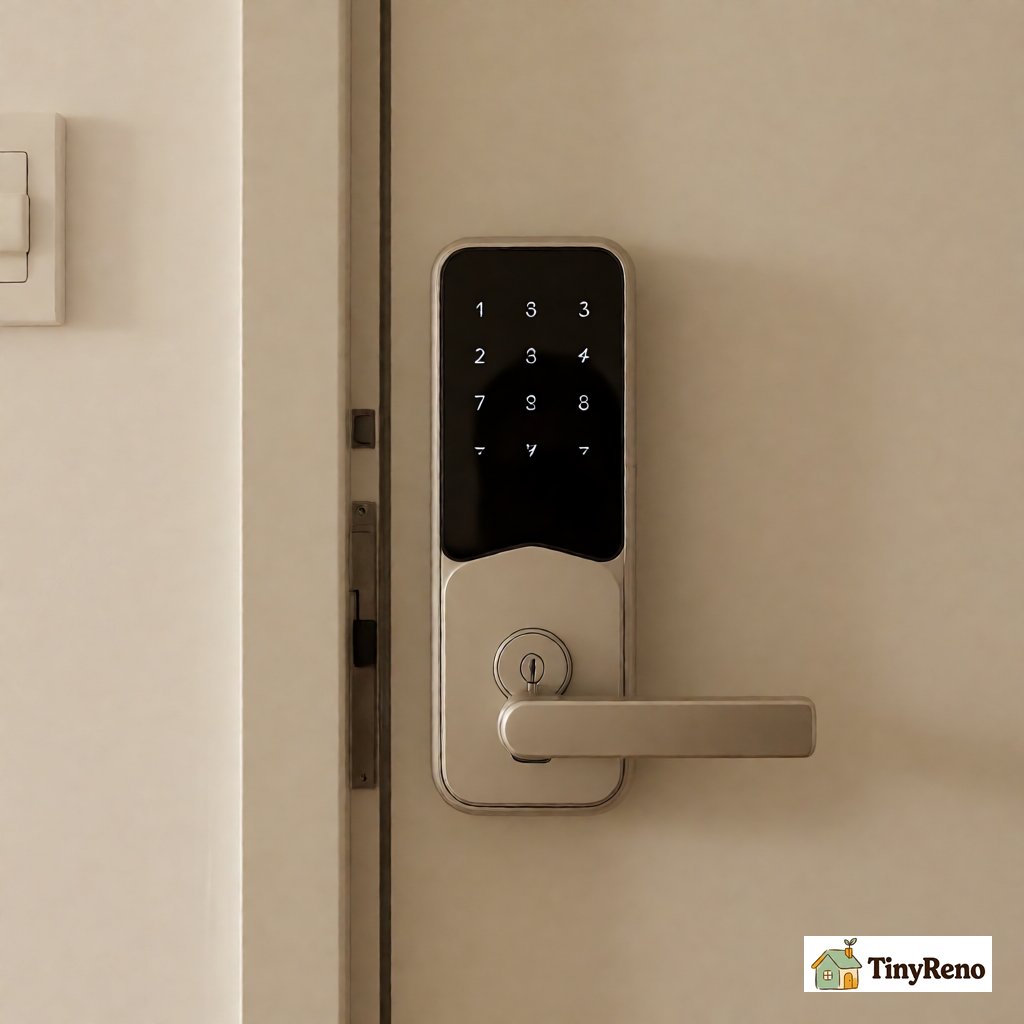
In July 2022 I bought a Yale Assure Lock 2, the Bluetooth model, for $229 from the Best Buy on Hartford's Bishops Corner. Installation took about forty minutes because my Kwikset was a standard 2-1/8 inch bore hole and the Yale fit it. Setup took another twenty minutes, and the lock synced to my phone by the end of the evening. I texted my landlord at 11 p.m. to tell him. He responded at 8 a.m. the next morning with one line: “Please revert to the original lock before move-out or I will deduct from your security deposit.” I had assumed a smart lock was a renter-friendly upgrade because every review I read focused on the install, not the lease. Section 14.2 of the Asylum Hill lease said: “Tenant shall not modify, replace, or remove any door hardware, locks, deadbolts, or security devices without prior written consent of Landlord.” I had not asked. He said no after the fact, and the no came with a $400 invoice for a locksmith to remove the Yale and reinstall the original Kwikset at move-out in August 2024.
The invoice broke down to $180 for the locksmith’s two-hour service call, $80 for a new Kwikset deadbolt because the original had been drilled for a smart-lock mounting plate that did not match the old screw pattern, and $140 for after-hours scheduling because I moved out on a Saturday. I contested the deduction through Connecticut’s security deposit mediation program in October 2024. The mediator split the difference: I paid $220, and the landlord absorbed $180. The lesson was not that smart locks are bad for renters; it was that asking first, in writing, and getting the answer in writing is the step that decides the cost. Many landlords will negotiate. Some will say no outright. The ones who say yes often attach conditions, such as keeping the original hardware and reinstalling it at move-out.
The 2024 install: a landlord who said yes and a lock that worked through a move
In September 2024, two weeks after I signed the lease on the Huyshope Avenue one-bedroom, I emailed the landlord, a retired teacher named Janice, and asked if I could install a smart lock on the Schlage B60N. She replied within a day with three conditions: keep the original Schlage in a labeled box, reinstall it at move-out, and give her a key to the smart lock for emergencies. I bought a Schlage Encode Plus, the Wi-Fi model with Apple HomeKey, from Home Depot for about $279. Installation took about thirty minutes and setup about fifteen. The lock worked through a roommate change in February 2025; the only task was reissuing the code, which took ninety seconds in the app.
The Huyshope apartment taught me what a smart lock actually does for a renter. The Schlage logged every lock and unlock with a timestamp and user code. When my roommate and I argued in December 2024 about who left the front door unlocked, I pulled the log and showed the door was locked at 9:47 p.m. and unlocked at 6:52 a.m. The argument ended. When my landlord’s plumber needed access for a hot-water-heater leak in January, I issued a one-time code that expired at 6 p.m. and texted it to him. He got in, fixed the valve, locked up, and the code expired. The smart lock did what the marketing promised: it logged events, shared access without copying keys, and ran on four AA batteries that I changed once in eight months. The traditional lock could not do any of those three things. The trade was the install, the lease negotiation, and the move-out reinstallation—about twenty minutes and a Phillips screwdriver.
The 2025 decision: why I went back to a traditional lock
In February 2025 I moved into the West End two-bedroom. The new landlord, a young guy named Theo who works in commercial real estate, said no to the smart lock question before I finished asking. His reason was specific: the building had a master key system for the four units, and the Medeco Maxum on my door was keyed to the master. A smart lock would have broken the master key system, and the building’s insurance required the master system to remain intact. He offered a compromise I had not seen before: I could install a smart lock on the inside of the door as a secondary lock, with the original Medeco Maxum remaining primary. The catch was that no smart lock compatible with a Medeco master key system offered a viable inside-only install in 2025. Some smart locks, like August, are designed to replace only the interior side[reference:8], but August is also officially incompatible with Medeco deadbolts[reference:9].
I tried three options in February and March. First, a SwitchBot Lock: a small motorized device that mounts over the existing deadbolt and turns it. It worked for nine days. The adhesive mount failed on day ten because the door is a 1920s solid-core slab that runs hot and cold with the hallway; SwitchBot’s own guidance notes that double-sided tape can deteriorate near heat sources[reference:10]. Second, an August Wi-Fi Smart Lock with a separate keypad. It failed because the Medeco thumb turn was a commercial-grade design that the August mounting plate could not seat against—consistent with August’s compatibility list excluding Medeco[reference:11]. Third, a Level Lock+, which replaces only the interior mechanism. The Level install required removing the Medeco’s interior escutcheon, which would have violated the master key system rule and breached the lease. I put the Medeco back, returned the Level, and stuck with the traditional deadbolt for the rest of 2025.
The 2025 answer Marcus, and the three questions to ask your landlord first
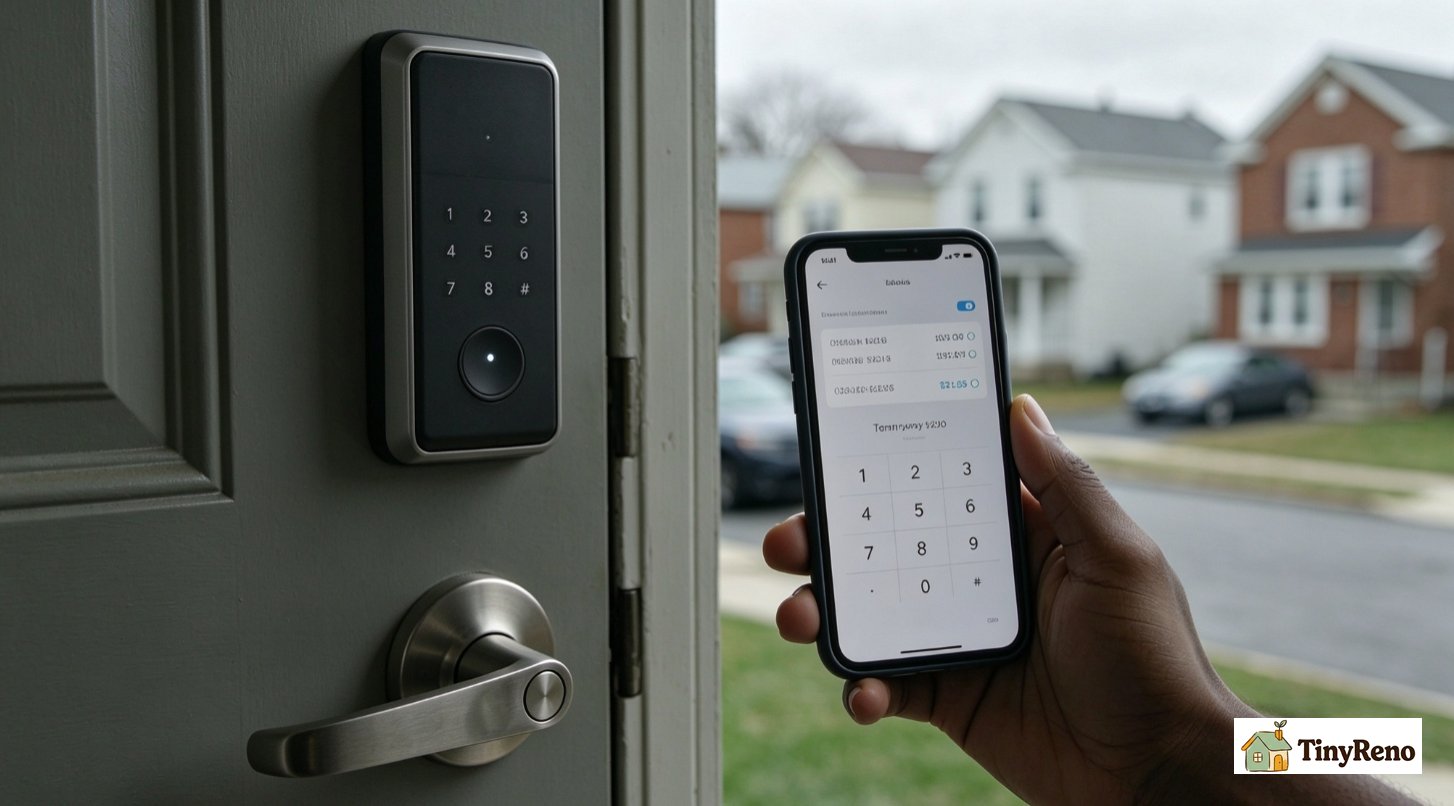
Marcus, here is the answer in three parts. First, if your lease has any clause about modifying locks or door hardware, ask before you buy. The email should include the make and model, the install plan, and a request for written consent. Many landlords say yes within a week; the ones who say no save you money. Second, if your landlord says yes, the Schlage Encode Plus is the right pick for most renters in 2025: it fits a standard 2-1/8 inch bore, runs on AA batteries that last about eight months, and comes off in twenty minutes with a screwdriver. The Level Lock+ is the second-best pick if your landlord wants the exterior to look unchanged. Third, if your apartment has a master key system or a commercial-grade deadbolt like a Medeco, stay with the traditional lock. The smart lock market has not solved the master key problem, and the workarounds I tried all failed within thirty days.
The $220 I paid after mediation in 2022 is the cost of not asking. The Schlage Encode Plus from 2024 is the lock I would buy again if I were renting from a landlord who says yes. The traditional Medeco Maxum I have today is the lock I would keep if I were starting over. The smart-lock question is not a brand question; it is a lease question. Ask first, in writing, with the make and model and the install plan, then buy the lock that fits the answer. The Schlage Encode Plus is the right answer for most renters whose landlords allow a swap. The Level Lock+ is the right answer for renters whose landlords care about the exterior looking unchanged. The traditional deadbolt is the right answer for buildings with master key systems. Three years of trying taught me that the landlord conversation decides the cost, and the cost decides whether the question was worth asking.
The $220 is gone. The Schlage Encode Plus from 2024 is in a labeled box on the top shelf of the hall closet in the Huyshope apartment, waiting for Janice to rent the unit to the next tenant. The Medeco Maxum is on my door in the West End, and Theo has the only key, and I have a spare under the mat like every other renter in Hartford. Marcus, text me when you email your landlord. I want to know which of the three answers you end up at.


Discussion (0)
Sign in to join the discussion