

When you walk into a rental apartment, the floor is usually the first thing you notice — and the material it is made of matters more than you think. Luxury vinyl plank (LVP) and laminate are the two most common flooring materials in newer apartments, and they feel different underfoot, clean differently, and fail in different ways. I have lived on both, and after two years of comparing them side by side in the same building, the difference is not just aesthetic.
LVP is quieter, more water-resistant, and feels softer underfoot. Laminate has a slight material-cost edge, but the installed price difference is narrower than the sales sheets suggest, and laminate swells when water reaches the core and sounds hollow underfoot. If you have a dog, a cat that knocks over the water bowl, or a small kitchen where splashes happen, LVP is the more forgiving surface. If you want the most convincing wood look and you do not have pets, laminate still has a case. These conclusions come from two years of living on both materials in the same building and from watching which floor survived which kind of mess.
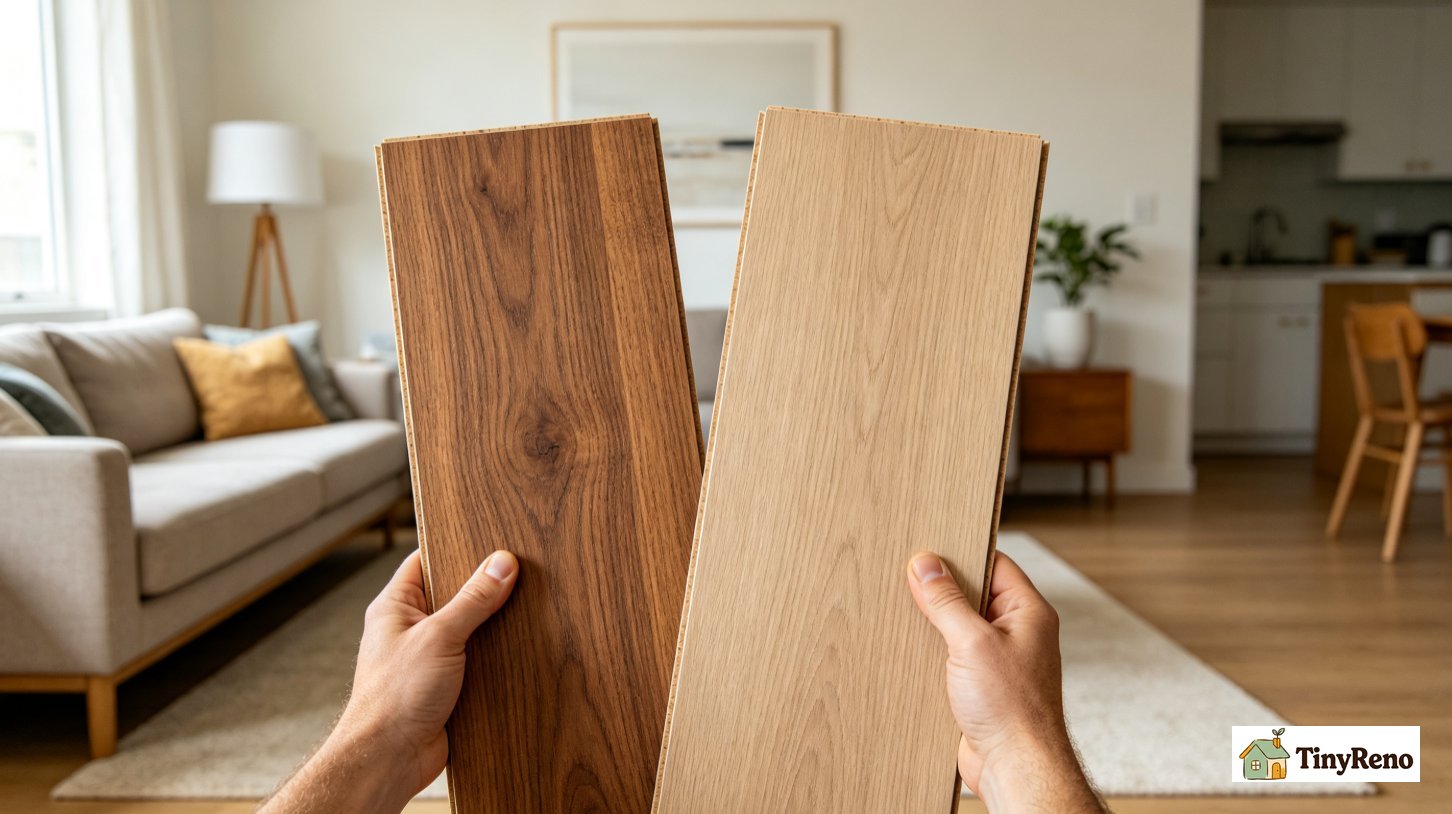
What they actually are, under the surface
LVP has a vinyl core—either flexible PVC or a rigid SPC/WPC core—topped with a printed vinyl film and a clear wear layer[reference:3][reference:4]. Some LVP planks flex slightly underfoot; rigid-core versions flex much less. It is not real wood, and from across the room it reads as wood, but up close it reads as vinyl.
Laminate is an HDF core with a printed paper face and a melamine-impregnated wear layer pressed on under heat. It is rigid, clicks together as a floating floor, and the print layer is where it spends its money. A good laminate print often looks more like real wood than a good LVP print because the printed paper and the embossed overlay are pressed onto a rigid HDF core, which holds fine detail more consistently than a vinyl film.
The difference you feel when you walk on it: LVP absorbs impact. The floor gives a little. Laminate rings. Drop a spoon on LVP and it makes a dull thud. Drop the same spoon on laminate and it makes a sharper sound that travels down to the people below you.
The noise difference is bigger than you expect
This is the one that surprised me. I used a phone decibel meter while walking across both floors in hard-soled shoes from the apartment directly below. The LVP floor measured about 64 dB and the laminate floor about 71 dB. A 7 dB difference is audible—it reads as a clear step down in loudness, not a subtle shift—though a phone meter is not a laboratory IIC/STC test, so treat the number as directional. Third-party flooring acoustics data point the same way: laminate typically lands in the IIC 40–50 range without premium underlayment, while LVP ranges roughly IIC 50–70[reference:7]. The neighbor below could hear the laminate from her couch.
The reason is construction. A flexible vinyl plank absorbs some impact in the plank itself, while a rigid HDF core transmits more of it through the click joint and underlayment into the subfloor. Underlayment matters too: closed-cell foam under LVP damps more click noise than the thin open-cell foam often used under laminate.
If you live in an apartment building and you know the person below you, this matters. LVP floors are quieter to walk on, and if your downstairs neighbor ever complained about footsteps, you are probably on laminate.
The water test is where laminate fails
This is the one that matters most if you have pets, you cook, or your shower curtain leaks. Laminate has an HDF core that behaves like compressed wood fiber. When water reaches the seam and soaks into the core, the fiberboard swells, the seam lifts, and the swelling is permanent; once that happens, the plank has to be replaced[reference:10]. Repeated or unaddressed spills at the seams are where laminate fails.
LVP’s PVC/SPC core does not absorb water, and most rigid-core LVP is sold as waterproof[reference:11]. That does not make a flood harmless: water can still travel through the seams to the underlayment or subfloor, and standing water can get trapped under the floating floor. But a splash that dries in an hour, a knocked-over bowl, or a damp mop is within LVP’s comfort zone. The vinyl itself does not swell the way wood fiber does.
The practical difference for a renter: if you have a dog that slobbers water all over the floor after drinking, or a cat that knocks over the water bowl, or you cook in a kitchen where grease splatters happen, you are much better off on LVP. On laminate, the seam will lift within a year of the first spill. On LVP, it will not.
One caveat: LVP is not indestructible. If you drag a heavy couch across it, the wear layer will scuff. If you drop a cast iron pan on it, it will dent. It is better than laminate at water, but it is not armor. Treat it like a good pair of shoes: clean it regularly, do not soak it, and it will last.
The one place laminate still wins
Laminate looks better up close. The print layer on a good laminate is sharper and more convincing as real wood than the print layer on most LVP. Kneel down a foot away and laminate reads as wood; LVP reads as vinyl. That is part of why landlords choose laminate for staging—it photographs well. But print fidelity is a viewing pleasure; water resistance and noise are daily-life variables. For a renter, the daily-life variables usually matter more, unless the look of the floor is the main thing you care about.
What this means for you, as a renter
If you are apartment hunting and you have a choice between two units that are otherwise the same, check what the floor is made of. If one is LVP and one is laminate, take the LVP. It is quieter, it handles spills better, and it will not swell if the shower leaks or the dog slobbers on it.
If you are already living on laminate, the main thing to know is: do not soak it. Use a barely-damp mop, not a wet one. Wipe up spills immediately. Do not let the shower curtain leak onto the bathroom floor. The seam is the weak point, and once it swells, it does not go back. You can report it to the landlord as a maintenance issue, but the repair is the landlord's job, not yours.
If you are on LVP, the rules are simpler: sweep or vacuum regularly, mop with a damp (not wet) mop, and do not drag heavy furniture across it. It is more forgiving than laminate, but it is not invincible.
If I had to reduce this to one recommendation for a renter, it is this: when two units are otherwise similar, LVP is the lower-risk floor. It is quieter underfoot, its core does not swell when water reaches it, and the installed cost gap with laminate is small enough that the durability difference usually outweighs it. Laminate still has the better print and a slight material-cost edge. But for the accidents that actually happen in a rental kitchen or bathroom—the dog bowl, the shower curtain, the dropped mop—LVP is the surface that tolerates them without a permanent seam repair.


Discussion (0)
Sign in to join the discussion