

A sliding patio door that sticks is one of those rental annoyances that feels like it is your job to fix, but it usually is not. Most sliding door problems come from dirt in the track, seasonal expansion of the frame, or worn rollers. Track dirt is often something you can clean yourself; frame expansion and worn rollers are landlord repairs. But there are a few things you can try yourself before you put in a maintenance request, and knowing what works will save you a week of waiting for the handyman.
I went through this exact problem last summer: the sliding door off the kitchen in my rental townhouse got so stiff that I had to brace one shoulder against the frame and pull with both hands to open it. The dog had stopped trying to push through because he kept getting pinched against the frame. I called the landlord, and the handyman gave a worst-case quote of $450 to replace the rollers and the track if replacement turned out to be necessary. Before he came out, I tried a few simple things myself, and the door started moving again—though it still was not gliding smoothly. Here is what worked, what did not, and when you should just call your landlord instead.
First: try the simple stuff before you call the landlord
Before you put in a maintenance request, try these two things. They take about ten minutes, and they fix the problem more often than you would expect. If they work, you have saved yourself a week of waiting. If they do not, you have a better idea of what the actual problem is when you talk to your landlord.
Step 1: Vacuum the track
The most common reason a sliding door sticks is dirt and debris in the track. The track is the aluminum channel the door rolls along, and over time it collects dust, pet hair, sand, and whatever you track in on your shoes. That grit gets into the roller bearings and makes the door bind.
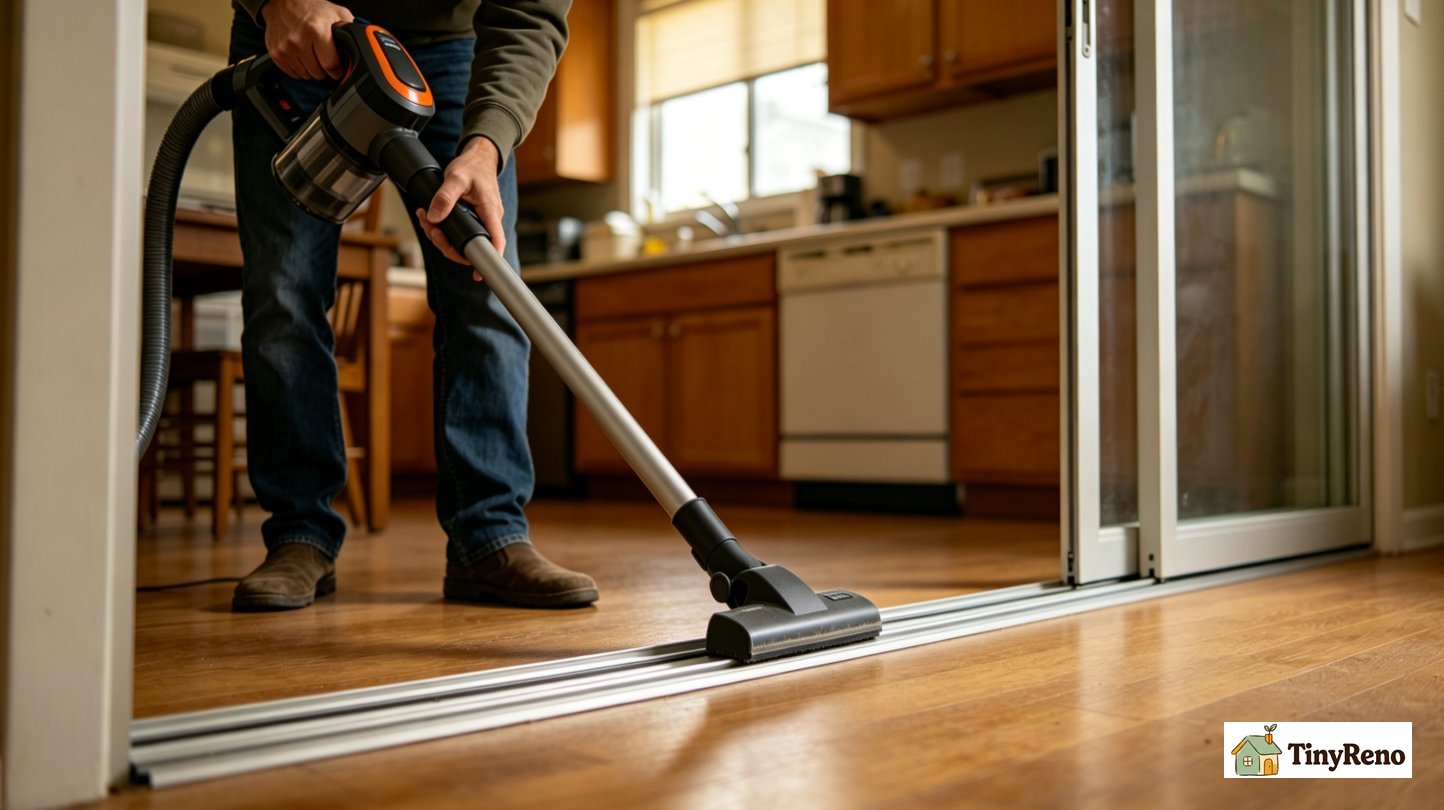
Take your vacuum cleaner with the narrow crevice tool and run it along the entire length of the track. Do it twice — the first pass picks up the loose stuff, the second pass picks up the compacted layer. You would be surprised how much gunk is in there. In my case, the door moved about an inch farther on its own just from the vacuuming.
This is the cheapest, easiest step, and it is the one most people skip. If you only do one thing, do this one.
Step 2: Scrub the track with vinegar
If vacuuming helps but the door still sticks, the next step is to scrub the track. Mix equal parts white vinegar and warm water in a spray bottle, spray the track until it is wet, and scrub it with an old toothbrush. The toothbrush gets into the corners where the vacuum cannot reach. Keep the vinegar contact brief: it can help dissolve mineral film, but vinegar is mildly acidic and can dull aluminum if it sits. Scrub, then dry the track immediately with a paper towel or microfiber cloth.
This step takes about five minutes and fixes many sticking doors. The track is often not worn out—it is just dirty. A track that looks rough or chalky may be covered in mineral film that comes off with vinegar and elbow grease. A track that is actually pitted has metal damage, not mineral deposit, and vinegar will not fix that; pitting is a landlord repair.
What not to do: do not spray WD-40 on the track
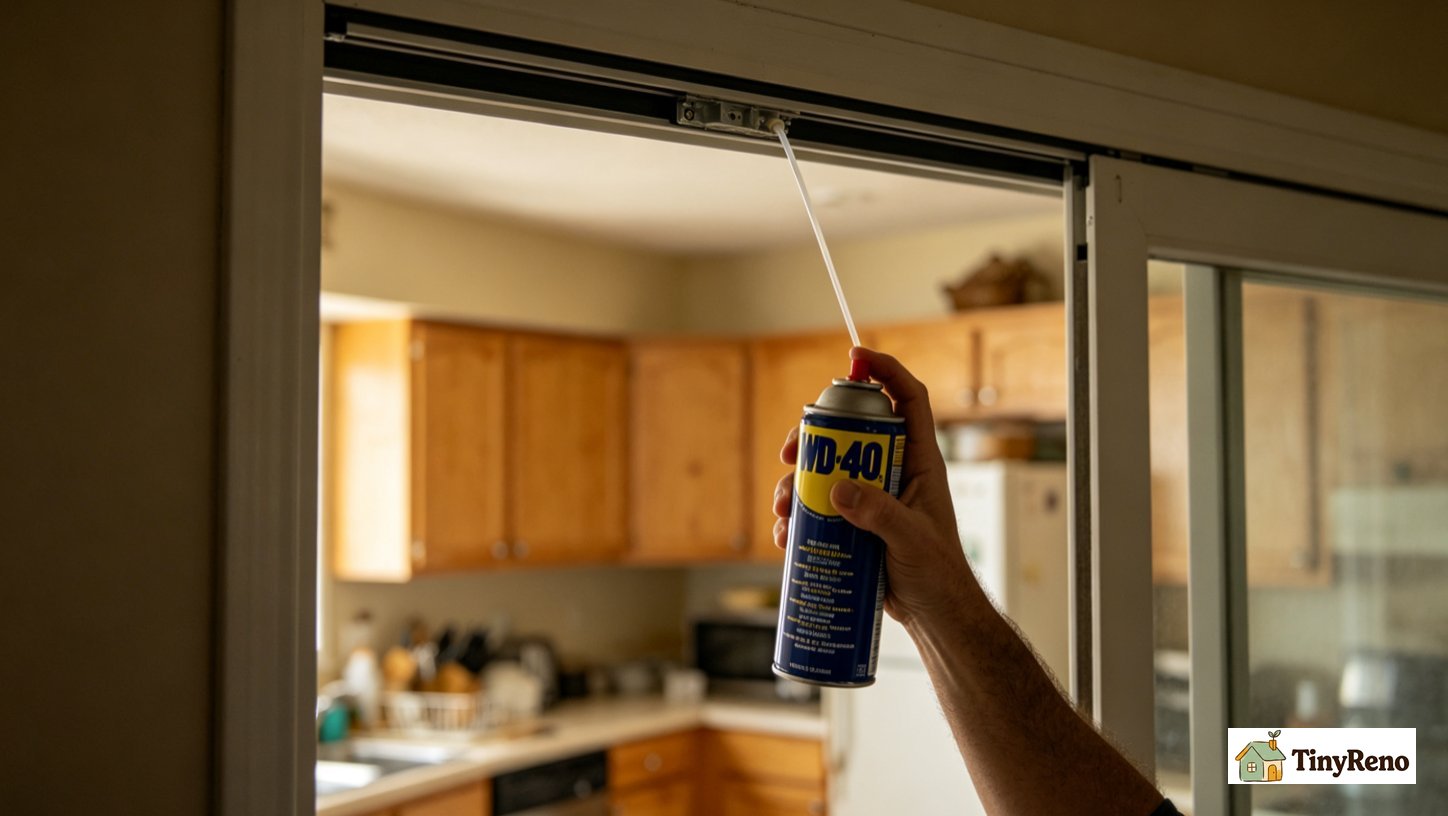
Here is the mistake everyone makes: they grab a can of WD-40 and spray it on the track. WD-40 will make the door move for about a day, and then it will make it worse. WD-40 is a water-displacement spray, not a lubricant. It strips the existing lubricant from the rollers, leaves a residue, and that residue traps dust and dirt. After a few days, the door sticks worse than before.
If you want to lubricate the track, use a silicone-based spray. It is safe on the rubber weatherstripping, it does not attract dirt, and it lasts for months. A can costs about eight dollars, and you only need a thin line along the track — not a flood. Spray a thin line, let it sit for three minutes, then wipe off the excess with a cloth.
But here is the thing: lubricating the track is optional. If the door is still sticking after you vacuum and scrub it, that is not a lubrication problem. That is a roller or track problem, and that is your landlord's job.
When to call your landlord: these are not DIY fixes
There are a few situations where you should not try to fix the door yourself. These are landlord problems, and you should put in a maintenance request as soon as possible:
The door will not lock. This is a safety issue. If the sliding door does not lock properly, your apartment is not secure. Put in a maintenance request immediately, and mention that the door does not lock. This is not a "get to it when you can" repair — it is a security issue.
The door has come off the track. If the door has lifted off the track, or it feels like it is about to fall out of the frame, do not try to put it back yourself. You could break the door, and then you are on the hook for the replacement. Call the landlord.
The rollers are visibly worn or broken. If you can see that the nylon rollers are cracked, chipped, or missing pieces, that is a parts replacement. Your landlord should handle that.
The door sticks after you have cleaned the track. If you have vacuumed and scrubbed the track and the door still sticks, the problem is not just surface dirt. It could be the rollers, the alignment, or wear in the track itself. That is a handyman job and your landlord's responsibility.
One thing to know: sliding doors often stick more in the summer. Vinyl and aluminum frames expand when they get hot, and a door that glides in March can stick in July because the frame and track geometry change just enough to make the rollers bind. This is normal, but it is not your problem to fix. Adjusting the rollers is a handyman job, not a tenant job.
For a renter, the practical sequence is: vacuum the track, scrub it with vinegar and water, dry it, and see if the door improves. If it does, you have saved a maintenance request. If it does not, put in a request to your landlord.
Do not adjust the rollers yourself, do not take the door off the track, and do not spray WD-40 on it. In a rental, a misadjusted roller or a dropped door can become your liability. Those are handyman jobs and your landlord's responsibility.
And remember: if the door will not lock, that is a safety issue. Put in the request immediately, and make sure you mention that it is a security concern. Do not wait for the next available appointment.
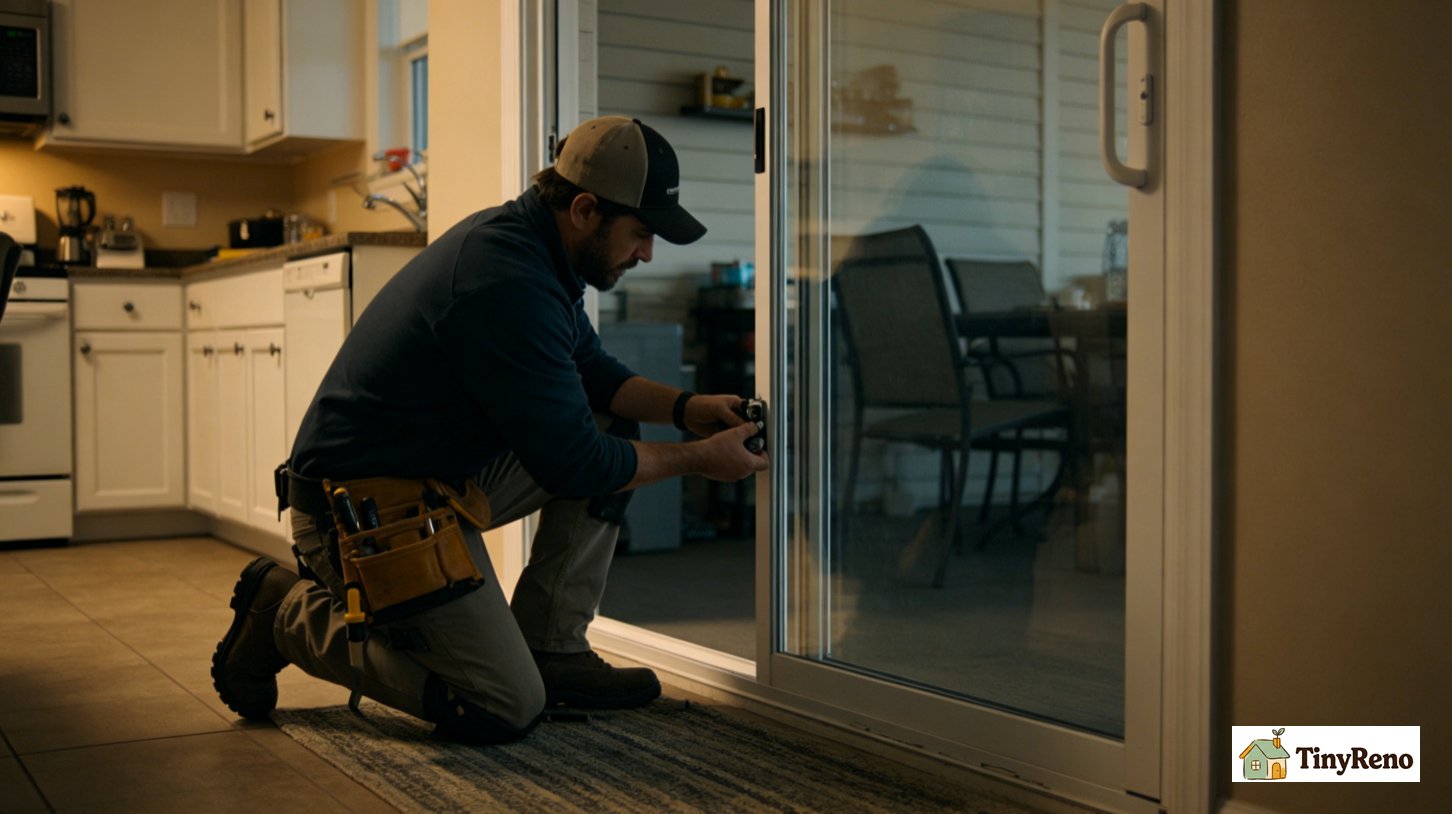
In my case, the vacuum and vinegar got the door moving again, but it still was not gliding right. I put in a maintenance request, and the handyman came out and adjusted the rollers in about ten minutes. The $450 quote had been for worst-case replacement; after inspection, the track was clean and the rollers were intact, so no parts were needed. The door has been gliding since. That adjustment is not something I should have done myself in a rental.


Discussion (0)
Sign in to join the discussion