

Three friends in three cities asked me whether they could sublet their apartments for the December holidays while they visited family: Iris in San Francisco, Devon in New York, and Marcus in Boston. All three started from the same assumption—that a two-week sublet is the same as hosting a guest, just hand over the key and let the friend sleep on the couch. The outcomes were different enough that the assumption deserves unpacking. Here is what each city actually requires, what each friend learned, and the questions to ask before you sublet for the holidays.
Iris signed a lease in August for a one-bedroom in the Mission. Her lease allowed subletting with written landlord approval. In San Francisco’s rent-controlled units, when a tenant makes a written request under Section 37.9(a)(2)(A) to replace a departing roommate or add an occupant, the landlord has 14 days from receipt to deny the request in writing with specific reasons; if the landlord does not respond, the request is deemed approved[reference:8][reference:9]. The 14-day clock starts from when the request is deemed received, and email is deemed received on the second calendar day after it is sent[reference:10]. Iris emailed her landlord in October for a December 22–January 5 sublet. The landlord did not respond for 21 days. Iris assumed silence meant approval and let her friend move in on December 22. On December 28, the landlord emailed saying the sublet was not approved. The friend moved to a hotel for the last eight days. Iris lost the $1,800 she had collected plus the $1,400 hotel cost. The lesson is not simply “silence is not approval”—in a qualifying SF request, silence can be approval. The failure was evidentiary: Iris did not have a clean record of the date the landlord was deemed to have received the email, and she did not follow up at the 14-day mark. If you rely on the deemed-approval rule, keep the sent email, the delivery record, and a follow-up timestamped on day 14.
What Each City Requires, and What Each Friend Learned the Hard Way
Devon signed a lease in July for a studio in Brooklyn. His lease allowed subletting with written landlord approval and said the landlord “may not unreasonably withhold consent.” In New York, the statutory 30-day response window and the “unreasonable withholding” standard under RPL § 226-b apply most clearly to rent-stabilized or rent-controlled units; for market-rate leases, the lease terms and the specific statutory framework determine how much protection the tenant actually has[reference:13][reference:14]. Devon asked in November to sublet from December 23 to January 4. The landlord responded within five days saying no, because the building imposed a 30-day minimum sublet period. Devon’s lease also required a $200 sublet fee and a credit check on the subletter. His friend did not want to pay the fee or submit to the check, so the sublet fell through. The lesson is not that New York is “restrictive” in the abstract—it is that the lease can stack conditions (minimum duration, fee, credit check) on top of the consent requirement, and a two-week holiday sublet may fail on the duration clause before the consent question is even reached.
Marcus signed a lease in September for a one-bedroom in Somerville. His lease allowed subletting with written landlord approval and required the subletter to be approved by the landlord. He asked in October to sublet from December 20 to January 6. The landlord approved within three days and required a copy of the sublet agreement and the subletter’s ID. Marcus provided both, the sublet went through, and he collected $2,000. His cost was a $50 application fee and about 30 minutes of paperwork. It would be tempting to call Boston “the easiest city,” but the legal picture is narrower: Massachusetts does not give tenants an automatic right to sublet. M.G.L. c. 186 § 15 says that if a lease requires landlord consent, the landlord cannot unreasonably withhold it—but that “unreasonably withhold” standard is triggered by the lease language, not by the statute alone[reference:17]. If the lease is silent, the landlord can refuse for any reason or no reason[reference:18]. Marcus’s outcome was smooth because the lease set a workable process and the landlord chose to approve, not because a statewide rule compelled approval.
The three cases do not line up into a neat ranking. San Francisco’s rent ordinance gives tenants a clear deemed-approval mechanism for written requests to replace roommates or add occupants, but that mechanism is embedded in a specific regulatory framework and depends on clean delivery records. New York’s RPL § 226-b supplies a 30-day response window and an “unreasonable withholding” standard, but the practical force of those protections varies with the lease type and the unit’s regulatory status. Massachusetts leaves the “unreasonably withhold” standard to the lease: if the lease says consent cannot be unreasonably withheld, courts will enforce that; if it does not, the landlord’s discretion is broad. The holiday-sublet lesson is not which city is “easiest”—it is that the same two-week request can succeed or fail depending on which of these three structures it lands in.
What Your Lease Says, and What Your City Law Says, and Which One Wins
Lease terms and local law are not related by a simple “more permissive rule wins” formula. The lease sets the contractual baseline. Local or state law may impose a non-waivable minimum protection—for example, a deemed-approval deadline for certain requests in a rent-controlled unit—or it may leave the standard to the lease, as Massachusetts does with “unreasonably withhold.” The question is not “which document is more generous,” but “whether this specific rule is one the lease can waive or one the law forces onto the lease.” In practice, that means reading the subletting clause, identifying whether the unit is covered by a rent ordinance or stabilization law, and checking whether the statutory protection at issue is mandatory or default. The “more permissive wins” shortcut can give you the wrong answer in both directions.
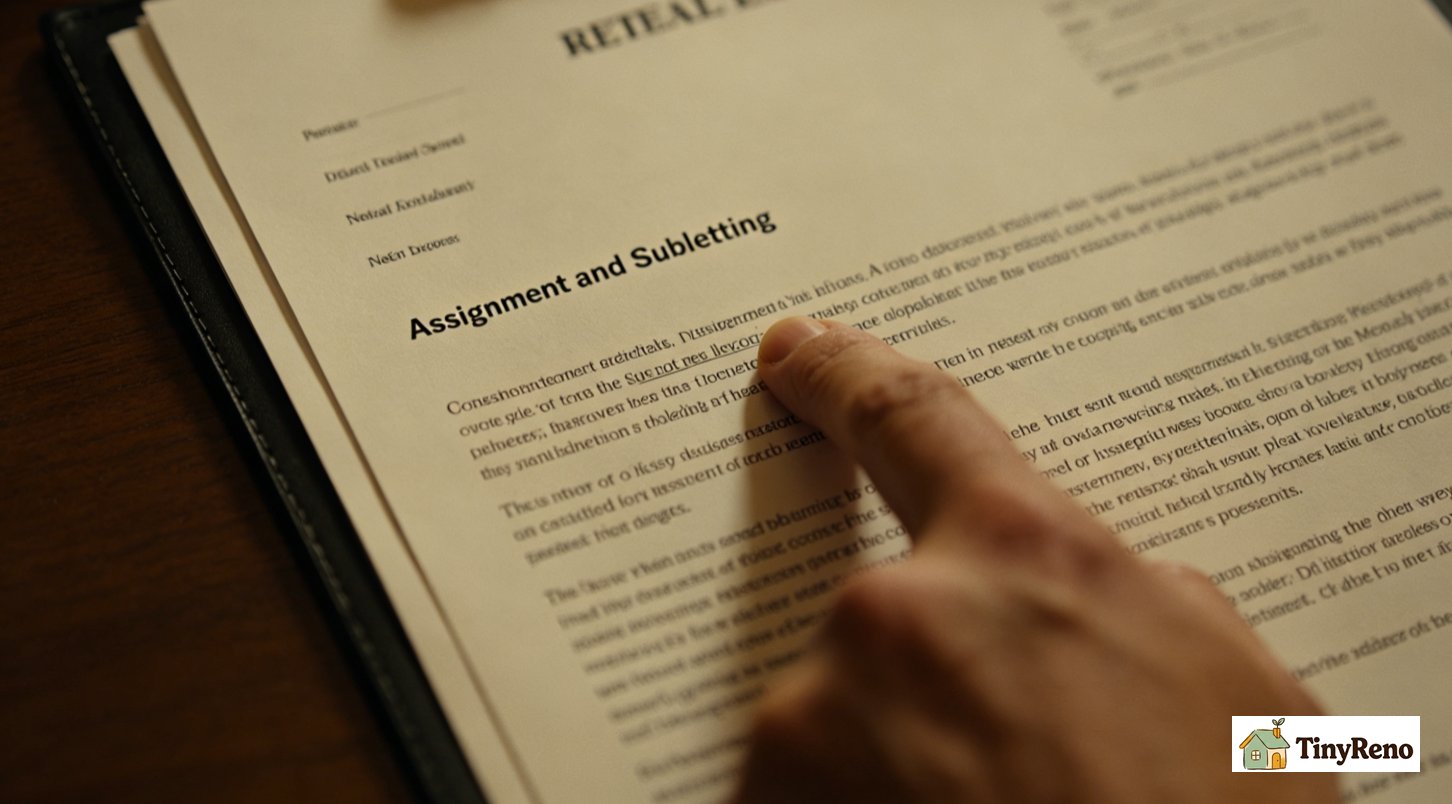
The lease clause to look for is the subletting clause, which is usually in the "Assignment and Subletting" section of the lease. The clause will say one of three things. Option one: subletting is allowed with written landlord approval. Option two: subletting is allowed with written landlord approval and certain conditions (like a minimum sublet period, a sublet fee, or a credit check). Option three: subletting is not allowed. If the lease says option three, the default answer is no—but in a rent-controlled jurisdiction, a flat ban may not override a tenant’s right to replace a departing roommate or add an occupant under the local ordinance.
The city law to look for is the subletting law in your city. New York’s RPL § 226-b supplies a 30-day response window for covered sublet requests; if the landlord fails to respond, consent is deemed[reference:25]. San Francisco’s rent ordinance supplies a 14-day deemed-approval rule for qualifying roommate-replacement or occupant-addition requests[reference:26]. Massachusetts does not impose a statewide response deadline; if the lease says consent cannot be unreasonably withheld, that standard applies, but if the lease is silent, the landlord’s discretion is broad[reference:27][reference:28]. There is no national default of “14 to 30 days.” Texas, for example, prohibits subletting during the lease term without the landlord’s prior consent even when the lease is silent[reference:29]. Check your state and local rules before assuming a response window exists.

How to Ask Your Landlord for Permission Without Getting Denied
The way to ask your landlord for subletting permission is to put it in writing, with all the details. The email should include the dates of the sublet, the name of the subletter, the relationship (friend, family, colleague, stranger from a sublet platform), and the reason (travel, work, family emergency). The email should also include a copy of the proposed sublet agreement (the document the subletter will sign with you). The email should ask for written approval. If a statutory response window applies to your unit and request type, reference it explicitly and ask for a response within that window. If no window applies, request a response by a specific date and explain that you need the answer to plan. Sending at least 30 days before the sublet start date is a safe buffer, not a universal legal deadline; in a 14-day deemed-approval jurisdiction, 30 days gives you room to follow up before the window closes.
The mistakes most renters make when asking for subletting permission are these. Mistake one: asking verbally instead of in writing. If the landlord denies and you go to housing court, the verbal request is hard to prove. Mistake two: asking at the last minute. If the landlord needs 14 days to respond and you ask 5 days before the sublet, you have no time to fix the problem. Mistake three: not providing the proposed sublet agreement. The landlord may deny because they do not have enough information to approve. Mistake four: not giving the landlord the response deadline. The landlord may take longer than necessary because there is no deadline. Mistake five: not following up. If the landlord does not respond, you should follow up at the 14-day mark with a second email asking for confirmation. The follow-up creates a paper trail.
What Happens If You Sublet Without Permission and Get Caught
If you sublet without landlord permission and the landlord finds out, the consequences vary by state and city. The cure period is often short. In California, unauthorized subletting can trigger a three-day notice to cure or quit under CCP § 1161; in San Francisco, the rent ordinance generally requires a ten-day notice to cure for unauthorized subletting, and the tenant can cure by removing the subtenant or making a written approval request[reference:32][reference:33]. If the tenant does not cure, the landlord may file an eviction case, which can take weeks to months depending on the court. The practical risk is not only the legal maximum—a lease violation on the record can affect future rental applications and the landlord relationship. In some jurisdictions, the landlord can sue you for damages (the unpaid rent, the cost of re-renting the apartment, and any legal fees). In a few jurisdictions, the subletter can also be evicted.
The realistic consequence of subletting without permission is less severe than the legal maximum. Most landlords do not want to evict a paying tenant over a two-week holiday sublet. Most landlords will give you a warning and ask you to stop. Most landlords will not pursue damages if you stop the sublet immediately. The risk is not the legal maximum — the risk is the relationship with the landlord, which is harder to repair than the legal issue. If you plan to renew the lease, subletting without permission is a bad idea. If you do not plan to renew the lease, subletting without permission is a calculated risk that may save you money on a two-week trip.
The Middle Path: What I Tell My Friends Before They Sublet
What I tell my friends before they sublet for the holidays is this. First, read your lease. Find the subletting clause. Know what it says. Second, look up your city law. Know what the city requires. Third, put the request in writing with all the details, at least 30 days before the sublet start date. Fourth, follow up at the 14-day or 30-day mark if the landlord has not responded. Fifth, if the landlord approves, provide the sublet agreement and the subletter's ID, and pay any sublet fee the lease requires. Sixth, if the landlord denies, do not sublet. Find a hotel for the friend, or invite the friend to visit a different time. Seventh, after the sublet, restore the apartment to its original condition. The subletter is your guest. You are responsible for any damage they cause.
Holiday subletting is not a single rule but an interaction between the lease and the applicable local law. The lease is the contract you signed; local law may add a mandatory protection or leave the standard to the lease; the landlord’s decision operates inside whatever space those two documents leave. The practical sequence is: read the subletting clause, identify whether a rent ordinance or stabilization law covers the unit, put the request in writing with the details and delivery method the rules require, follow up before any deemed-approval or response deadline, and accept a clear denial if the lease and law give the landlord that discretion. Subletting without permission can produce a short cure notice, a lease violation, or a damaged relationship; for a two-week holiday stay, that downside usually outweighs the hotel savings, but it is a judgment call, not a universal rule. The documentable path—written request, clean delivery record, follow-up—gives you the best chance of a yes and the clearest position if the answer is no.


Discussion (0)
Sign in to join the discussion