

Three Years of December Decorating Taught Me Five Steps I Got Wrong
Renter-friendly holiday decorations that cause no damage is the seasonal project I have done every December since 2022, and the one I should have approached differently the first time. The first year, I used a mix of nails, screws, and adhesive hooks. I made 18 mounting points on the walls for lights, a wreath, and garlands, and several of them left holes or pulled paint when I moved out. The second year, I cut that down to six mounting points. The third year, I used the approach I am about to describe and made zero new holes. Here are the five steps I wish I had followed from the start, what I learned in three years, and the specific materials I use now.
The first step is the inventory. Before I buy anything, I walk the apartment with a notebook and note every surface where I might want to put a decoration. The surfaces are the walls, windows, doors, floor, ceiling, and furniture. The inventory takes about 15 minutes and saves me from buying decorations I cannot install in my specific apartment. For each surface, I note whether there is a no-damage installation method or whether I should skip that surface. Walls and doors usually work with adhesive hooks or over-the-door hooks. Windows work with static clings. Floors work with weighted bases. Ceilings are the hardest, because adhesive hooks on a ceiling can fail under heat or gravity, so I avoid hanging anything heavy there.
The Five Steps That Took Me Three Years to Learn
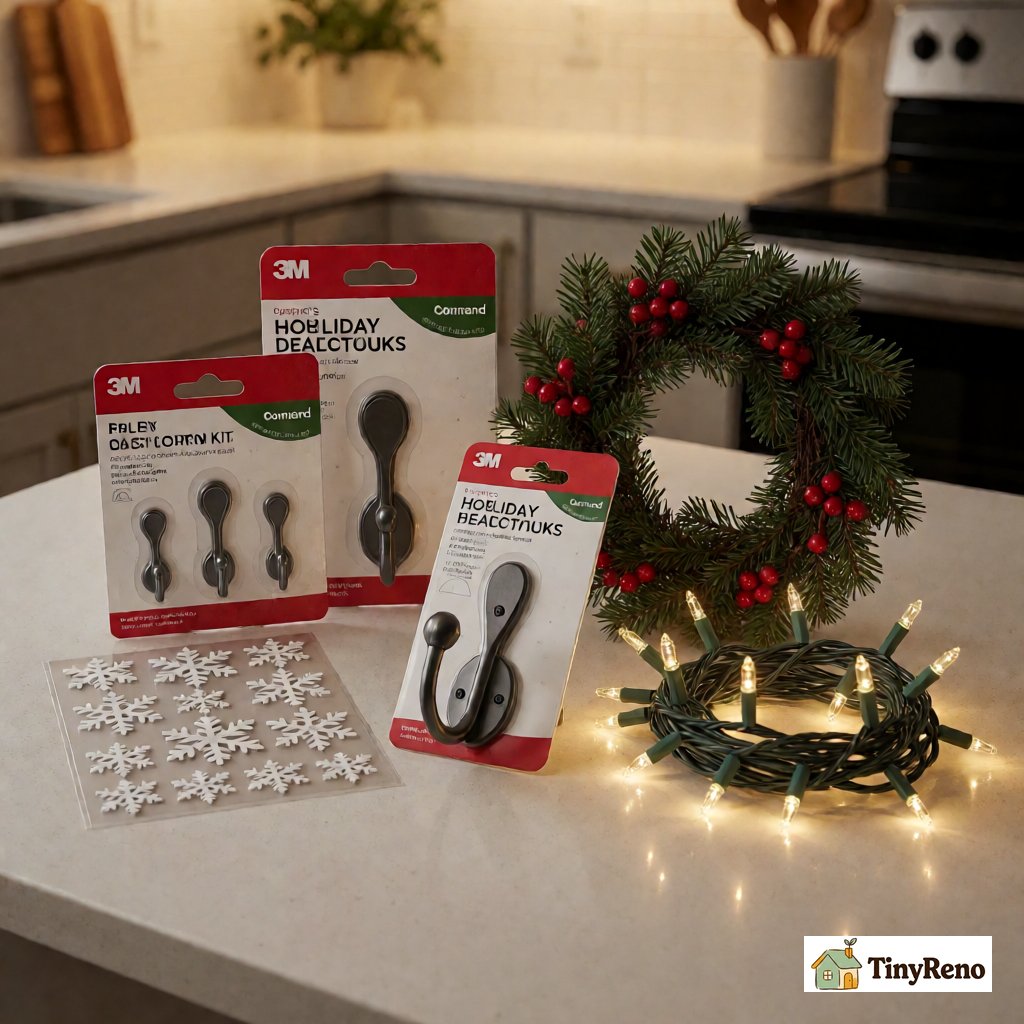
The second step is to choose the no-damage hardware. The hardware depends on the surface and the weight of the decoration. For walls, I use removable adhesive hooks rated for the weight of the item. Small hooks for items under about one pound, medium hooks for items under about three pounds, and larger hooks for heavier items. Apply the hook to a clean, dry surface, press firmly, and wait at least an hour before hanging anything. Remove the hook by pulling the tab slowly down along the wall, not outward. For windows, I use static clings, which use no adhesive. For doors, I use over-the-door hooks that hook over the top of the door. For floors, I use weighted bases or the decoration’s own base. For ceilings, I avoid adhesive hooks for anything heavy, because heat and gravity can weaken the adhesive. For furniture, I place the decoration on the surface.
The third step is to choose the decoration that fits the hardware. The mistake most renters make is to buy the decoration first and then figure out how to hang it. The right order is to know the hardware first and then buy the decoration that fits. For example, if I want to hang a 3-pound wreath on the wall, I need a Command Hook rated for 3 pounds or more. If I buy a 5-pound wreath, I need a Command Hook rated for 5 pounds, which is the largest size and costs more. The hardware-first approach prevents the "I bought this and now I cannot hang it without a nail" problem that most renters have in December.
The fourth step is the install. The install is where most mistakes happen. The first risk is a freshly painted wall. Adhesive hooks are more likely to pull paint from a wall that has not fully cured, so wait as long as the paint manufacturer recommends and test a small spot first. The second risk is a textured wall, such as orange-peel or popcorn texture. Adhesive does not bond as well to texture, and the hook may fall. Test the hook for 24 hours before hanging anything. The third risk is overloading the hook. Use a hook rated above the weight of the decoration. The fourth risk is high humidity in a bathroom or kitchen. Adhesive may weaken there, so use a hook rated for wet or humid areas, or avoid that surface.
The fifth step is removal. Removal is the part that determines whether the decoration was actually renter-friendly. Pull the adhesive tab slowly down along the wall, not outward. The strip should stretch and release. If the strip breaks, use dental floss to saw through the remaining adhesive without pulling on the paint. If a small residue remains, try a damp cloth first. A melamine sponge such as a Magic Eraser can remove residue, but it is mildly abrasive and can dull the paint, so test it in a hidden spot and use light pressure. The full removal process should take a couple of minutes per hook.
What I Use, Specifically, for Each Surface
For walls, I use 3M Command Hooks in three sizes. The small clear hooks hold up to 1 pound and cost about $5 for a 4-pack. I use these for lightweight stockings, small wreaths (under 12 inches), and single string lights. The medium hooks hold up to 3 pounds and cost about $8 for a 4-pack. I use these for medium wreaths, garland, and small Christmas trees. The large hooks hold up to 5 pounds and cost about $12 for a 2-pack. I use these for heavy wreaths, large garlands, and outdoor-rated items. The total hardware cost for a full apartment holiday decoration setup is about $30 to $50, depending on how much I am doing. The hardware lasts for 3 to 5 years if I remove it carefully and store it in a plastic bag.
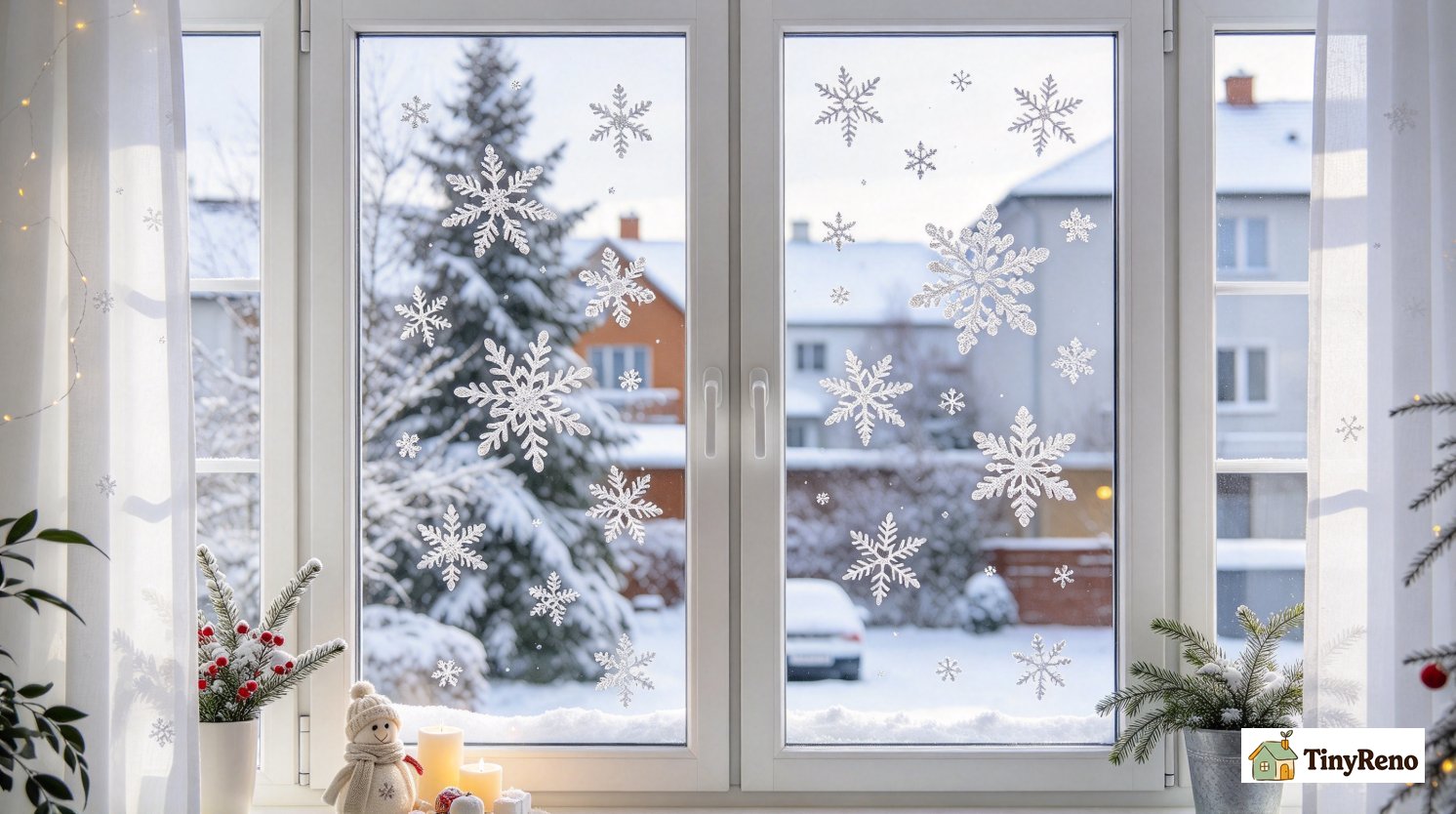
For windows, I use static cling decorations. The static clings are vinyl or plastic sheets with a decorative design that sticks to the glass via static electricity. The static clings do not use adhesive, so they come off clean. The static clings cost $3 to $15 each. I use snowflakes, reindeer, menorahs, and abstract winter designs. The static clings are reusable year after year. I store them between two pieces of cardboard in a plastic bag. The static clings do not work on every window — they work best on smooth, clean glass. They do not work well on textured or frosted glass.
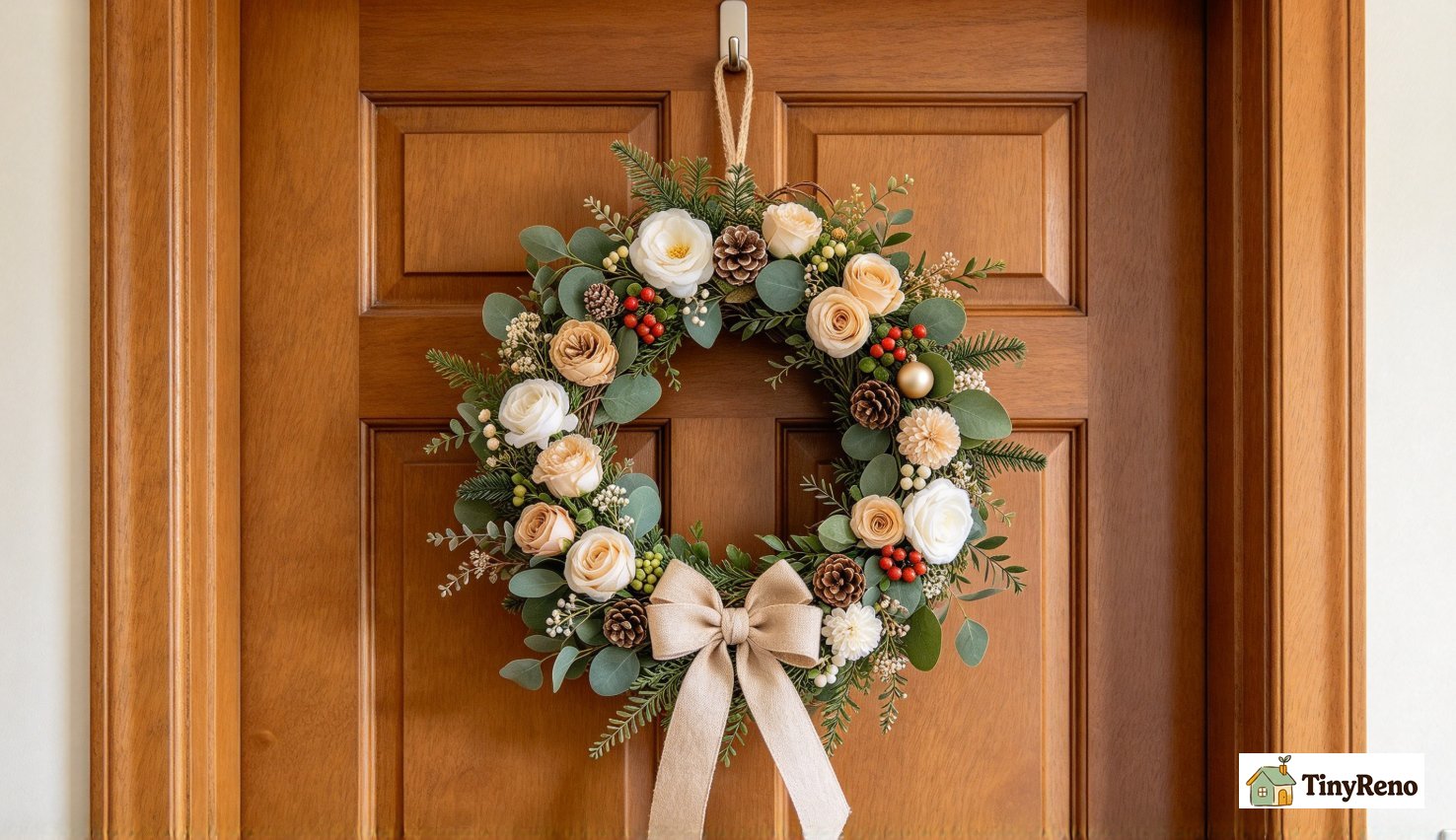
For doors, I use over-the-door hooks that hook over the top of the door without adhesive. They cost about $5 to $10 each. I use one for a wreath and one for a stocking. They leave no marks on the door. They work on standard interior wood doors, which are usually about 1 3/8 inches thick, but they do not work on every metal door or every non-standard frame. Check the door thickness and the gap above the door before buying. They also work on the back of a closet door for extra decorations.
For ceilings, I use 3M Command Hooks rated for the weight of the decoration. A string of lights that weighs 0.5 pounds uses a small hook. A heavier decoration uses a larger hook. The trick with ceiling hooks is to apply them to a smooth ceiling (not popcorn) and to not overload them. The hook can hold the decoration while it is static. The hook will fail if the decoration is bumped or pulled. I do not put anything heavier than 2 pounds on a ceiling hook.
The Mistakes I Made and the Damage I Caused
The mistake I made the first year was using adhesive hooks on a wall that had been painted about two weeks earlier. The hooks held through December, but when I removed them in January, three of the adhesive hooks pulled paint off the wall. The paint had not fully cured. The lesson is to wait as long as the paint manufacturer recommends, and to test one hook in a hidden spot before hanging a full set. I asked the landlord to repaint the three spots, and he did it for free, but I would rather have avoided the conversation.
The second mistake I made was the Command Hook on a textured wall in the bedroom. The wall was orange peel texture, which is a common apartment wall finish. The Command Hook adhesive does not bond well to orange peel texture. The hook fell off within 4 days, taking a small piece of the texture with it. The hole was about 1 inch by 1 inch. I spackled it before moving out. The landlord did not notice. The lesson is to test the hook on the wall for 24 hours before hanging the decoration, especially on a textured wall. If the hook does not hold for 24 hours, it will not hold for the season.
The third mistake I made was the over-the-door hook on a metal door. The door was a fire door at the building entrance, which is metal. The over-the-door hook does not work on metal doors because the door is too thick and the hook cannot get a grip. The hook fell off when I hung the wreath. The wreath fell off and the glass frame broke. The lesson is to check the door type before buying over-the-door hooks. The over-the-door hook works on interior wood doors, not on exterior metal doors.
What I Recommend for First-Time Renters Doing Holiday Decorations
If you are a first-time renter doing holiday decorations, here is the order to do it in. First, walk the apartment and inventory the surfaces. Second, decide what surfaces you want to decorate and what decorations you want on each. Third, buy the hardware based on the weight of the decorations, not the other way around. Fourth, install the hardware and wait 1 hour before hanging anything. Fifth, hang the decorations and do not overload any hook. Sixth, enjoy December. Seventh, on January 1, remove the hardware carefully using the tab-pull method. Eighth, store the hardware in a labeled plastic bag for next year.
The first-time setup costs about $30 to $50 in hardware and $50 to $200 in decorations, depending on how elaborate you want to be. Decorations can be reused for years if stored carefully. Hardware can be reused for several years if removed carefully. If you spread $30 to $50 of hardware over four years, that is about $7.50 to $12.50 per year. Add $50 to $200 for decorations in the first year, and the annual average is lower after that.
The alternative is nails and screws, which can leave holes the landlord may charge for at move-out. A small nail hole might cost $5 to $10 to patch and repaint, a screw hole $10 to $20, and a larger anchor hole $25 to $50, depending on the landlord and the market. Eighteen holes could therefore cost a few hundred dollars, not a fixed $360 to $900. The savings from using removable hardware depend on how many holes you avoid and what your landlord charges. The point is not that removable hooks are free. The point is that they avoid the most common move-out paint and drywall disputes.
The closing thought is that renter-friendly holiday decorating is less about the decoration and more about the hardware. The decoration can look the same whether you rent or own. The difference is how it is attached. Removable adhesive hooks, static clings, over-the-door hooks, and weighted bases reduce the risk of holes and paint damage. Nails, screws, and drywall anchors increase that risk. The choice is not always $30 versus $500. It depends on how many holes you would otherwise make, how your landlord handles move-out repairs, and how carefully you install and remove the hardware. But avoiding unnecessary holes is usually cheaper and less stressful than repairing them later.


Discussion (0)
Sign in to join the discussion