

What I Bought, and How I Measured the Electric Bill Difference
Heated blanket vs space heater is the comparison I ran for 30 nights in November, after my gas bill rose by about $90 compared with the previous November. I bought two things on the same day: a $45 heated blanket from Target and a $60 ceramic space heater from Home Depot. I used each one for 15 nights in the same bedroom, with the building thermostat at the same setting. I measured each device with a plug-in power meter. The data is below, and the result depends on what you mean by “warm enough.”
The numbers below are measured device draw, not a whole-apartment bill estimate. I used a plug-in power meter on each device. The thermostat setting, the room, the bedding, and the sleeper stayed the same. So when I say the heated blanket cost about 79 cents for 15 nights and the space heater cost roughly $15 to $20 for 15 nights, that is the measured electricity used by the device, multiplied by my electricity rate. It is not the same as the change in the whole apartment bill, because the boiler, the refrigerator, and everything else kept running.
The setup was a 110-square-foot bedroom in a 1950s apartment building in Boston. The bedroom has one exterior wall with a window that I insulated against drafts in October. I closed the interior door during the test. The building thermostat was set to 68°F, which is roughly what the boiler delivered to the bedroom on most nights. The bed is a queen. The two devices were a $45 Sunbeam heated blanket, whose lowest setting the manufacturer rates at about 30 watts, and a $60 Lasko ceramic space heater, whose low setting the manufacturer rates at 750 watts. I plugged each device into the same plug-in power meter so I could measure its actual draw.
Night 1 to 15: The Heated Blanket at 5 Cents a Night
Night one through night 15, I used the heated blanket. I turned it on 30 minutes before bed to pre-warm the bed, then turned it down to the lowest setting once I got in. The heated blanket ran for about 8 hours each night at 30 watts, which is 240 watt-hours per night, or 0.24 kWh. At my electricity rate of 22 cents per kWh, that is 5.3 cents per night. Over 15 nights, that is 79 cents. The bedroom felt warm — I slept under just a sheet and the heated blanket. The room itself was 65°F because the boiler was set to 68°F and the bedroom loses about 3 degrees overnight. I did not feel cold.
The heated blanket's other metric is comfort. The Sunbeam heated blanket has 10 heat settings, but I used only the lowest. The lowest is enough to keep a sleeper warm at a 65°F room temperature. The middle settings would overheat a sleeper at the same temperature. The highest setting is for someone who is sleeping in a 50°F room, which is not a temperature any building thermostat should be set to. The point is that you do not need the heated blanket on a high setting to be warm at 65°F. The low setting is enough.
Night 16 to 30: The Space Heater at $1.32 a Night
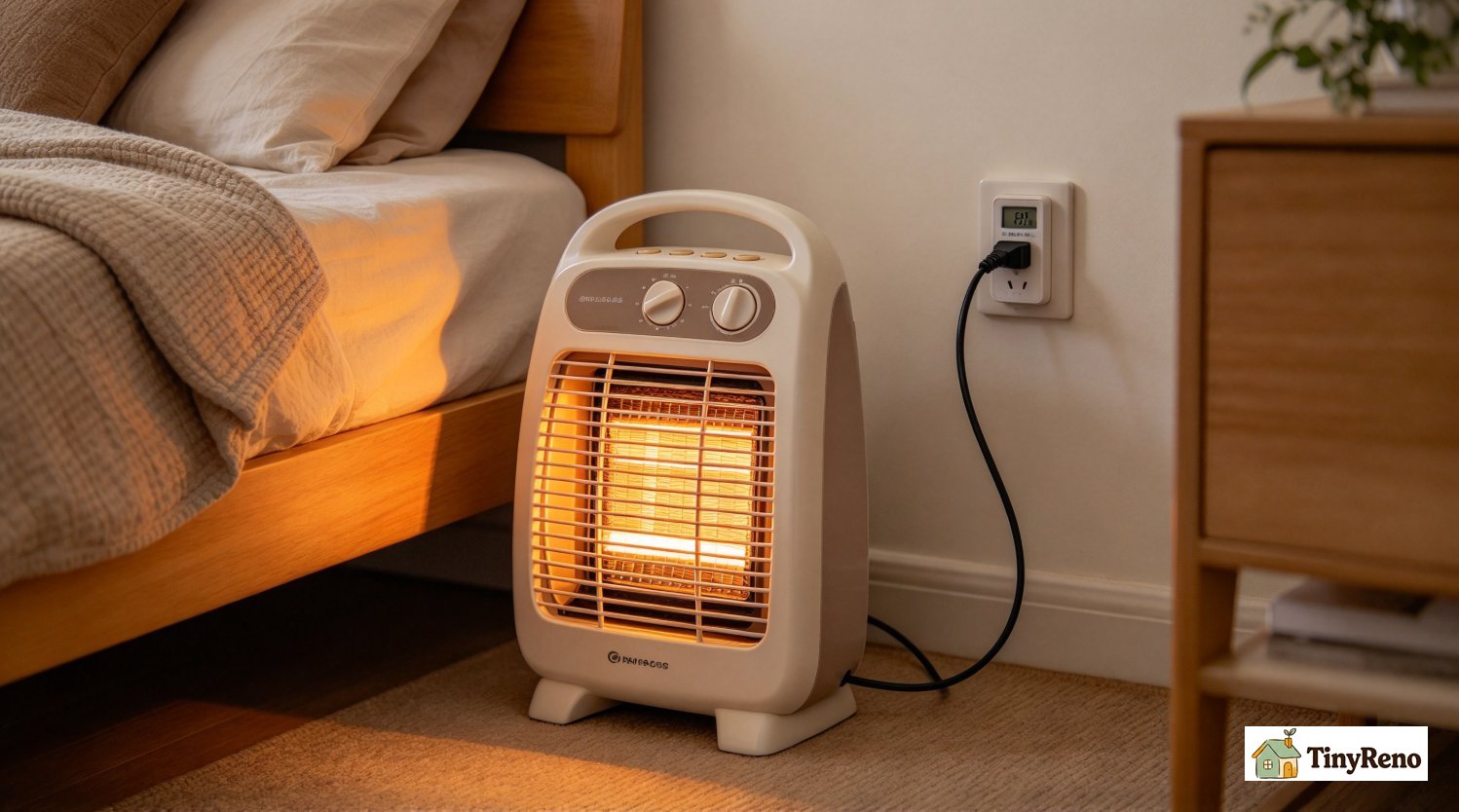
Night 16 through night 30, I used the space heater. I turned it on 30 minutes before bed to pre-warm the room, then set it to its lowest thermostat position once I got in. The heater cycled on and off through the night. On the nights when it ran at full draw for the full eight hours, it would have used 750 watts times 8 hours, or 6 kWh. At my electricity rate of about 22 cents per kWh, that would be about $1.32 per night. Because the heater cycled, the actual nightly use was somewhat lower than that full-draw estimate. Over 15 nights, the measured cost was in the range of $15 to $20, depending on the night. The room stayed around 70°F, and I slept under a sheet and a comforter.
The space heater's other metric is comfort. The Lasko ceramic space heater on the lowest setting is enough to warm a 110 square foot room from 65°F to 70°F in about 20 minutes. The room stays at 70°F for as long as the heater is running. The heater has a thermostat setting of its own that I left on the lowest position, so it cycles on and off to maintain about 70°F. The cycling is what keeps the kilowatt-hour draw at 6 kWh per night rather than running continuously.
Why the Space Heater Costs 25 Times More for the Same Warmth Result
The difference between the two is the main result of this test. The heated blanket cost about 79 cents for 15 nights. The space heater cost roughly $15 to $20 for 15 nights. That is a cost ratio of roughly 20 to 25 times, depending on how much the heater cycled. The ratio is not a universal constant. It depends on the device, the room, the outdoor temperature, the electricity rate, and how warm you want the air to be. The reason the blanket is cheaper is that it heats the person, not the room. The space heater heats the air, and the room loses that heat through the walls, the window, the ceiling, and the door.
I expected the space heater to feel more effective because it warms the whole room. For sleeping, it did not feel more effective to me. The blanket kept me warm at a lower air temperature. The space heater raised the air temperature by about five degrees, but I did not need the room to be 70°F while I was under a heated blanket. That is a comfort judgment, not a laboratory measurement.
The heated blanket also has a better safety profile in my experience, though neither device is risk-free. The Sunbeam blanket I bought has an auto-shutoff after about 10 hours. The Lasko space heater has a tip-over switch and an overheat sensor, but it does not auto-shutoff on a timer. A 750-watt space heater can make its surface hot enough to ignite nearby fabric if something falls against it. A heated blanket runs at a much lower wattage and is designed to be in contact with bedding, but it can still be a risk if it is damaged, folded while on, or used by someone who cannot feel heat. The National Fire Protection Association has reported that space heaters are involved in a significant number of home heating fires each year. I would not repeat a specific number without checking the current NFPA report.
Safety, Portability, and the Middle Path That Combines Both
The third thing the data tells me is that the heated blanket is more portable. The heated blanket rolls up and fits in a closet when not in use. The space heater is a 6-pound plastic box that sits on the floor or a table. The heated blanket can be moved from room to room by unplugging it. The space heater can be moved from room to room by unplugging it and carrying the box. Both are about the same portability, but the heated blanket takes up less storage space.
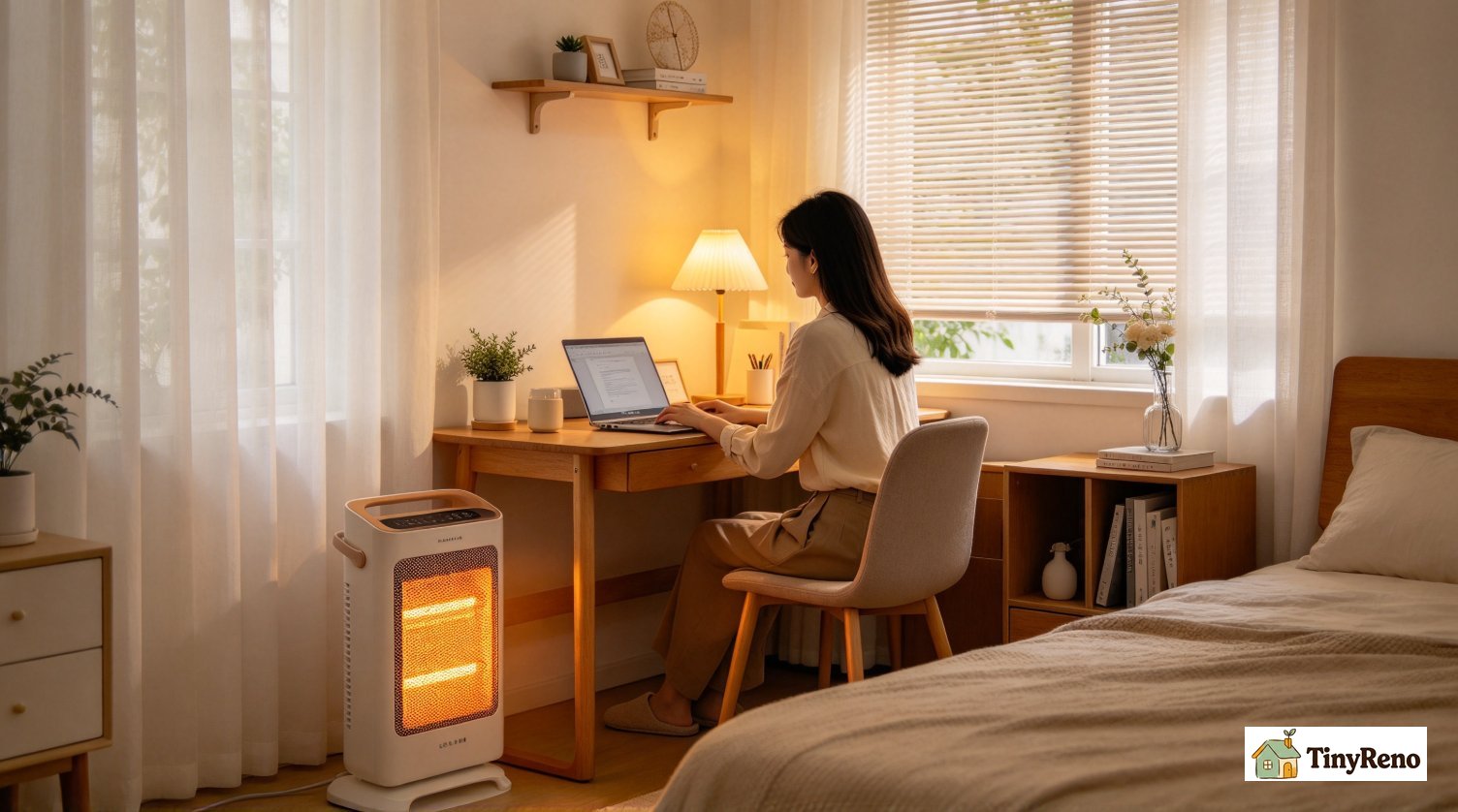
What the heated blanket cannot do, and what the space heater can, is heat a room where you are not in bed. If I want to work at my desk in the bedroom on a cold morning, the heated blanket does not help — I am not in bed. The space heater raises the room temperature and makes the desk usable. The use case is different. The heated blanket is for sleeping. The space heater is for working or hanging out in a cold space during the day.
What the space heater can do that the heated blanket cannot is heat a large room. The space heater I tested is rated for 150 square feet. The bedroom is 110 square feet, which is well within the rating. If I tried to heat my 280 square foot living room with the space heater, it would take 2 hours to warm up and then the boiler would not run because the room was already at the thermostat setting. The heated blanket cannot heat a large room by definition — it heats the person wrapped in it, not the air around the person.
So the heated blanket vs space heater electric bill answer depends on what you are trying to do. If you are trying to stay warm in bed at night, the heated blanket is 25 times cheaper to run and safer. If you are trying to heat a room where you are awake, the space heater is the right tool. The wrong answer is to use a space heater for sleeping, because you are paying to heat the air that the blanket is also heating, and the air is the part that loses heat to the walls.
What I would tell anyone trying to decide between a heated blanket and a space heater, and what I would have told myself in October before the gas bill jumped, is this. Buy the heated blanket first. It is cheaper ($30 to $80 versus $40 to $150 for a space heater), it costs 5 to 10 cents a night to run versus $1 to $2 a night for a space heater, and it is safer. If you find that you need to heat a room where you are awake, buy the space heater second, and use it only in that room for the hours you are in that room. Do not run the space heater all night in an empty bedroom. Both can coexist. The heated blanket handles the night. The space heater handles the day.
The comparison that matters is the per-night cost for the way you actually use the device. The heated blanket is the better fit for sleeping. The space heater is the better fit for a room where you are awake and moving around. Raising the whole-apartment thermostat is usually the most expensive way to make one room warmer, because you are heating rooms you are not using. A practical pattern is to keep the main thermostat moderate, use the blanket at night, and use the space heater only in the room where you are awake. The exact savings depend on your rates, your building, and your comfort level.


Discussion (0)
Sign in to join the discussion