

Paint Touch-Ups Without Losing Your Deposit: What the Rule Actually Says
Paint touch-ups without losing your deposit is the project I attempted the week before I moved out of my last apartment, and the one I should have started six months earlier. The landlord had given me a move-out inspection date 30 days before the end of my lease. I had read in several tenant guides that paint was “normal wear and tear” and the landlord could not charge me for it. That turned out to be only partly true. Small nail holes and minor scuffs are often treated as normal wear, depending on your state and your lease. But a wall with 17 nail holes, a six-inch scratch from a moved dresser, and a coffee stain the size of a dinner plate is not automatically normal wear. Those cost me $480 of my $1,800 deposit. Here is what I should have done, and what I am doing this time.
The rule most tenants get wrong is that “normal wear and tear” is not the same as “no paint needed.” Normal wear and tear generally means the landlord cannot charge you for a full repaint because the apartment is simply aging. It does not mean every mark is the landlord’s responsibility. The outcome depends on your state’s security deposit statute, your lease, the number and size of the marks, and whether the damage was caused by you or by ordinary use. Small nail holes may be normal wear in one state and a tenant repair item in another. Large stains, deep scratches, and burn marks are more likely to be treated as damage. Most tenants do not make this distinction. Most landlords do.
Mistake 1: Not Walking the Apartment When I Moved In
The first mistake I made was not walking the apartment when I moved in. Most leases have a move-in inspection form. I did not fill mine out. The apartment paint touch up without deposit loss rule I should have followed from day one is this: walk the apartment on day one. I should have walked every wall with a flashlight and noted every pre-existing nail hole, every pre-existing scuff, every pre-existing stain, and every pre-existing scratch. The landlord did not have a record either. So when I moved out, the wall with 17 nail holes, the six-inch scratch, and the coffee stain had no baseline to compare to. The landlord assumed all of it was mine. I had no evidence to dispute any of it.
The move-in inspection form is the single most important document in any lease, and most tenants skip it. The form is what proves what the apartment looked like when you moved in. Without it, the move-out inspection is a he-said-she-said about the condition of the walls. Most landlords will win a he-said-she-said because they have more experience with move-out disputes and they have a record of what they think the apartment looked like. The tenant has nothing. The move-in inspection is your defense. Fill it out, photograph every wall, email it to the landlord, and keep a copy. The cost is one hour on move-in day. The savings can be $500 to $1,500 of your deposit.
Mistakes 2 and 3: Too Many Holes, and the Dresser That Caught on a Nail
The second mistake I made was putting too many holes in the wall. Over three years, I hung two large pieces of art (4 holes each), one bookshelf (4 holes), three small frames (2 holes each), one curtain rod (4 holes), and one large mirror (4 holes). That is 30 holes. I filled 13 of them when I moved out. The other 17 I did not fill because I did not have spackle. The landlord charged me $50 for paint and labor to fill the 17 holes. That is $2.94 per hole. The spackle would have cost me $4. The mismatch is embarrassing.
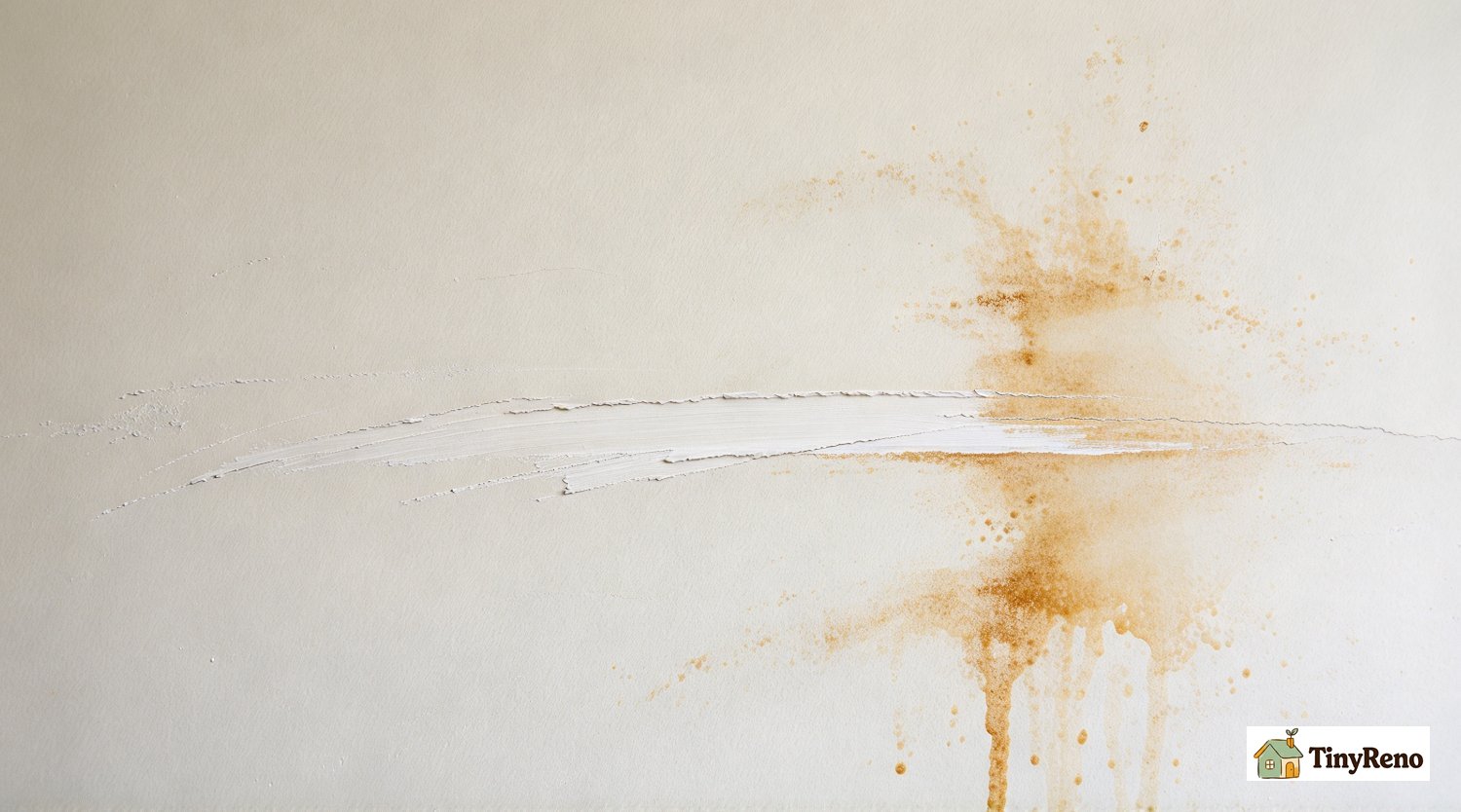
The third mistake I made was moving the dresser without protecting the wall. The dresser had been against the same wall for three years. When I moved it, the bottom of the dresser caught on a baseboard nail that had lifted slightly. The dresser slid forward and the bottom edge scraped a six-inch line of paint off the wall. I did not notice it until after I had moved the dresser into the new apartment. The scratch was visible. The landlord charged me $80 to repaint the section. The fix would have been to slide a towel under the dresser before I moved it, which would have cost nothing.
Mistake 4: The Coffee Stain That Took 32 Months to Become Visible
The fourth mistake I made was not cleaning the coffee stain sooner. The stain happened in month two of my lease — I spilled a full mug of coffee on the wall behind the sofa. I wiped it with a paper towel and thought that was the end of it. The stain was not visible after I wiped it. But the coffee had soaked into the paint and oxidized over the next 32 months. By the time I moved out, the stain was visible as a yellow-brown disc about eight inches across. The landlord charged me $350 to repaint the section because the stain would not come off with a touch-up — it required a full repaint of the wall. The fix would have been to clean the stain with a Magic Eraser within 24 hours of the spill, which would have lifted the coffee before it soaked in.
A melamine sponge, often sold as a Magic Eraser, is one of the most useful tools for paint touch-ups, but it is not safe on every wall. It works by mild abrasion, so it can dull or burnish flat and eggshell paint if you scrub hard. Test it first in a corner or behind furniture. Use light pressure, not scrubbing. Coffee, food, grease, furniture scuffs, and fingerprints often come off if you clean them soon after the spill. The longer you wait, the more the mark soaks into the paint and oxidizes. After a few months, the mark may become a stain that requires repainting. A melamine sponge costs about $5 for a pack. Repainting a wall because of a stain can cost $100 to $300 or more, depending on the wall and the landlord.
The Six Things I Am Doing This Time, Starting on Day One
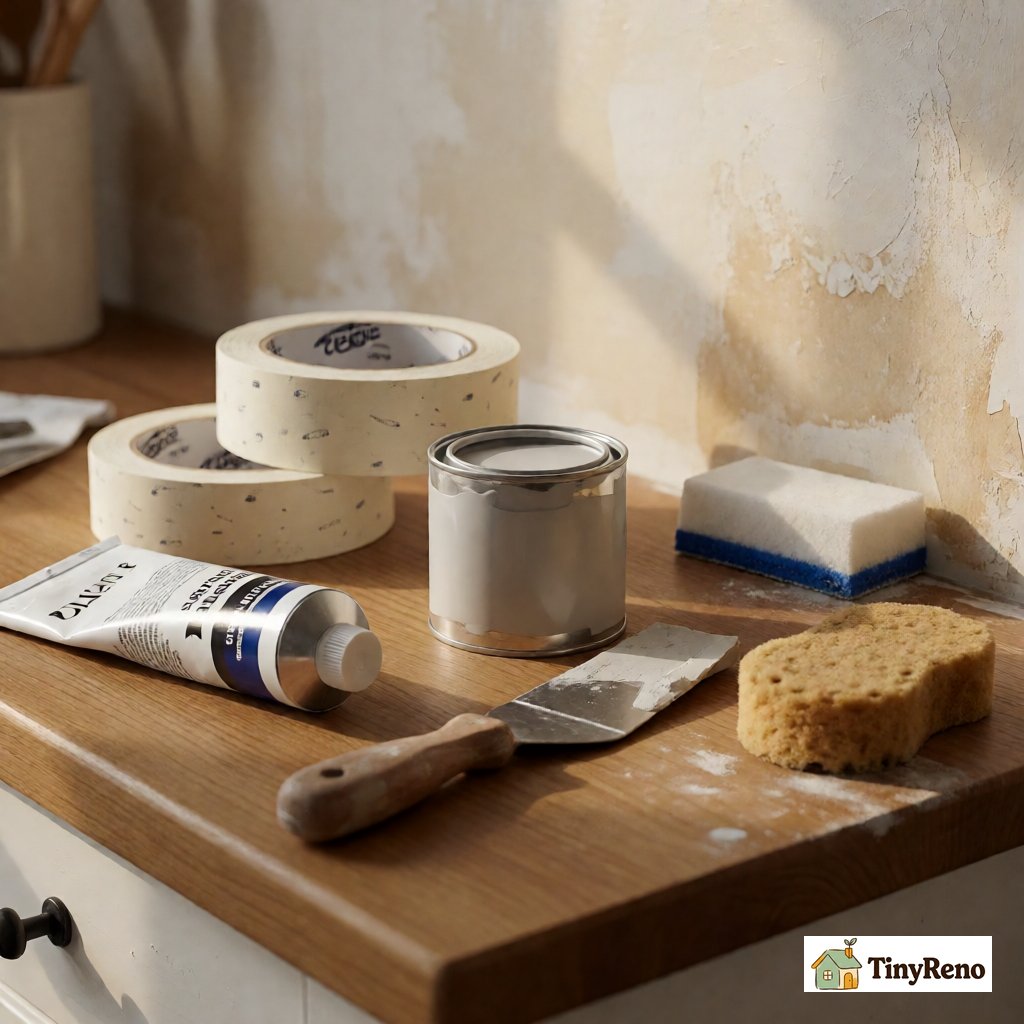
The fifth mistake I made was not buying spackle, paint, and basic supplies at the start of the lease. I should have bought a $10 spackle kit, a $15 sample-size can of the wall paint, a $5 putty knife, and a $4 roll of painter's tape on day one. Total: $34. The cost of not having these supplies was $480 of my deposit. That is not a guaranteed return, because not every mark turns into a deduction and not every landlord charges the same amount. But the potential savings are much larger than the $34 cost.
What I am doing this time, before the move-out inspection date for my current apartment, is the six things I should have done last time. First, I walked the apartment with a flashlight and a notebook and noted every pre-existing mark on every wall. I emailed the list to my landlord and asked him to confirm. He confirmed. The list is now my evidence baseline.
Second, I bought a $10 spackle kit and a $5 putty knife. Every time I hang something on the wall, I note the hole location in my phone. When I take the thing down, I spackle the hole the same day. The spackle dries in 30 minutes. I sand it lightly with a $3 sanding sponge. The hole is gone. This has been a habit for 18 months. The wall has zero unfilled holes right now.
Third, I bought a sample-size can of the wall paint from the hardware store. The paint color is sometimes written on the inside of the electrical panel door, and some landlords and property managers keep the paint formula there. I took a picture of it, brought the picture to the paint store, and they mixed me a $15 quart of the same color. The quart is enough to do 20 to 30 touch-ups. I use it for any scuff or stain that does not come off with a melamine sponge. The paint dries in about 30 minutes and is close to the wall color, but it may not match exactly because of batch differences, sheen, and lighting. Test a small spot first.
Fourth, I keep a Magic Eraser in the kitchen and one in the bathroom. Any mark on the wall gets the Magic Eraser treatment within 24 hours. Coffee, food, grease, scuff from furniture, fingerprints — all of them come off the wall with a Magic Eraser if you do not wait. The longer you wait, the more the mark soaks in and the harder it is to remove.
Fifth, I slide a towel or a piece of cardboard under any heavy furniture before I move it. The towel protects the wall from the dresser edge that catches on a baseboard nail. The cardboard protects the floor from the furniture leg. Both cost nothing. Both prevent the kind of damage that costs $50 to $200 to repair.
Sixth, I do a quarterly walk-through of the apartment with the same flashlight and notebook. I note any new marks, any new holes, any new stains. I fix them the same week. The quarterly habit catches things I would otherwise forget about. A mark that I fix in March does not become a stain I notice in October when I am packing to move.
The cost of the six things is $34 in materials and about 30 minutes per quarter in walk-through time. The cost of not doing them is $480 of deposit, plus the stress of a move-out dispute with the landlord, plus the time spent arguing about which marks were pre-existing. The ROI is enormous. The peace of mind is also enormous — I know that when I move out of this apartment in 2027, the walls will be in the same condition they were when I moved in, plus the documented pre-existing marks.
If You Have 30 Days, or One Week, or None
If you are reading this because your landlord just gave you a move-out inspection date and you have not started preparing, do these three things in the next week. First, walk every wall with a flashlight and note every mark. Second, fill every hole you can see with spackle. Third, clean every mark you can with a melamine sponge, testing a small spot first. Those three things address many of the common paint-related deductions, but they do not guarantee a full deposit return. The remaining issues are the marks that require repainting, which you can either do yourself with the sample paint or pay the landlord to do. The cost of doing them yourself is about $30 in materials. The cost of paying the landlord is often $50 to $100 per wall, depending on the market.
If you are reading this because you are moving in next week and you want to avoid my mistakes, do these three things before the moving truck arrives. First, walk every wall with a flashlight and note every pre-existing mark. Second, email the list to your landlord and ask them to confirm in writing. Third, buy the spackle kit, the putty knife, the sample paint, and the Magic Erasers, and put them in a closet. You will use them within the first month.
The closing thought on apartment paint touch up without deposit loss is this. Apartment paint touch up without deposit loss is not a move-out project. It is a move-in project. The habits you build in the first month of a lease determine what the walls look like in the last month. A wall that is maintained quarterly for three years does not need anything at move-out. A wall that is ignored for three years needs $500 of work at move-out. The choice is which one you want.


Discussion (0)
Sign in to join the discussion