

How to reduce a sewer bill was the question I started asking at 9 p.m. on a Tuesday in October, when the city of Boston sent me a quarterly sewer and water bill for $387, which was $96 more than the same bill three months earlier, which was already $40 more than the same bill six months earlier, and which was the second bill in a row that did not match the actual water I was using in the apartment. I am one person. I take showers. I run the dishwasher once a day. I do not water a lawn. I do not have a pool. The water meter on the apartment reads 4.2 cubic feet per month, which is somewhere between 3,000 and 3,200 gallons, which at the city's published rate of $11.40 per thousand gallons should produce a bill in the $36 to $40 range for water alone. The bill I was paying was $387. The math did not work, and the math not working was the only reason I started paying attention to the word "sewer" on the envelope in the first place.
The reason the math was not working was that the sewer portion of the bill is calculated as a multiplier on the water portion, which is how many U.S. cities structure their combined water and sewer bill. Boston's structure—and the structure in the other cities I have rented in—charges a fixed water fee based on actual metered use, and then charges a separate sewer fee calculated as 4 to 5 times the water fee. The assumption is that almost all of the water that comes into the apartment goes back out into the sewer. That assumption is not unfair in principle. It is unfair in practice when the apartment has a leak that lets water out before it reaches the meter, or a leak after the meter that does not go through the sewer, or a fixture that uses water but does not put it into the sewer, like an outdoor hose bibb or a hot water recirculation loop with a slow leak somewhere in the wall. The leak does not have to be visible. It does not have to be a flood. It only has to be enough that the meter records water that is not actually going down the drain, and the city bills you for the sewer capacity regardless.
The reason this matters to a renter specifically, and not to a homeowner, is that the renter is usually not responsible for the pipes between the meter and the unit. The renter is usually not responsible for the pipes inside the walls of the unit either, except for fixtures the renter installed. The pipes, the joints, the valves, the main shutoff, the connections under the sinks, the connections behind the toilet, the connections to the water heater — almost all of those are part of the habitability envelope, which puts them on the landlord, and which puts the diagnosis on the landlord, and which puts the bill for fixing the leak on the landlord. The renter's job is to identify that there is a problem, document it with dates and meter readings, and email the landlord with the documentation. The landlord's job is to send a plumber. The plumber's job is to find and fix the leak. The water and sewer bill drops. The math starts to work again. This is the process I went through in October, and this is the part of the city billing system that, before October, I did not know existed and I am writing this article to put on the record for any renter in any city who is looking at a bill that does not match the water they are actually using.
How to read the bill — the renter's first move if they want to reduce sewer bill overcharges
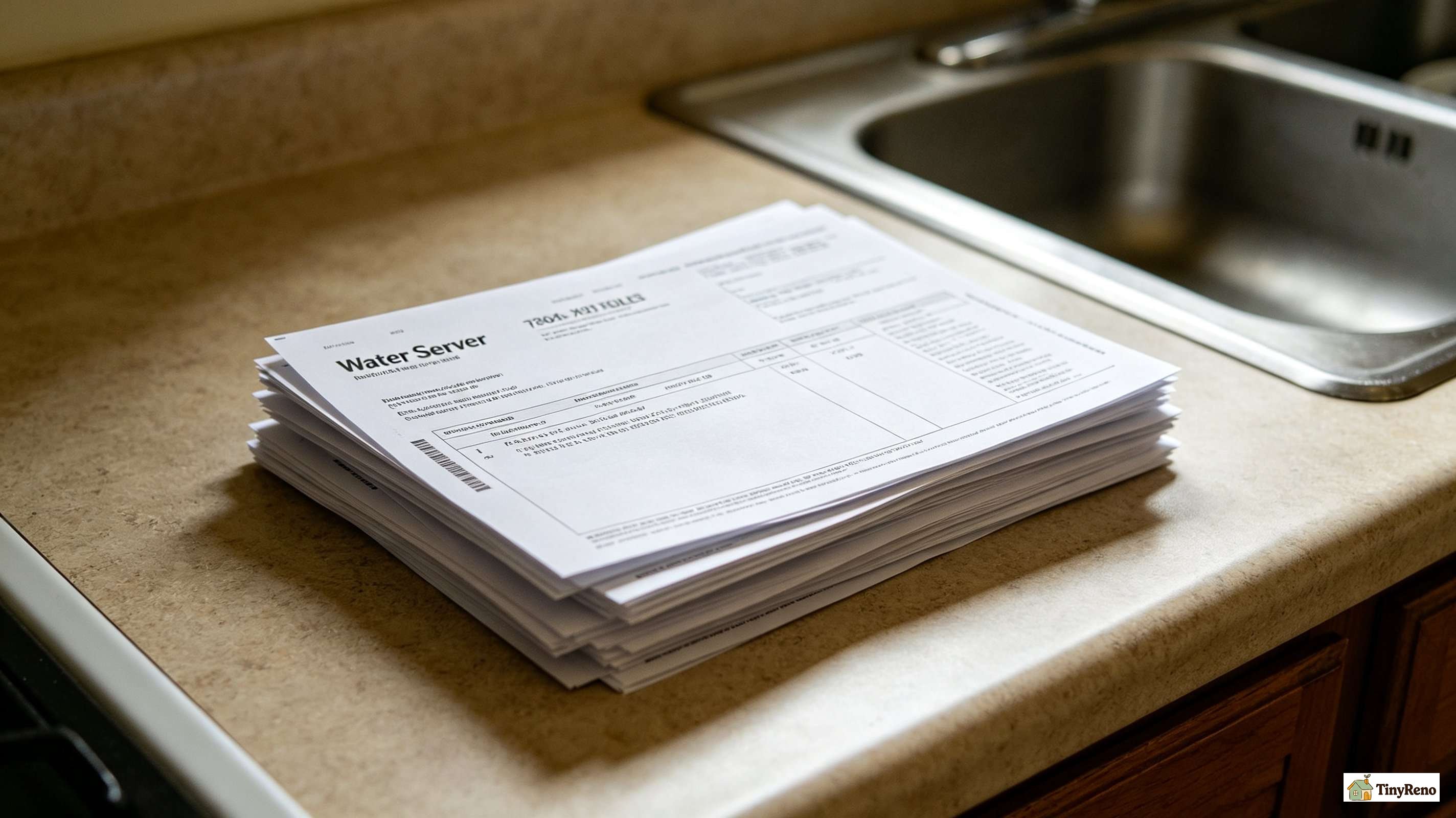
The first thing to know is that almost every city in the U.S. structures its combined water and sewer bill in three parts. The first part is a fixed base fee, which is what you pay just for being connected to the system, regardless of how much water you use. The base fee covers the city's cost of maintaining the pipes and the meter, and it is typically $5 to $15 per quarter, and it is the same for everyone in your service area. The second part is the water consumption charge, which is calculated from your actual metered use, and which is typically $8 to $15 per thousand gallons in most U.S. cities. The third part is the sewer charge, which is the part that surprises people, and which is calculated as a multiplier on the water consumption charge. The multiplier is typically 3 to 5 times, depending on the city, because the assumption is that the water consumption charge represents water that also went through the sewer. If the multiplier in your city is 4, and your water consumption charge is $40, your sewer charge is $160. The total bill, before any add-on fees for stormwater or fire service or infrastructure replacement, is $200. If your actual water bill, including the base fee and the consumption charge, is $40, and your total bill is $200, the difference is the sewer multiplier, and the sewer multiplier is the part of the bill that goes up the most when the city raises rates, which is the part that goes up the most when the city replaces a section of sewer main, which is the part of the bill that does not correspond to anything you actually did with water in your apartment.
The second thing to know is that you can request a copy of the actual meter reading from your utility, and the meter reading is the only thing on the bill that is independently verifiable. The base fee is whatever the city says it is. The consumption charge is whatever the city calculates from the meter. The sewer multiplier is whatever the city says it is, and most cities publish their multipliers as part of the rate schedule, which is public information, and which is the document that lets you figure out whether the sewer portion of your bill is being calculated correctly. If your city publishes a 4x multiplier and your sewer charge is 5x your water charge, the city is overcharging you by 25 percent on the sewer portion, which on a $387 quarterly bill is somewhere around $40 in overcharges, and which is the kind of thing that gets fixed when a tenant points it out, because city billing systems have errors, and city billing departments respond to documented complaints with adjustments and credits. The first step is to ask for the meter reading. The third step is to look up the multiplier. The fourth step is to do the math yourself. The fifth step is to email the utility if the math is wrong.
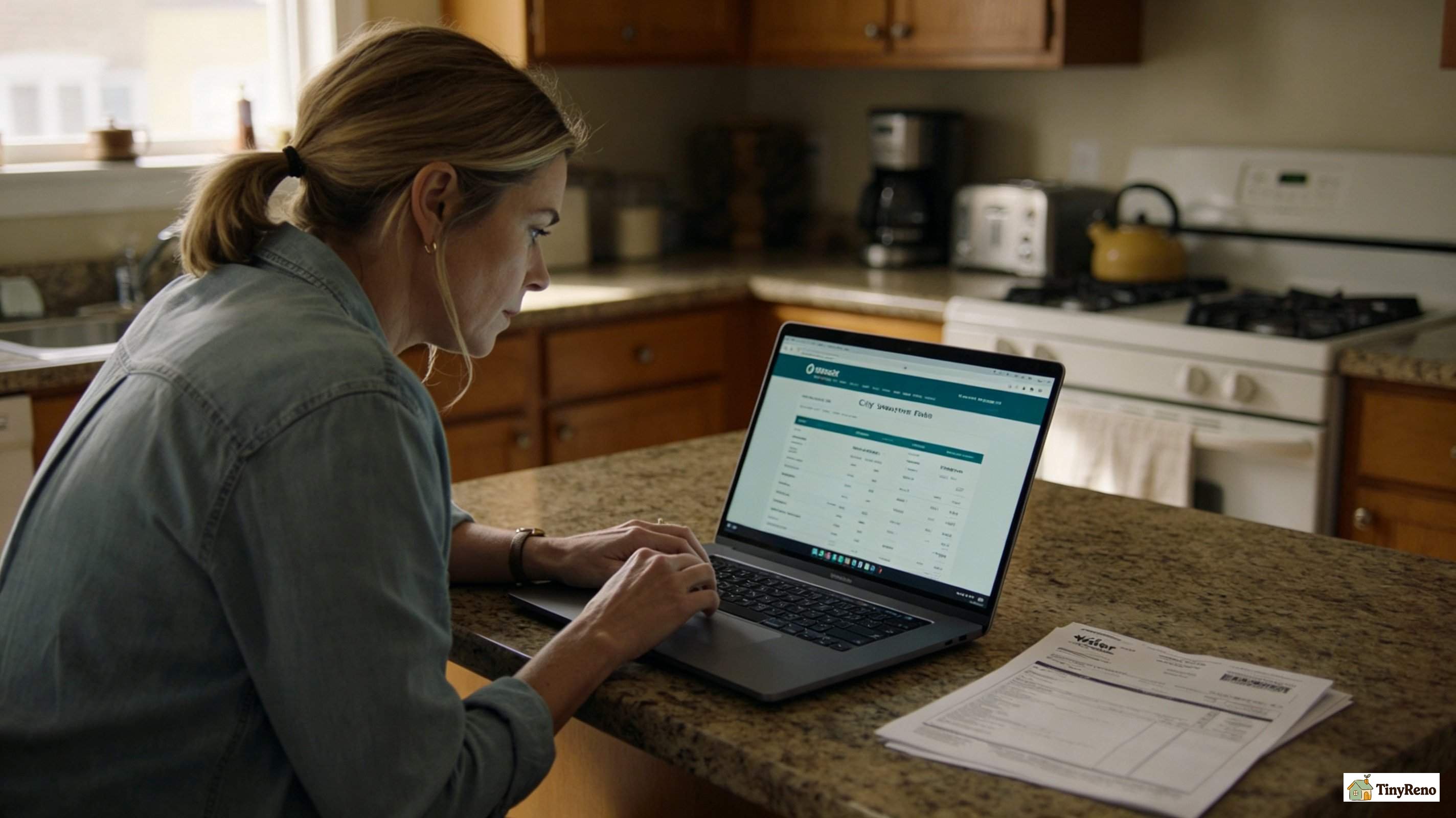
The third thing to know is that the sewer multiplier applies to the water consumption charge, not to the water base fee. Some cities calculate sewer as 4 times (water consumption + base fee), which inflates the sewer portion by an extra $20 to $60 per quarter. Some cities calculate sewer as 4 times (water consumption only), which is the formula the city usually publishes. If the formula on the bill does not match the formula on the rate schedule, the bill is being calculated incorrectly. The formula on the bill is usually not labeled, which is the part that makes this confusing. The fix is to call the utility billing department and ask, in writing if you can, what the multiplier is, what the formula is, and whether the formula on your last bill matches the published rate schedule. The answer, in my case in October, was that the formula was being applied incorrectly, and the correction reduced my quarterly bill by $42, which was almost the entire increase I had seen over the previous six months.
Where the overage is actually coming from — the leaks and fixtures that drive how to reduce sewer bill in your apartment
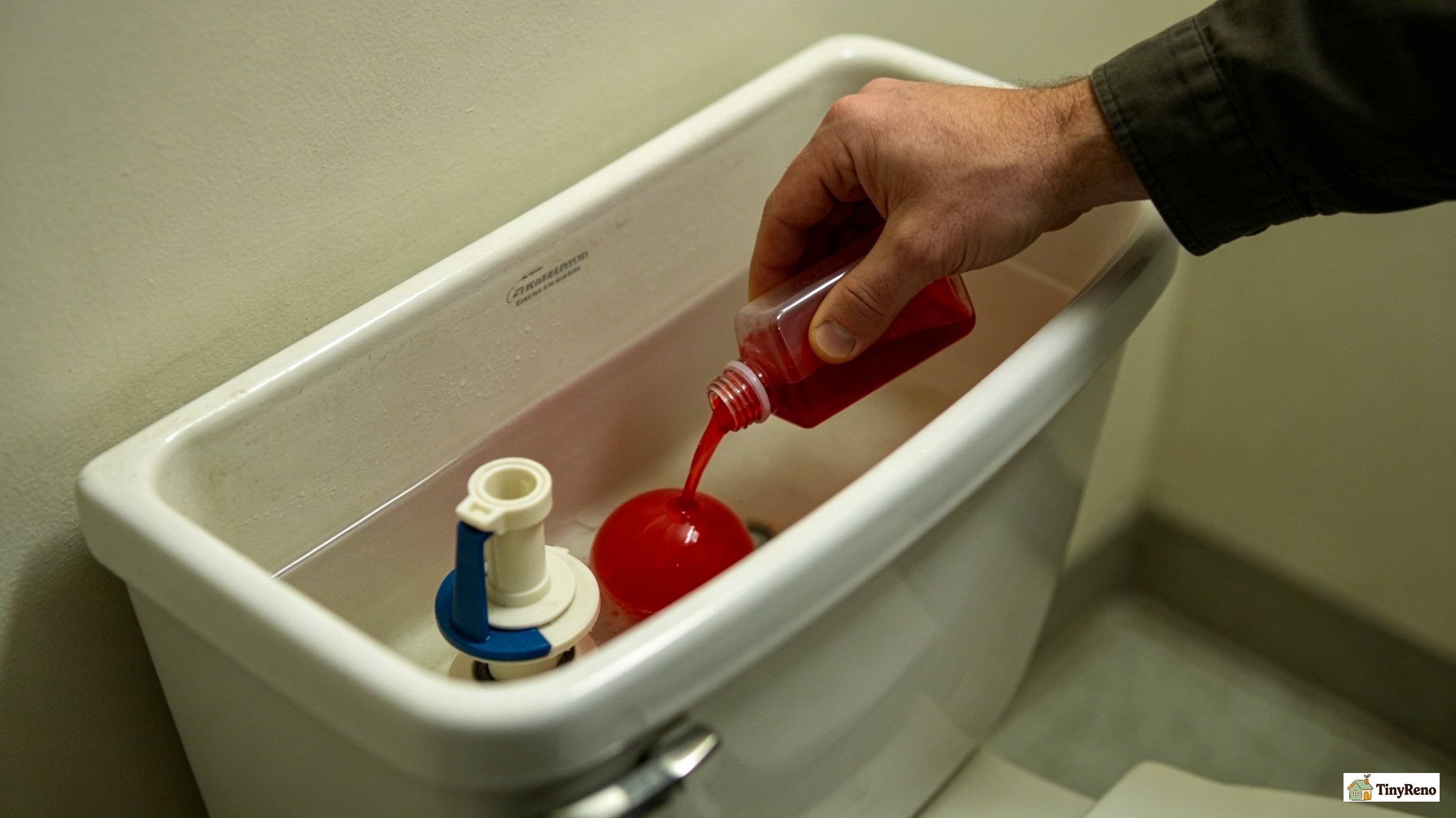
The first place the overage comes from, and the place most renters do not look, is the toilet flapper. The toilet flapper is the rubber flap at the bottom of the tank that lifts when you flush and that is supposed to seal closed when the tank is empty. A flapper that does not seal closed lets water leak from the tank into the bowl continuously, and a continuously leaking flapper can use somewhere between 30 and 200 gallons per day, which on a monthly bill is somewhere between 900 and 6,000 gallons, which on most city bills is somewhere between $10 and $70 per month, and which is also multiplied by the sewer multiplier when the city calculates sewer. A flapper replacement is a $5 part and a 10-minute job, and the part is at any hardware store, and the job does not require any tools beyond a sponge and 10 minutes. The diagnostic is the food coloring trick. Put a few drops of food coloring in the toilet tank. Wait 10 minutes without flushing. If the color shows up in the bowl, the flapper is leaking and needs to be replaced. The total cost of the test is $0 and 10 minutes. The savings on a leaking flapper is somewhere between $10 and $70 per month, which on a quarterly bill is somewhere between $30 and $210.
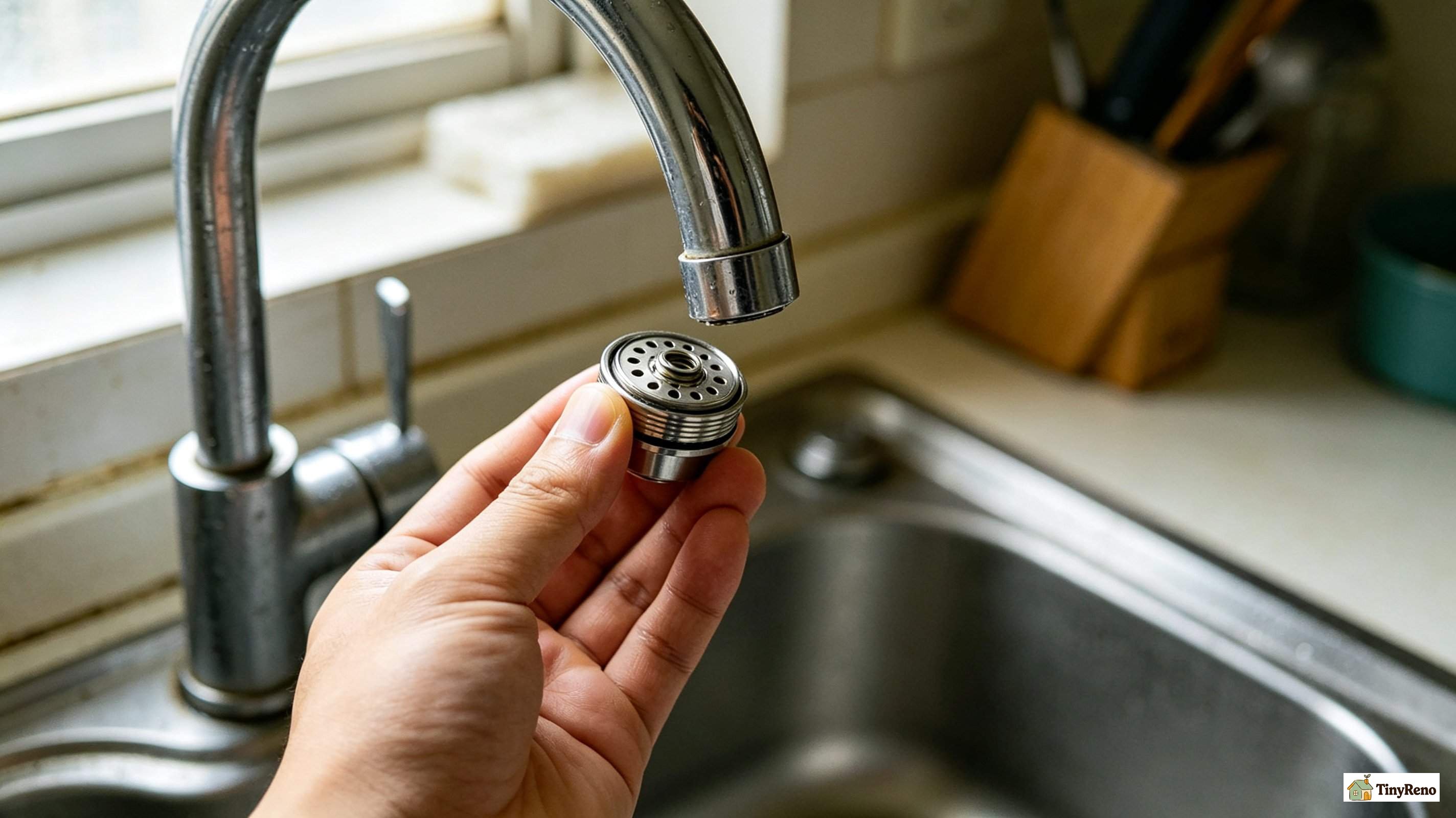
The second place the overage comes from is the faucet aerator. The faucet aerator is the small metal piece at the tip of the faucet where the water comes out, and its job is to mix air into the water stream so the stream feels like more water than it actually is. A clogged or partially clogged aerator does the opposite — it restricts the flow and makes the faucet feel like less water than it actually is, which makes you run the faucet longer to fill the same pot, which means more water and more sewer. The fix is to unscrew the aerator, rinse it under the faucet, and screw it back in. The time is 3 minutes. The savings depends on how much you use that faucet, but on a kitchen sink used for cooking and dish rinsing, a clogged aerator can add 5 to 15 gallons per day, which is 150 to 450 gallons per month, which is $2 to $7 per month on most bills.
The third place the overage comes from is the showerhead, specifically the showerhead in a bathroom where the previous tenant was using a high-flow showerhead and the landlord has not yet replaced it with a low-flow one. A standard pre-1992 showerhead flows at 3.5 to 5 gallons per minute. A standard low-flow showerhead flows at 1.5 to 2 gallons per minute. The difference, on a 10-minute shower, is 20 gallons versus 35 gallons, which is a 15-gallon-per-shower savings, which on a daily shower is 450 gallons per month, which on most bills is somewhere between $5 and $15 per month. The fix is a low-flow showerhead, which costs $10 to $30 at any hardware store, and which is something a landlord is usually happy to install because it reduces the load on the building water heater, which reduces the building energy bill, which the landlord also pays. The diagnostic is the shower itself — if you fill a one-gallon bucket in less than 20 seconds, the showerhead is high-flow.
The fourth place the overage comes from is the dishwasher and washing machine, and specifically the age of those machines. A dishwasher built before 2010 uses somewhere between 8 and 12 gallons per cycle. A dishwasher built after 2015 uses somewhere between 3 and 5 gallons per cycle. The difference, on one cycle per day, is somewhere between 100 and 250 gallons per month, which on most bills is somewhere between $1.50 and $4 per month. A washing machine built before 2010 uses somewhere between 30 and 40 gallons per load. A washing machine built after 2015 uses somewhere between 15 and 20 gallons per load. The difference, on four loads per week, is somewhere between 60 and 100 gallons per month. The fix is not something the renter can do — the renter is using the machines that are in the apartment. The fix is the landlord, and the email is the renter's, and the email says something like "the dishwasher in unit X is using X gallons per cycle based on the EnergyStar label; can we look at replacing it." Most landlords will not replace a working dishwasher. Some will, especially if the renter points out the energy savings.
What the landlord is responsible for, and what to put in the email — the part of how to reduce sewer bill that is not your job
The first landlord responsibility is any leak between the meter and the unit, which is the kind of leak that shows up on the meter but does not show up in the apartment. The diagnostic is the meter itself. Every utility meter has a small triangle or star-shaped indicator on the face that spins when water is flowing through the meter. If the indicator is spinning when every fixture in the apartment is turned off, and the toilet flapper diagnostic shows no flapper leak, and the faucet aerator diagnostic shows no aerator leak, then the leak is between the meter and the unit, and the landlord is responsible. The email is the renter's job, and the plumber visit is the landlord's job, and the bill for the plumber visit is the landlord's bill. The cost of the water that was lost to the leak is a separate question, and most cities will adjust a bill for a documented leak, which is the kind of adjustment that happens when the renter emails the utility billing department with the meter readings and the plumber's report.
The second landlord responsibility is any leak inside the walls of the unit that is not in a fixture the renter installed. The diagnostic for an inside-the-walls leak is to look at the wall for water staining, peeling paint, or active moisture. The diagnostic for a leak under the floor is to look at the floor for soft spots, water staining, or active moisture. The diagnostic for a ceiling leak from an upstairs unit is to look at the ceiling for staining. None of these diagnostics require tearing into the wall. The renter can see most inside-the-wall leaks from the surface. The fix requires the landlord to send a plumber. The plumber determines the location of the leak by isolating sections of pipe and watching the meter. The plumber fixes the leak. The bill for the plumber is the landlord's bill. The water that was lost to the leak is a separate question, and most cities will adjust a bill for a documented leak, with documentation being the renter's email to the landlord and the plumber's report.
The third landlord responsibility is the formula on the bill, which is the part that does not involve a leak at all. If the city's published multiplier is 4 and your bill is being calculated at 5, the city is overcharging you, and the overcharge is the city's mistake, and the city will refund the overcharge when you point it out. The email is to the utility billing department, not to the landlord, because the formula is the city's, not the landlord's. The documentation is a printout of the published rate schedule from the city's website, and a printout of your last bill showing the calculation, and a one-line note pointing out the discrepancy. The response from the utility billing department is usually a credit to your next bill and a correction going forward. The credit on my October bill was $42, which was almost the entire increase I had seen over the previous six months.
The before-and-after, and what the math actually looked like
The October bill, before I did anything, was $387. The November bill, after I replaced the toilet flapper ($5), cleaned the faucet aerator ($0), and called the utility to ask about the multiplier formula (which turned out to be applied incorrectly and which was corrected to a 4x formula on my account going forward), was $241. The December bill, the first full month after the corrections, was $198. The January bill was $192. The savings from October to January was $195 per quarter, which is $65 per month, which is $780 per year, which is more than I have ever saved on any single home repair in any apartment I have ever rented, and which is the kind of money that the renter's meter reading and the renter's email and the renter's 10 minutes of flapper replacement can recover, and which is the kind of money I would not have recovered if I had not started paying attention to the word "sewer" on the envelope.
The math I should have done in July, when the bill first jumped, is the math I did in October, which is to look up the city's rate schedule, calculate the sewer multiplier myself, and call the billing department to ask for the meter reading and the formula. The math takes 15 minutes. The email takes 10 minutes. The flapper replacement takes 10 minutes. The total time is 35 minutes, and the savings is $780 a year, and the savings continues every quarter the renter stays in the apartment, and the savings transfers to the next renter if the renter emails the landlord and the next renter knows to keep checking the math, which is the part of the article I am going to put in writing now, because the math is the kind of thing that does not change between tenants, and the math is the kind of thing the city will keep doing if no one points it out, and the renter who points it out is the renter who saves the most. How to reduce sewer bill is not a single trick — it is a 35-minute Sunday afternoon, an email to the utility, a 10-minute flapper swap, and a willingness to do the math on a paper bill the city does not expect any renter to read. The math is the only one of those four things that does not go away when the lease ends.


Discussion (0)
Sign in to join the discussion