

Pantry size is the question I did not know I was answering until the second Tuesday of this month, when my friend Julia moved into a one-bedroom in Sunnyside and called me from the kitchen with the words "this pantry is not a pantry." She was right. The pantry was a 22-inch-wide gap between the refrigerator and the wall, with three wire shelves that were 11 inches deep, and the deepest shelf could not fit a 24-inch cereal box standing up. The pantry was not a pantry. The pantry was a closet for food. I have lived in three rentals in New York since 2021, and I have measured three pantries, and the pantry in Julia's Sunnyside one-bedroom is the same size as the pantry in my Long Island City studio, which is the same size as the pantry in the Astoria railroad apartment I rented for six months in 2023. Pantry size in a New York rental is one of three sizes, and the third size is the only one that actually fits the food you buy at Trader Joe's on a Sunday.
How to figure out what pantry size you actually have, before you buy the wrong shelves, before you buy the wrong containers, before you spend $80 on a Lazy Susan that does not turn in a 22-inch gap, depends on the answer to one question, and the question is not "what is the standard pantry size." The question is "what kind of pantry do you have." The standard pantry size in a house built in 2024 is 5 feet wide by 2 feet deep by 6 feet tall, with five shelves that are 12 inches deep. The standard pantry size in a house built in 1974 is 4 feet wide by 18 inches deep by 5 feet tall, with four shelves that are 9 inches deep. The standard pantry size in a rental built before 1930 in New York City is whatever fits between the radiator pipe and the wall, and the answer is usually 22 inches wide and 11 inches deep, with two shelves, and the shelves are not adjustable, and the shelves are not deep enough for a cereal box, and the shelves are the only pantry you have.
The 3 pantry types in New York rentals, and the one shelf depth rule that matters.
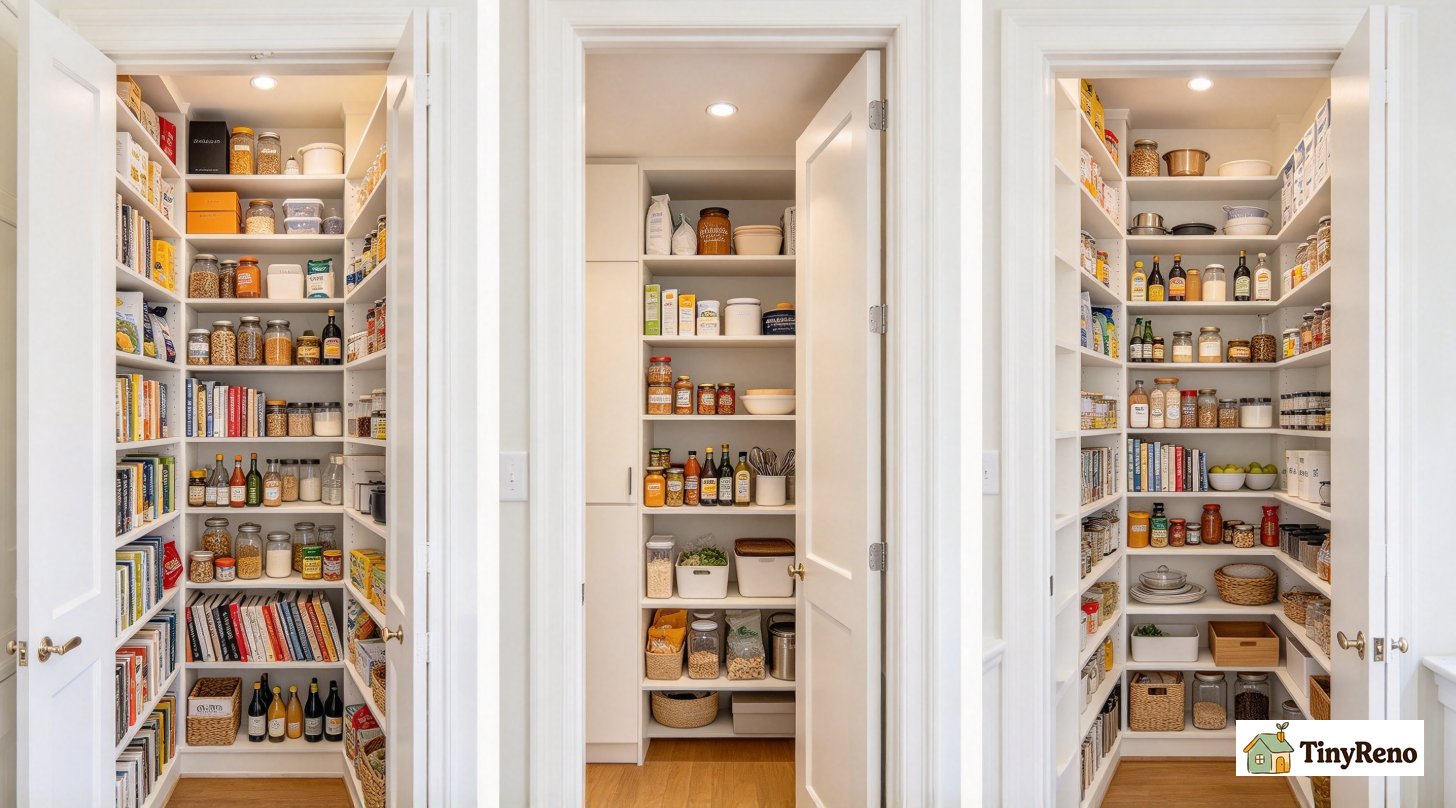
Pantry type one is the pre-war closet pantry, which is the pantry in Julia's Sunnyside apartment. Pre-war in New York means before 1930, but most of the pre-war rentals on the market were built between 1890 and 1925, which means the pantry was designed for a person who shopped at a corner store once a day and kept a tin of crackers and a jar of olives in the pantry. The pre-war closet pantry is 18 to 26 inches wide, 11 to 14 inches deep, and 36 to 60 inches tall. The pre-war closet pantry has two or three wire shelves that are 11 inches deep. The pre-war closet pantry does not fit a cereal box standing up. The pre-war closet pantry fits about 24 cans of soup, 6 boxes of pasta, 1 bottle of olive oil, and a bag of rice if you lie the bag on its side. The pre-war closet pantry is the pantry you have if you live in a one-bedroom in Sunnyside, Astoria, Woodside, Jackson Heights, Washington Heights, or the Upper West Side between 72nd and 110th.
Pantry type two is the new-construction reach-in pantry, which is the pantry in my Long Island City studio. New construction in New York means after 2010, which means the pantry was designed by a person who had a Pinterest board. The new-construction reach-in pantry is 24 to 30 inches wide, 14 to 18 inches deep, and 60 to 72 inches tall. The new-construction reach-in pantry has four adjustable shelves that are 14 inches deep. The new-construction reach-in pantry fits a cereal box standing up. The new-construction reach-in pantry fits about 36 cans of soup, 12 boxes of pasta, 2 bottles of olive oil, and a bag of rice standing up. The new-construction reach-in pantry is the pantry you have if you live in a new-construction studio or one-bedroom in Long Island City, the Lower East Side, Williamsburg, or Bushwick.
Pantry type three is the walk-in pantry, which is the pantry in my friend's townhouse in Cobble Hill. Walk-in means you can walk into the pantry. Walk-in means the pantry is the size of a small closet. Walk-in means you can store a small refrigerator in the pantry. Walk-in pantries in New York rentals are rare. Walk-in pantries are usually in townhouses and in 2-bedroom and 3-bedroom rentals in the outer boroughs. Walk-in pantries are usually 36 to 48 inches wide, 24 to 30 inches deep, and 6 to 8 feet tall. Walk-in pantries have five or six adjustable shelves that are 16 inches deep. Walk-in pantries fit a small refrigerator. Walk-in pantries are not relevant to 90 percent of New York renters. Walk-in pantries are relevant if you are reading this from a Cobble Hill townhouse.
The 1 shelf depth rule that matters is the part of pantry size that the internet does not write about, because the internet writes about volume, and volume is not what fills a pantry or fails to fill a pantry. The shelf depth is what fills or fails to fill a pantry. A 14-inch-deep shelf fits two rows of cans. An 11-inch-deep shelf fits one row of cans. A 14-inch-deep shelf fits a 32-ounce container of oats standing up. An 11-inch-deep shelf does not fit a 32-ounce container of oats standing up; you have to lie it on its side. The shelf depth is the difference between a pantry that holds a week of groceries and a pantry that holds a day of groceries. Measure it before you measure anything else.
How to measure your pantry in 4 steps, which is what I did for Julia on the second Tuesday of this month, and what I do for every rental I move into, and what I will do for the next rental I move into in 2026.
Step one is to measure the width of the pantry opening, which is the horizontal distance between the two walls or between the wall and the refrigerator or between the wall and the door frame. The width is the measurement you need first because the width decides what containers fit on the shelves. A 22-inch-wide pantry does not fit a 24-inch-wide Lazy Susan. A 24-inch-wide pantry fits a 22-inch-wide Lazy Susan. Measure the width with a tape measure. If you do not have a tape measure, use the box of the container you are trying to fit. If the box is 24 inches wide and the pantry is 22 inches wide, the container does not fit.
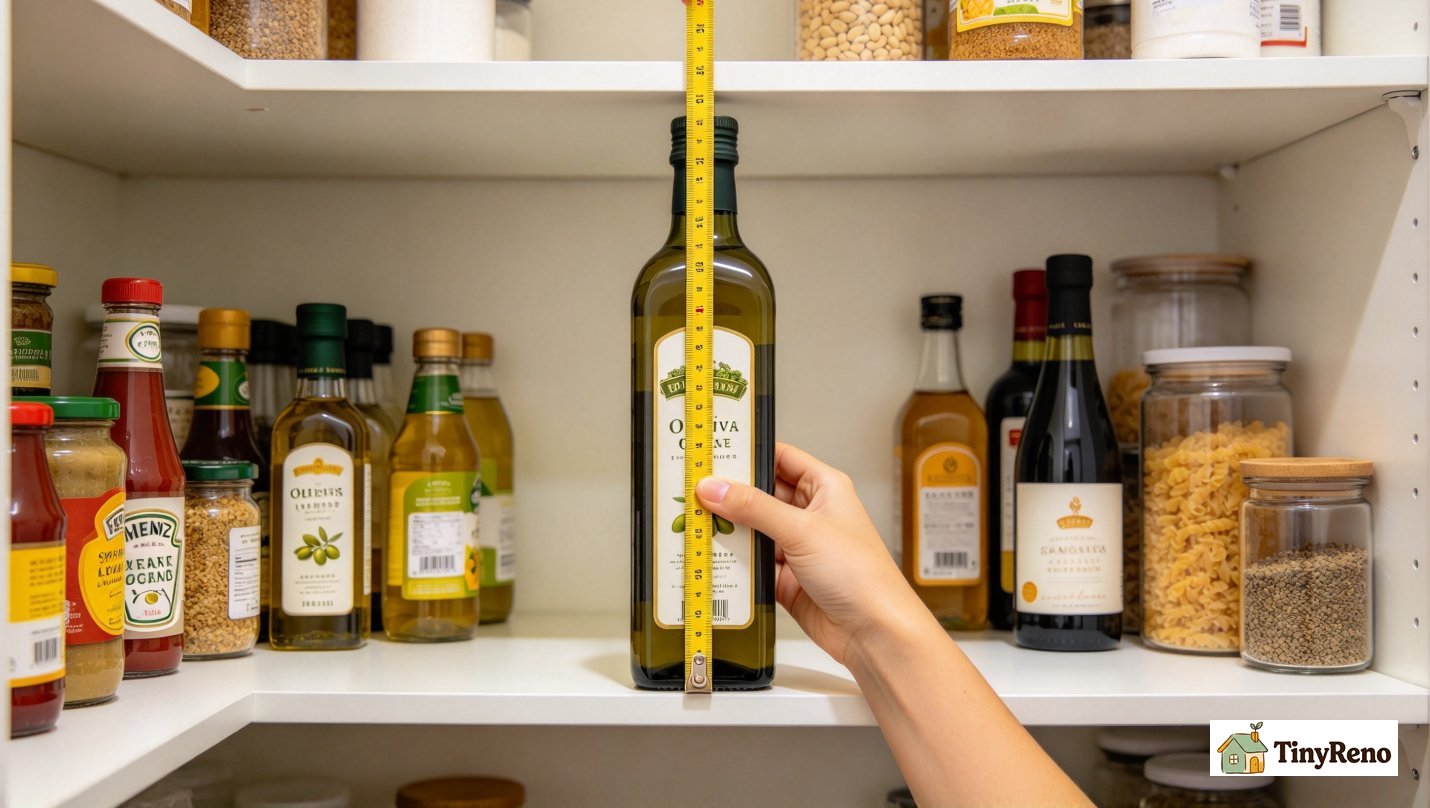
Step two is to measure the depth of the shelves, which is the horizontal distance from the front of the shelf to the back wall. The depth is the measurement you need second because the depth decides how many rows of items fit. An 11-inch-deep shelf fits one row of cans. A 14-inch-deep shelf fits two rows of cans. A 16-inch-deep shelf fits two rows of cans and a small container behind them. Measure the depth by placing a standard can of soup on the shelf. If two cans fit front to back, the depth is at least 14 inches. If only one can fits, the depth is about 11 inches.
Step three is to measure the height of each shelf, which is the vertical distance between two adjacent shelves. The height decides what fits on the shelf. A 9-inch-tall space does not fit a 12-inch-tall bottle of olive oil. A 12-inch-tall space does. Measure the height by holding a bottle of olive oil on the shelf. If the bottle fits with 1 inch of clearance above the lid, the height is enough. If the bottle does not fit, the height is not enough.
Step four is to measure the height of the top shelf from the floor, which is the part that decides whether you can reach the top shelf without a step stool. A 72-inch-tall pantry has a top shelf at 60 inches from the floor. A 60-inch-tall person can reach 60 inches from the floor with their fingertips. A 60-inch-tall person cannot reach 72 inches from the floor. The top shelf of a 72-inch pantry is for things you do not need often, like the stand mixer you got for Christmas and the bread maker you have not used since 2022.
The 3 things that do not fit in a rental pantry, which is the part of pantry size that no blog post writes about, because the blog posts assume you have a walk-in pantry.
The first thing is the 32-ounce container of oats. The container is 10 inches tall and 5 inches in diameter. The container fits on an 11-inch-deep shelf with 6 inches of clearance behind it. The container does not fit on an 11-inch-deep shelf if you try to put a second container behind it. The container on an 11-inch-deep shelf takes up the whole depth, which is the reason the second shelf of a pre-war pantry fills up by Wednesday of every week.
The second thing is the 32-ounce container of oats. The container of oats is 10 inches tall and 12 inches wide. The container fits on a 14-inch-deep shelf with 1 inch of clearance. The container does not fit on an 11-inch-deep shelf. The container fits on an 11-inch-deep shelf if you lie the container on its side. The container on its side takes up twice as much vertical space. The container on its side is the reason the second shelf of a pre-war pantry fills up by Wednesday of every week.
The third thing is the Lazy Susan. The Lazy Susan is 16 inches in diameter and 12 inches tall. The Lazy Susan fits on a 14-inch-deep shelf. The Lazy Susan does not fit on an 11-inch-deep shelf. The Lazy Susan does not turn in a 22-inch-wide pantry. The Lazy Susan turns in a 24-inch-wide pantry. The Lazy Susan is the part of pantry organization the blog posts recommend that does not work in a pre-war pantry. The Lazy Susan is the part of pantry organization you should not buy until you have measured the width of the pantry opening.
What Julia got, and what I wish she had measured first, is the last part of pantry size I want to tell you, because Julia is going to be in the Sunnyside apartment for at least a year, and the year is going to be better if she measures the pantry twice. She is going to measure the pantry once on move-in day and put the wrong shelves on the wire racks. She is going to measure the pantry again on the first weekend of month 2 and put the right shelves on the right racks. She is going to be frustrated for a month and a half. I want you to skip the month and a half. I want you to measure twice on move-in day. Measure the width. Measure the depth. Measure the height. Measure the top shelf. Then go to Target. Then buy the right containers. Then go home. Then put the containers on the shelves. The pantry will fit more than you think it will fit, because the shelf depth is the rule that matters, and the shelf depth is the rule nobody measures.
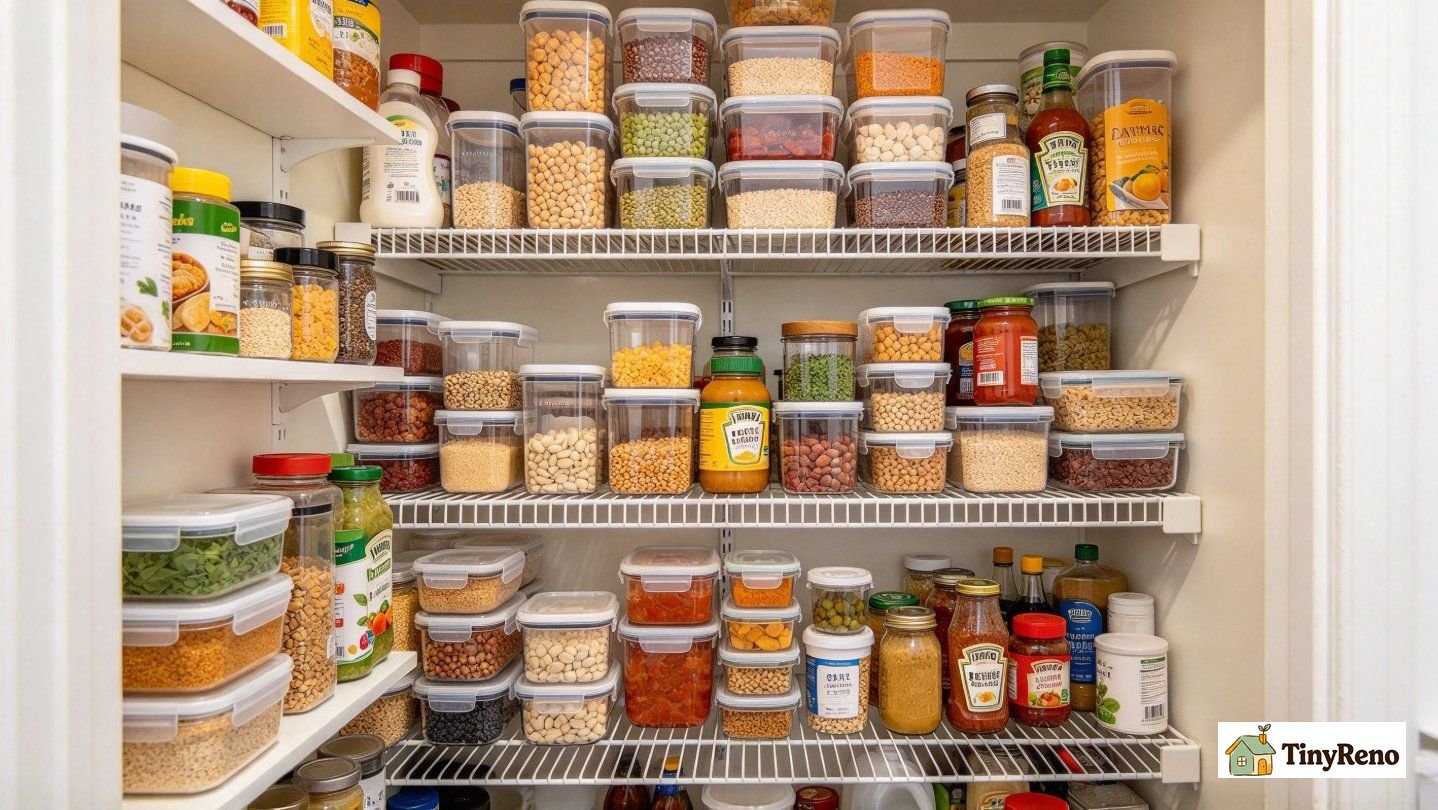
If I were moving into a new rental this month, and the pantry was 22 inches wide and 11 inches deep, I would buy the containers before I bought the shelves. I would buy a set of 12 clear stackable containers from the Container Store for $40, and I would put the containers on the wire shelves. I would not buy the Lazy Susan, the extra shelves, or the risers that lift the top shelf. The pantry is 22 inches wide and 11 inches deep. The containers will fit. The food will fit. The pantry will work.


Discussion (0)
Sign in to join the discussion