

How to furnish a small apartment does not start with furniture. It starts with the four things that decide whether a piece survives the apartment or fights it. Kevin, the floor lead at West Elm on Atlantic Avenue, told me this on my third trip to the store in five weeks. He took one look at my floor plan and said "this is not going to work" before I had finished describing the couch I had measured for two hours the night before.
I moved into a 480-square-foot Brooklyn studio in October 2022. The previous tenant, a graduate student finishing her dissertation at Pratt, had left behind a Murphy bed that folded into the wall and a stack of three milk crates. The Murphy stayed. The milk crates left with her. The lease was 12 months. The security deposit was $2,400. The landlord, a woman named Phyllis who lived two floors up, walked the apartment with me on move-in day and said "the floor will be checked. The walls will be checked. The radiator will be checked. The door frame will be checked." She counted eight things she would look at, in that order, before signing the move-out form. I memorized the list.
The First West Elm Trip, and the Couch I Returned on Monday
The first West Elm trip, in late October, was a mistake. I walked in with a 24-inch-deep couch in my head, the one I had measured twice in the store the previous weekend, and the one that I thought fit between the radiator and the door frame. Kevin, the floor lead, asked to see my floor plan on my phone. He looked at it for 30 seconds. He said "your door swings in, your radiator is 6 inches off the wall, and your window has a deep sill." Then he said "the couch you measured is going to fight the door every time someone opens it." I bought the couch anyway, because I had been staring at it for two weekends and my budget was already blown. The couch arrived on a Saturday. It took 8 inches off the door swing. Phyllis would have noticed. I returned it on Monday for a $72 restocking fee.
Kevin's Four Rules, Written on the Receipt
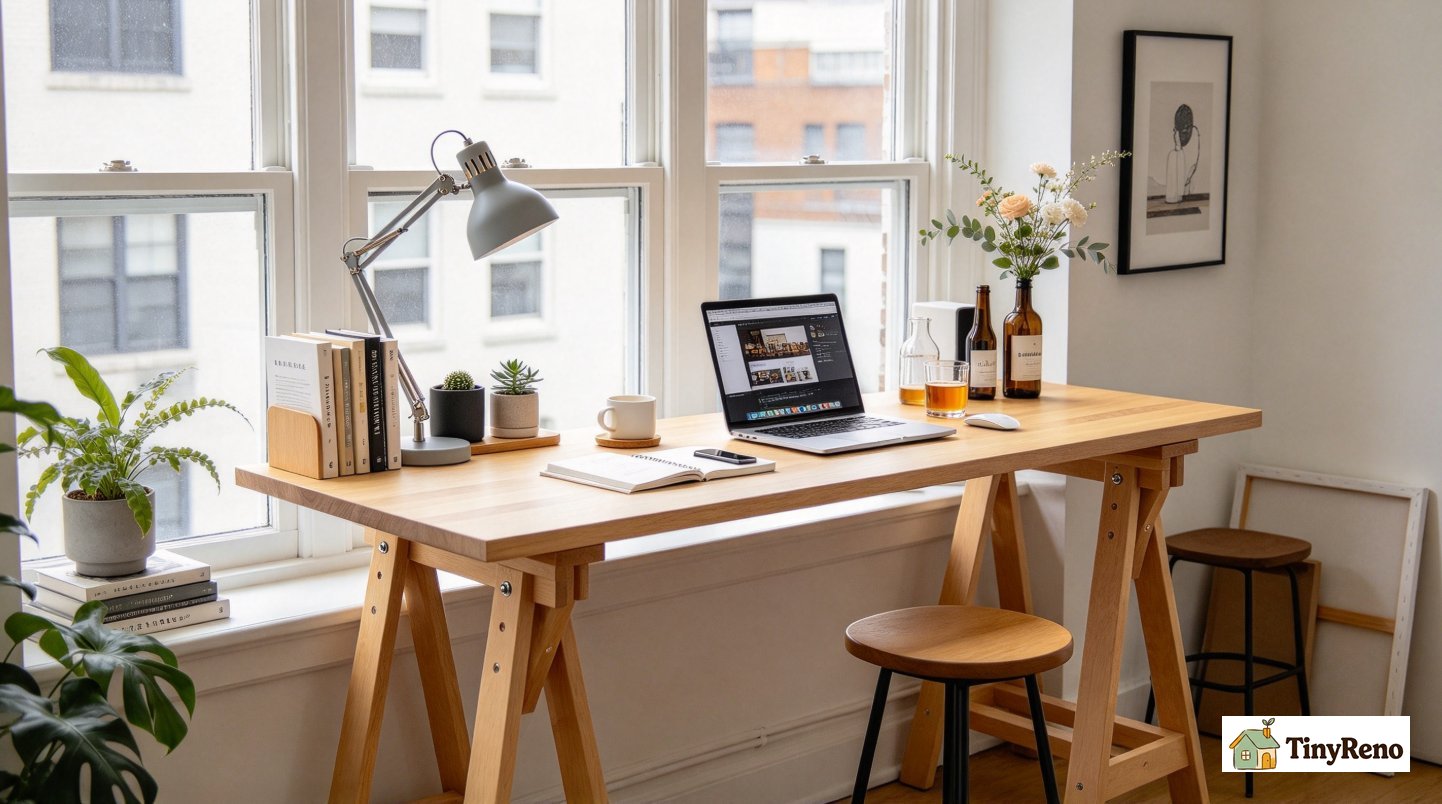
The second trip, three weeks later, was better. I had learned the four things Kevin kept circling back to whenever I picked something up. He drew a sketch on a West Elm receipt. He circled the window in red pen and said "the deep sill is your desk, your bar, your shelf. Everything below the sill stays below the sill." He circled the radiator and said "this is what people forget. A radiator gets hot. Anything that blocks it costs you heat and it warps." He circled the budget and said "do not buy the most expensive piece first. Buy the most expensive piece last, because the apartment will tell you which one it actually needs."
By the third trip, in mid-November, I had a list of six things that I had narrowed down from the first trip's nine. The couch was gone. The desk was gone. The bookshelves were gone. I had kept the dresser (still here) and the lamp (which died in month 3). The six things I actually bought over the next year were the couch, the desk, the dresser, the rolling cart, the lamp, and the bookshelf that I later sold.
The Shape of the Room: How I Picked the Couch
The shape of the room decided two pieces. My studio is a long rectangle with the kitchen against one short wall and the window on the opposite short wall. The Murphy bed sits against the long wall near the door. The couch has to fit between the bed and the radiator, or it blocks the path to the kitchen. I bought a 78-inch three-seat couch from Article for $1,200, which left me 22 inches of walking space from the couch arm to the radiator cover. The Article couch was the most expensive piece I bought last, because by then I had measured the path to the kitchen seven times.
The Window Sill: How I Picked the Desk and the Lamp
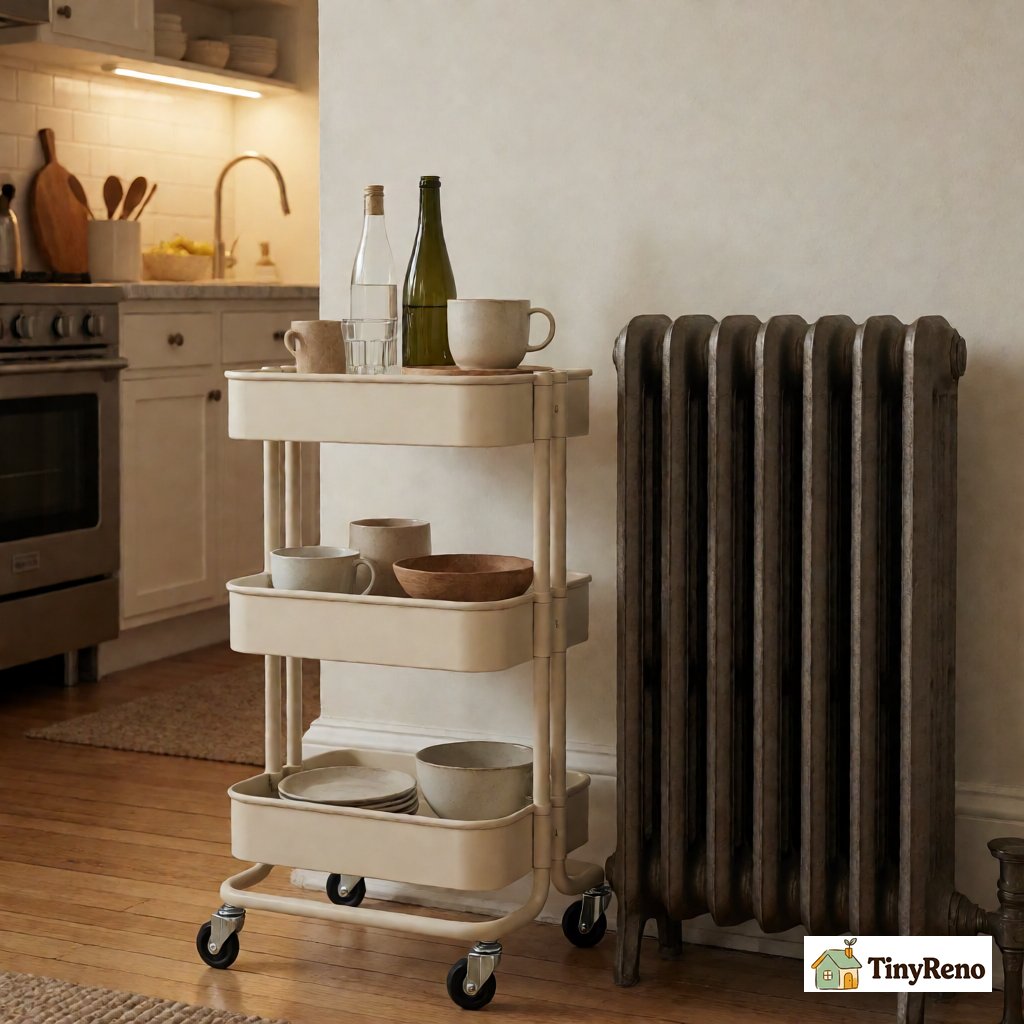
The window decided two more. The sill is 12 inches deep and 38 inches wide, which is close to the width of a 36-inch-wide IKEA tabletop I bought for $79. The tabletop sits on two $35 trestles and becomes my desk between 9 and 5, my bar between 5 and 7, and my dining table between 7 and 9. The lamp that died was a $220 floor lamp from West Elm that I had bought the first weekend and that I never moved back to the corner where it actually worked, because the corner was too far from the outlet. I bought a $40 desk lamp from Target the second winter and it has been there for 12 months.
When I look back at how to furnish a small apartment without buying the wrong pieces, the four things Kevin circled were the only parts that mattered.
The Radiator: Why I Took the Bookshelf Down
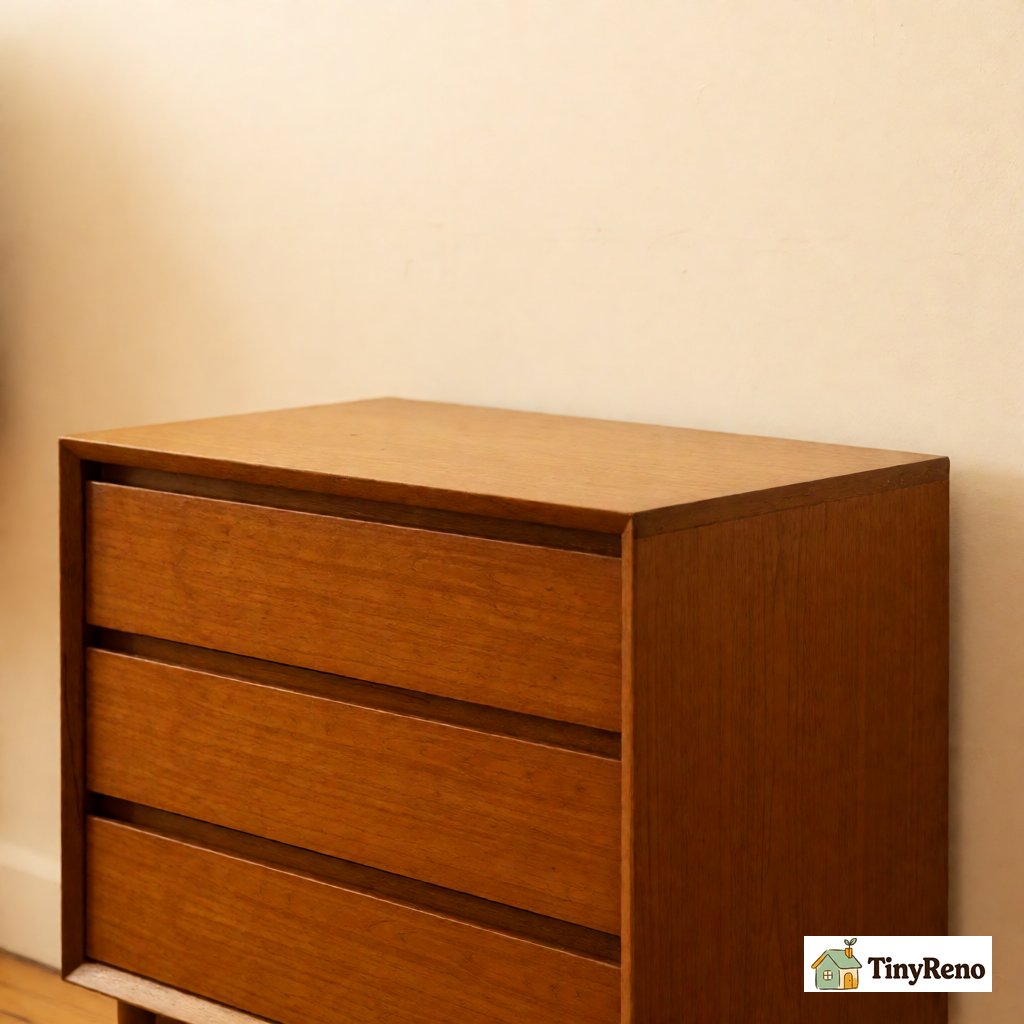
The radiator decided one piece and killed one piece. The piece that survived was a 32-inch-wide rolling cart from Home Depot, $89, that parks 6 inches from the radiator and rolls out of the way when I need to bleed it in November. The piece that died was a $140 bookshelf I bought on day 4, which I had to take down in month 6 when I realized it was holding the heat against the wall and the wall paint was cracking behind it. The bookshelf is in a stoop sale on 4th Avenue right now. I told Kevin about it on a West Elm trip in the spring. He said "I told you about the radiator."
The Budget: The Dresser I Waited Two Months For
The budget decided the last two. The Murphy bed came with the apartment, so my budget only had to cover the couch, the desk, the dresser, the rolling cart, and the lamp. The dresser, $320 from a vintage store on Atlantic, took two months to find and was the only piece I bought at the price I had budgeted for. The rolling cart, $89, was the cheapest piece of furniture I bought and the one I use every day. I bought the lamp at $40, not the $220 I had wanted. I learned that Kevin's rule was not "buy the cheapest." It was "buy the piece that the apartment tells you to buy, not the piece you wanted to buy when you started."
Phyllis Walked the Apartment on Move-Out Day
Three pieces of advice for anyone trying to figure out how to furnish a small apartment from scratch. The first is to take a photo of every wall and every floor transition before you buy anything. The floor plan is more important than the Pinterest board. The second is to ask the landlord, in writing, what counts as damage at move-out. Phyllis sent me a 4-page list. I taped it to the inside of the closet door. The third is to live with the apartment for one month before buying anything that costs more than $200. The four things Kevin circled will tell you which pieces to buy, in which order, and at which price. The apartment will not match the Pinterest board. It will not match the West Elm catalog. It will match itself.
If I were doing this over, I would skip the first West Elm trip entirely. I would buy only the lamp and the rolling cart from the first month. I would wait until month 2 to buy the dresser. I would wait until month 4 to buy the couch. I would never buy the bookshelf. The four things Kevin circled — the shape of the room, the windows, the radiator, and the budget — are not the four things you find on a list of how to furnish a small apartment. They are the four things the list skips, which is the only reason the list does not work.
Phyllis walked the apartment on move-out day in October 2023. She checked the floor. She checked the walls. She checked the radiator. She checked the door frame. She handed me a check for $2,160 within 9 days. The $240 she kept was a carpet cleaning fee that I had agreed to in writing. The couch, the desk, the dresser, the rolling cart, and the lamp went to the next tenant's storage unit. Kevin sent me a text that said "you figured it out."


Discussion (0)
Sign in to join the discussion