

9:47 PM, Sara Calling Crying From Park Slope
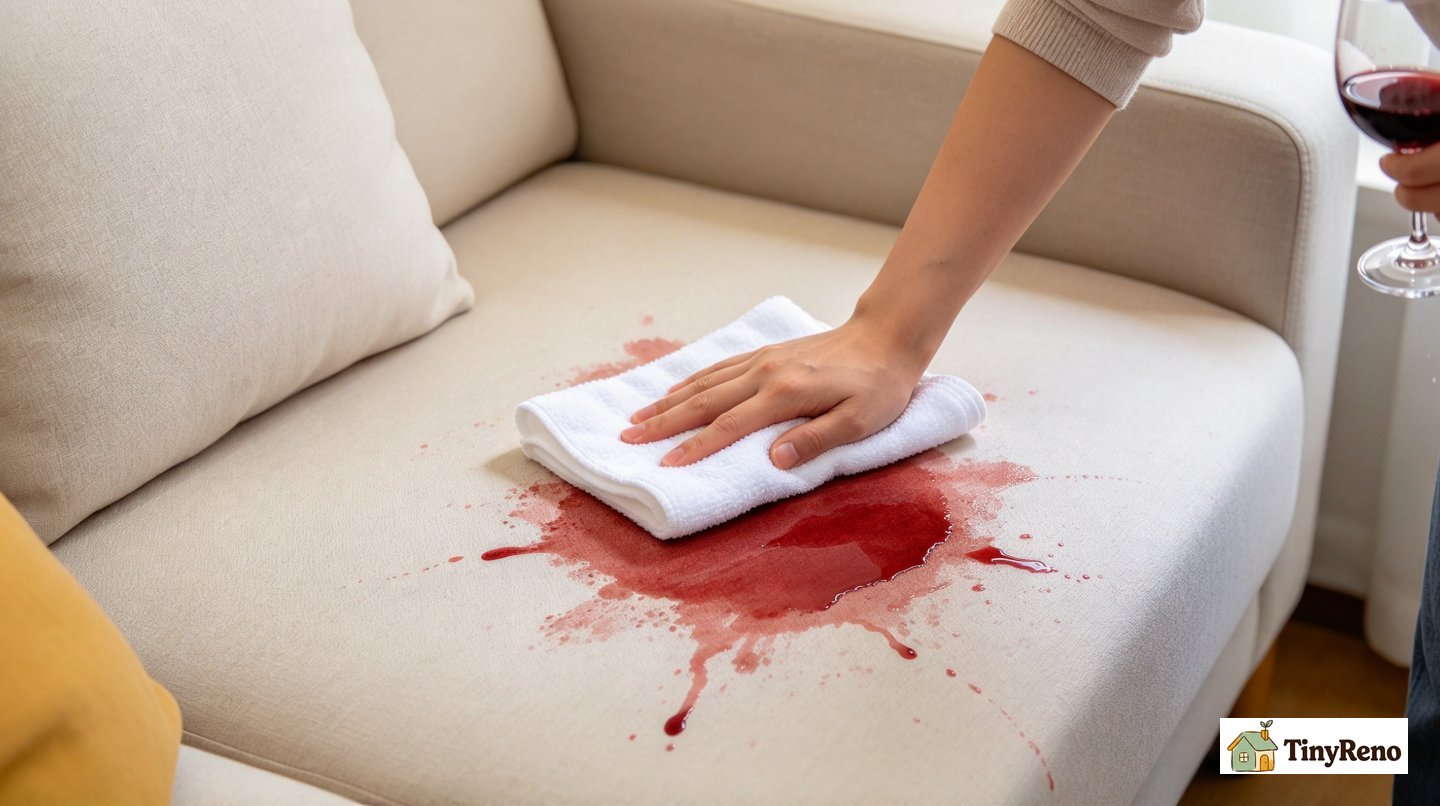
I learned how to remove a stain from a sofa on a Saturday night at 9:47 PM, when my friend Sara called me crying and said red wine had been sinking into her cream-colored sofa for four minutes and she did not know whether to scrub it or to leave it alone. I told her not to scrub. I told her I would be at her apartment in fourteen minutes, and I told her to put a layer of plain cold water on the stain, not to soak it but to keep it from drying, and to put a bag of frozen peas on top of the wet cloth because the cold would slow the wine's progress into the fabric while I drove. I drove with the windows down because the radio was not going to help either of us think. The stain on a sofa is a clock, and the four minutes that had already passed were minutes I would not get back. What I have learned since then is that almost every stain on almost every sofa can be saved by a renter who knows what the stain is, knows what the fabric is, and knows which five things are in the kitchen right now that will fix it.
The Cream Polyester Sofa and the Malbec She Opened
Sara's apartment was a one-bedroom in a pre-war walkup in Park Slope, and the sofa was the kind she had bought three months earlier from a place in Industry City that sold furniture out of shipping containers. It was a cream-colored polyester blend, which is the most stain-friendly fabric you can buy and also the most stain-vulnerable fabric you can buy, depending on what you spill on it and how quickly you decide to deal with it. The wine was a malbec she had opened to celebrate a friend who was visiting from Berlin, and the friend was sitting on the other end of the sofa looking at the stain as if it were a small animal that had just walked into the room. I arrived at 10:02 PM to remove a stain from a sofa that was still wet, looked at the fabric tag on the bottom of the cushion, and started the clock. The first hour was the only hour that mattered, and what we did in that hour is the same thing I would do for any renter who calls me at 9:47 PM with the same problem.
The First Hour, in Reverse Order
By 10:30 PM I had blotted up the standing wine with a dry white cotton towel. By 10:45 PM I had mixed a solution of one tablespoon of blue dish soap to two cups of cold water in a bowl from Sara's kitchen, and I had pressed it into the stain from the outside in, working the wine out of the fabric rather than spreading it deeper. By 11:00 PM I had blotted the soap out with a clean towel and I had poured a quarter cup of plain cold water over the stain to rinse. By 11:20 PM the stain was a faint pink shadow that I could see only when I knew where to look. By midnight, when Sara's friend had gone home and Sara had poured herself a glass of the same wine she had spilled, the stain was gone from the part of the cushion that mattered. We left a dry towel over the area and went to bed. The next morning I came back at 9:00 AM. The towel was dry. The stain was not visible from three feet away, which is the distance a landlord measures by. The way to remove a stain from a sofa before it sets is to work in that first hour, in that exact order, with cold water and a surfactant and a cotton towel that lifts rather than pushes.
The 4 Categories Almost Every Sofa Stain Falls Into
The way you learn how to remove a stain from a sofa starts with knowing which of the four categories it falls into. What I have learned in the two years since that Saturday night, from helping Sara and from helping four other friends through the same kind of phone call, is that almost every stain on almost every sofa falls into one of four categories, and that the four categories do not respond to the same treatment. The first is the category Sara's wine fell into, which is a tannin stain: red wine, coffee, tea, cola, beer, and most fruit juices. Tannins are plant-based and they bond to fabric the way tea bonds to the inside of a teacup, which is to say they bond fast, they bond permanently if you let them, and they need to be lifted out with cold water and a surfactant like dish soap before the bond sets. The second is the protein category: blood, sweat, vomit, milk, egg, and most dairy. Proteins bond to fabric when they are heated, which is why hot water is the worst thing you can do to a protein stain and cold water is the best thing. The third is the oil category: butter, salad dressing, makeup, lotion, and most things that come out of a tube. Oils repel water and they need to be lifted with a solvent, which in a renter's apartment usually means baking soda or cornstarch. The fourth is the dye category: ink, marker, hair dye, and most things that come out of a pen. Dyes are pigments that need to be pulled out with rubbing alcohol, and they are the only one of the four categories where the renter's first move should be to test the alcohol on a hidden corner of the cushion before they put it on the visible stain. The stain you see on the sofa is one of these four. The hour you have to deal with it is the same hour, no matter which one. The way you remove a stain from a sofa starts with knowing which of the four you are dealing with.
5 Things in Your Kitchen That Will Fix It
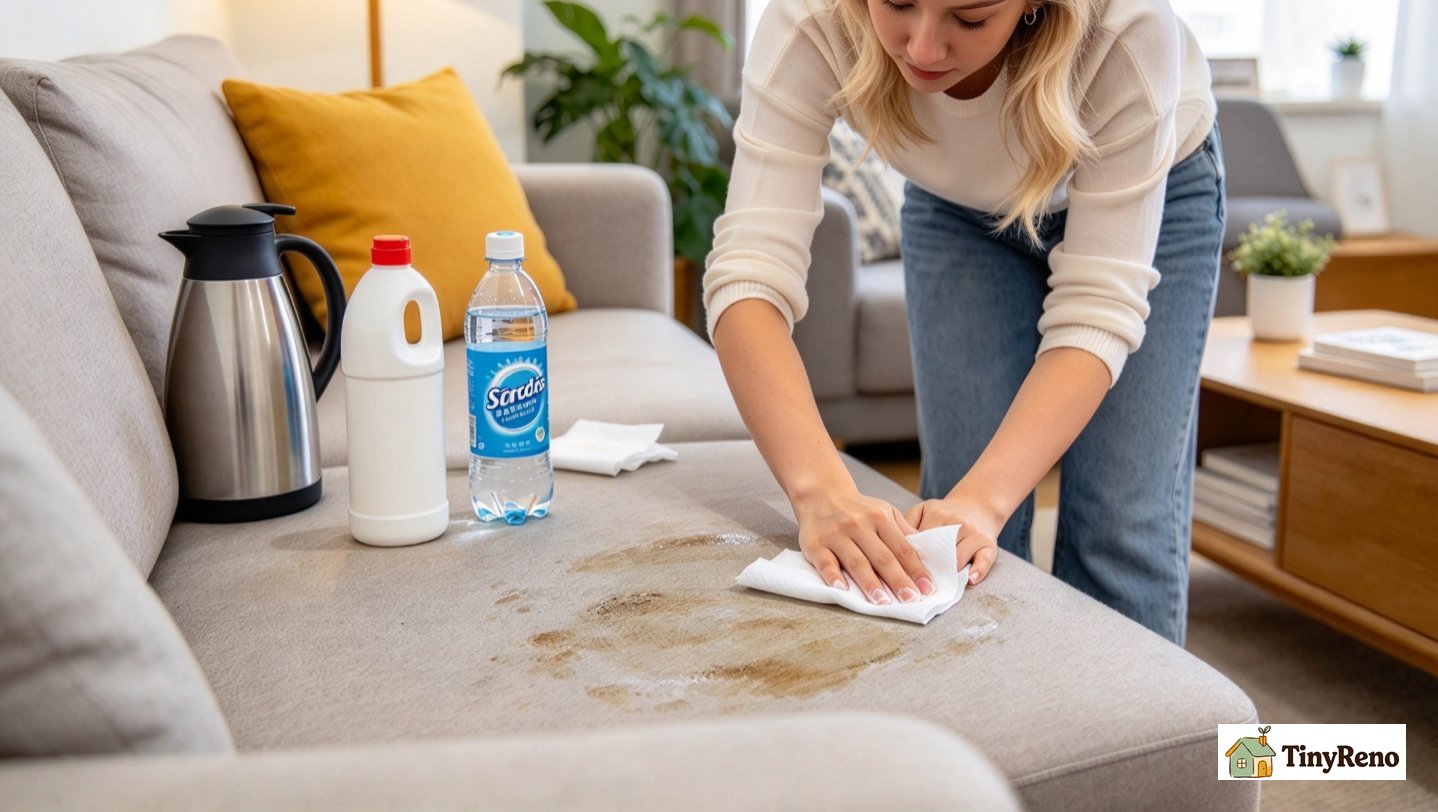
There are five things in almost every renter's kitchen that will fix any of the first three stain categories in the first hour, and that are what you reach for when you need to remove a stain from a sofa without calling a cleaner at midnight, and I keep them in my head the way some people keep a list of emergency phone numbers. The first is plain cold water, which is what you put on a tannin stain within the first minute and which is what you put on a protein stain within the first five minutes. The second is blue dish soap, which is a surfactant that lifts tannin and oil stains out of fabric without setting the dye. The third is baking soda, which is what you pour on an oil stain and let sit for fifteen minutes, and which pulls the oil up out of the fabric the way a sponge pulls water off a counter. The fourth is white vinegar, which is what you mix half-and-half with cold water and put on a tannin stain that the dish soap did not lift, and which is also what you put on a sweat stain that has been there for more than a week. The fifth is a clean white cotton towel, which is what you press into the stain from the outside in, and which is the only tool that should ever touch a stain. No scrub brush. No paper towel. No sponge. The cotton towel lifts, the others push the stain deeper into the fabric and set the bond. These are the five things in your kitchen that make it possible to remove a stain from a sofa without calling a cleaner at midnight. If you want to remove a stain from a sofa without losing your deposit, these are the only five tools you need.
The 3 Moves That Lost My Friends Their Deposit (and the 1 Thing Everyone Reaches For That Does Nothing)
There are three things I have stopped doing when a stain shows up on a sofa, and these are the moves that cost my friends the deposit they would have gotten back. The first is rubbing. Rubbing a stain, especially with anything other than a cotton towel, pushes the stain deeper into the weave and breaks the fibers on the surface, which makes the stain permanent in a way that even a professional cleaner cannot undo. The second is using hot water on a protein stain. The protein in blood, sweat, vomit, milk, or egg bonds to fabric the moment the temperature of the water crosses about 100 degrees, which is the temperature of a hot tap, and the bond is irreversible. Use cold water. Even if it feels wrong. Even if the stain looks like it would come out faster with hot water. Cold. The third is using bleach on a colored sofa. Bleach removes the dye from the fabric at the same time it removes the stain, and on a cream-colored sofa like Sara's, the bleach leaves a white spot that is more visible than the stain would have been. Bleach is for white cotton towels and white cotton sheets and white cotton underwear. It is not for a sofa. There is also one thing that isn't a "move" exactly, but that every renter reaches for and that does nothing: club soda. Club soda is water with carbonation. The carbonation does nothing that plain cold water doesn't already do, and cold water alone isn't enough unless it's paired with a surfactant like dish soap. Skip the club soda. Skip the three moves above and the only thing you will have removed is your deposit. Knowing how to remove a stain from a sofa is mostly about knowing what not to do in the first hour.
The Deposit, and the Email Thread That Settled It
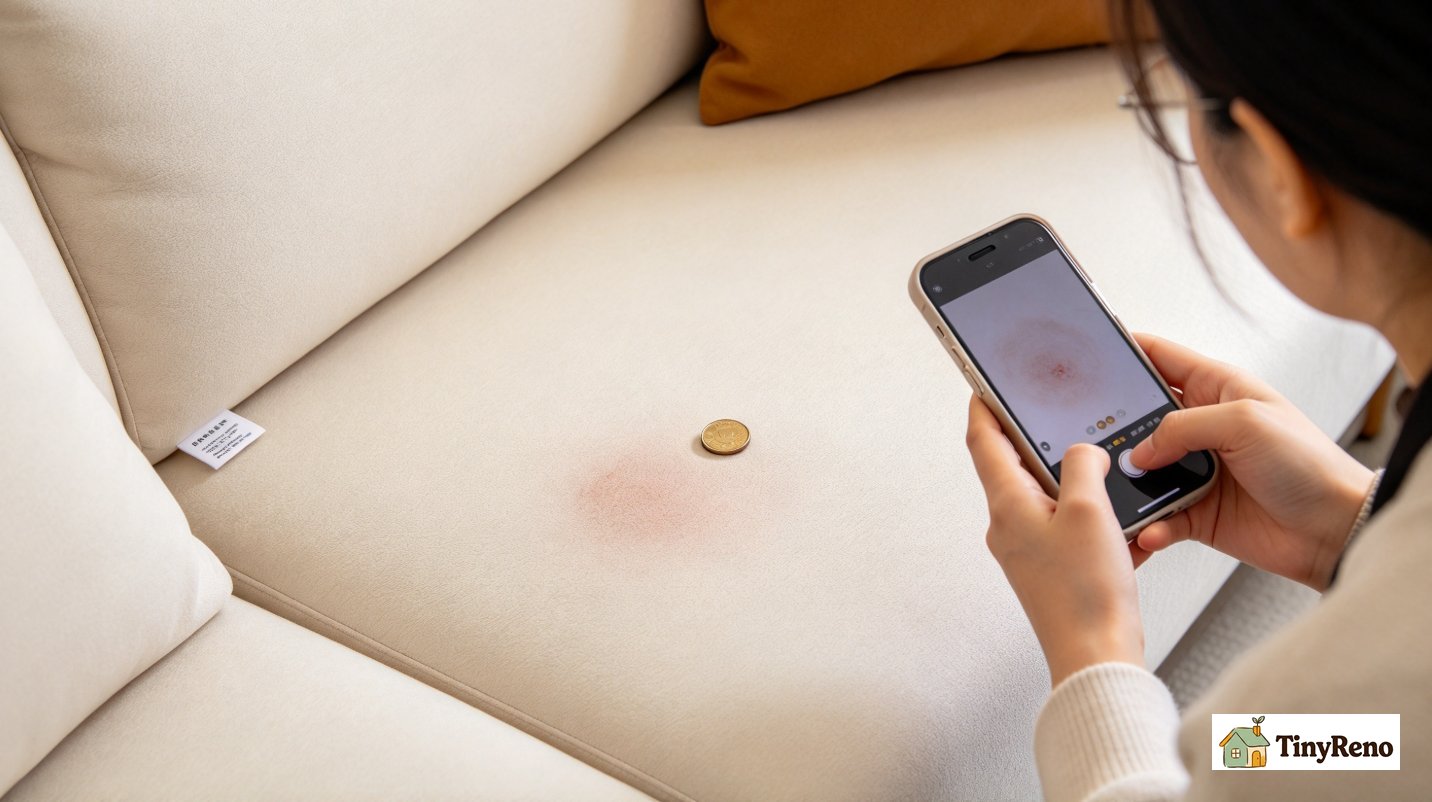
The deposit question is the question that keeps most renters from trying to fix a stain at all, and the answer depends on where the apartment is and what the lease says, but the general rule in New York City is that a landlord cannot deduct from a security deposit for ordinary wear and tear, which a single stain on a sofa cushion is not. The general rule in New York City is that a landlord cannot deduct from a security deposit for ordinary wear and tear. A single small stain that you documented and reported promptly is usually treated as wear and tear, not damage—but the outcome depends on your lease, your landlord, and how well you documented it. The case that matters more, in practice, is the photo Sara took at 9:00 AM the next morning with the cushion pulled up so the tag was visible, and with a quarter placed next to the stain so the landlord could see the scale. She sent the photo to her landlord by email at 9:14 AM with the subject line "Wine spill, 11 PM last night, taken this morning," and the landlord replied at 11:02 AM with "Looks fine. Thanks for the heads up." The photo showed a faint shadow smaller than a quarter, which is why the landlord didn't flag it. The email thread is what settled the question six months later when Sara moved out, because the landlord did not try to deduct and Sara had the documentation to dispute any deduction that came. The landlord, when she came by for the inspection in person on Tuesday, looked at the photo, looked at the cushion, and said, "This looks fine." Sarah did not lose a dollar of her deposit.
If you are standing in front of a stain on a sofa at 9:47 PM on a Saturday night, here is what I would tell you: do not scrub. Put cold water on it within the first minute. Put a bag of frozen peas on top of the wet cloth if you have them. The five things in your kitchen that will fix most stains are cold water, dish soap, baking soda, white vinegar, and a clean white cotton towel. The three things you should never do are rub, use hot water on a protein stain, and use bleach on a colored sofa. Take a photo of the stain with a quarter next to it before you start and another photo after you finish. Send both to your landlord the next morning with the cushion tag visible, by email, so you have the thread in writing. Six months from now, you will still be sitting on that sofa, and you will still have your deposit.


Discussion (0)
Sign in to join the discussion