

Eco friendly apartments don't require living in a LEED-certified building or paying premium rent for a sustainable unit. They require the four changes my partner Jorge and I made starting last March, after a utility bill arrived that was 40 percent higher than the same month the year before. We weren't trying to save the planet. We were trying to keep the thermostat wars from getting worse between us and the next-door neighbors, and the bill was the trigger. The four changes we made took Saturday morning and the better part of Sunday, cost under $200 total, didn't require any permanent modifications to the apartment, and reduced our combined energy use by 28 percent in the first month. None of them made the apartment look "eco" or involved reusable bamboo straws. They were practical changes that any renter can make in any apartment in any building, and they addressed the four things that actually drive renter energy waste: leaks, lighting, ventilation, and appliances. Each change below is matched to the renter persona who benefits most from it, because eco-friendly isn't one approach. It's four approaches for four kinds of renters, and the right approach depends on which one you are.
Why One Eco Apartment Plan Doesn't Fit All Renters
The reason most guides to eco-friendly apartments fail is that they assume one renter profile. The student renter who shares an apartment with three roommates and pays a fixed utility bill has different motivations than the family renter with a baby who needs good air quality. The budget renter who can barely afford rent cares more about bill reduction than carbon footprint. The health-sensitive renter who has asthma or allergies cares about indoor air quality in ways others don't.
The single-plan approach ignores these differences. The result is generic advice that doesn't quite work for anyone, or that works for one renter profile while making life worse for another. The four changes below work for all four profiles, but each profile benefits from one of the four more than the others. Pick the one change that fits your persona, do it this weekend, and you'll see results in the first utility bill.
For the Budget Renter: Seal the Leaks
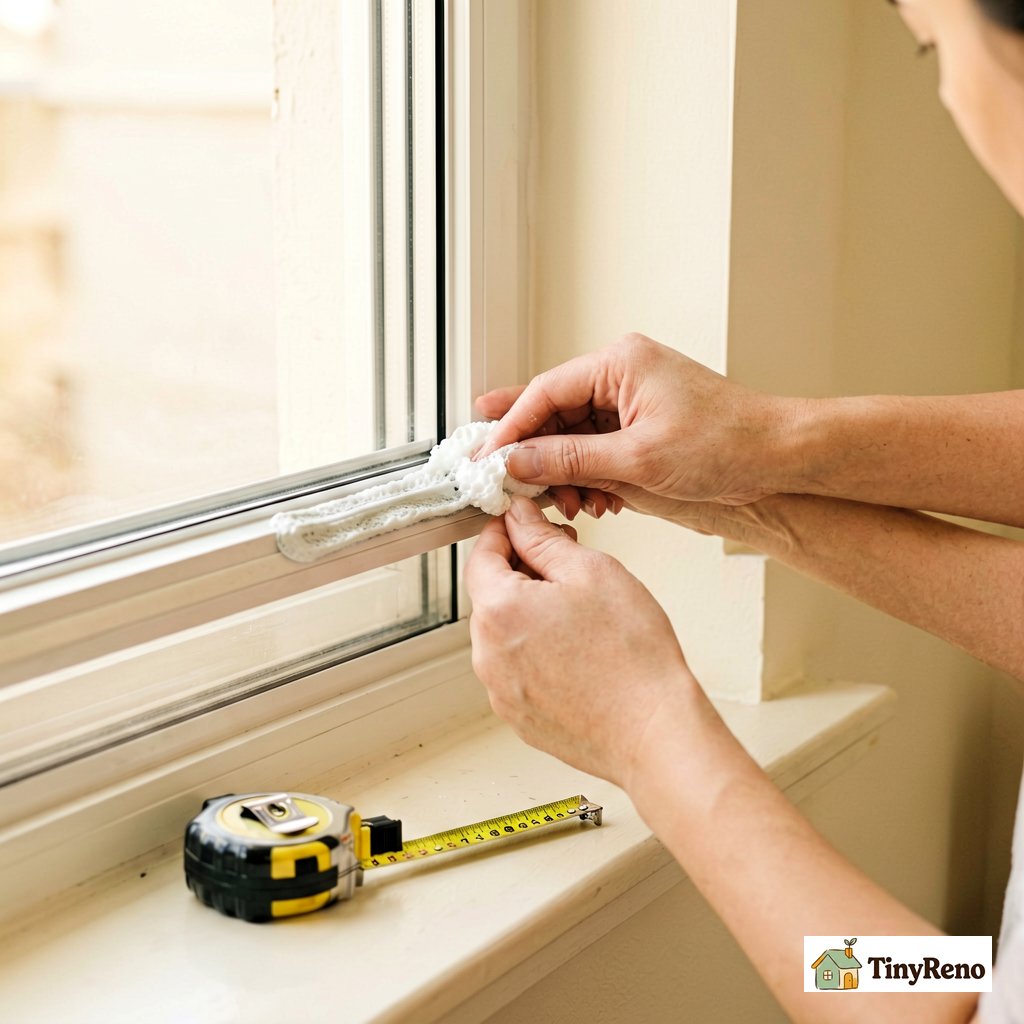
If your primary motivation is reducing what you spend on utilities each month, the highest-impact change is sealing air leaks around windows and doors. This is invisible work that takes a Saturday morning and costs $20 to $40 in supplies, but it reduces heating and cooling costs by 10 to 20 percent in most apartments.
The sources of air leaks in apartments are predictable. The top of window frames where they meet the sash, the bottom of door frames where they meet the floor, the edges of electrical outlets on exterior walls, and the gaps around plumbing penetrations (where pipes enter the apartment through exterior walls). Each of these leaks lets conditioned air escape and outside air enter, which means your heating or cooling system runs longer to maintain the temperature you've set.
The fix for each leak type is different. For window sash leaks, removable weatherstripping (foam or V-seal type, $5 to $15 per window) applied to the top and sides of the sash frame stops the drafts. For door bottom gaps, a door sweep ($8 to $15) attached to the bottom of the door seals the gap between the door and the floor. For outlet gaps on exterior walls, foam gaskets behind the outlet cover ($1 per outlet) seal the small gap around the outlet box. For plumbing penetrations, caulk or expanding foam ($5 per gap) seals around the pipe.
The total cost for a typical one-bedroom apartment with 6 windows, 4 doors, 10 outlets, and 2 plumbing penetrations is $80 to $150 in supplies and 3 to 4 hours of work. The savings on heating and cooling are $20 to $40 per month in most climates, which means the supplies pay for themselves within 3 to 6 months. The work is removable when you move out, so it doesn't violate any lease terms and doesn't risk your deposit.
The budget renter profile is the one who benefits most from this change because the savings are direct, measurable, and persistent. Every month you live in the apartment, the leak sealing continues to save money. The ROI is the highest of the four changes for this persona.
For the Family Renter: Upgrade the Air Filter
If your primary motivation is providing a healthier indoor environment for children, the highest-impact change is upgrading the air filter in your HVAC system (or adding one if your building doesn't have forced air). The EPA has found that indoor air pollutant concentrations can be 2 to 5 times higher than outdoor levels, and the difference matters more for children whose lungs are still developing.
The standard filter in most apartment HVAC systems is a MERV 8 fiberglass filter, which captures large particles but lets smaller particles through. Fine particulates (PM2.5), pollen, pet dander, and dust mite allergens all pass through MERV 8 filters and circulate through the apartment. For a family with a baby or young child, this means the air the child breathes is loaded with allergens that can trigger asthma, eczema, and respiratory infections.
Upgrading to a MERV 13 filter (compatible with most residential HVAC systems, $15 to $30 per filter) captures over 90 percent of fine particulates. A MERV 11 filter captures 60 to 80 percent. The filter needs replacement every 60 to 90 days, which is more frequent than the standard 6-month MERV 8 replacement. The cost is $60 to $120 per year in filter replacements, depending on how often you run the HVAC.
If your apartment doesn't have forced air (radiators, baseboard heat, window AC units), the air filtration approach is different. Standalone HEPA air purifiers ($100 to $300 per unit) can be placed in the rooms where children spend the most time. One purifier per major room is the right answer for serious air quality concerns. The filters need replacement annually and cost $30 to $50 per purifier per year.
The family renter profile benefits most from this change because children's lungs and immune systems are more vulnerable to indoor air pollution than adults. The investment pays off in fewer respiratory infections, fewer asthma flare-ups, and better sleep for children with allergies. The change is also removable when you move out.
The non-HVAC approach is simpler in some ways. Open the windows for 10 to 15 minutes each morning, even in winter, to flush accumulated indoor air. It does increase heating costs slightly, but the air quality benefit is worth it—especially if someone in the apartment has allergies or asthma.
For the Student Renter: Cut the Single-Use Waste
If your primary motivation is reducing waste and living more sustainably without spending much money, the highest-impact change is a kitchen and bathroom audit focused on single-use products. The savings here are in purchases you no longer make, not in utility bills, which fits the budget reality of most student renters.
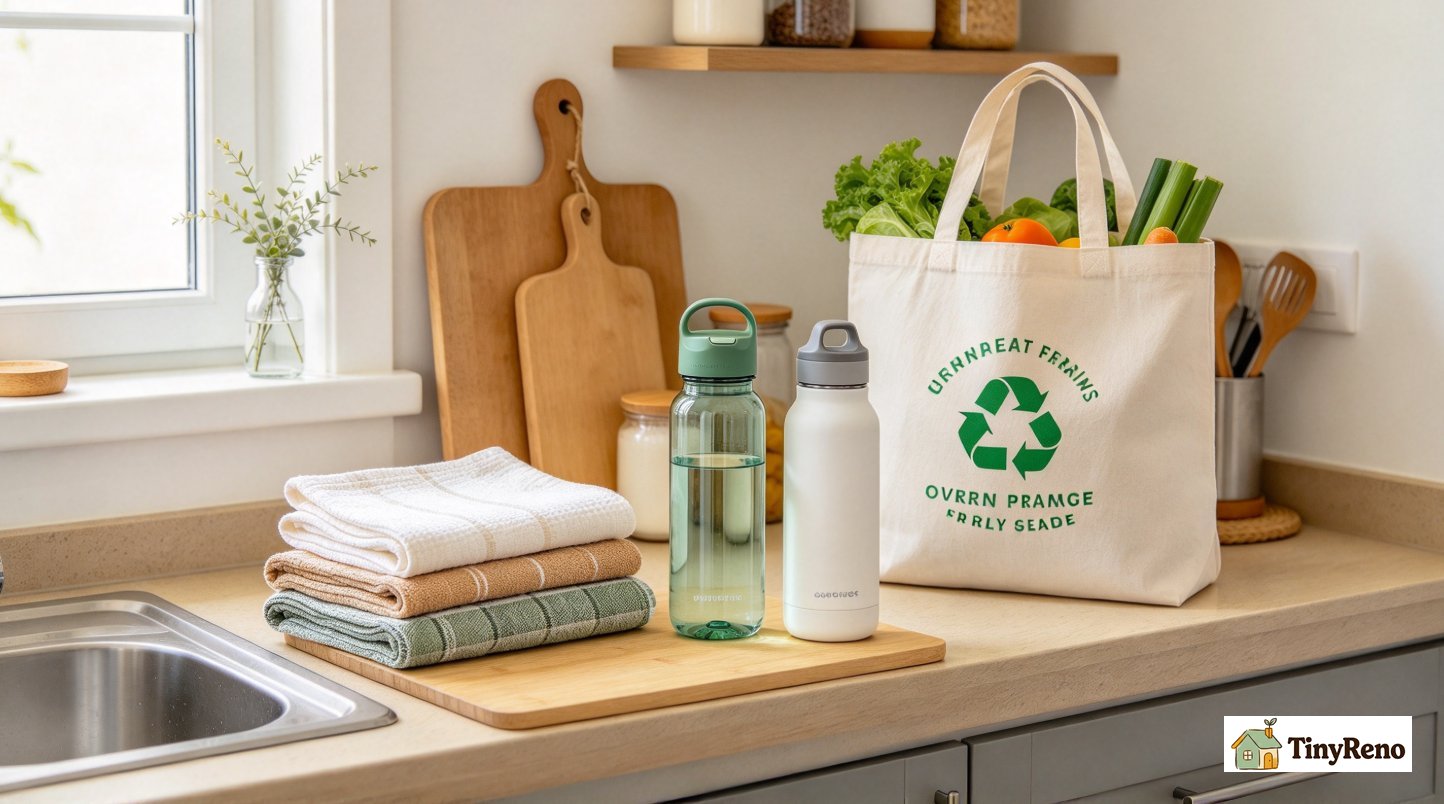
The kitchen audit starts with the four biggest single-use culprits: plastic water bottles, paper towels, plastic grocery bags, and disposable coffee cups. The replacements are reusable water bottles ($15 to $30 for a decent one), a set of cloth towels ($15 for a 12-pack), reusable grocery bags ($1 to $3 each), and a reusable coffee cup ($15 to $25). The total upfront cost is $50 to $80. The annual savings on the items you no longer buy is $200 to $500 for most people.
The bathroom audit is similar but smaller scale. Replace disposable razors with a safety razor ($30 upfront, $5 per year in blades), disposable toothbrushes with an electric or a recyclable replacement ($25 one-off or $5 per year), and single-use face wipes with washable cotton rounds ($15 for a set of 16, lasting 2+ years). The total upfront cost is $70 to $100. The annual savings is $50 to $150.
The waste reduction here is significant. A typical student renter generates 4 to 6 pounds of single-use kitchen and bathroom waste per week. The reusable alternatives cut this by 70 to 90 percent within the first month. The cost savings are larger than they look because the cumulative effect of not buying $5 of paper towels every two weeks adds up to $130 per year.
The student renter profile benefits most from this change because waste reduction aligns with sustainability values that many students hold without requiring a major investment. The changes are also small enough to fit in a shared apartment without taking over shared space, and they're reversible when the lease ends.
For the Health-Sensitive Renter: Reduce the Triggers
If you have allergies, asthma, multiple chemical sensitivity, or another condition that's aggravated by indoor air quality, the highest-impact change is identifying and reducing the specific pollutants that trigger your symptoms. This is more targeted than the family renter's general air quality approach and addresses specific sources rather than general air.
The common indoor pollutant sources in apartments are cleaning products, air fresheners, new furniture (which off-gasses formaldehyde and other VOCs for months), painted surfaces (especially freshly painted), and any combustion source (gas stove without proper ventilation, candles, incense). Each of these can be reduced or eliminated without permanent modifications.
For cleaning products, the simple swap is to use unscented, simple-ingredient products or homemade vinegar-and-water solutions for most cleaning tasks. The cost is the same or lower than conventional cleaners. The reduction in VOCs and fragrances is significant, especially for people with chemical sensitivities.
For air fresheners, the swap is to stop using them entirely. Open windows for ventilation instead. Plug-in air fresheners and sprays are major sources of indoor VOCs and have no ventilation benefit even if they make the apartment smell pleasant.
For new furniture off-gassing, the swap is to buy used or vintage furniture, which has already off-gassed over years of use. Used furniture is also cheaper, which aligns with most renter goals. For painted surfaces, the concern is mostly cosmetic; if you must paint, choose low-VOC paint ($5 to $10 more per gallon) and ventilate for 72 hours after application.
For gas stoves, the fix is using the exhaust fan every time you cook and ensuring the fan actually vents outside (some apartment fans vent into the wall cavity, which is worse than not venting at all). Electric kettles, instant pots, and induction burners eliminate gas combustion entirely and are renter-friendly because they don't require any stove modification.
The health-sensitive renter profile benefits most from this change because reducing specific triggers reduces specific symptoms. The change is harder to quantify in dollars but easier to quantify in days without asthma attacks, headaches, or allergic reactions.
What to Skip (the Changes That Don't Matter)
Some changes marketed as eco-friendly don't matter enough to be worth your time or money. Three of them are below.
Skip 1: Bamboo or reusable straws. Plastic straws are a tiny fraction of ocean plastic pollution by weight—estimates vary, but most are well under 1 percent. The 30 minutes you'd spend researching and buying bamboo straws saves a fraction of a fraction of plastic. Spend the 30 minutes on a different change.
Skip 2: Composting in a small apartment. Traditional backyard composting needs outdoor space, but many cities have food scrap drop-off programs or community compost sites. Check what's available in your area before ruling it out. Countertop composters are also an option if you have the counter space. The waste reduction from composting is real for the waste that goes through it, but the operational cost in time and the smell risk in a small space make it a poor trade.
Skip 3: Reusable bamboo utensils or travel kits. Reusable utensils need to be used many times before their manufacturing impact is offset. If you already own them, use them. But buying new reusable items you won't use regularly doesn't help. The marketing for them is stronger than the actual environmental benefit. Use what you have; don't buy new reusable items to replace things you already use efficiently.
The changes that actually matter are the four above. The changes that don't matter are the ones that feel virtuous but don't move numbers on your utility bill, your purchase receipts, or your health.
Which Persona Are You (and What to Do This Weekend)
If you're not sure which persona fits, answer two questions. Question 1: What's your primary motivation for making eco-friendly changes? Reducing bills, improving air quality, reducing waste, or reducing specific health triggers? Question 2: How much time and money can you invest this weekend? Under $50 and 2 hours, or up to $200 and a full day?
If bills are primary and you have $40 and a Saturday morning, do the air leak sealing in Persona A. If your family or health is primary and you have $200 and a day, start with the air filtration upgrades in Persona B, then add the pollutant reduction steps in Persona D over the next few weekends. The two work together. If waste reduction is primary and you have $80 and a Saturday, do the kitchen and bathroom audit in Persona C.
You can do more than one change over multiple weekends, but the first change should be the one that addresses your primary motivation. The motivation drives the persistence; people who do changes that align with what they actually care about stick with them.
For Jorge and me, we did Persona A first because our primary motivation was the bill. The sealing took one Saturday morning and cost $90 total. The bill dropped by $35 the first month. Then we did Persona D over the next few weekends because my partner's allergies were acting up in the apartment. The combined changes took us from "the apartment is uncomfortable and the bill is too high" to "the apartment is comfortable and the bill is reasonable." That's what eco friendly apartments actually mean when you're a renter: a small set of changes that fit your situation, fit your weekend, and produce results you can measure in the first month. The next renter who reads this and treats it as a list of four unrelated projects will probably do one and stop. The renter who picks the change that matches their primary motivation will see results in the first utility bill or the first month of easier breathing—and that's what makes the next change easier to commit to.


Discussion (0)
Sign in to join the discussion