

Can mold grow on plastic is the question my upstairs neighbor Dana asked me in March, holding a translucent plastic food container she'd pulled out of the back of her cabinet. The container was six years old, stained brown in places, and dotted with a thin film of greenish-black something on the inside rim. She wanted to know if she should throw it out or wash it. I told her to throw it out, but the real answer turned out to be more interesting than that. Plastic is not one material. There are at least four common plastics in any apartment, and they react to mold in two completely different ways. Some plastics actually feed mold growth by holding moisture against the surface. Other plastics starve mold by being too smooth, too hydrophobic, or too chemically inert for spores to anchor to. The split is not obvious from looking at the container, and the cleanup that works on one plastic is wrong for the other. The list below covers the four most common plastics in apartments, ranks them by how readily mold colonizes each, and gives the renter-safe cleanup that works on all four without bleach.
The "Yes" Answer That Every Cleaning Blog Repeats
The internet is unified on one point: yes, mold grows on plastic. The standard advice is to scrub it with bleach, vinegar, or hydrogen peroxide and replace the item if the stain doesn't come out. CDC and FEMA guidelines classify plastic as a non-porous material that can usually be cleaned and reused, not discarded. The “throw it away” advice applies to soft, porous materials like carpet, drywall, and fabric—not to hard plastics.
The mechanism behind the yes is straightforward. Mold spores are everywhere in apartment air, especially in humid climates or in bathrooms and kitchens. When spores land on a surface that holds moisture and has some texture to anchor to, they germinate and start a colony. Plastic isn't a food source for mold the way wood or drywall is, but plastic can host a colony if the surface is rough, scratched, or coated with organic residue (food oils, soap scum, body soil). The colony eats the residue, not the plastic itself. That's why a "yes mold grows on plastic" answer is technically correct but practically incomplete.
The implication of this incomplete answer is that bleach cleanup is often unnecessary. If the mold is feeding on residue, not on the plastic, then removing the residue removes the food source. If the plastic itself is structurally intact and the mold has not penetrated, the item can usually be salvaged. Bleach is overkill and, in a rental, bleach fumes can set off the smoke alarm and damage adjacent surfaces. There are better options.
The contrarian position that holds up in practice is this: mold on plastic is usually a surface phenomenon that responds to mechanical removal, not a deep infection that requires chemical disinfection. The four plastics below sort themselves into two groups that prove this point.
The "No" Answer That Actually Holds Up for Half the Plastics
The contrarian answer comes from food safety researchers and materials scientists who work with plastic surfaces daily. Their position: mold does not grow on certain plastics at all, regardless of how long they're left in a wet environment. The mechanism is surface chemistry. Plastics like polyethylene and polypropylene are so hydrophobic (water-repellent) and so chemically inert that mold spores cannot anchor to them, and any moisture that lands on them beads up and rolls off rather than pooling.
Materials science research on polymer surfaces consistently shows that mold spores adhere more readily to some plastics than others. The key factors are surface energy and surface roughness. HDPE and PP have very low surface energy and smooth surfaces, which makes it difficult for spores to anchor and for water to spread into a film. PET and LDPE have higher surface energy and rougher surfaces at the microscopic level, which gives spores footholds and allows water to spread, creating the moisture conditions mold needs.
The reason is a combination of surface energy and surface roughness. HDPE and PP have low surface energy and smooth surfaces, so water beads up and spores struggle to anchor. PET and LDPE have higher surface energy and rougher surfaces, so water spreads into a film and spores find footholds. Organic residue—food oils, soap scum—can override these differences by providing a food source and a sticky surface for spores. This isn't about "plastic" as a category. It's about specific polymer chemistry within the plastic category. Treating "plastic" as one thing is the mistake that leads to over-cleaning and unnecessary disposal.
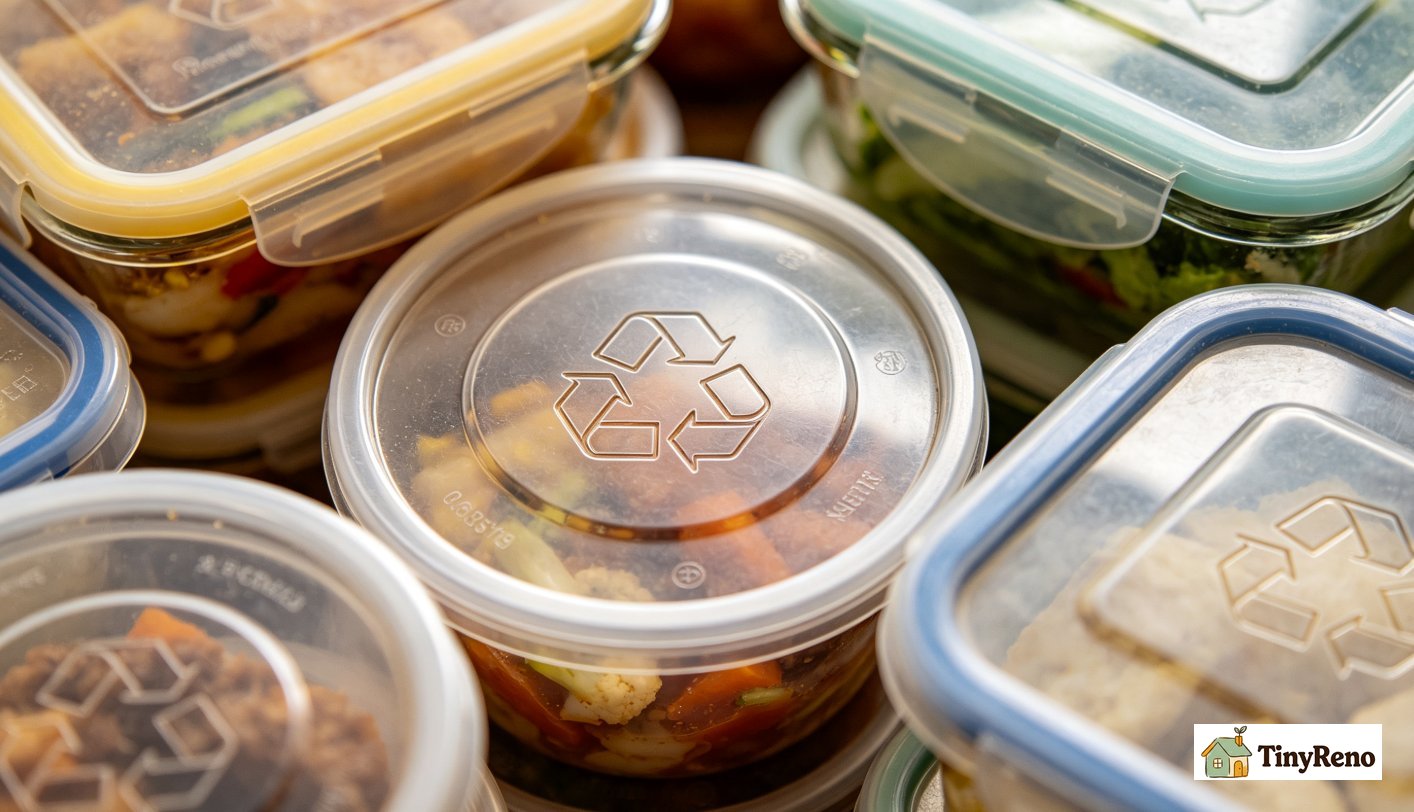
For Dana's six-year-old container, the answer was the recycling code stamped on the bottom. If it was 1, 3, or 4 (PET, PVC, LDPE), throw it out. If it was 2 or 5 (HDPE, PP), it was probably salvageable with a hot-soap scrub. The visual difference is hard to tell, but the recycling code is stamped on every plastic container for exactly this kind of decision.
Two Plastics That Feed Mold (PET and LDPE)
If you see mold on a plastic item, the first check is the recycling code stamped on the bottom. Codes 1 (PET) and 4 (LDPE) are the two common plastics that host mold colonies under the right conditions.
PET is the plastic used for soda bottles, water bottles, most clear food containers, and many disposable cups. It has moderate surface energy, meaning water can spread into a thin film rather than beading up. Mold spores anchor easily to this film and germinate within 24 to 48 hours of consistent moisture. PET has a higher surface energy than HDPE or PP, which allows water to spread into a film rather than beading up. It also has more microscopic surface roughness, which gives spores physical footholds to anchor to.
In practice, PET items that have been wet for more than a day or two are likely to show visible mold. The fix is replacement, not cleaning, because once mold has anchored in the micro-roughness, scrubbing the surface won't reach the spores. PET containers with visible mold should go in the trash, not the recycling.
LDPE is the plastic used for plastic wrap, squeeze bottles, and many reusable food bags. It has higher surface energy than HDPE and PP, and it's softer than PET, meaning it scratches more easily and creates more surface area for spore anchoring. LDPE is also commonly used in refrigerator drawers and crisper bins, where humidity is high and condensation is constant.
LDPE items with mold can sometimes be cleaned if the mold is fresh (less than a week of moisture), but for older colonization, replacement is the safer call.
Two Plastics That Starve Mold (HDPE and PP)
HDPE and PP are the two common plastics that resist mold colonization. Both are used in food storage, plumbing, and high-moisture applications specifically because they don't host microbial growth.
HDPE is the plastic used for milk jugs, detergent bottles, cutting boards, and many bathroom items. It has very low surface energy and a smooth, non-porous surface. Water beads up and rolls off. Mold spores have difficulty anchoring, and colonization is much less likely under normal conditions—though food residue or deep scratches can still provide a foothold. A 2022 materials science review confirmed that HDPE surfaces in hospital and food processing settings resist mold colonization for months under conditions that would colonize PET or LDPE in days.
If you find a mold spot on an HDPE item (recycling code 2), it's almost certainly surface residue feeding the mold, not the HDPE itself. A thorough scrub with hot soapy water removes the residue, and the mold doesn't return unless the residue builds up again. HDPE items can often be salvaged after a mold scare.
PP is the plastic used for yogurt containers, bottle caps, and many reusable food storage containers. It's chemically similar to HDPE in surface energy terms, with the same mold-resistant properties. PP items with visible mold are also usually salvageable with a hot scrub, though PP is more prone to staining than HDPE if the colony has been there for weeks. Some staining may persist even after the mold is gone, but the item remains functional.
The practical implication: before throwing out any moldy plastic item, check the recycling code. If it's 2 or 5, try a hot scrub first. If it's 1, 3, or 4, the safer call is replacement.
How to Tell What Kind of Plastic You Have
The recycling code is stamped on the bottom of most plastic items, inside a small triangle of arrows. The number is the key. Codes 1 through 7 cover virtually all consumer plastics. For mold purposes, the relevant split is 1 and 4 (feed mold) versus 2 and 5 (starve mold). Code 3 (PVC) and code 7 (other/mixed) are less common in apartments and behave variably; PVC is somewhat mold-resistant, code 7 varies by specific plastic.
If the recycling code is missing or unreadable, the visual cues are weaker but still informative. PET (code 1) is usually clear and rigid, like a soda bottle. LDPE (code 4) is usually flexible and slightly cloudy, like plastic wrap. HDPE (code 2) is usually opaque or semi-opaque and slightly waxy to the touch, like a milk jug. PP (code 5) is usually semi-rigid and slightly glossy, like a yogurt container. These visual distinctions aren't perfect, but they cover most cases.
For containers without codes (older items, imported items, certain kitchenware), the rule of thumb is: if the mold is firmly anchored and doesn't come off with a hot-soap scrub within a minute, the plastic is probably PET or LDPE and should be replaced. If the mold wipes off cleanly with hot soapy water, the plastic is probably HDPE or PP and can be salvaged.
A Bleach-Free Cleanup That Works on Most Plastics
The cleanup below is bleach-free, vinegar-free, and safe for use in apartments without setting off smoke alarms or damaging adjacent surfaces. It works for any plastic item where you want to attempt salvage, and it gives you a clear stop point for deciding when to replace instead.
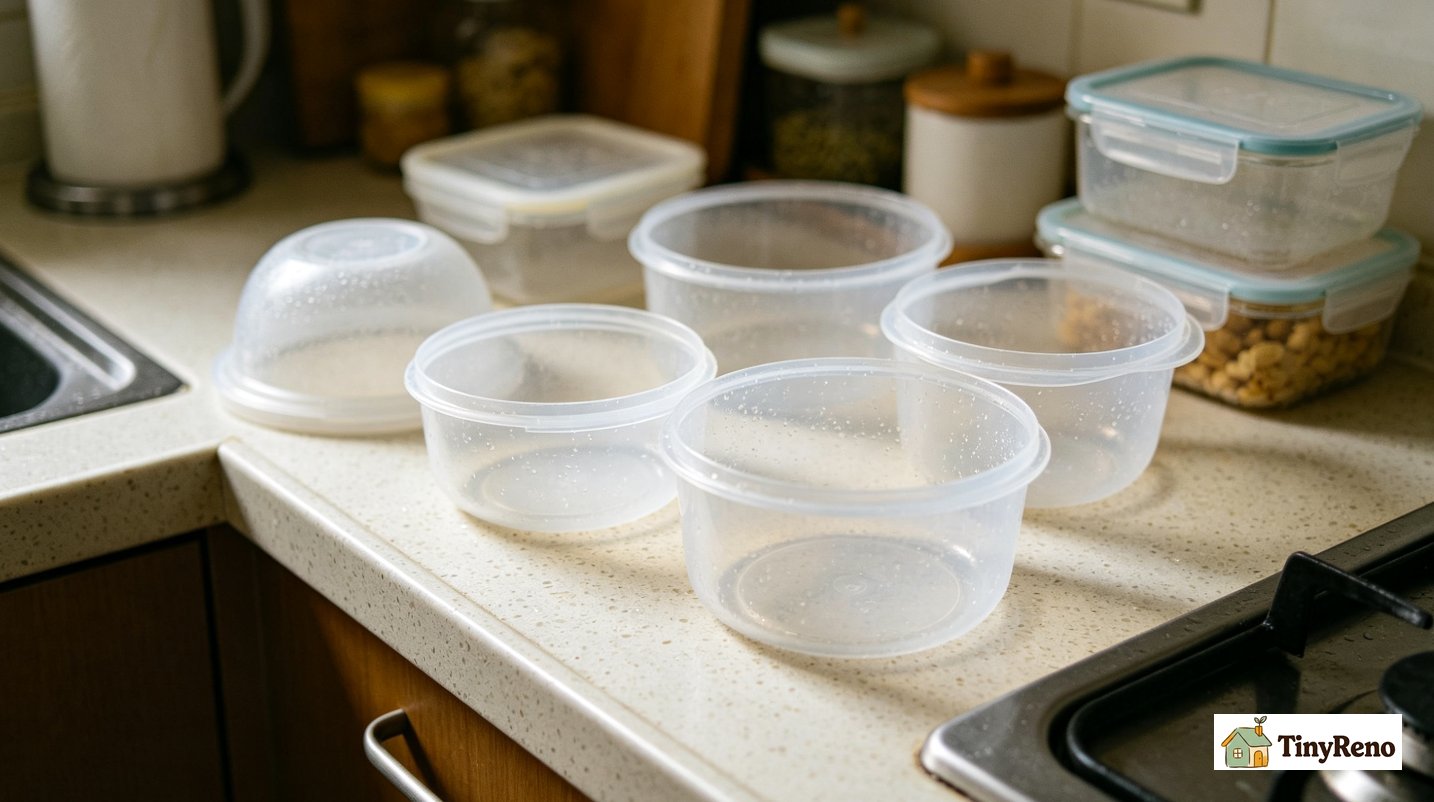
Step 1: Hot soapy scrub. Use the hottest water your tap provides, mixed with dish soap. Scrub the mold spot firmly with a non-abrasive sponge for at least 60 seconds. The mechanical action dislodges the colony, and the soap breaks the surface tension that holds the spores in place. Rinse thoroughly with hot water and inspect. If the mold is gone, proceed to step 2. If the mold remains firmly anchored, the plastic is probably PET or LDPE with deep colonization; replace the item.
Step 2: Baking soda paste. Mix baking soda with a small amount of water to form a thick paste. Apply to the mold area and let sit for 10 minutes. The baking soda is mildly alkaline (pH 9), which disrupts mold metabolism without the fumes or surface damage of bleach. Scrub the paste with a sponge, then rinse. Inspect again. If the mold is gone, proceed to step 3. If not, replace.
Step 3: Dry thoroughly and store dry. Mold needs moisture to colonize. After cleaning, dry the item completely with a clean towel, then let it air-dry for at least an hour before storing. Store the item in a dry location, not in a closed container where moisture can build up. For items that go in the refrigerator, dry them before returning. This step is what prevents the mold from coming back.
The whole process takes 15 to 20 minutes per item and costs nothing beyond dish soap and baking soda, both of which you probably already have.
What When to You Should Just Throw the Item Out
If step 1 or step 2 fails to remove the mold completely, the item is probably PET or LDPE with deep colonization. The mechanical scrubbing won't reach spores anchored in the surface roughness, and the mold will return within days of the next moisture exposure. Replacing the item is the safe call.
For containers that have held high-risk contents (raw meat juices, moldy food, compost residue), replacement is the right move regardless of plastic type, because the residue has likely penetrated any surface the mold could use as a foothold.
For containers older than 5 years with visible wear (scratches, cloudiness, staining), replacement is also usually the right move. Older plastic is more scratched, and scratched plastic is more hospitable to mold colonization.
Mold can grow on plastic, but how easily depends on the plastic type. PET and LDPE are more hospitable to mold, especially when scratched or coated with food residue. HDPE and PP resist mold colonization much better, and items made from them can often be salvaged with a hot scrub and thorough drying. The recycling code on the bottom of the item is the fastest way to know which kind you have, and the visual cues plus the cleanup test give you a fallback when the code isn't readable. For renters especially, the bleach-free cleanup above is the right approach, because bleach in a small apartment sets off smoke alarms, damages grout and adjacent surfaces, and isn't necessary for the surface-level colonization that mold on plastic actually is. The next time someone asks can mold grow on plastic, the right first answer is "it depends on the recycling code," not "yes, throw it out." That single shift in framing saves items that don't need replacing and gets rid of items that do.


Discussion (0)
Sign in to join the discussion