

Can steam set off a fire alarm? That's a question I never thought to ask until 6:30 AM last Tuesday, when my bathroom-shower steam drifted 12 feet down the hall and set off the smoke alarm in my bedroom. I was in the kitchen making coffee at the time, the bathroom door was closed, the exhaust fan was running, and yet the alarm went off anyway. The shower had been going for about 4 minutes. The steam that reached the bedroom was so diluted I couldn't feel it, but the alarm did. That morning taught me that "fire alarm" is not one thing. It's three things, and each one reacts to steam differently. The taxonomy below explains the three types, ranks them by how often they trip on steam, and gives the three fixes that stop the false alarms without disabling the alarm or getting the landlord involved.
Why "Fire Alarm" Is Three Things Disguised as One
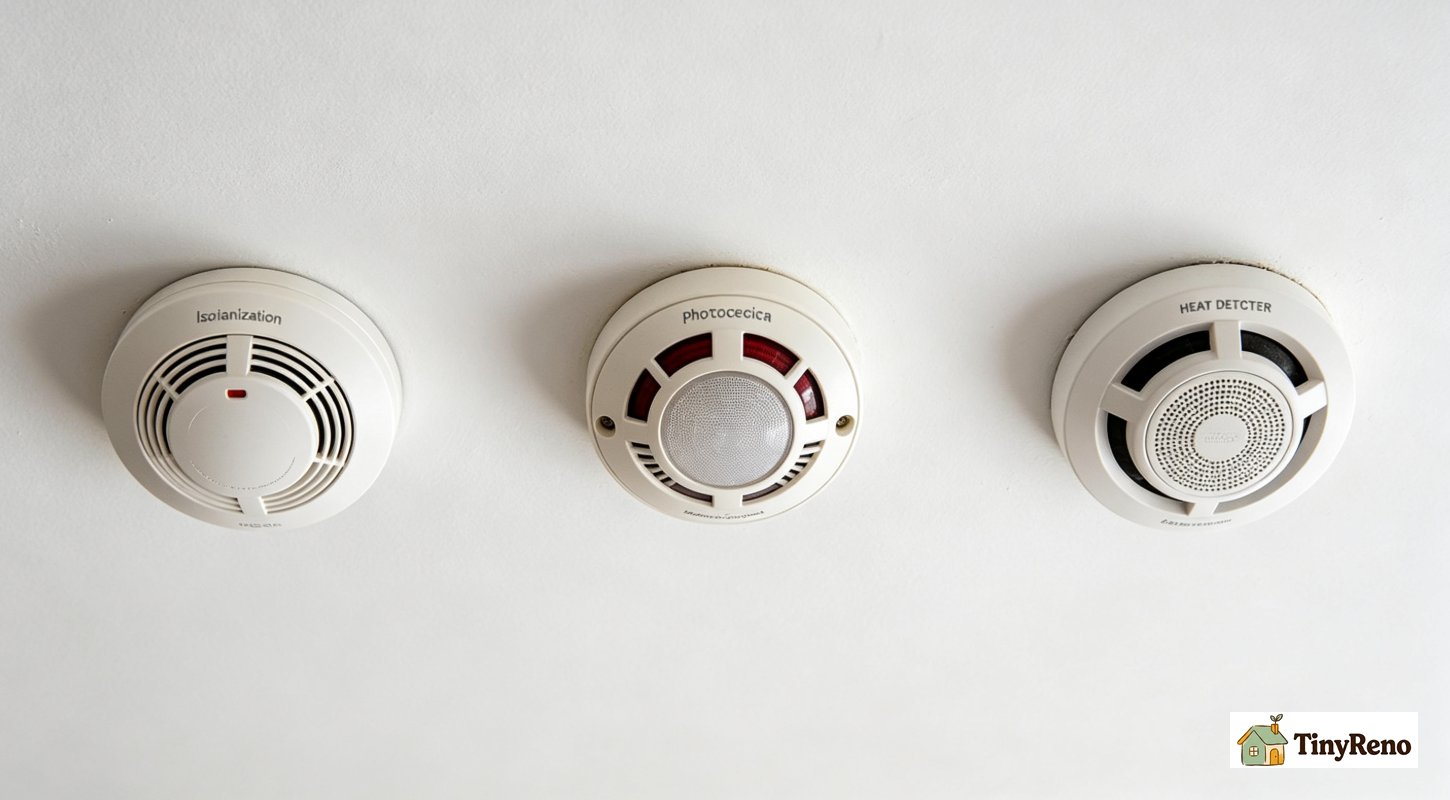
The phrase fire alarm covers three distinct sensor types, each detecting a different physical signal. Ionization alarms detect changes in an electrical current caused by small combustion particles. Photoelectric alarms detect light scattering from larger smoke particles. Heat alarms detect temperature rise, not particles at all. Most apartments have one or two of these in different rooms, often without telling you which.
The confusion comes from the fact that all three make the same noise. To a renter, a screaming ceiling unit is a fire alarm, period. But for the question of whether steam will set one off, the sensor type is the entire answer. Steam is water particles small enough to scatter light and disrupt an ionization field. It is not a temperature change, unless the steam is very dense and very hot. So the alarm type determines the answer to can steam set off a fire alarm in your specific unit.
The three types below are ranked by how often they trip on steam. Once you know which type you have, the fix is straightforward.
Type 1: Ionization Alarms (the Most Steam-Sensitive)
Ionization alarms contain a small radioactive source (americium-241) that ionizes the air between two charged plates, creating a steady micro-current. When combustion particles enter the chamber, they attach to the ions and disrupt the current, triggering the alarm. Steam particles are small enough to behave like combustion particles, so ionization alarms trip readily on dense steam.
In practice, an ionization alarm will trip on steam within 6 to 8 feet of a shower with the bathroom door open. My bedroom alarm sat 12 feet from the bathroom and still went off, because the steam concentration after 4 minutes of showering, even with the fan running, was enough to reach it. Ionization alarms are also the most common in older apartment buildings because they were the cheaper standard for decades.
The identifying features of an ionization alarm: round shape, smaller profile, no visible chamber or sensor window on the side, often labeled with "ionization" or "i" on the back. If your apartment's alarm looks like a plain white disc with no visible sensor dome, it's likely ionization.
If you have an ionization alarm and steam trips it, the fix is rarely moving the alarm (that's the landlord's call). The fix is reducing the steam that reaches it: close the bathroom door fully, run the exhaust fan for 20 minutes after showering, and consider opening a window in the bedroom before showering to vent the steam before it reaches the sensor. These don't eliminate ionization false alarms, but they reduce them significantly.
Type 2: Photoelectric Alarms (Moderately Steam-Sensitive)
Photoelectric alarms use a light beam and a photosensor positioned at an angle inside a small chamber. When smoke particles enter the chamber, they scatter the beam toward the sensor, triggering the alarm. Steam particles also scatter light, so photoelectric alarms can trip on steam, but they need a higher concentration than ionization alarms do.
In practice, a photoelectric alarm will trip on steam within 4 to 6 feet of a shower with the bathroom door open, but usually not at 12 feet unless the steam is very dense (a long shower, multiple people, no fan). NFPA research has also found that photoelectric detectors are more prone to steam nuisance alarms in cold ambient temperatures, because humidity condenses into water droplets that scatter light more effectively. Photoelectric alarms are more common in newer buildings and in retrofitted units, because they have a lower false-alarm rate for cooking and showering than ionization alarms.
The identifying features: usually larger than ionization units, with a visible chamber or sensor dome visible from the side (often a perforated metal cover over a chamber), and often labeled "photoelectric" or "P" on the back. The visible sensor dome is the easiest way to tell.
If your photoelectric alarm trips on steam, the same fixes as ionization apply: close the bathroom door, run the fan longer, vent the room. Photoelectric alarms also benefit from being slightly less sensitive to cooking smoke, which is a tradeoff renters often prefer.
Type 3: Heat Alarms (the One That Doesn't Trip on Steam)
Heat alarms contain either a fixed-temperature sensor (typically triggers at 135°F) or a rate-of-rise sensor (triggers when temperature climbs more than 12 to 15°F per minute). Some models use both. They do not detect particles at all. Steam is invisible to them unless it carries enough heat to trigger the temperature threshold.
In practice, a heat alarm will not trip on shower steam under any normal conditions. To trigger a heat alarm from steam alone, the steam would need to be hot enough and concentrated enough to raise the room temperature by 15°F in under a minute, which doesn't happen from a residential shower even at maximum heat. Heat alarms are designed for kitchens, garages, and other spaces where smoke alarms false-trip too easily.
The identifying features: usually labeled "heat alarm" or "135°F" on the front, often with a different shape (sometimes square or rectangular), and almost always with a different test button (sometimes labeled differently). They are rare in bedrooms and hallways because they don't detect actual smoke, which is why most apartments don't have them in living spaces.
If you have heat alarms in your unit, the answer for those particular units is a clear no. But heat alarms are almost never the only alarm type in a unit. Most apartments have at least one smoke alarm and one heat alarm in different rooms. The smoke alarms will still trip on steam; the heat alarms won't.
The 30-Second Test to Identify Your Alarm Type
If the labels and shape don't tell you which type you have, run this test the next time the alarm is down for a battery change or cleaning. Take a flashlight and look at the chamber.
If you see a smooth white interior with no visible sensor dome or chamber window, it's likely ionization. If you see a perforated metal cover or a visible chamber dome (often with a small dark rectangle inside), it's likely photoelectric. If the unit is labeled "heat" or has a different shape than the others in your apartment, it's a heat alarm.
The other test, less reliable but easier: trigger a small amount of steam at a distance (a kettle on the stove, with the alarm temporarily removed). If the alarm trips within 30 seconds at 6 feet, it's ionization. If it takes longer or only trips at close range, it's photoelectric. If it doesn't trip at all, it's a heat alarm or your steam wasn't dense enough.
This test is also useful for confirming your fix worked. After installing the steam-reduction changes below, run the same test and see if the trip time has changed.
The 3 Fixes That Stop Steam False Alarms
Once you've identified your alarm type, the fixes are mostly environmental. The goal is to reduce steam concentration before it reaches the sensor, not to move or disable the alarm.
Fix 1: Bathroom ventilation discipline. Close the bathroom door fully before showering. Run the exhaust fan during the shower and for 20 minutes after. If the bathroom has no exhaust fan, open the window. If neither is available, the shower should be shorter and cooler. This fix alone eliminates most ionization false alarms and many photoelectric false alarms, though the exact percentage depends on the bathroom layout and ventilation.
Fix 2: Apartment-level airflow. Open a window in the room with the alarm before showering. The cross-ventilation dilutes the steam before it reaches the sensor. In winter, the window only needs to be cracked an inch for this to work. In summer, open windows on both ends of the apartment to create airflow. This fix reduces steam concentration significantly, though the exact reduction depends on airflow and apartment layout.
Fix 3: Bedroom door and hallway closure. If the alarm is in a bedroom or hallway adjacent to the bathroom, close the door to that room during the shower. Steam that doesn't enter the room can't trigger the alarm. This fix is the simplest and most reliable, but it does require thinking ahead before showering.
If these three fixes don't eliminate the false alarms, the next step is talking to the landlord. Most leases allow landlords to swap ionization alarms for photoelectric alarms in problem locations, and many building codes now require photoelectric units in residential settings. The swap is the landlord's call, but it solves the problem permanently.
When Steam Plus Something Else Is the Real Issue
If your alarm trips on steam but the fixes above don't fully eliminate it, there may be a second cause layered on top. Dust inside the chamber makes any alarm more sensitive, so a dusty ionization alarm will trip on steam that a clean one would have ignored. Insects inside the chamber have the same effect. An aging sensor past its 10-year certified life will false-trip on conditions that a newer unit would handle fine.
If you've applied the three fixes above and the alarm still trips randomly on steam, the cause is probably one of these secondary issues, not steam alone. The combined-cause article on smoke alarm random triggers covers these layers in more detail.
The other combined-cause pattern is heat plus humidity. If your bathroom exhaust fan vents into the attic instead of outside, it can pump steamy hot air into the building envelope, raising the temperature of rooms adjacent to the bathroom. This is more likely in older buildings with poor ventilation design. A landlord or HVAC inspection can confirm whether this is happening.
Can steam set off a fire alarm is the wrong question for many cases. The better question is which alarm type you have and what other conditions are amplifying the steam. Once you know the type and the amplifiers, the fix is one or more of the three environmental changes above. For the rare case where environmental changes don't work, the landlord can swap the unit for one less sensitive to your specific bathroom layout.
The answer to whether steam will set off your alarm depends on which of the three types sits in the room where the steam reaches it. Ionization alarms trip easily. Photoelectric alarms trip under heavier steam. Heat alarms don't trip on steam at all. Most apartments have one of the first two in bedrooms and hallways, and The three fixes above stop most steam-induced false alarms without disabling anything. The remaining cases are landlord conversations, often ending in a sensor swap to a type that doesn't false-trip on your specific bathroom layout.


Discussion (0)
Sign in to join the discussion