

I sent 9 repair requests to landlords over 4 years as a renter. 6 got fixed within a week. 3 dragged on for months, with one taking 7 months and ending with a code enforcement inspector. The difference between the fast fixes and the slow ones was always the same: whether the repair request followed an 11-step path or skipped steps.
The requests that got fixed in a week shared four traits: they were in writing, they cited the lease, they specified a reasonable deadline, and they offered the landlord a way to respond. The requests that dragged on for months shared the opposite traits: phone calls with no follow-up, vague descriptions, no deadline, and no record.
This article is the 11-step path from first notice to code enforcement complaint for any tenant who needs to request repairs landlord must do. Most requests resolve at step 4 or 5. A few go further. The path is designed so the tenant has documented evidence at every stage, in case the dispute ends up in front of a judge or a housing inspector. The email template that doubles response rate is in step 3.
The Full Path from Start to Finish
The 11 steps are: (1) document the problem, (2) check the lease, (3) send the written request, (4) wait the right amount of time, (5) follow up, (6) offer access, (7) escalate to the manager or owner, (8) contact code enforcement, (9) file with the state attorney general, (10) consider withholding rent or breaking the lease, (11) small claims court.
Most repair requests resolve at steps 3 through 5. The steps after that exist for the requests that don't.
The path is sequential on purpose. Skipping ahead to step 8 or step 10 weakens your position because the landlord can argue you didn't give them a chance to fix it. The 11 steps also create a paper trail that makes the landlord's defense harder to sustain.
Phase 1: What to Do First (and Why)
Steps 1 through 4 are the discovery and initial request phase. These steps establish the problem in writing and give the landlord the first chance to fix it.
Step 1: Document the Problem
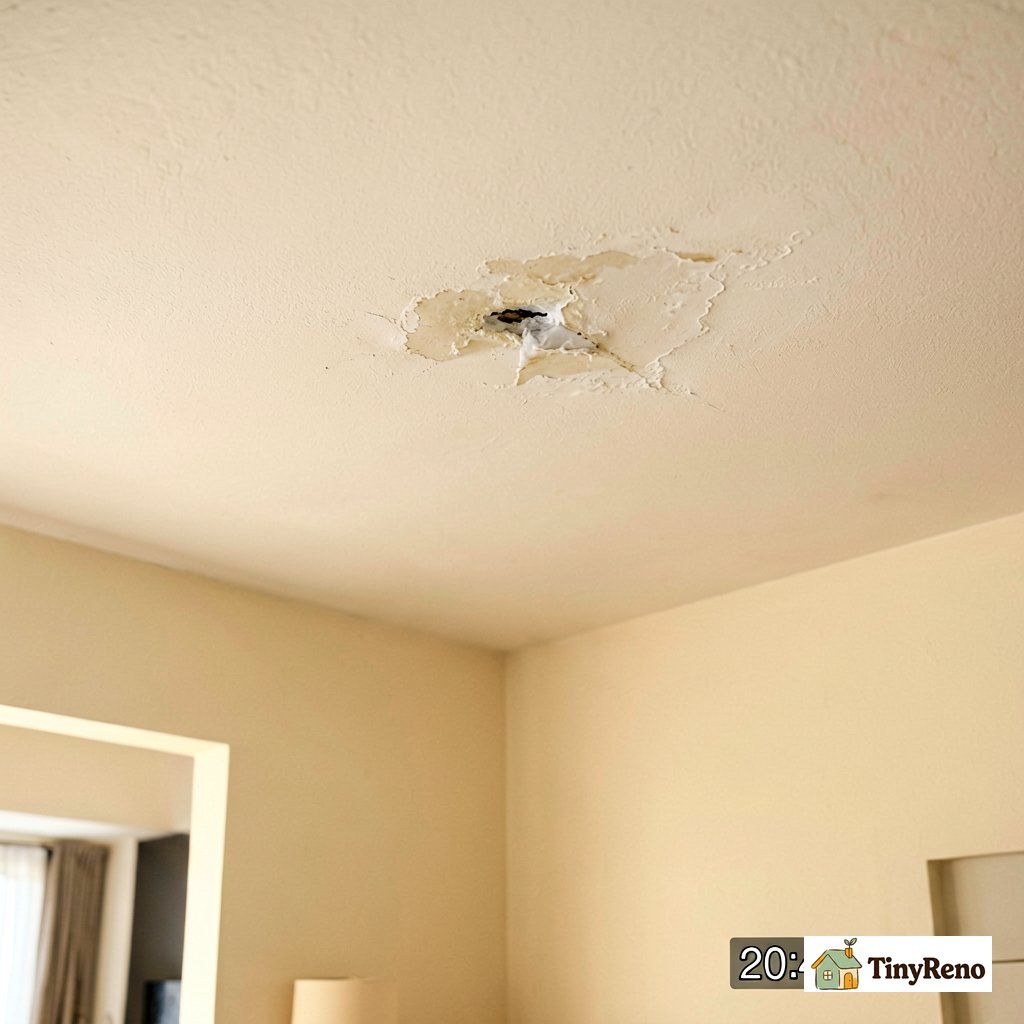
Before you contact the landlord, document the problem. Photograph the issue from multiple angles. Photograph any secondary damage (water stain spreading across the ceiling, mold growing around the leak). Photograph the meter, the breaker, the appliance, whatever is involved. Save the photos with timestamps. Email the photos to yourself immediately so the timestamp is server-side.
If the problem is functional (no heat, no hot water, broken lock), photograph the thermostat, the breaker label, the lock from inside and outside. If the problem is cosmetic but habitability-related (large mold patch, water damage, broken window), photograph the area and any visible safety risk (exposed nails, broken glass, sharp edges).
Documentation before contact is critical for two reasons. First, the landlord may claim the problem didn't exist before you reported it. The pre-contact photos prove otherwise. Second, if the repair takes a while, the documentation shows the problem hasn't worsened during the delay, which prevents the landlord from arguing that any secondary damage was caused by you.
Step 2: Check the Lease
Open your lease and find two sections: the repair and maintenance clause, and the entry and inspection clause. The repair clause typically lists what the landlord is responsible for (structural, mechanical, habitability) and what the tenant is responsible for (light bulbs, smoke detector batteries, damage caused by the tenant). The entry clause typically says how much notice the landlord must give before entering (often 24 to 48 hours) and which repairs the landlord can do without notice (emergency repairs).
Reading the lease first lets you cite the specific clause in your repair request. "Per Section 8.2 of the lease, the landlord is responsible for repairs to the plumbing system" is much stronger than "please fix the sink." It also tells you whether the landlord can enter without notice for the repair, which affects how you handle the access step.
If the lease is silent on a particular issue, state law controls. Most states require landlords to maintain habitability (working heat, hot water, weatherproofing, structural integrity) regardless of what the lease says.
Step 3: Send the Written Request
The written request is the most important step in the path. It is the document that starts the legal clock and creates the paper trail for everything that follows. The request should be sent by email (fastest) and by written letter (slowest but most legal). Text message works as a backup but is harder to authenticate in court.
The email template I use, with the variables filled in:
Subject: Repair request, [unit number], [brief description]
Dear [landlord name],
I am writing to request repairs to the following item in my unit:
Item: [specific item, e.g., kitchen sink drain pipe, bedroom window latch, master bathroom shower diverter]
Location: [specific location, e.g., kitchen, northeast corner; bedroom, north window]
Problem: [description, e.g., leaking water onto the floor each time the sink is used; will not close fully; diverts all water to the tub even when set to shower head]
Date first noticed: [date]
Severity: [routine / urgent / emergency — see below]
Lease reference: [e.g., Section 8.2 — plumbing repairs]Photographs of the problem are attached, taken on [date].
Per [state] habitability law and the lease, I am requesting repair by [date, typically 14 days from today for routine, 24-72 hours for urgent, immediate for emergency].
Please confirm receipt of this request and let me know when you or your maintenance staff plan to access the unit for the repair. I am available [list days/times you can offer access].
If you need additional information or want to coordinate the access differently, please respond to this email.
Thank you,
[Your name]
[Unit number]
[Phone number]
This template works because:
1. The request specifies severity. Routine requests get a 14-day response window. Urgent requests (no heat in winter, no hot water, active leak causing damage) get a 72-hour window. Emergency requests (gas leak, electrical fire risk, no heat in freezing weather) get an immediate response. The severity label sets expectations without demanding an instant response.
2. The request offers access. Many repair requests stall because the tenant is unavailable during business hours and the landlord cannot enter. Listing specific times you can offer access removes that obstacle.
3. The request cites the lease and the state law. This signals that you know your rights. Landlords respond faster to requests that show the tenant has done their homework.
Send the request. Save the sent email. Save any reply. The reply becomes the basis for step 5.
Phase 2: The Waiting Game (and How to Shorten It)
Steps 4 through 6 cover the wait between request and repair. Most repairs happen in this window.
Step 4: Wait the Right Amount of Time
The waiting window depends on the severity:
Routine: 14 days is a common benchmark for cosmetic or non-critical repairs, but many states interpret "reasonable time" differently—check your state's statute. Some allow 10 days, others 30.
Urgent: 72 hours is reasonable for active leaks, partial loss of heating or cooling, broken locks on exterior doors, and similar.
Emergency: Immediate (within 24 hours) for gas leaks, electrical hazards, no heat in freezing weather, no water, sewage backup, broken locks that leave the unit unsecured.
During the wait, do not call or email the landlord asking for updates. Calling multiple times signals anxiety and reduces your leverage at step 5. Let the calendar run. If the landlord responds before the deadline with a scheduled repair time, skip steps 5 and 6 and proceed to phase 3.
Step 5: Follow Up
If the landlord has not responded by the deadline, send a second email. The follow-up is shorter and more direct:
Subject: Follow-up: repair request [unit number], [original subject line]
Dear [landlord name],
I am following up on my repair request of [date]. The deadline I provided was [date], and I have not received a response.
If the repair cannot be completed by [new deadline, typically 7 days], please let me know when you expect it to be completed and what is preventing the timely repair.
Per [state] habitability law, the landlord is required to maintain [specific item] in working condition. Failure to repair within a reasonable time may be treated as a breach.
Thank you,
[Your name]
The follow-up accomplishes three things: it documents that the landlord missed the deadline, it sets a new deadline, and it cites state law to remind the landlord that there are consequences for inaction.
If the landlord responds to the follow-up with a scheduled repair time, skip to phase 3.
Step 6: Offer Access
Some repair delays are caused by access issues. The tenant is at work during the day, the landlord cannot enter, and the repair stalls. If the landlord requests access but the two of you cannot find a time, propose a specific solution: a key left with the building manager, a lockbox, a weekend appointment, a specific afternoon off work. The goal is to remove the access obstacle without giving the landlord an excuse to delay.
Document the access offer in writing. If you offered a key to the manager and the landlord did not pick it up, that becomes evidence that the landlord's delay is not access-related.
Phase 3: The Active Work
Steps 7 through 9 are the escalation steps. These apply when the landlord has stopped responding or has refused to make the repair.
Step 7: Escalate to the Manager or Owner
If your landlord is a property management company, escalate to the supervisor or owner. The first-line contact is often a leasing agent with limited authority to approve repairs; the supervisor or owner has the authority and the budget.
If your landlord is an individual owner, the escalation step is harder. The owner is the decision-maker. The escalation here means putting the request in writing one more time, with a slightly more serious tone, citing the state law by name rather than generically.
The escalation email should reference the original request and the follow-up, and add a deadline for legal action:
Subject: Repair request [unit number] — final notice before formal action
Dear [landlord name],
This is the third written notice regarding [item] in my unit. The original request was sent on [date], with a follow-up on [date]. Neither has resulted in a repair.
Per [state] habitability law, specifically [statute citation if available], landlords are required to maintain [item] in working condition. Failure to repair within [new deadline] may result in formal action, including:
1. Complaint to the local code enforcement or housing inspector
- Complaint to the [state] attorney general
- Rent withholding or lease termination, where state law permits
I prefer to resolve this without formal action. Please contact me by [deadline] to schedule the repair.
Thank you,
[Your name]
Step 8: Contact Code Enforcement
Code enforcement (also called housing inspection or building inspection, depending on the jurisdiction) is the local government office that enforces habitability standards. The complaint is usually free and anonymous (though you may need to provide your contact info). An inspector will visit the unit, document the violation, and give the landlord a deadline to fix it.
Code enforcement is one of the most powerful tools a tenant has because the inspector is a neutral third party with legal authority to require the repair. Most landlords fix the problem within days of receiving the inspection notice because the inspector can fine the landlord and place a lien on the property.
The downside of code enforcement is the time it takes to schedule the inspection (often 1 to 4 weeks) and the fact that the inspector's findings may not match your complaint exactly. But in most cases, code enforcement produces results when other steps have not.
Step 9: File with the State Attorney General
The state attorney general's consumer protection office handles landlord complaints in most states. The complaint is usually free. The AG's office sends a letter to the landlord requesting a response. Some landlords respond faster to AG letters than to tenant letters, but not all states handle landlord-tenant disputes through the AG. Check your state's consumer protection office first—some states have a dedicated housing agency.
AG complaints work best when combined with code enforcement. The two together create pressure from multiple directions.
Phase 4: The Final Steps
Steps 10 and 11 are the legal remedies. These apply when the landlord has refused or failed to repair and the problem is significant.
Step 10: Consider Withholding Rent or Breaking the Lease
In some states, tenants can withhold rent when the landlord fails to maintain habitability—but the rules are strict, and getting it wrong can lead to eviction. Most states require you to put the withheld rent in an escrow account, give written notice, and wait a specific period. Never withhold rent without checking your state's exact procedure first. Some states require the tenant to put the withheld rent in an escrow account. Some states require a specific notice period. Some states only allow withholding for specific issues (no heat, no water, sewage backup). A few states prohibit withholding entirely.
Check your state's law before withholding rent. Withholding without following the law is grounds for eviction.
Breaking the lease is a more drastic step. Most states allow lease termination if the landlord fails to maintain habitability, but the tenant usually has to follow a specific process. The process typically includes written notice, a waiting period, and sometimes an inspection. Breaking the lease without following the process can leave the tenant liable for the remaining rent.
Step 11: Small Claims Court
For monetary damages (rent abatement, repair costs you paid out of pocket, moving costs), small claims court is the right venue. The filing fee is $30 to $75 in most states. You do not need a lawyer. You do need your documentation: the original repair request, the follow-up, the escalation email, the code enforcement inspection report, and any receipts for repairs you paid for yourself.
The court will typically order the landlord to make the repair or pay you the cost of making it yourself, plus sometimes rent abatement for the period during which the unit was not habitable.
The Bottlenecks I Didn't See Coming
The bottlenecks that stall most repair requests:
1. The landlord doesn't read email. Older landlords especially may not check email regularly. Send the written request by both email and physical letter (certified mail, return receipt requested). The letter creates a second timestamp and proves delivery.
2. The landlord is also the property manager and is overwhelmed. Small landlords often manage 5 to 20 units and do not have a maintenance staff. Their response time is genuinely slow. Escalation in this case means being a more organized requester: offer specific access times, specify the repair in detail, and follow up at predictable intervals.
3. The repair is expensive. Some landlords delay repairs because they cannot afford them. In this case, the escalation path is faster than negotiating. Code enforcement can require the repair on a specific timeline; AG complaints can embarrass the landlord into action. Some jurisdictions have rental assistance programs that pay for habitability repairs; ask your local housing authority.
4. The landlord thinks the damage is the tenant's fault. Some repair requests stall because the landlord disputes responsibility. The escalation path is the same, but the documentation must be stronger. Photographs, the move-in condition report, and witness statements (neighbors who saw the damage develop) all help.
The Two Shortcuts That Saved Me the Most Time
Two shortcuts cut the average repair time in half in my experience:
Shortcut 1: The offer of access. Landlords often cannot enter during business hours because the tenant is at work. Propose a key left with the building manager, a weekend appointment, or a specific afternoon off work. The access offer removes the most common excuse for delay.
Shortcut 2: The specific repair description. "The bathroom sink leaks" is ambiguous. "The cold water supply line under the bathroom sink leaks approximately 1 cup of water per hour when the faucet is in use, causing water to pool in the cabinet base" is specific. Specific descriptions get faster repairs because the maintenance staff can show up with the right parts.
These two shortcuts are not just about being polite. They remove the two most common reasons repair requests stall: access issues and vague descriptions that require a second site visit.
If You Already Signed (here's what to do)
If you already requested repairs and the landlord has not responded within 14 days, three moves are still open.
Move 1: Send the follow-up email today. The 14-day window resets each time you make contact. Send the follow-up email with a new 7-day deadline. Document the new deadline.
Move 2: Contact code enforcement today. Most code enforcement offices respond within 1 to 4 weeks. The sooner you file, the sooner the inspector visits.
Move 3: Start a documentation log. From today, document every repair issue, every contact with the landlord, and every inconvenience caused by the delay. The log becomes evidence if the dispute escalates to small claims court.
What to skip if you have already escalated: hiring a lawyer for routine disputes in the first 60 days. Most repair disputes resolve through code enforcement or AG complaint without a lawyer. But if the issue is an immediate health or safety hazard—gas leak, no heat in freezing weather, sewage backup—contact a tenant lawyer or legal aid immediately. Lawyer involvement becomes appropriate at the small claims or full civil litigation stage.
The Short Version (If You're Skim-Reading)
How long does a landlord have to respond to a repair request? Routine repairs: 14 days. Urgent repairs (active leak, no heat in winter, broken exterior lock): 72 hours. Emergency repairs (gas leak, electrical hazard, no water): 24 hours.
What if my landlord ignores my repair request? Send a written follow-up. Wait the additional 7 days. Escalate to the supervisor or owner. Then contact code enforcement. Then file with the state attorney general. Then consider withholding rent or breaking the lease where state law permits.
Can a landlord retaliate for requesting repairs? No. Retaliation (rent increase, eviction, harassment) within 90 days to 1 year after a repair request is illegal in most states.
Should I email or call the landlord? Always in writing. Email is best for speed. Follow up phone calls with a written confirmation. Text messages work but are harder to authenticate in court. The written record is what makes your repair request hardest for the landlord to dismiss.
What's the most important step in the path? Step 3: the written request. The email template that cites the lease, specifies severity, and offers access doubles response rate compared to a casual email or phone call.
The body of this article walks through the 11 steps with email templates, severity guidelines, and the bottlenecks that stall most repair requests. Steps 1 through 4 resolve most disputes. Steps 5 through 11 exist for the requests that don't.


Discussion (0)
Sign in to join the discussion