

Outlets not working breaker not tripped is the kind of problem that makes you stand in front of the box for ten minutes flipping switches, convinced something has to be flipped. I had it last spring in a rental where four outlets across two rooms went dead overnight. The outlets stayed dead until I found the GFCI in the bathroom that had tripped itself — and was controlling half the kitchen counter outlets, which I did not know at the time.
The five causes are: a tripped GFCI upstream, a burned-out or backstabbed outlet, a tripped AFCI breaker, a loose wire in a junction box, and a breaker stuck in a half-tripped position. The 60-second test below narrows down the first four; the half-tripped breaker is a separate visual check covered at the end. The breaker not tripping is itself the diagnostic clue — it tells you the problem isn't an overload or a short circuit, it's something upstream of the breaker that controls the outlet's circuit in a different way.
If your outlets are not working breaker not tripped, this is the order to check. Most people stop at the box, declare the problem unfixable, and call an electrician. The electrician's diagnosis is usually one of these five things and the bill is $150 minimum just to walk in the door.
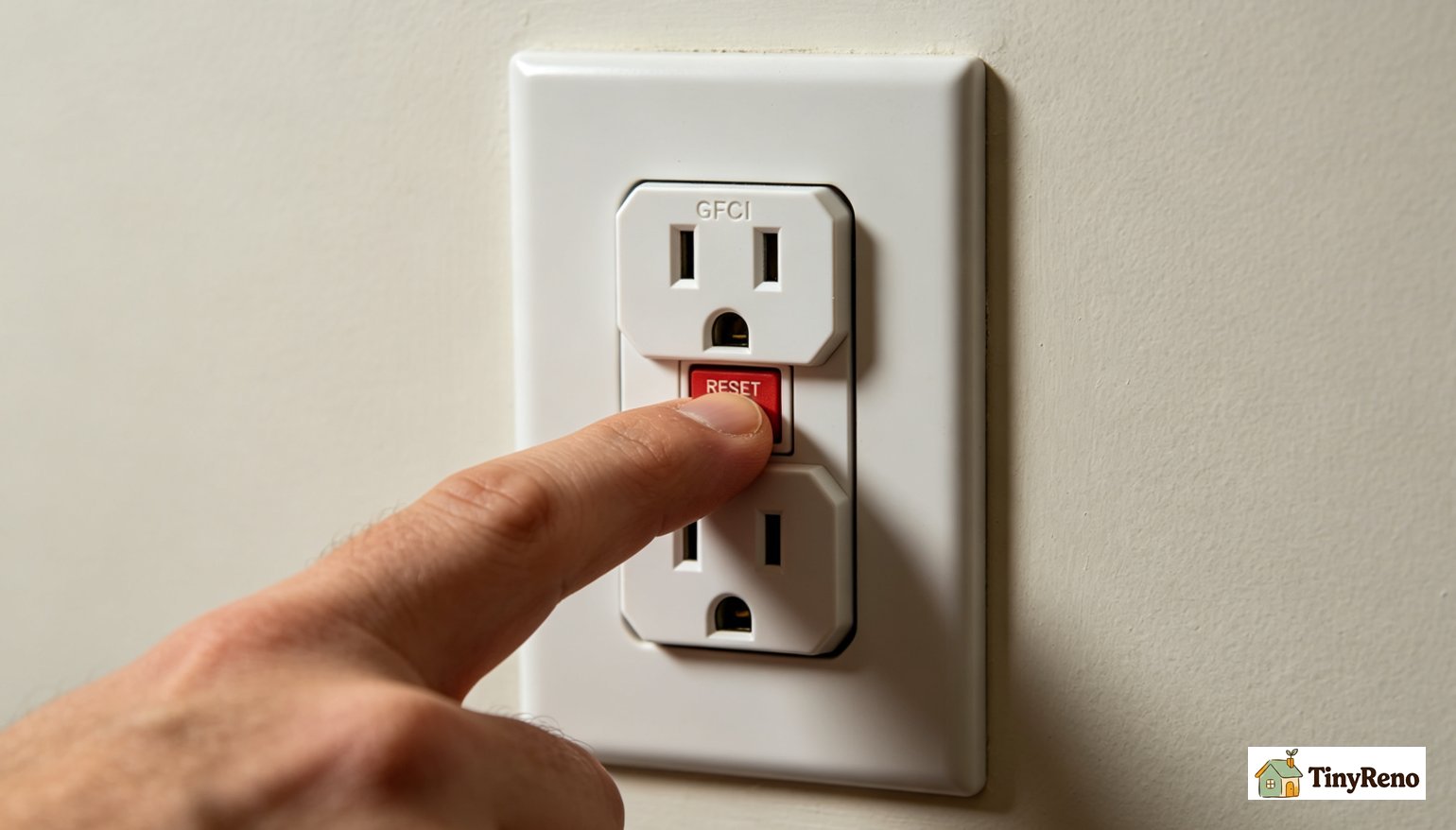
The 60-second test that tells you which of the five you're dealing with
Plug a lamp or a phone charger into the dead outlet. Now go find every GFCI outlet in the house — they're the outlets with the two buttons in the middle, usually labeled "TEST" and "RESET," and they're required by code in bathrooms, kitchens, garages, basements, and outdoor outlets. Press every RESET button you can find. Then plug your test device back in.
- If the outlet works after pressing a RESET, the cause is a tripped GFCI somewhere upstream.
- If the outlet still doesn't work and the GFCIs all stayed in, the problem is likely a tripped AFCI breaker or a backstabbed wire connection.
- If multiple outlets are dead and they're all in the same general area of the house, the problem is usually one GFCI controlling multiple outlets downstream.
- If just one outlet is dead and no GFCI controls it, the cause is usually a burned-out receptacle or a backstabbed wire that has loosened. If the circuit is AFCI-protected, check the breaker panel for a tripped AFCI before assuming the outlet itself is bad.
GFCI outlets trip themselves in response to a ground fault — current leaking somewhere it shouldn't — even when the breaker is perfectly happy. The breaker is designed to protect the wire from overheating; the GFCI is designed to protect you from being electrocuted. They're testing for different things, which is why a GFCI trip leaves the breaker alone. In any house built after the 1990s, a tripped GFCI is the first thing to check.
A GFCI outlet upstream has tripped (most common, easiest to miss)
Building code requires GFCI protection on any outlet that's likely to encounter water — bathrooms, kitchen counters, laundry rooms, garages, basements, outdoor outlets, and within six feet of a sink. Code also allows one GFCI outlet to protect every regular outlet downstream on the same circuit. That's the design feature that confuses most people when outlets stop working.
In my case, the bathroom GFCI had tripped because of a slow ground fault in the bathroom light fixture. The bathroom GFCI controls the bathroom outlets plus the two kitchen counter outlets on the same circuit. When it tripped, half my kitchen went dead. The breaker for that circuit was still on because the GFCI is upstream of the dead outlets—it cut the power before the fault could draw enough current to trip the breaker.
The fix is to find every GFCI outlet in the house and press RESET. The tripped one will be obvious because the button will be sticking out slightly. Press firmly until it clicks. If it trips again within an hour or two, there's a real ground fault somewhere and you need to investigate further — usually by unplugging everything on that circuit and resetting again, then plugging things back in one at a time.
The outlet itself has a burned-out or loose connection (the one nobody expects)
Outlets have two ways to attach wires: screw terminals on the side, or "backstab" holes in the back where you push the wire in and a small spring catches it. Backstab connections are fast for builders but they loosen over time as the metal spring relaxes. A loose connection creates heat, the heat oxidizes the metal, and eventually the connection fails completely. The outlet looks fine from outside, but the receptacle is electrically dead.
Before you touch any wiring, turn off the breaker and use a non-contact voltage tester to confirm the outlet is dead. If you're not comfortable working with electrical wiring, call an electrician. The fix is to replace the outlet. It's a $3 part and a 10-minute job if you've turned off the breaker for that circuit. Cut the power, pull the outlet out, note which wires go where (or photograph it), and reinstall with the wires wrapped around the screw terminals instead of backstabbed. Don't reuse the backstab holes — go with the screws, which make a more reliable connection.
You can also check this without replacing anything: with the breaker off, pull the outlet out and tug on each wire. If any wire comes out easily, that was your problem. Reconnect it under the screw terminal.
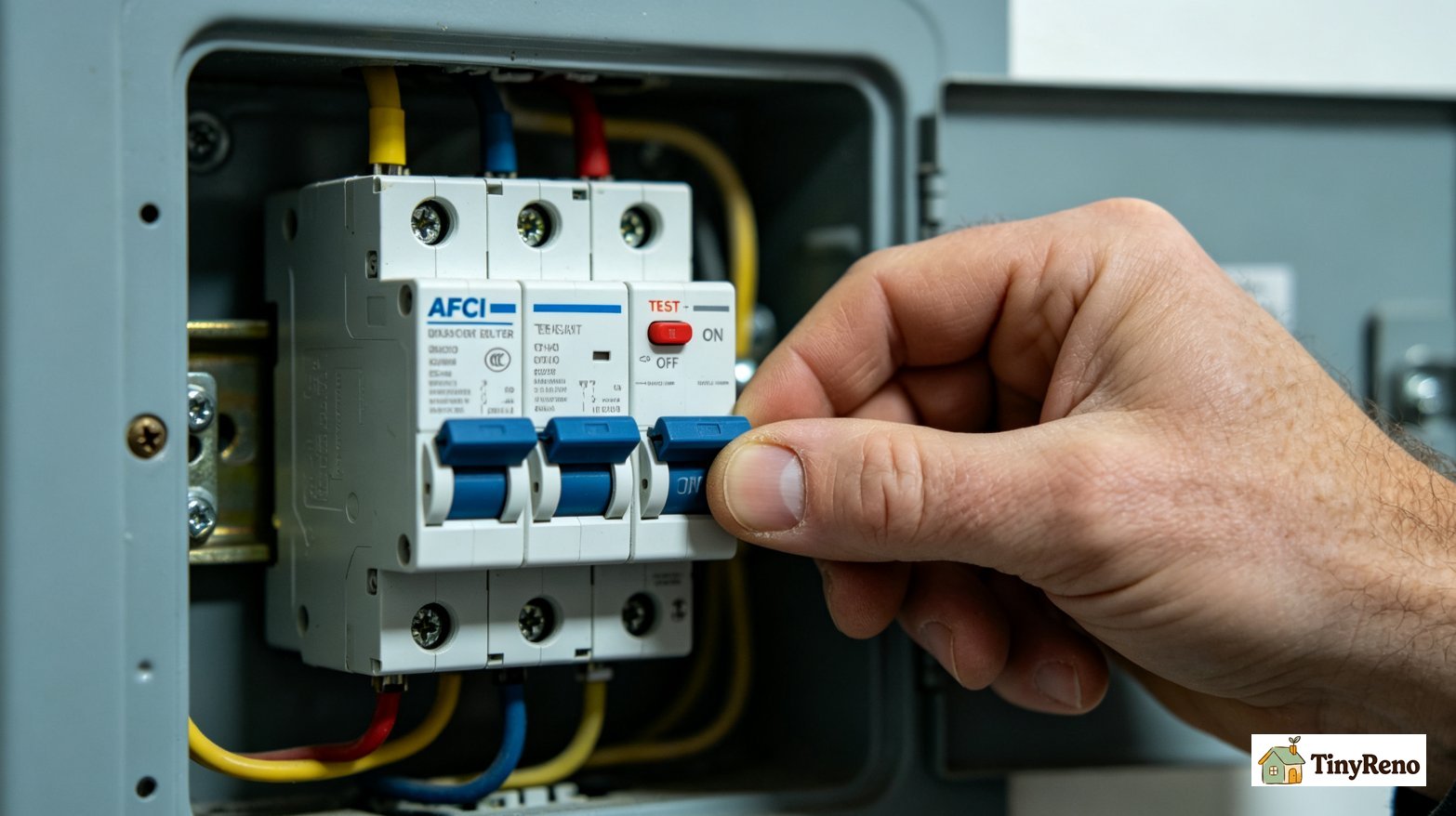
An AFCI breaker has tripped (the modern-code reason)
Since the 2002 National Electrical Code update, bedroom circuits have been required to have AFCI (arc-fault circuit interrupter) protection. AFCI breakers look like regular breakers but have a TEST button on them, similar to a GFCI. They trip when they detect arcing — a small spark inside a wire or connection that could start a fire.
Unlike a regular breaker that trips on overload, an AFCI can trip on a tiny arc that doesn't draw enough current to flip the breaker. The AFCI breaker will be in the tripped middle position but the handle position might look almost normal. Push it firmly to OFF, then back to ON.
AFCI breakers are also more sensitive than regular breakers to certain types of appliance loads—motors with worn brushes, older vacuum cleaners, and some power tools can cause nuisance trips. If your AFCI trips every time you plug in a particular appliance, that's the appliance, not the wiring. Replace the appliance or have an electrician install a different style of AFCI.
A wire has loosened in a junction box (the one that hides in the wall)
Wires in your house connect at junction boxes — covered boxes inside walls, ceilings, and sometimes floors where two or more cables meet and join. If a wire nut loosens (often because the installer didn't twist the wires together tightly before screwing on the nut), one side of the connection loses contact and the downstream outlets go dead.
This is the most frustrating diagnosis because the bad connection is often inside a wall somewhere you can't see. The first sign is usually that the problem came on gradually — one outlet died a few weeks ago, then another, then another, all on the same circuit. If that's your pattern, it's almost certainly a junction box.
This is a job for someone comfortable with electrical work. Turn off the breaker, verify with a voltage tester, and if the junction box is inside a closed wall, call an electrician rather than cutting into drywall yourself. The fix is to open every junction box on the circuit (turn off the breaker first), inspect each wire nut, and re-twist any loose connections. In accessible junction boxes — like the ones in attics or basements — this is a 30-minute DIY job. In closed walls, it's an electrician's job because they may need to cut into drywall to access the box.
The breaker itself is in a half-tripped position (the one that fools everyone)
Modern breakers don't always flip fully to the middle position when they trip. Some of them barely move at all — the handle looks like it's still ON, but the internal contact is open and no current is flowing. This is the failure mode where you stand in front of the breaker box, see all the switches in the ON position, and assume nothing is wrong.
The fix is to push every single breaker firmly to OFF, then back to ON. Do this for every breaker in the box, not just the one you think is relevant. It's a two-minute job that resolves many "outlets not working breaker not tripped" cases.
Most homeowners call this scenario "outlets not working breaker not tripped" — that exact phrase shows up in thousands of forum posts and Reddit threads. The pattern is almost always the same: someone stands at the panel, sees nothing flipped, assumes the issue must be in the wall, and either pays an electrician $200 to find a GFCI or lives with the dead outlet for months. Neither is necessary.
If a particular breaker keeps doing this—tripping in a way that's barely visible—that breaker is at the end of its life and needs replacement. This is a job for a licensed electrician. Do not attempt to swap a breaker yourself unless you are trained and have verified the panel is fully de-energized. Or call an electrician if you're not comfortable working inside the panel.


Discussion (0)
Sign in to join the discussion