

The five reasons are: a failed heating element, a worn-out breaker, undersized wiring, a shorted thermostat, and sediment buildup. The 60-second check below narrows down the first four; sediment is a separate visual/audible check covered at the end. I learned this the hard way during a January cold snap when my electric water heater kept shutting off every forty minutes, which meant lukewarm showers for three days while I figured out what was wrong. The hot water circuit breaker keeps tripping, and the diagnostic order matters.
If your hot water circuit breaker keeps tripping, the cause is almost always a high-amperage draw that's tripping the breaker intentionally. Electric water heaters pull 18-30 amps continuously while heating — more than most other appliances — so anything that pushes the draw over the breaker's rated amperage will trip it. Here's the order I'd check, starting with the cheapest and ending with the ones that need an electrician.
A hot water circuit breaker keeps tripping is also a sign the breaker itself might be old. Breakers wear out. If yours is over 20 years old and your hot water circuit breaker keeps tripping, the breaker may be the problem, not the water heater. More on that in a moment.
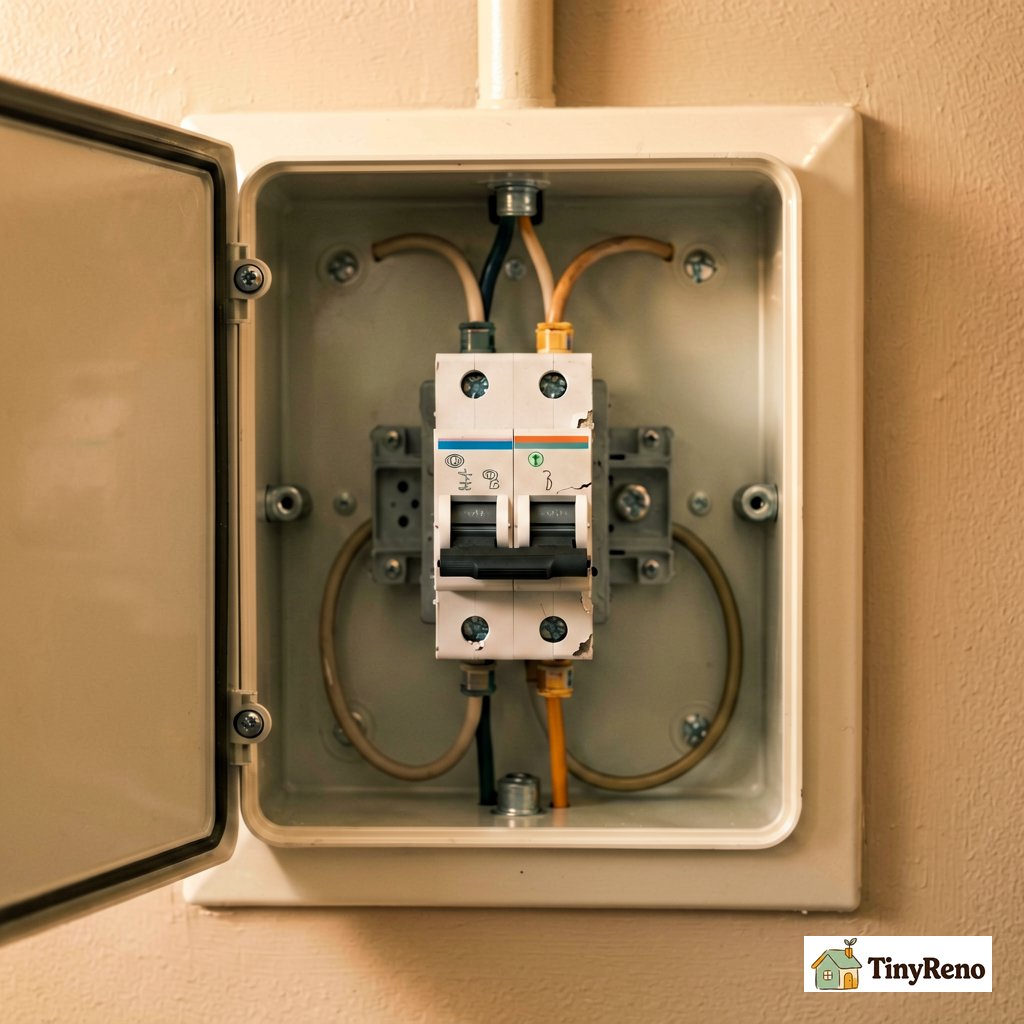
The 60-second check that tells you which of the five you're dealing with
Go look at the breaker box. Find the breaker labeled "water heater" or "WH." It should be a double-pole breaker (two switches tied together) rated 30 amps in most homes, sometimes 20 or 40. If only one of the two switches has flipped, the breaker's internal linkage may be failing, or it may be a different circuit entirely. Either way, do not keep resetting it—call an electrician. If the whole double-pole has tripped, push it firmly to "off" first, then back to "on." Note exactly how long it takes to trip again. If it trips again immediately, stop. Do not keep resetting it. Leave it off and call an electrician.
- If it trips in under a minute, the problem is usually a short circuit or a bad heating element.
- If it trips in 5 to 20 minutes, the problem is usually the heating element shorting to ground as it heats up.
- If it trips in 30 minutes to 2 hours, the problem is usually a worn-out breaker or undersized wiring.
- If it trips randomly and unpredictably, the problem is often a loose wire somewhere in the circuit, or a breaker at the end of its life.
The trip timing is the single most useful diagnostic clue. I wasted an entire Saturday swapping a heating element before realizing the original element was fine — the breaker was just tripping faster than the element was failing. Note the timing before you start swapping parts.
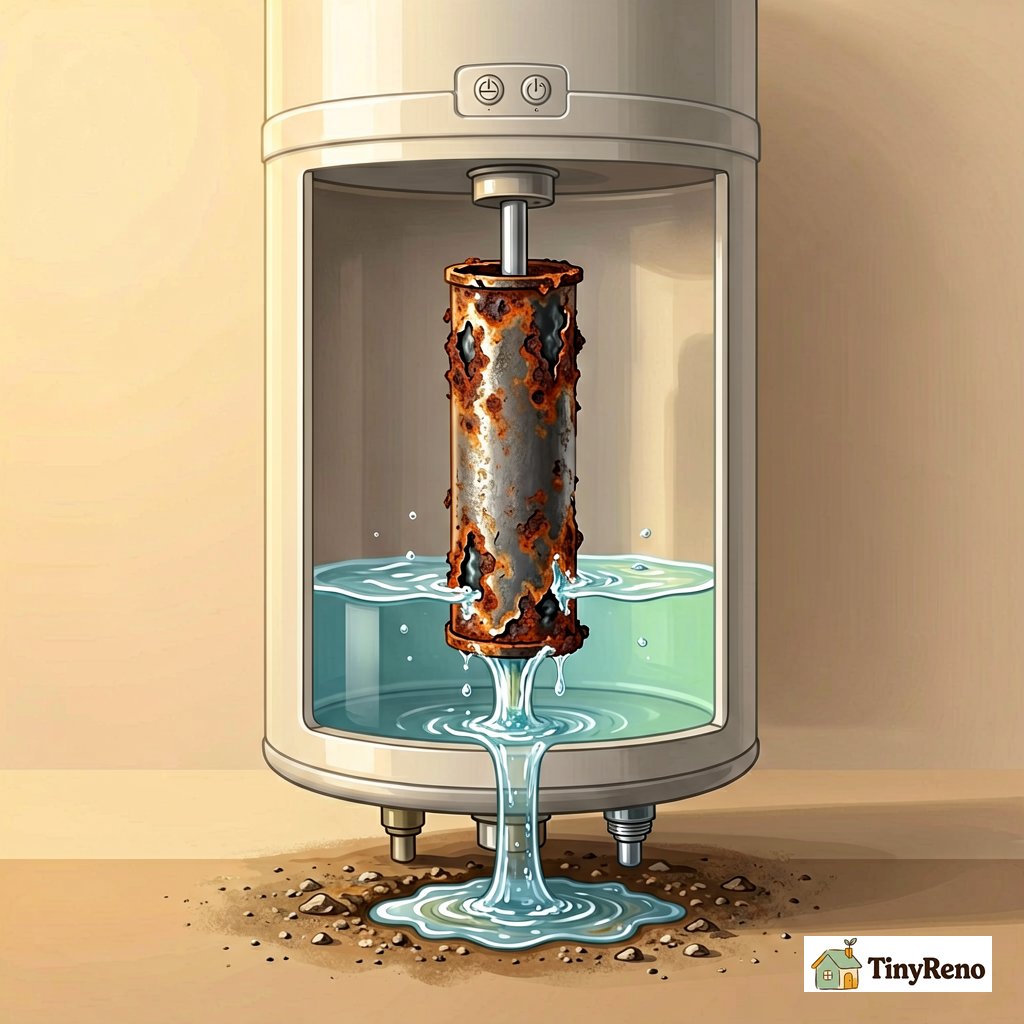
The heating element has failed (most common, not cheap)
Electric water heaters have two heating elements: one near the top, one near the bottom. Both are immersed in water and carry 240 volts across a resistive coil. When an element ages, the outer sheath corrodes and water seeps into the insulating material around the coil. That water creates a path to ground. As the element heats up, the resistance drops and current leaks through the water to ground instead of through the coil. If the leakage is large enough, it can trip the breaker as an overload or ground fault. If your breaker is a GFCI or AFCI, it may trip even on small leakage.
Before you touch anything, turn off the power to the water heater at the breaker box. Use a non-contact voltage tester to confirm the wires are dead. If you are not comfortable working with 240-volt wiring, stop and call an electrician. The test is simple but requires a multimeter and the water heater drained. With the power off and the element leads disconnected, a healthy element reads 10-30 ohms across the terminals. A failed element reads either open (infinite resistance) or shorted to ground (any reading between either terminal and the metal sheath).
Replacement elements are $20-40 each. The job takes about an hour if you're comfortable with basic electrical work. If you're not, this is the one to call an electrician for — the difference between a $30 part and a $200 service call is worth the cost when the alternative is working with 240-volt wiring.
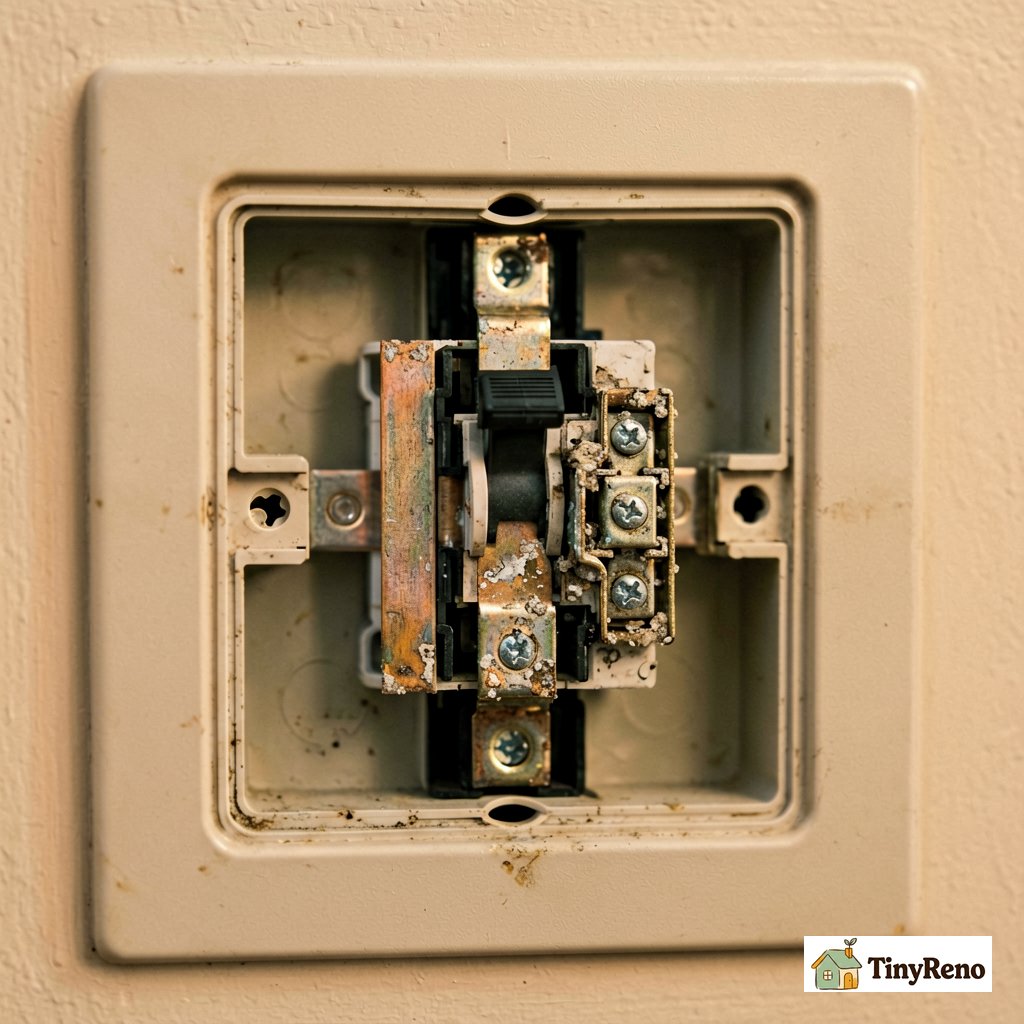
The breaker itself is worn out (the one nobody checks first)
Breakers are mechanical devices with a bimetallic strip or a magnetic coil inside. Each trip wears them a little. After 15-20 years of normal use — and many trips — the breaker's calibration drifts. It starts tripping at lower currents than it's rated for. So a 30-amp breaker that should hold 28 amps indefinitely starts tripping at 22 amps. The water heater pulls 25 amps to heat, and the breaker thinks it's overloaded.
This is the failure mode nobody suspects because it's counterintuitive — you'd assume a tripped breaker means the appliance is bad, not the breaker. But if you've replaced the heating element and the water heater circuit breaker keeps tripping, the breaker is the next suspect.
This is a job for a licensed electrician. Do not attempt to swap a breaker yourself unless you are trained, the main breaker is off, and you have verified the panel is de-energized. If you rent, this is your landlord's responsibility. The test is to swap the suspect breaker with a known-good one of the same amperage. Most breaker boxes have a spare slot or a circuit you're willing to temporarily borrow from (like a bedroom outlet that's not critical). If the trip moves with the breaker, the breaker was the problem. Replacement breakers are $20-50 for standard residential models. If your box is a Federal Pacific, Zinsco, or Pushmatic, the breakers are harder to find and the box itself may need replacement — those brands have known design flaws.
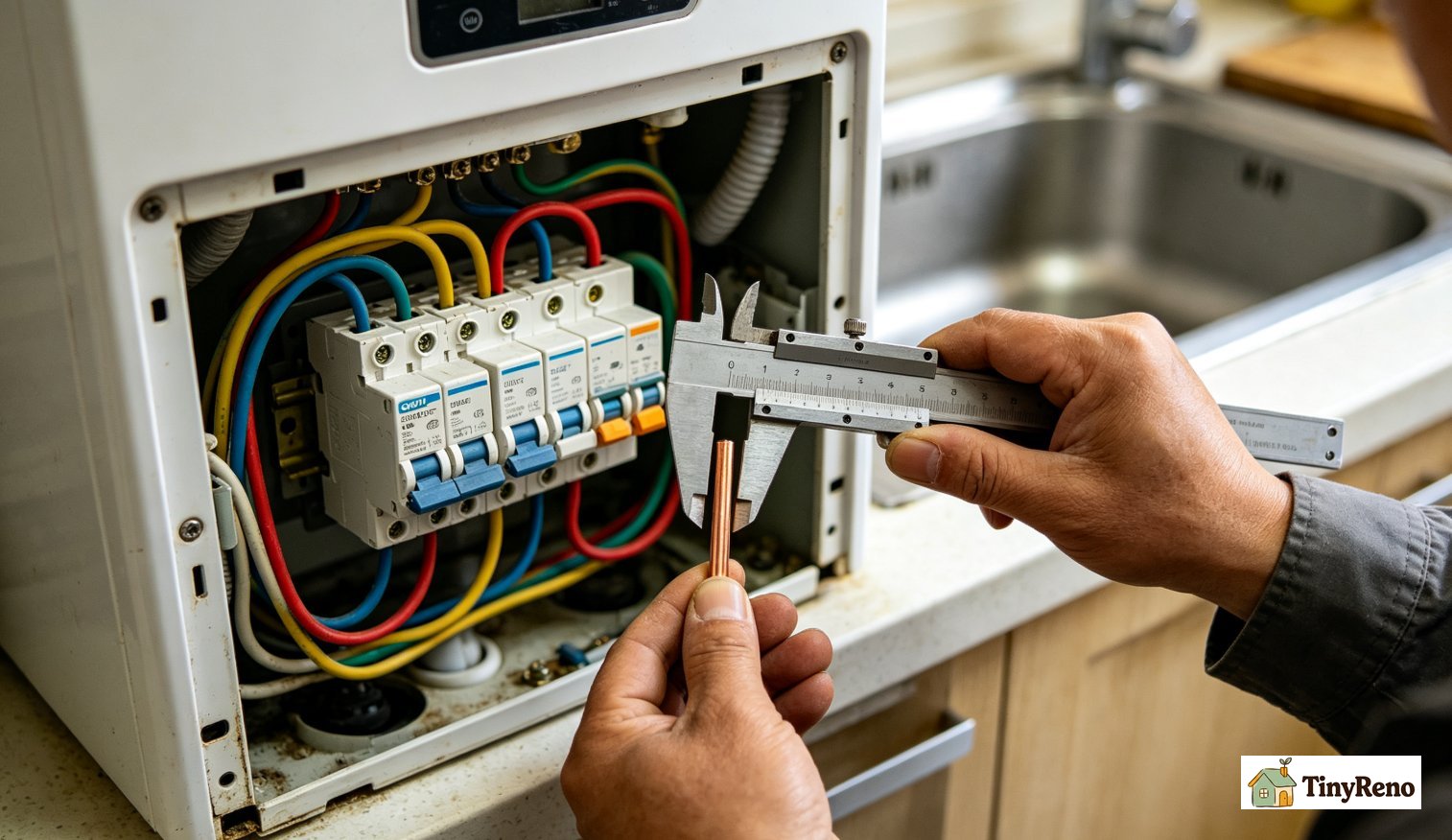
The water heater is drawing more current than the circuit allows (the underrated wiring)
An electric water heater needs a dedicated circuit. The wire gauge, breaker amperage, and water heater wattage all have to match. The most common mismatch in older homes: a 20-amp breaker on a 20-amp circuit running a 4500-watt water heater that pulls 18.75 amps at 240 volts. Aging elements usually draw slightly less current, not more. The real problem is that the circuit was never sized with any margin to begin with.
If your water heater is rated 5500 watts or higher, you absolutely need a 30-amp breaker and 10-gauge wire. A 4500-watt heater draws 18.75 amps at 240 volts. A 20-amp breaker is only rated for 16 amps continuous, so this is a code violation and will trip under normal load. It requires a 30-amp breaker and 10-gauge wire.
This isn't a fix you do yourself — wiring a new circuit from the panel to the water heater is a job for a licensed electrician. But it's the diagnosis if you've ruled out the element and the breaker. The water heater simply needs more current than the circuit was designed to deliver. Cost: $300-800 for the electrician to run a new circuit and upgrade the breaker.
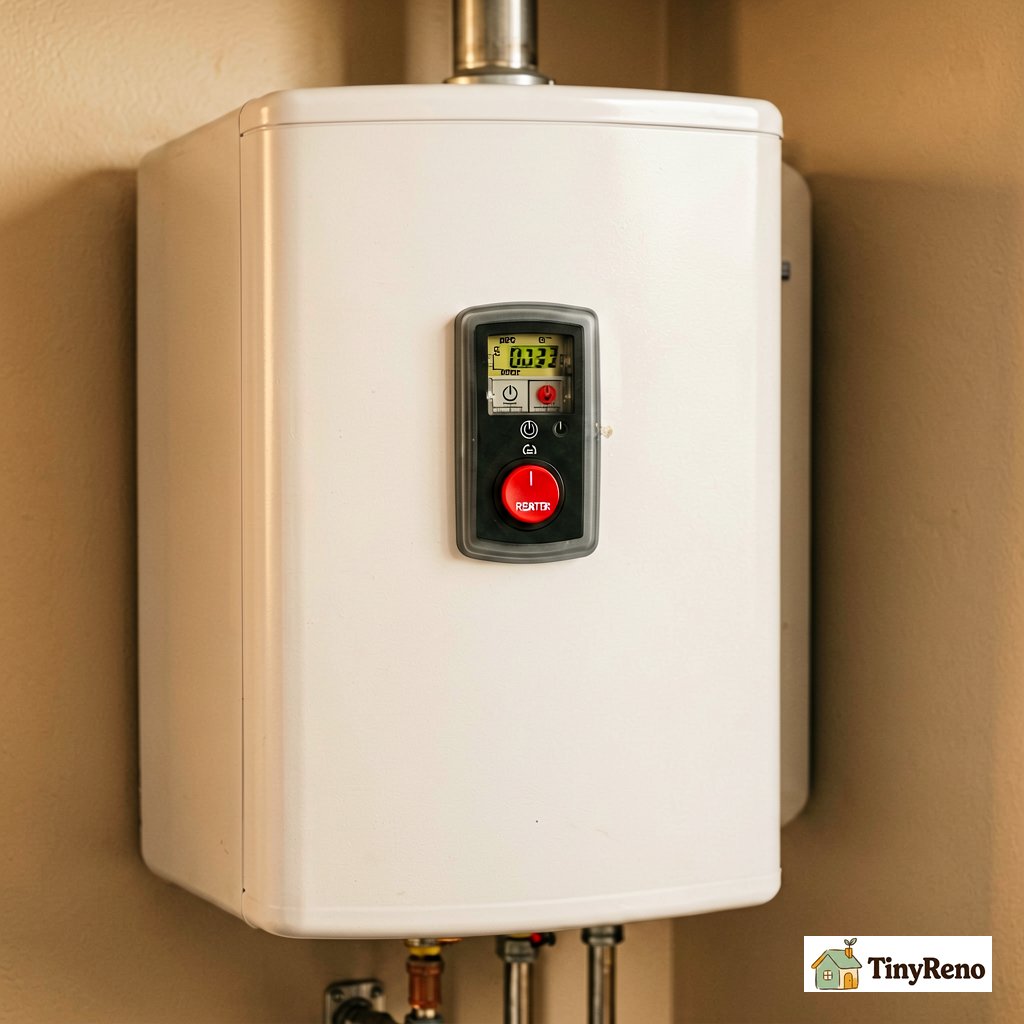
The thermostat is shorted (the one that hides until the water is fully heated)
Each heating element has a thermostat that controls when it turns on. The thermostat has high-limit protection built in — a small reset button that cuts power if the water gets too hot. If the high-limit switch contacts stick closed, the element can keep heating past the set temperature, eventually tripping the breaker or damaging the element. The element heats past its design temperature, the water gets scalding hot, and eventually something fails — usually the element, but sometimes the breaker.
Check the thermostats by pressing the red reset button firmly on each one. If it clicks, that was the issue. If it clicks and trips the breaker within an hour, the underlying problem (usually the lower thermostat) is still there and needs replacement. Thermostats are $25-50 each and a moderate DIY replacement.
The fifth reason—sediment buildup—doesn't show up in the trip-timing test. Instead, listen for hissing or popping from the tank. One last thing: if your water heater is making a hissing or popping sound along with the breaker tripping, that's sediment buildup on the bottom of the tank. The element heats through the sediment, runs hotter than designed, and trips the breaker. Draining the tank to flush the sediment fixes it. Do this once a year and you'll prevent most element and breaker problems before they start.


Discussion (0)
Sign in to join the discussion