

A dishwasher drain high loop is the cheapest backflow preventer you already own. The plumber installed mine and left a loop of hose attached to the underside of the sink cabinet, routed up near the top and back down to the drain. I asked why. He said, "Don't believe me? Pull it down and smell in three weeks." I did. The kitchen smelled like a backed-up sewer for two days. I ran the loop back up and never questioned it again.
If you've ever wondered what this high loop is supposed to do, or why the hose is mounted near the top of the cabinet instead of running straight down to the floor, this is the answer. The loop prevents two distinct problems: sewage siphoning back into the tub, and sewer gas rising up between cycles.
Plumbing details like this don't get noticed until something goes wrong. The two mechanisms are different, and understanding the difference matters when something goes wrong.
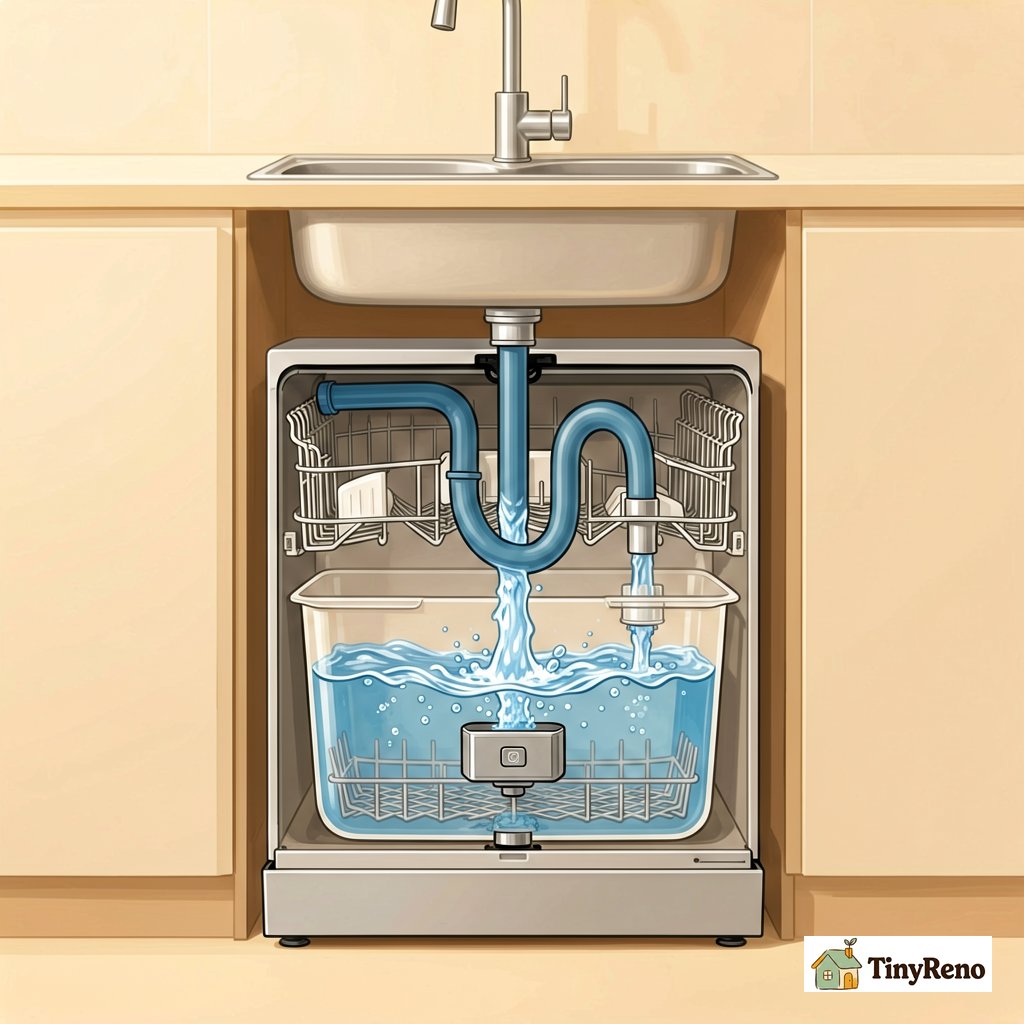
What the high loop actually does (the 30-second plumbing lesson)
The dishwasher drain high loop serves two distinct purposes, and they're easy to confuse.
First, it prevents sewage from siphoning back into the dishwasher. When the sink drains, water rushes past the dishwasher drain connection. Without a physical barrier higher than the sink's flood level, that rushing water creates a siphon effect that can pull sink wastewater backward through the drain hose and into the dishwasher tub. The high loop breaks that siphon by forcing the drain hose to rise above the sink's flood rim before coming back down. Water can't siphon uphill.
Second, it keeps sewer gas from rising up through the drain hose and into the dishwasher tub. Sewer gas smells like rotten eggs (yes, the same smell as the biofilm problem, but a different source). Without the high loop, that gas has an open path from the sink drain up through the hose and into the dishwasher between cycles. The high loop also helps slow sewer gas from rising up through the drain hose between cycles. The dishwasher's drain pump leaves a small amount of water in the low point of the hose after each cycle, which creates a partial barrier. But the high loop is not a true water trap—that's what the P-trap under the sink is for. The loop's main job is backflow prevention; gas control is a secondary benefit.
These are two separate mechanisms. A lot of online advice talks about them as if they're the same thing. They're not. If your dishwasher smells between cycles, the loop is too low or missing. If your dishwasher has gunk in it after the sink drains heavily, the loop is too low. Same fix, two different symptoms.
Option A: Under-counter loop on the cabinet side wall
This is the most common install. The drain hose runs from the back of the dishwasher, makes a U-turn up the inside wall of the sink base cabinet, gets fastened with a plastic clip or zip tie near the top of the cabinet (typically just below the countertop), then comes back down to connect to the sink tailpiece or garbage disposal.
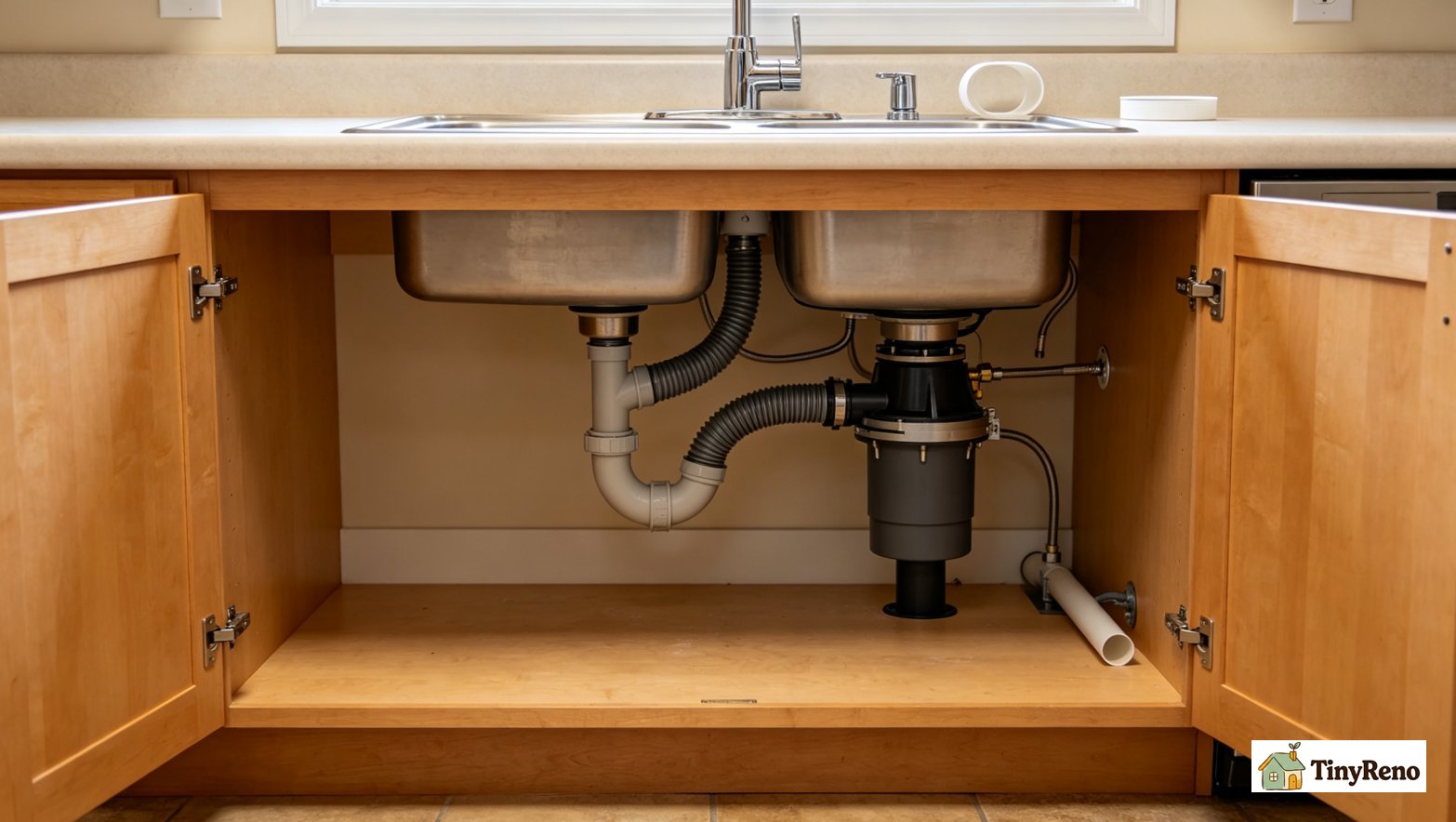
The fastener matters. Don't cinch the hose so tight that it crushes the ribbed walls. The ribs are structural — they keep the hose from kinking when it bends. If you crush them with a zip tie, you create a low spot right where the high point is supposed to be. Use a smooth plastic clip that holds the hose against the cabinet wall without compressing it. Leave a finger's worth of slack where the hose bends over the top.
This option works for almost every under-counter install where there's a wood cabinet side wall within reach of the drain hose. It's invisible once the cabinet doors are closed, which is why most people never know the loop is there.
Option B: Air gap fitting on the sink (code-required in some states)
An air gap is a small chrome or plastic fitting that mounts on the sink deck or countertop near the faucet. It has two barbed connections underneath: one to the dishwasher drain hose, one to the sink tailpiece or disposal. Water from the dishwasher flows up through the air gap, then down to the drain. The fitting contains a physical air break that no siphon can cross — a different mechanism from the dishwasher drain high loop, but serving the same backflow goal.
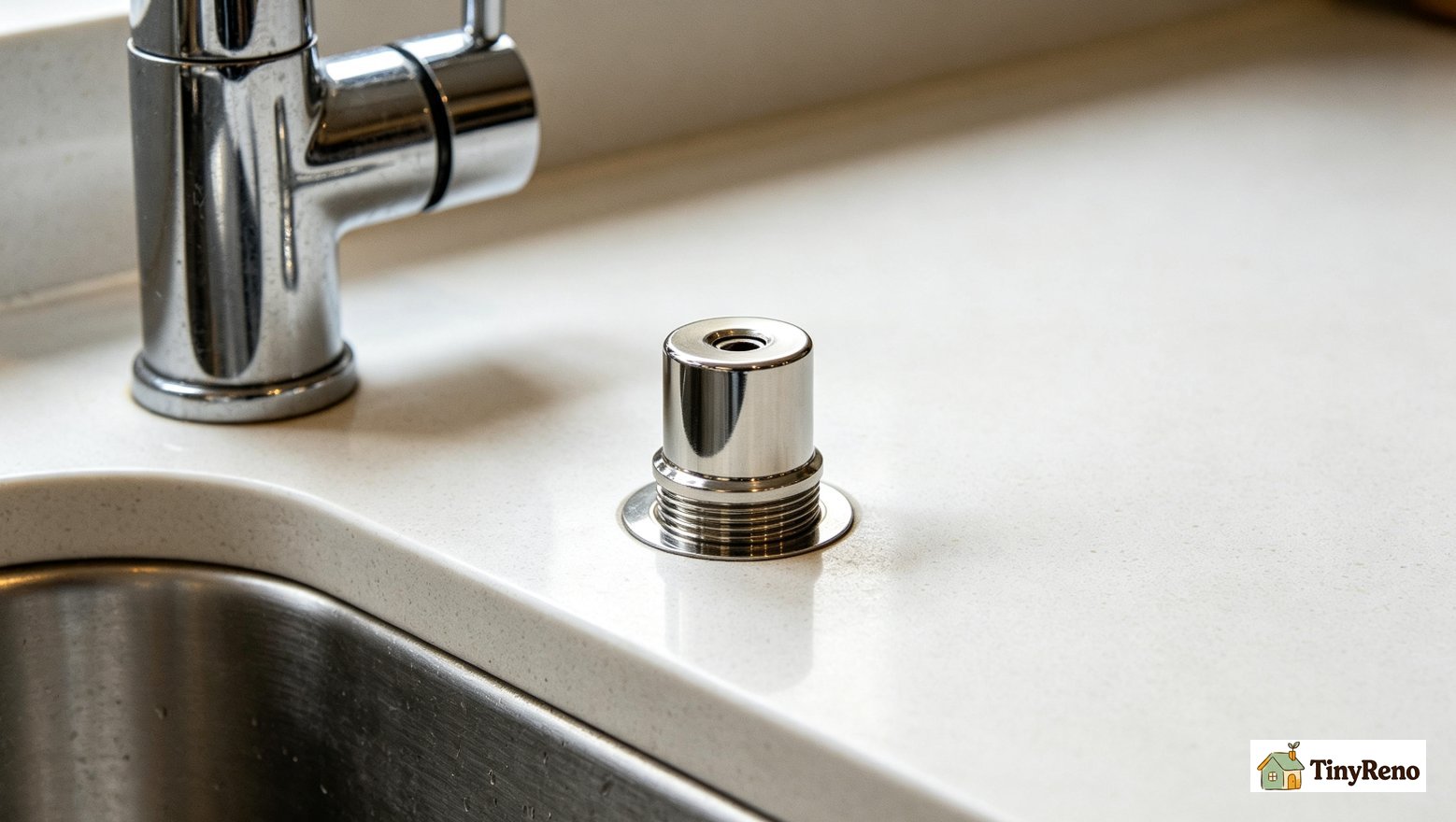
California, Washington, Oregon, and a handful of other states require an air gap by plumbing code for any new dishwasher install. If you see one of those small chrome cylinders next to your faucet with what looks like a tiny vent hole on top, that's the air gap. The vent hole sometimes dribbles water during draining — that's normal, it's the air break doing its job. If it dribbles constantly, the air gap is clogged with food debris and needs a five-minute clean.
Where an air gap is required, the loop under the counter is usually still installed as well — they aren't either-or. The air gap is the code-mandated backflow prevention; the high loop is the secondary defense. Some installers skip the loop when there's an air gap. That's technically allowed by code but it's bad practice, because the air gap can clog and stop doing its job, and the loop is the backup that keeps the system safe.
Option C: Air gap plus high loop (the installer's choice)
In a properly done install where an air gap is required, you'll see both. The drain hose runs from the dishwasher, makes the under-counter loop, then goes up through the air gap fitting on the sink deck, then back down to the disposal or tailpiece inlet. This is the most defensive setup and the one a careful plumber leaves behind — air gap for code compliance, loop for redundancy.
You'll see this configuration most often in newer rental properties in code-required states, because landlords can't afford to have a tenant's dishwasher backflow into the sink drain and trigger a health inspection. If you're renting and you see both — the loop and the air gap — that's a good sign about the rest of the plumbing.
If you're installing your own dishwasher and your state requires an air gap, you still want the loop. They're cheap insurance. The loop catches the cases where the air gap is clogged or the vent hole is blocked. (A disposal knockout plug that wasn't removed is a different problem—it blocks drainage entirely, and the high loop won't help.) Any of those failure modes leaves you with no backflow prevention at all if there's no loop underneath.
The mistake that turns the loop into a clog magnet
One piece of advice I see repeated is wrong: "Just loop the hose anywhere above the sink drain level and you're fine." This is the most common dishwasher drain high loop mistake, and it's why some people end up with clogs within six months.
The high point of the loop needs to be at least as high as the sink's overflow rim — usually about 32 inches above the floor for a standard-depth sink. If the loop peaks lower than that, it's not actually preventing siphoning in heavy drain events. A toilet flush on the same drain line, or a full sink draining, can still push water backward into the dishwasher.
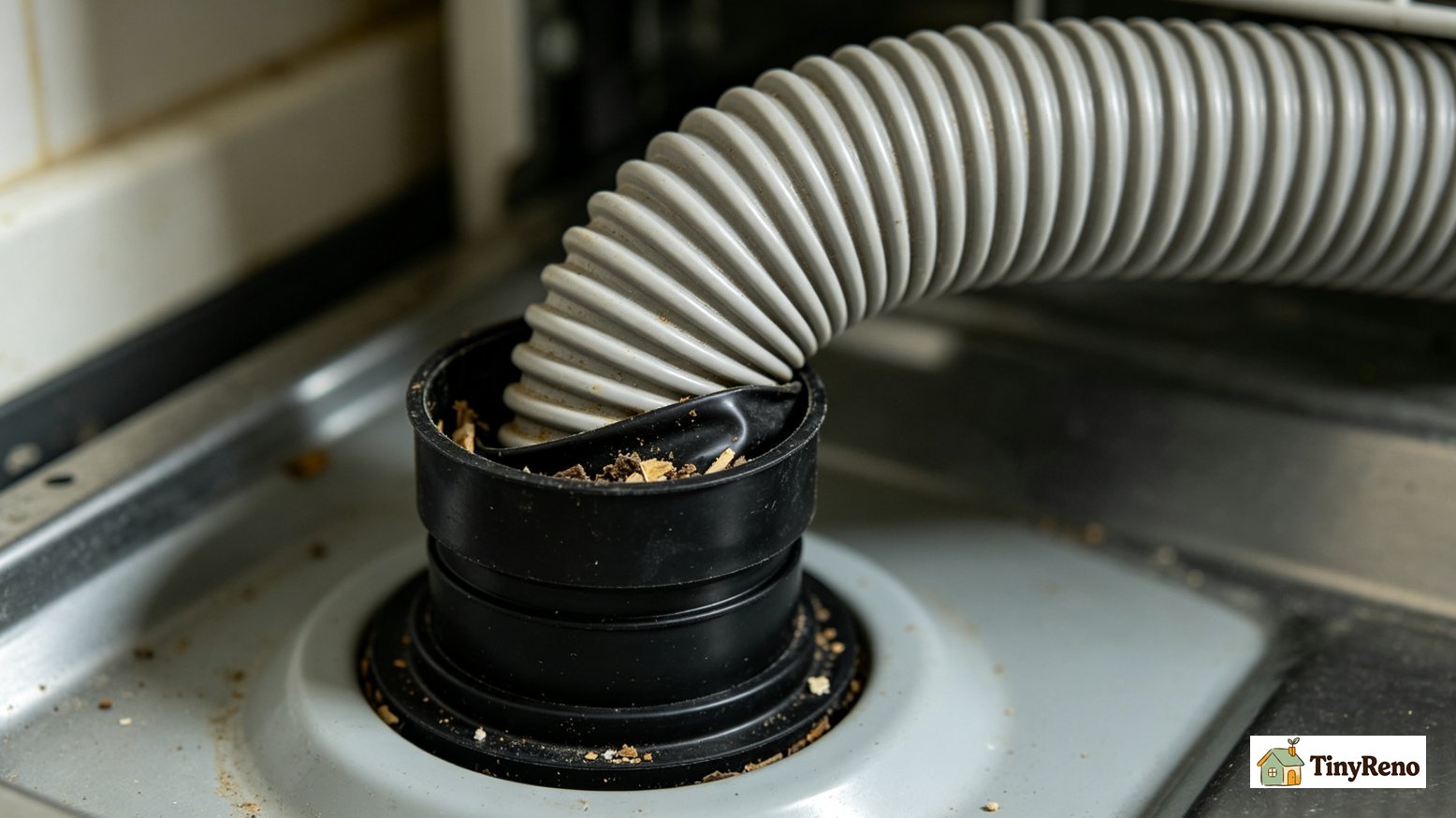
The other mistake: kinking the hose at the top of the loop. The high point should be a smooth curve, not a sharp bend. A sharp bend restricts flow, and food debris from the dishwasher collects at the restriction. Within six months you have a partial clog. Within a year, a full one. The fix looks like the prevention — pull the dishwasher out, replace the kinked section of hose, redo the loop as a smooth arc.
If you open the cabinet under your sink and the dishwasher drain hose runs in a straight line from the dishwasher up to the disposal with no loop, that's not a "modern install"—it's a code violation in most jurisdictions and a real risk of backflow. Adding the loop is a twenty-minute job with a plastic clip and a screwdriver. Before you start, unplug the dishwasher and shut off the water supply valve under the sink. It's the kind of fix that's easy to ignore until one day the dishwasher fills with sink water during a heavy drain event, and then it's the only thing on your mind.


Discussion (0)
Sign in to join the discussion