

A dishwasher door leaking at the bottom is the kind of problem that feels urgent at 6 a.m. when you step barefoot into a puddle. I had it twice in a year. The first time, I'd blamed my upstairs neighbor's spilled laundry detergent — turned out that wasn't it. The second time, with no neighbor noise and no obvious reason, I spent thirty minutes taking the door apart before I realized I was solving the wrong problem.
A dishwasher door leaking at the bottom is almost always one of five things, and only one of them is the door seal itself. Here's the order I'd check now, the five-minute version that beats the thirty-minute version, and one "fix" I think is mostly a waste of time.
If you're seeing water on the floor right under the door — not around the kick plate, not dripping from under the cabinet — the leak is one of these six. The five-minute check is the same regardless of whether you rent or own.
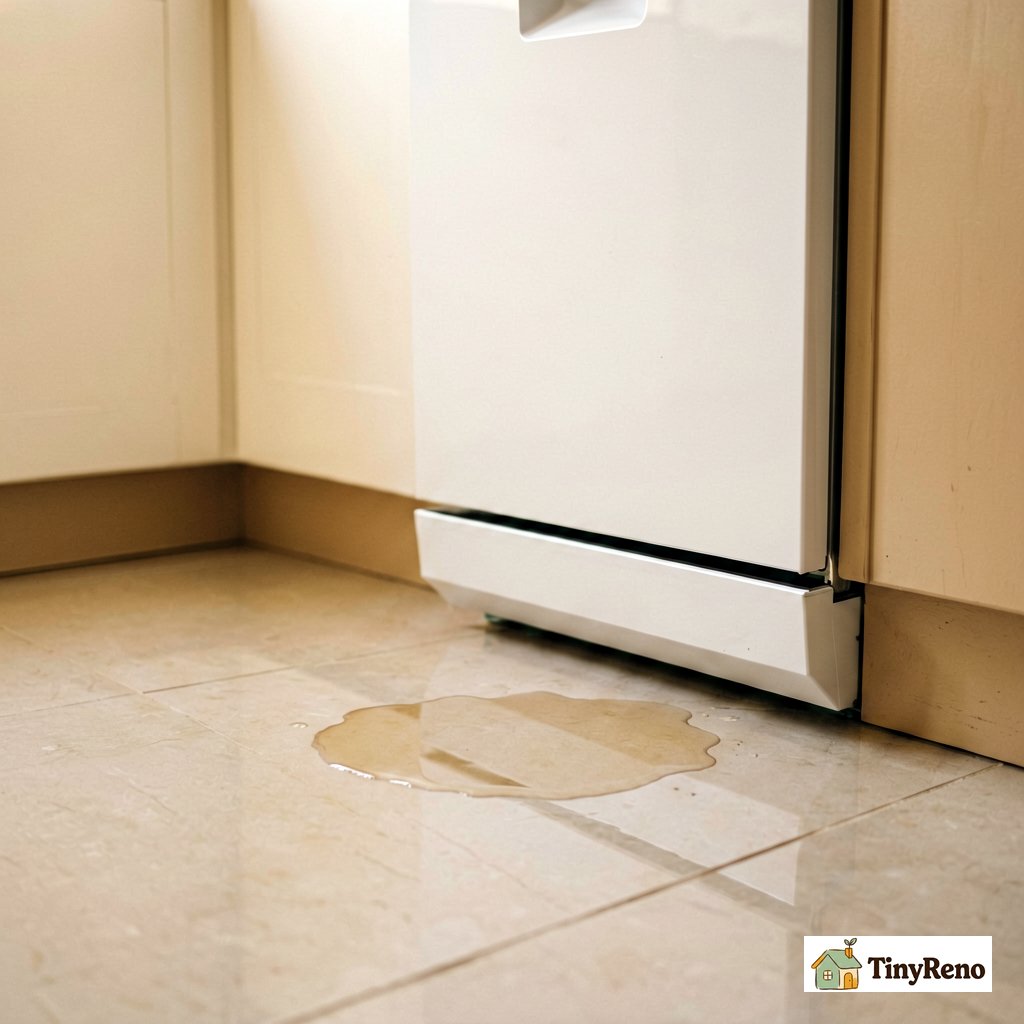
The 5-second check that tells you which of the six you're dealing with
Open the door and look at the gasket. Then look at the floor directly under the door hinge. Then look at the floor two feet out from the dishwasher.
- If the puddle sits tight against the door bottom, the leak is at the gasket or the detergent cup.
- If the puddle spreads outward past the door, the leak is the tub overflowing internally and pushing water out the door bottom — usually a drain or float issue, not a door issue. If the puddle spreads outward, check the float and drain. A clogged drain filter or a stuck float can cause the tub to overfill. Clean the filter and test the float by lifting it gently—it should move freely.
- If the floor is wet but the gasket looks bone-dry, run your hand under the cabinet kick plate. The leak might actually be the water inlet valve or the drain hose, and it's just running out from under the door. To check the inlet valve, look for drips on the valve body with a flashlight while the dishwasher is filling. To check the drain hose, trace it from the pump to the sink disposal or standpipe and look for cracks or loose clamps.
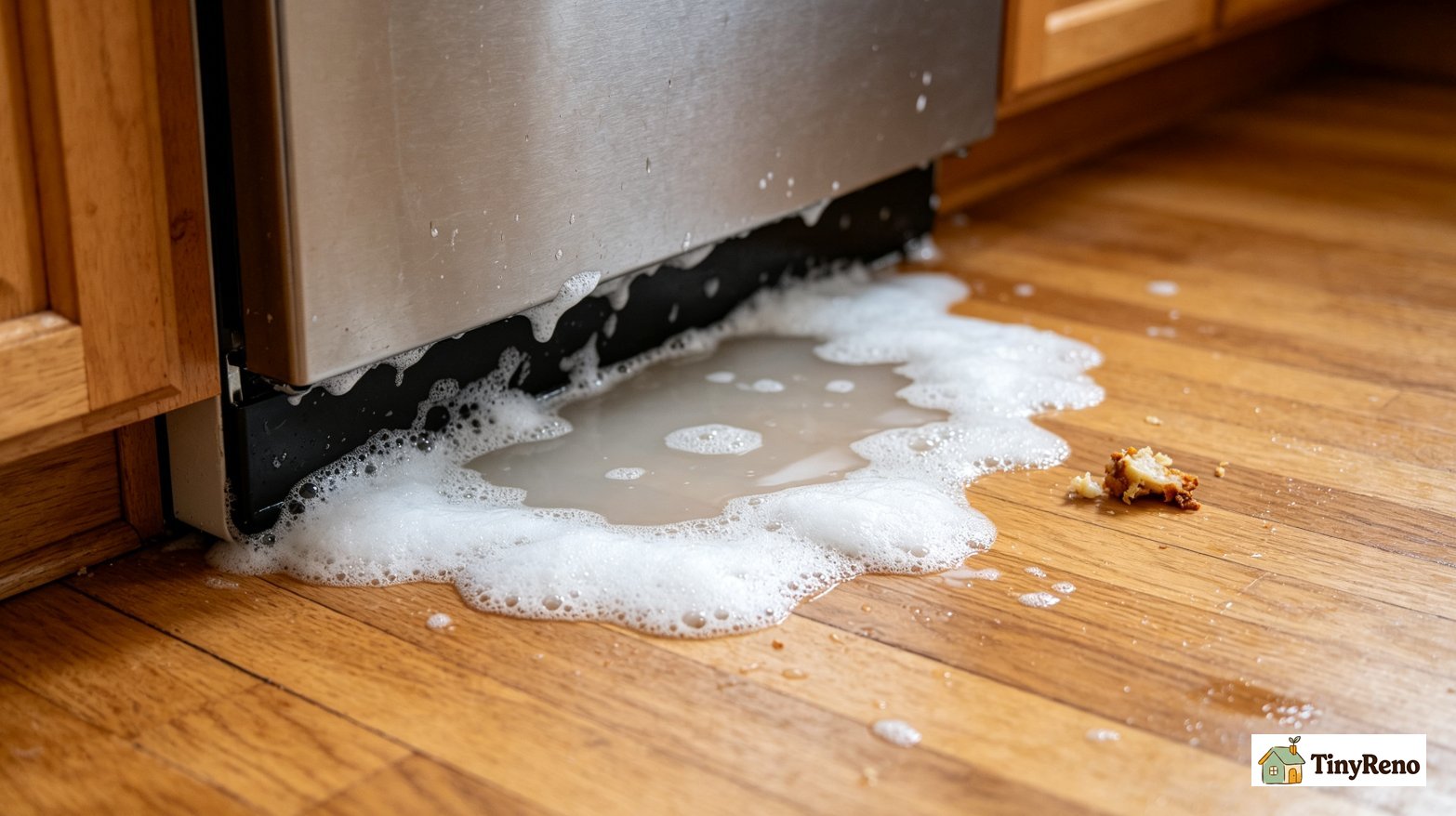
The color of the water matters too. Sudsy water means detergent is escaping — usually a cup problem. Clear water with food bits means an internal overflow. Clear water with no debris could be a gasket, door alignment, or a supply/drain leak—check the puddle location to narrow it down. This single five-second observation will save you thirty minutes of disassembly. I learned it from a repair tech who watched me struggle with a dishwasher door leaking at the bottom, sighed, and said "just look at the puddle first, kid."
Door gasket dried out (the one most people skip)
The rubber gasket around the dishwasher door is supposed to stay pliable for about five years. After that it gets hard, sticky in spots, and develops micro-cracks along the bottom corners. The door closes, latches, and looks sealed — but water sneaks out through the bottom corner where the rubber has compressed unevenly.
My gasket had been "fine" for three years. I pulled it off during a deep clean and found a section along the bottom-right corner that was rock-hard and slightly shrunken. The door still latched, the seal still felt snug to my hand, but there was a gap you couldn't see without peeling the gasket back. Replacing the gasket cost $22 and ten minutes. The dishwasher door leaking at the bottom stopped. That was three years ago.
To check your gasket: pull it back at the bottom corners and look at the rubber. If it doesn't flex and spring back when you let go, it's gone. If you see any cracks, even hairline ones, it's on its way out. Most gaskets for common models (Bosch, GE, Whirlpool, Frigidaire) are under $30 and install by just pressing them back into the channel.
The detergent cup not sealing (the sneaky one)
This one is harder to spot because it usually only leaks during the main wash cycle, when water is being sprayed directly at the cup. If the cup lid spring is weak, or if there's detergent buildup caking the seal, water sprays past the cup and runs down the inside of the door. From there it follows the door's inner wall to the bottom corner and pools at the seal — which looks exactly like a dishwasher door leaking at the bottom from the gasket.
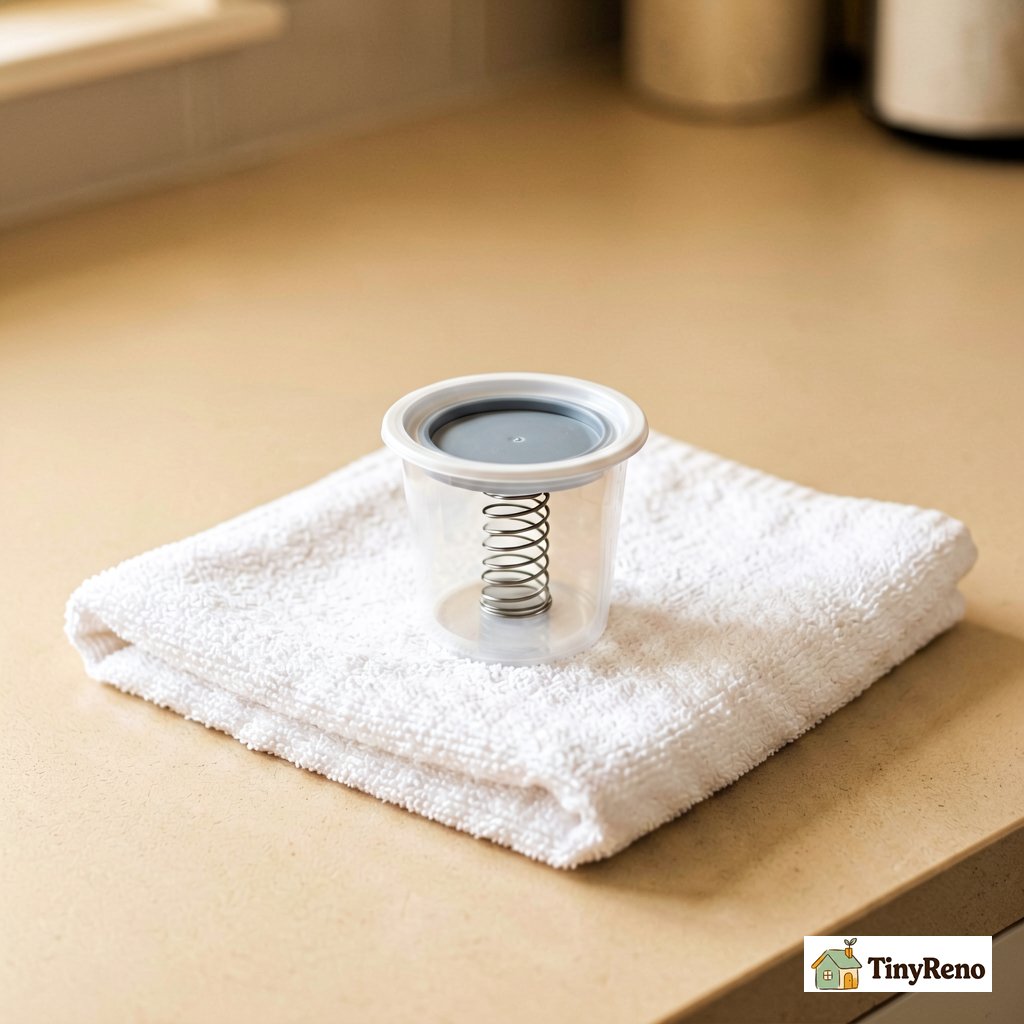
The clue: the leak only happens mid-cycle, not at the start or end. And if you open the door right after a cycle, you'll see water sitting in the bottom of the door panel itself — not just on the floor.
Fix it by removing the cup (it usually pops out with a screwdriver or just pulls straight out) and cleaning all four seal surfaces with a toothbrush and white vinegar. If the spring that pushes the lid closed is weak, the whole cup assembly is around $25 to replace. Don't just keep running the dishwasher — that water at the door bottom will eventually rot the door's insulation and you'll smell it before you see it.
Dishwasher not level (the landlord-fixable one)
A dishwasher that's tilted forward by even a centimeter will hold water against the door instead of draining back into the tub. The water doesn't need to be deep — half an inch of standing water at the front lip is enough to leak past the gasket under spray pressure. From the outside it looks like the dishwasher door is leaking at the bottom, but the door is fine.
In rentals, the front feet are usually adjustable with a wrench from inside the door area. In owned homes, you'll need to pull the unit out and adjust all four feet. The fix is mechanical, not a part replacement. Pull a level across the top of the dishwasher door frame or the cabinet opening and adjust the front feet until the bubble is centered.
What a landlord will and won't fix varies wildly. In my experience, "the dishwasher leaks onto the floor" gets a same-day visit because it damages the subfloor. "The dishwasher is slightly tilted" usually doesn't. Worth the call either way.
Too much detergent, or the wrong kind (the one fix most advice gets wrong)
This is the one I see recommended backwards on every forum. The advice is usually "use less detergent." That helps, but it's not the whole story.
The real issue is that modern dishwashers are calibrated for gel or pod detergents. If you're using old-school powder, or if you're using pods in a dishwasher that was designed before pods existed, you get oversudsing. The foam fills the tub, the float rises to stop the fill, but the foam itself doesn't trigger the float the same way water does. So water keeps flowing in quietly, foam pushes past the door bottom, and you get a soapy puddle on the floor — which is one more way a dishwasher door ends up leaking at the bottom even when the seal is fine.
Switch to a detergent matched to your dishwasher's era — pods for anything made after 2010, gel for anything before — and use the minimum line, not the maximum. Run a hot cycle with a cup of white vinegar in the top rack to clear the residual suds. If the leak stops, that was it. This is the cheapest fix on the list and the one most people skip because it sounds too simple.
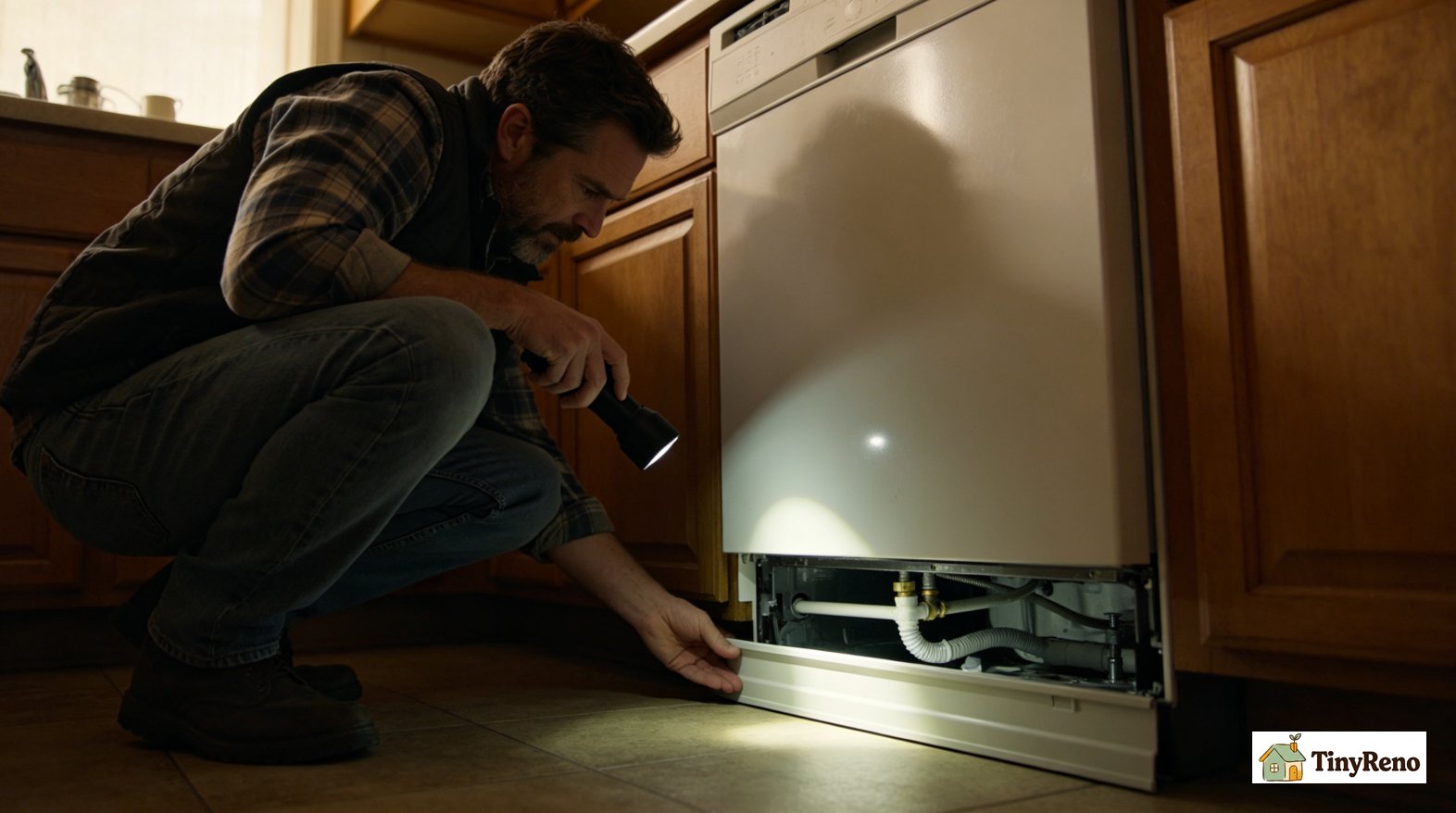
One last thing: if you've checked all six and the leak is still there, pull the kick plate off and look underneath with a flashlight. Sometimes the leak isn't the door at all — it's the water inlet valve or the drain pump, and water just runs out from under the door because that's the lowest point. That's a $75 part and a YouTube video, not a service call.


Discussion (0)
Sign in to join the discussion