

Laminate Flooring vs Engineered Hardwood
I spent three months last winter agonizing over laminate vs engineered hardwood before I finally said screw it and bought both. I put laminate in the kitchen because that's where water, dog hair, and dropped pots actually happen. I put engineered hardwood in the living room because I planned to be there for five years and I wanted the real-wood look. After two years of living with both, I know exactly where each one wins—and it's not what I expected.
If you're deciding between laminate and engineered hardwood for a rental or your own first floor, here's what the salespeople won't tell you: three reasons each, four price tiers, and the three-year question that actually decides it.
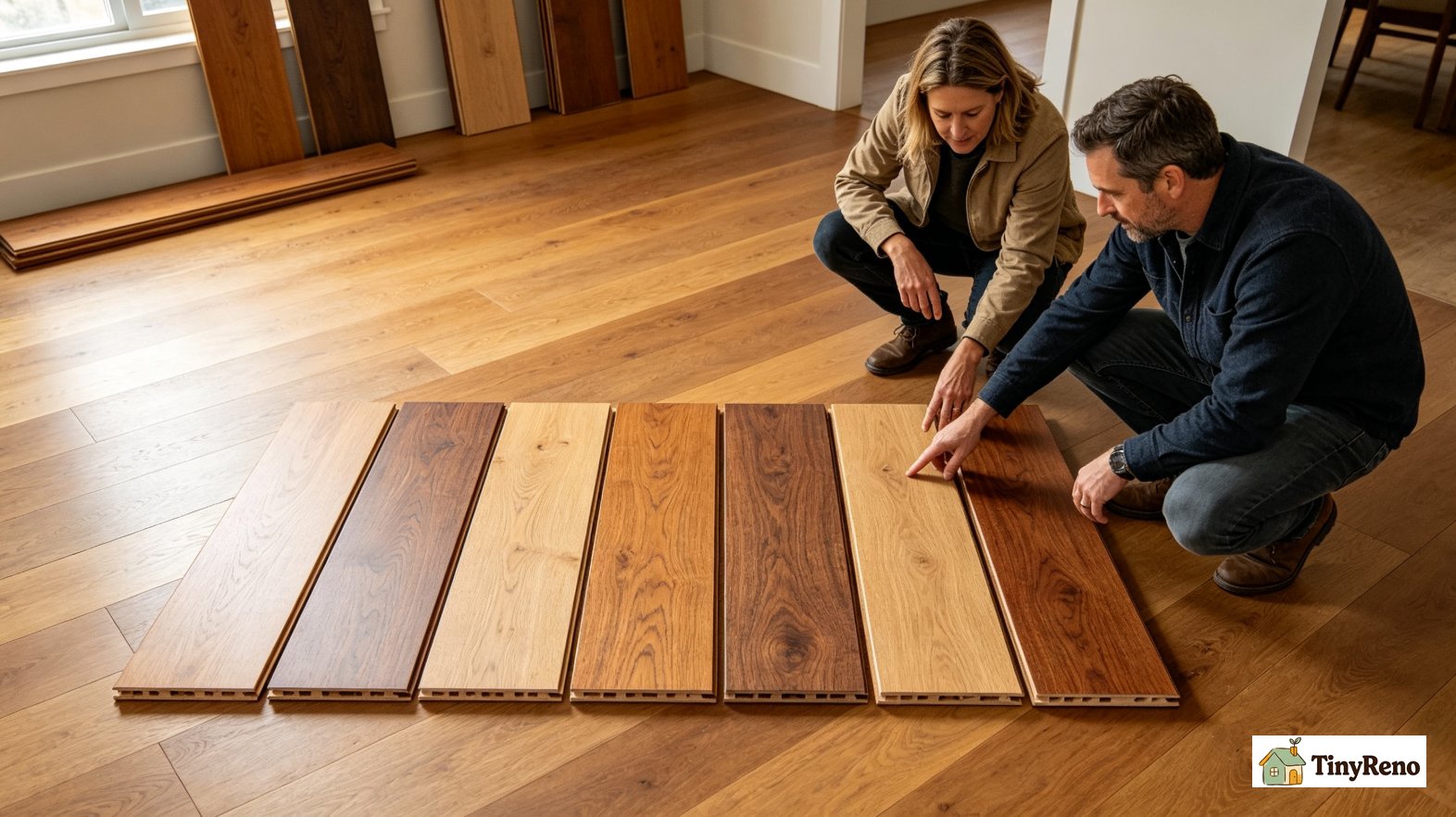
4 Price Points: $1 to $12 Per Square Foot
Both products have tiered pricing that overlaps in the middle, which is where it gets confusing. Here's roughly what I paid at Home Depot and Lowe's in 2026 for my kitchen and living room. This is the price map for the laminate flooring vs engineered hardwood question most shoppers end up asking first.
| Tier | Laminate | Engineered hardwood |
|---|---|---|
| Entry | $1 to $3 per sq ft | $4 to $6 per sq ft |
| Mid | $3 to $5 per sq ft | $6 to $9 per sq ft |
| Premium | $5 to $8 per sq ft | $9 to $12 per sq ft |
| Top | $8 to $12 per sq ft | $12 to $20 per sq ft |
The price overlap in the $3 to $8 range is where most people get stuck. A mid-tier laminate at $4 per sq ft and a mid-tier engineered hardwood at $7 per sq ft look like the same product from a foot away. They are not the same product. They do different things, they wear differently, and they fail in different ways. The price tells you what you are getting into.
The total cost difference for a 300-square-foot living room is $900. That is the gap between a mid-tier laminate at $1,200 installed and a mid-tier engineered hardwood at $2,100 installed. For a renter who is going to be in the apartment for two years, that $900 buys other things. For an owner who is going to be in the house for ten years, that $900 is 1 percent of the mortgage and the difference between a floor you are proud of and a floor you are living with.
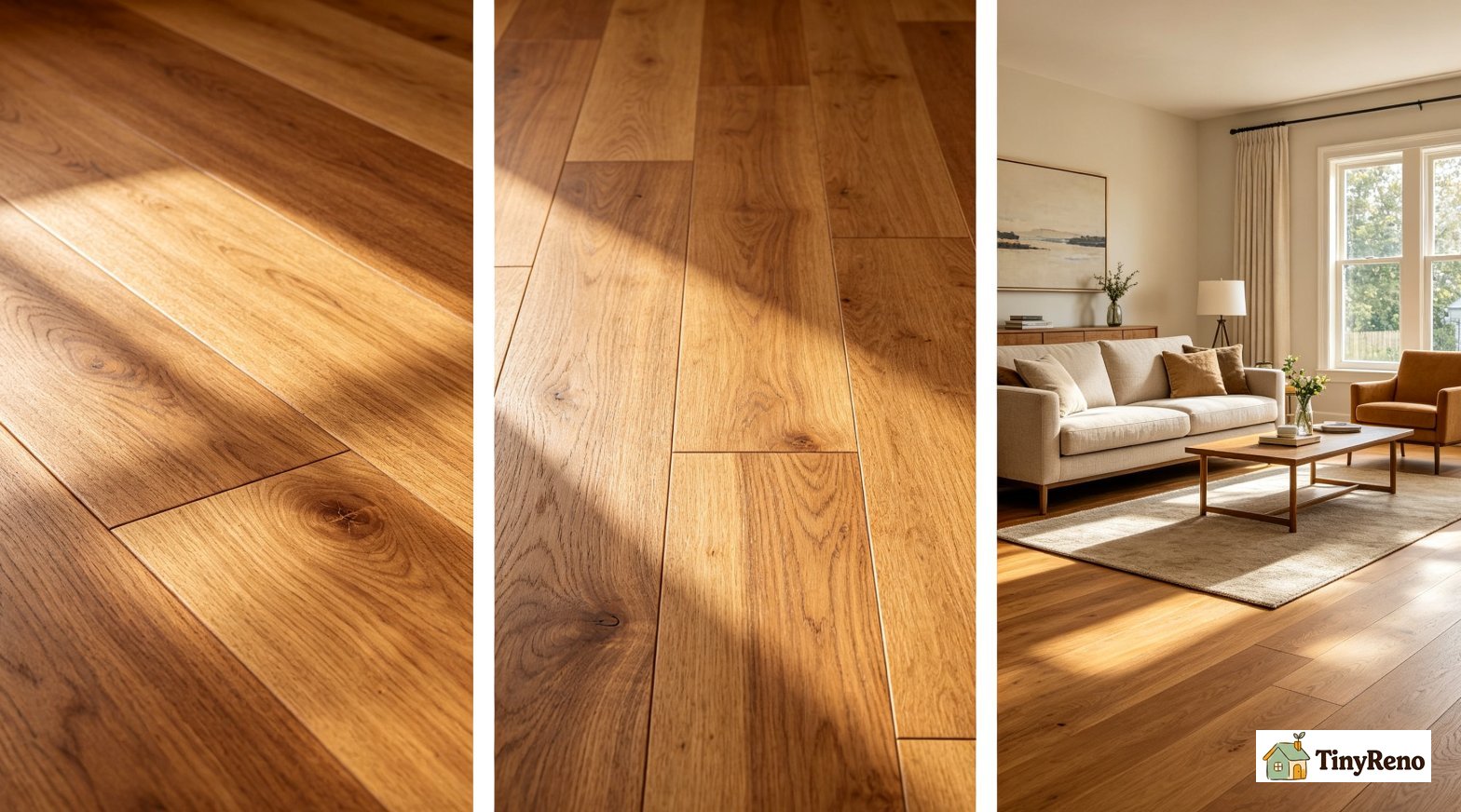
What Engineered Hardwood Does That Laminate Can't
Engineered hardwood does three things laminate can't, no matter how much you spend.
First, engineered hardwood can be sanded and refinished—if the wear layer is thick enough. The top layer of engineered hardwood is real wood, usually 2 to 6 mm thick. A mid-tier engineered hardwood can be sanded once or twice in its lifetime. That means a scratch or a stain does not mean replacing the plank. For a high-traffic living room or a dining room where chairs scrape, this is the difference between a 5-year floor and a 25-year floor. Laminate cannot be sanded. Once the wear layer is gone, the floor is gone. That is the single biggest durability advantage in the laminate flooring vs engineered hardwood comparison.
Second, engineered hardwood looks and feels like real wood because it is real wood. The print layer on laminate has gotten very good, but it does not have the depth, the grain variation, or the way the finish catches light that real wood does. If you walk into a room with engineered hardwood, you know it is wood. If you walk into a room with laminate, you know it is laminate. The difference is not enormous, but it is the difference between a floor that adds to the resale value of a home and a floor that does not.
Third, engineered hardwood adds resale value to a home. Real estate agents will tell you that engineered hardwood is one of the features buyers ask about when they are comparing two listings. Laminate is not on that list. For an owner who is renovating to sell, this matters. For a renter, this does not matter at all.
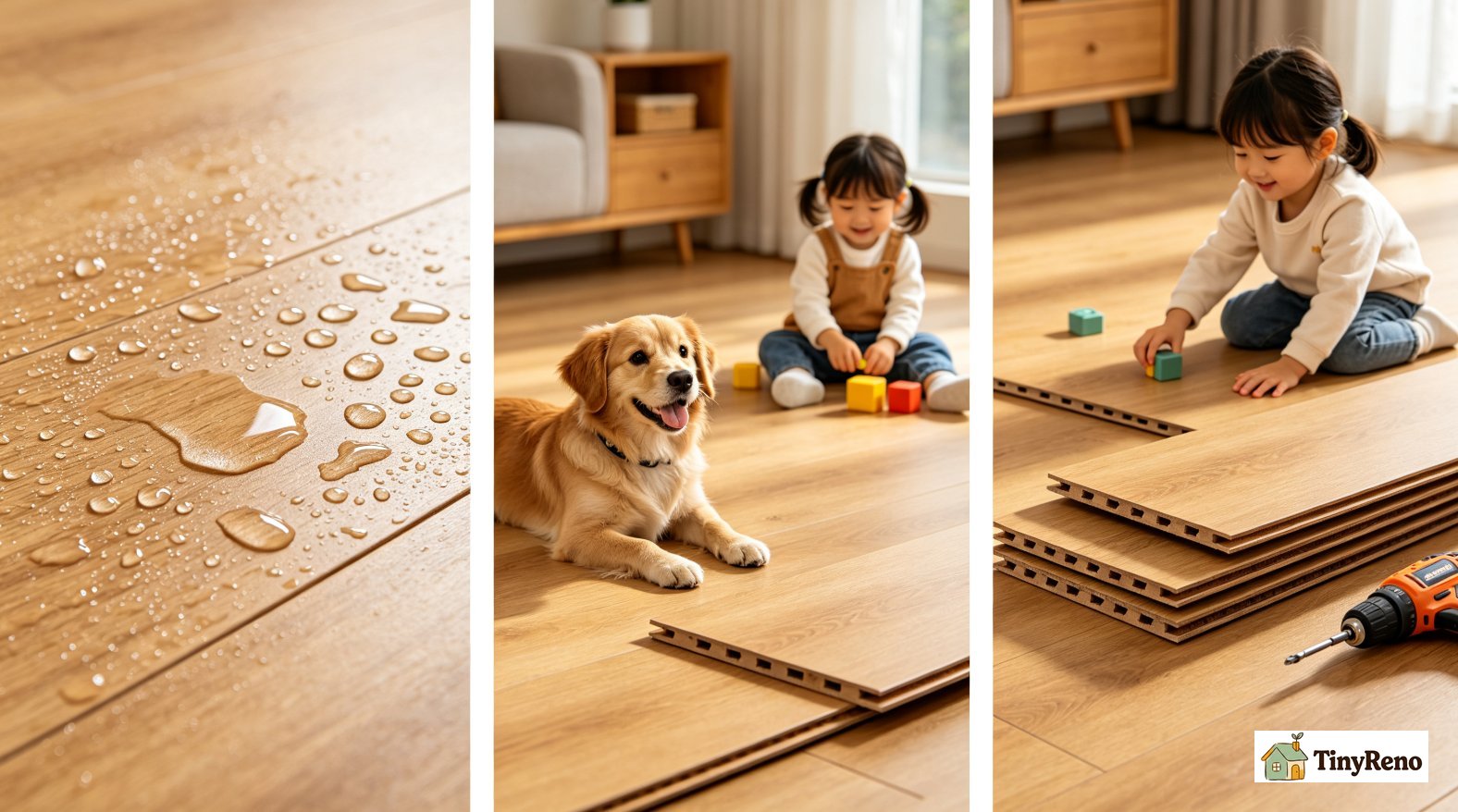
What Laminate Does That Engineered Hardwood Can't
Laminate does three things engineered hardwood can't, no matter the price.
First, laminate handles water. Modern laminate with a tight click-lock seam and a properly sealed edge will survive a dishwasher leak, a wet-mop, and a spilled glass of water. Engineered hardwood will swell, cup, and delaminate within 24 hours of any standing water. The top layer of real wood soaks up the water, expands, and never goes back to flat. If you have a kitchen, a bathroom, a laundry room, or a basement that has ever seen water, laminate is the only choice of the two.
Second, laminate installs faster. The click-lock system is forgiving, the cuts are easy, and the planks can be tapped together with a tapping block and a pull bar. Engineered hardwood installs the same way if you are floating it, but it cannot be floated over a wide area without a transition strip. A 300-square-foot living room with engineered hardwood will have a transition strip every 25 feet, which is the maximum run before expansion starts to lift the planks.
Third, laminate is more scratch-resistant than engineered hardwood. The wear layer on a mid-tier laminate is a melamine-impregnated paper that resists scratches, scuffs, and dents better than the polyurethane finish on engineered hardwood. If you have dogs, kids, or rolling office chairs, laminate holds up longer. Engineered hardwood shows scratches within a year.
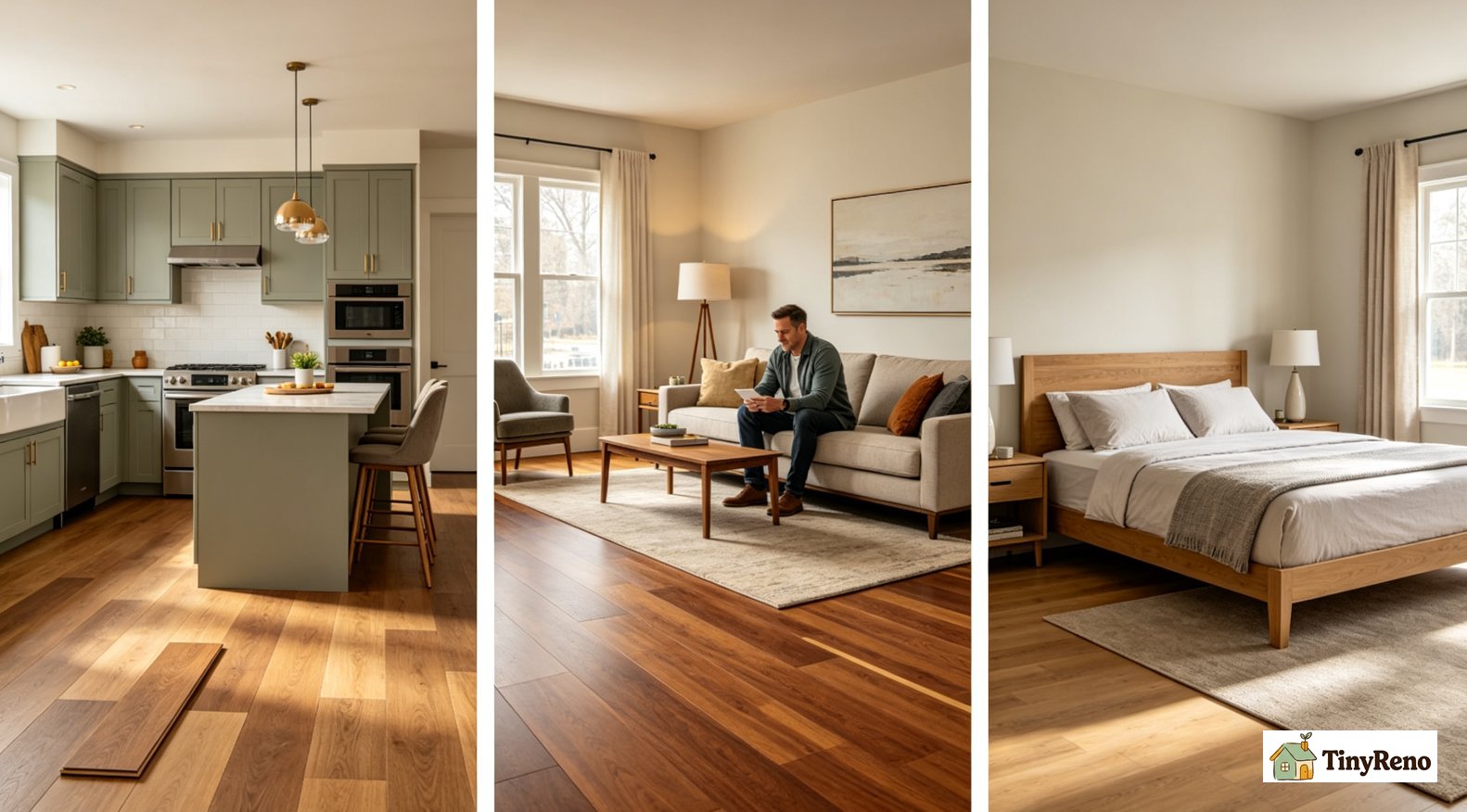
The 3-Year Question: Which One Would I Buy Again?
Three years after the install, here is what I would do differently if I were starting over.
I would put laminate in the kitchen again. The kitchen is the room where water happens, and engineered hardwood would have failed by now. The laminate I installed has a small seam lift near the dishwasher where the dishwasher leaked in month eight. I pulled up the dishwasher, dried the subfloor, and clicked the planks back into place. With engineered hardwood, that section would have been a $400 replacement.
I would put engineered hardwood in the living room again, but I would buy a higher tier than I did. The mid-tier engineered hardwood I bought at $7 per sq ft shows scratches from the dog and from rolling chairs. The premium tier at $10 per sq ft has a thicker wear layer and a better finish. For a living room where you live for years, the extra $3 per sq ft is worth it.
I would not put engineered hardwood in the bedroom. Bedrooms do not see water and do not see traffic. The premium laminate at $5 per sq ft looks the same as engineered hardwood from the bed and costs half as much. Save the engineered hardwood for the rooms where you entertain and where the look matters.
The short answer for the laminate flooring vs engineered hardwood question is this. For water, dogs, kids, and rentals, laminate. For resale, look, and the long haul, engineered hardwood. For most renters, laminate is the right answer. For most owners, the answer is engineered hardwood in the public rooms and laminate in the wet rooms.
That is the comparison that took me three months and two rooms to figure out, and that is the comparison I now give to anyone who asks.


Discussion (0)
Sign in to join the discussion