

The 3 Bathtub Wall Tile Styles Renters Actually Install
Bathtub wall tile ideas are usually the part of a bathroom remodel where people get the most ambitious and the most unrealistic. Pinterest has pictures of marble herringbone and hand-glazed zellige and penny rounds. What it does not show is the three styles that renters actually finish, in three styles that pass a move-out walkthrough, in three price ranges that fit a $300 budget. After two rentals and a friend's bathroom I helped design last spring, the three bathtub wall tile styles that consistently work are white subway, matte hex, and large-format porcelain. Everything else is a Pinterest fever dream that costs twice as much and looks half as good after two years.
If you are standing in a bathtub with a tape measure and a Pinterest board, here is the practical walkthrough of those three bathtub wall tile ideas, the four price points, the one thing to skip in a small bathroom, and the subway tile method that hides grout mistakes well enough that even a tired landlord on a 90-second walk-through does not flag them.
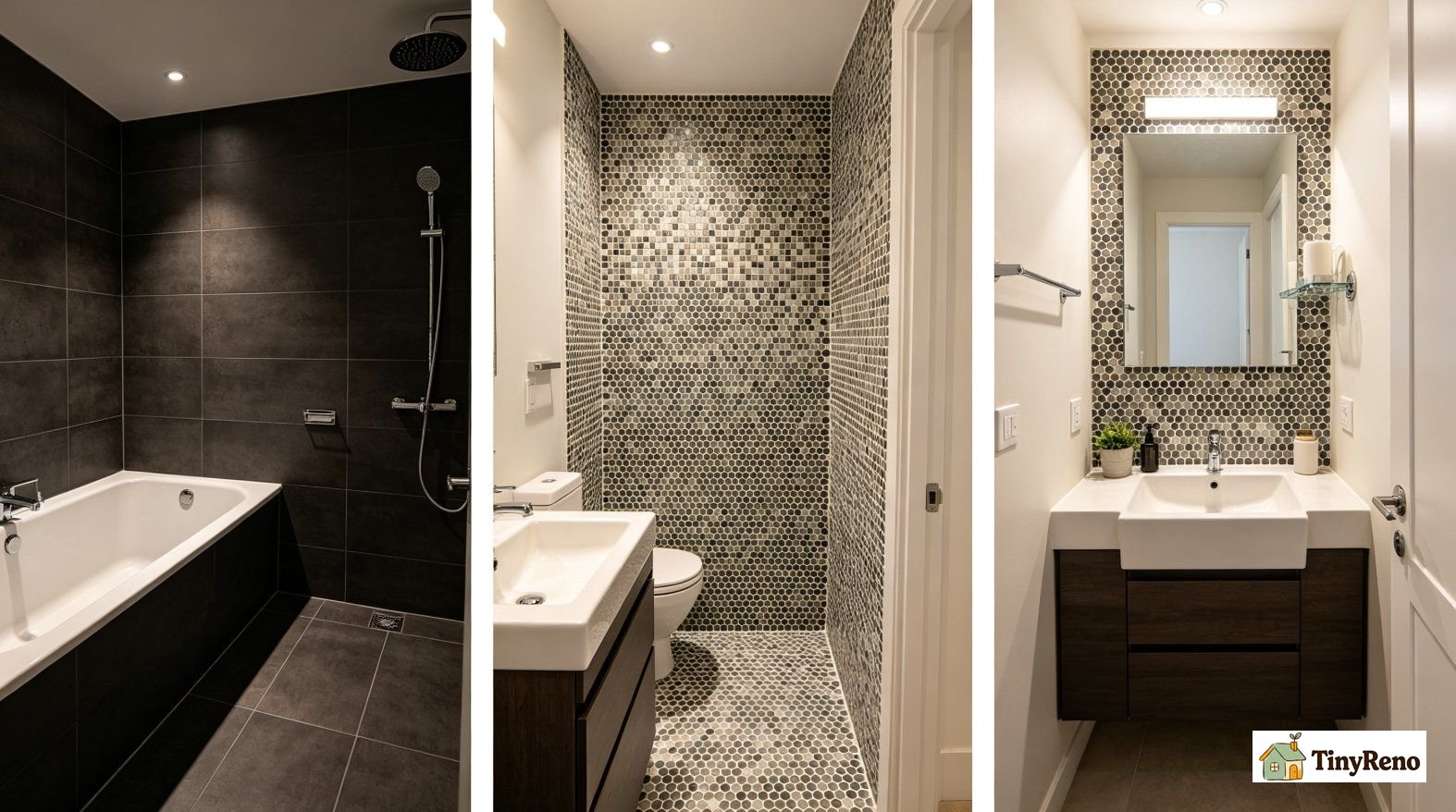
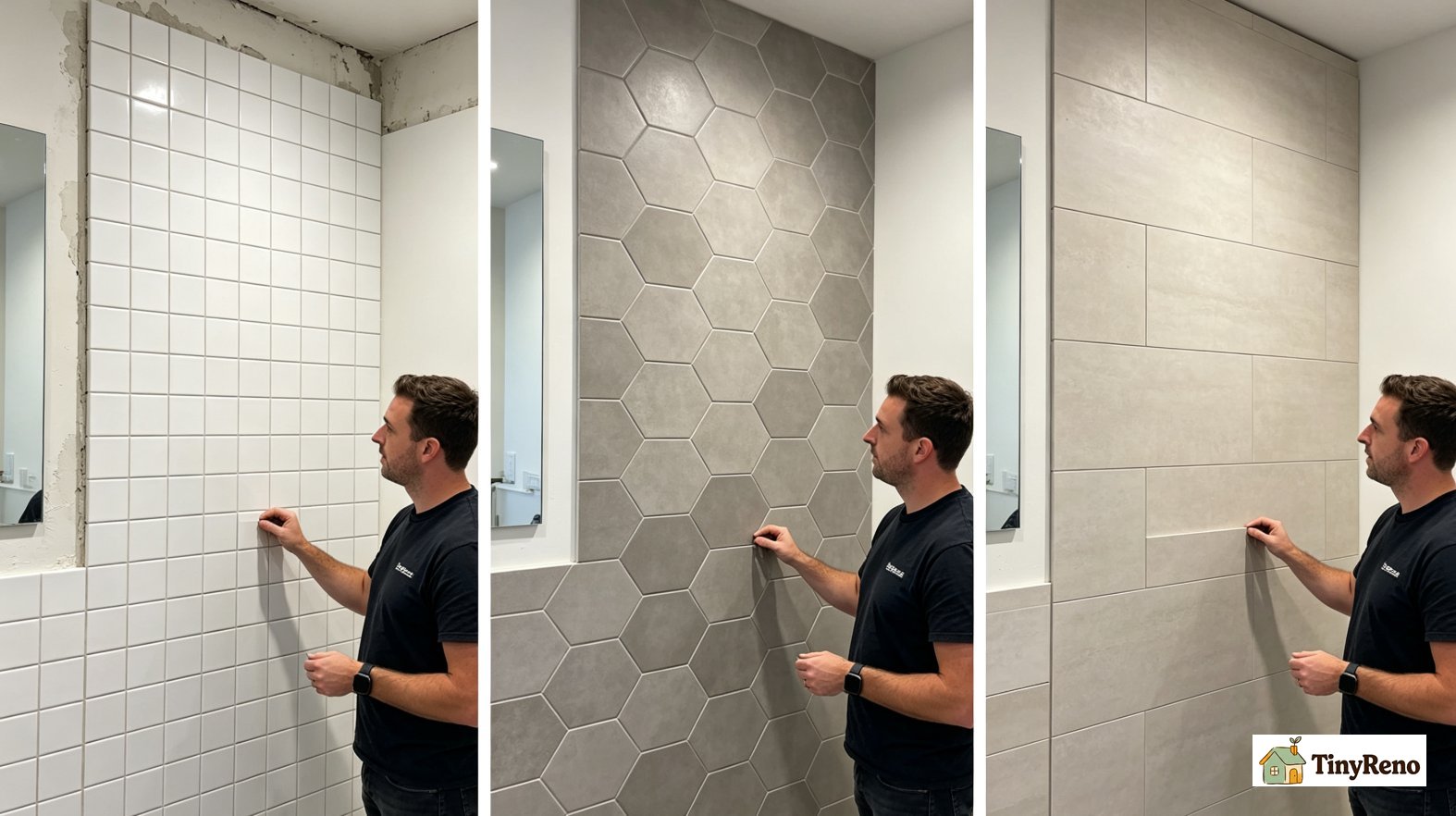
The first style is white subway tile in the classic 3 x 6 or 4 x 8 size. It is the cheapest of the three and the easiest for a first-timer to install. White subway reflects light, which is exactly what a small bathtub surround needs. The second style is matte hex tile, usually 2-inch hex in white, gray, or black. Hex costs more per square foot and takes longer to install because of all the cuts around the spout and the corners, but it hides wall imperfections better than subway and it reads as a deliberate design choice rather than a builder-basic move. The third style is large-format porcelain, 12 x 24 or larger. This is the most expensive and the most modern-looking, and it is the only one of the three that should be installed on a perfectly flat wall. In a rental with a wavy subfloor or an older cast-iron tub surround, large-format porcelain will telegraph every flaw in the wall, and it will look like a mistake in a way that subway never does.
4 Price Points: $1 to $25 Per Square Foot
Here is the price map for those three styles, all in stock at Home Depot or Lowe's in 2026, based on what I paid for my last two bathroom projects.
| Style | Price per sq ft | Total for a standard 40 sq ft surround |
|---|---|---|
| White ceramic subway | $1 to $3 | $40 to $120 |
| Matte porcelain hex | $5 to $8 | $200 to $320 |
| Large-format porcelain | $8 to $15 | $320 to $600 |
| Natural stone (marble, slate) | $10 to $25 | $400 to $1,000 |
The bottom tier ($1 to $3 ceramic subway) is what you want for a rental you are going to leave in two years. It installs with basic tools, the tile is forgiving, and if a piece cracks in the move-out walkthrough, a $4 replacement from the same dye lot is enough to swap it in. The mid-tier ($5 to $8 hex) is what you want if you are staying three to five years and you want the bathroom to feel intentional. The upper tiers are for owners, not renters, and the labor savings of doing it yourself shrink fast once you start cutting natural stone or setting 12 x 24 porcelain.
The other cost that nobody mentions is the thinset and grout. For a 40-square-foot surround, you will use about $25 to $40 of modified thinset, $15 to $25 of grout, and $15 to $20 of grout sealer. Add another $40 for a tile saw rental if you do not already own one. That puts the all-in cost of the bottom-tier subway option at about $160 in materials and one full weekend of labor.
What to Skip in a Small Bathroom Bathtub Wall
If your bathtub surround is less than 40 square feet (which is most rentals under 800 square feet), three design choices will make the bathroom feel smaller and the install harder. Skip them.
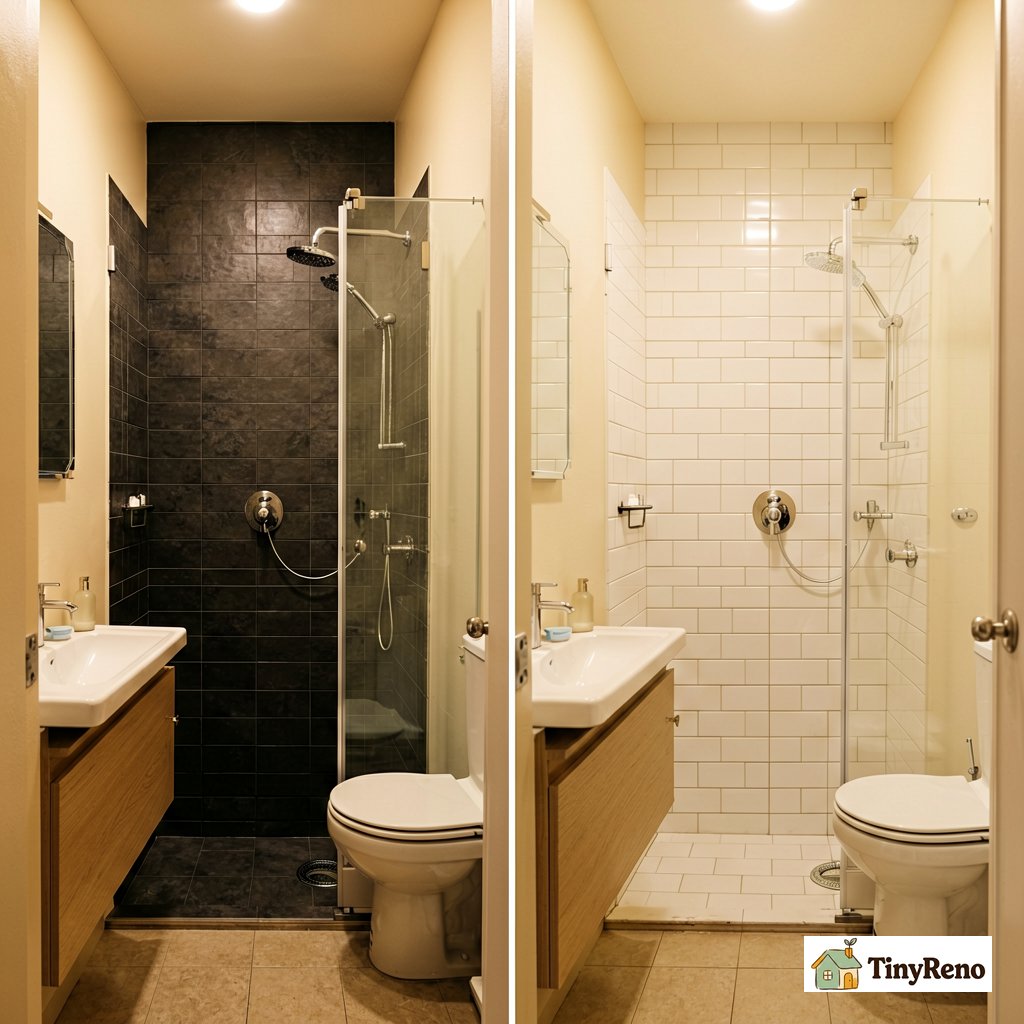
First, skip dark tile. A dark bathtub surround absorbs light and makes the room feel like a cave. The landlord's listing photo will not show this, but the every-morning shower in February will. If you want a non-white tile, pick a warm gray or a beige, not a charcoal or a navy. A charcoal surround absorbs light that a white surround would reflect. In a 5-by-7 bathroom, that difference makes the room feel noticeably smaller. It doesn't literally halve the size, but it changes the feel of the room every morning. This is the single most common bathtub wall tile ideas mistake I see in small rentals.
Second, skip mosaic sheets with mixed materials. The sheets with a glass accent or a metal strip look great in the store and look like a craft project after six months. The glass pieces are a different thickness than the ceramic, the grout does not bond the same way, and any chip in the glass shows the white underneath as a dark spot. Stick to single-material tile.
Third, skip any tile smaller than 2 inches square. Penny rounds, 1 x 1 mosaics, and tiny hex patterns are grout-heavy, grout stains fast in a shower, and the install time roughly doubles per square foot. In a small bathtub surround, the labor cost (even if it is your own labor) makes the small-tile look not worth it.
The Subway Tile Method That Hides Grout Mistakes (And Why It Beats Other Bathtub Wall Tile Ideas)
If you decide on white ceramic subway, here is the install method that hides the inevitable imperfect grout lines well enough that a landlord on a 90-second walk-through sees "fresh tile" rather than "renter tried to install tile." This is the bathtub wall tile idea I have used on two rentals and recommended to four friends.
- Plan the layout on the floor first. Lay out the tiles in a dry run on the bathroom floor. Decide whether you are doing a 50 percent offset (the classic subway look) or a stack bond (modern, but harder to hide crooked walls). For a rental, do the 50 percent offset because it hides the wall imperfections.
- Start at the tub edge, not the ceiling. The tub edge is the one straight horizontal line you can trust. The ceiling is rarely level. Working up from the tub means every horizontal joint will be parallel to the tub, and any wedge-shaped cuts go at the top where they are hidden by the ceiling line.
- Use a level every third row. Do not trust the previous row to be straight. Walls are not square in older rentals, and a 1/8-inch drift per row will become a half-inch gap by row eight.
- Back-butter the corners. Corners are where first-time installers leave the biggest gaps. A thin layer of thinset on the back of each corner tile fills the gap and lets you set the tile flush with the wall on both sides.
- Grout in two passes. The first pass pushes grout into the joints. The second pass, 15 minutes later, scrapes the excess off the tile face with a damp sponge. The 15-minute wait is what separates a clean grout job from a smeared mess. Skip it and you will be picking dried grout off the tile face for a week.
- Seal the grout 72 hours after the final grout cures. I have said this in three different articles now because it is the single most-skipped step in renter bathroom tile, and the one that decides whether the grout looks clean at the end of the lease or stained brown.
The total time for a 40-square-foot subway surround using this method is about 10 hours spread over a weekend (Saturday afternoon for thinset and tile, Sunday morning for grout and cleanup). The total cost is roughly $180 in materials, plus a $40 wet saw rental if you don't own one. That's $220 all-in for a 60-square-foot surround.
When Renter-Friendly Beats Pinterest-Worthy
For a rental, renter-friendly beats Pinterest-worthy every time. A clean white subway surround that you installed correctly will look better to a landlord than a hand-glazed zellige surround that you installed imperfectly. The landlord's standard for a move-out walk-through is "did the renter damage anything," not "did the renter achieve magazine-cover design." A clean subway install passes that test at any apartment in any neighborhood. None of the more ambitious bathtub wall tile ideas on Pinterest will pass that test if they are not installed to a professional standard.
The three styles above work because they are forgiving. White subway is forgiving on wavy walls because the grout lines break up the visual plane. Matte hex is even better at hiding imperfections because the small hexagonal pattern distracts the eye from any single high or low spot. Either works on an imperfect wall. Large-format porcelain does not. Large-format porcelain only works on a perfectly flat wall, but if you have that, it is the most modern-looking option. Pick the style that matches your wall, your budget, and your timeline. The right bathtub wall tile ideas for a renter are the ones you can finish in a weekend and that the landlord cannot point to at move-out as damage.


Discussion (0)
Sign in to join the discussion